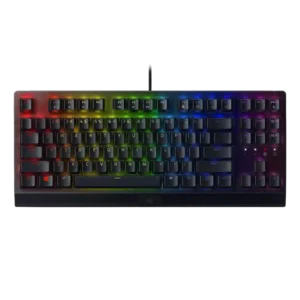
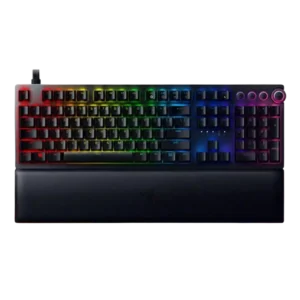
Scorata scores summarize analyzed review evidence on a 1–5 scale; they are not laboratory measurements or a simple average of customer star ratings. Feature scores summarize the reviews covering that feature. The overall score averages feature scores within each review, then combines review averages. When both expert and customer evidence are available, those two groups receive equal weight. Products can have different review coverage, so small score gaps do not establish a winner.
Recommendations prioritize important features for the category, with a score of at least 3.5, a gap of at least 0.25 points and at least two supporting reviews per product. Features with widely varying scores or broad connectivity contexts are excluded from recommendations. These safeguards do not establish statistical significance.
Quick verdict
What each product is best for
The review evidence points to a tradeoff: portability and cable quality versus ergonomics and passthrough features. Choose according to which strengths matter more to you; the overall score alone does not settle that choice.
Choose Razer BlackWidow V3 for portability and cable quality.
Choose Razer Huntsman V2 Analog for ergonomics and passthrough features.
Why these recommendations?
Razer BlackWidow V3
Where It Has the Edge
portability is 4.6 vs 2.0. Portability evidence was positive, citing the lightweight full-size build and compact TKL packability.
cable quality is 4.3 vs 2.7. Cable quality was mostly positive for the braided, durable, manageable cable, though one reviewer warned cable routing could...
volume control is 4.7 vs 3.6. Volume control was one of the best-liked extras, with several reviewers calling the roller useful, handy, convenient, or...
Razer Huntsman V2 Analog
Where It Has the Edge
ergonomics is 4.4 vs 3.9. Ergonomics were generally helped by the plush wrist rest and support during long sessions, but one reviewer warned...
passthrough features is 4.3 vs 2.0. Passthrough features were mostly praised, especially the USB 3.0 port, though one reviewer felt the extra port burden...
connectivity is 3.6 vs 2.5. Connectivity was mixed: USB-C and passthrough support were appreciated, but port requirements, cable behavior, and inconsistent setup frustrated...
Razer BlackWidow V34.0 overall score
Razer Huntsman V2 Analog3.9 overall score
Compare features
Scores are out of 5. Missing scores mean missing review evidence, not a missing feature.
Scored on both products
Comfort and build
Ergonomics
Razer BlackWidow V3
3.9
Ergonomics were mixed: the wrist rest, feet, and angled setup helped comfort, but the full-size footprint made positioning difficult for some.
Razer Huntsman V2 Analog
4.4
Ergonomics were generally helped by the plush wrist rest and support during long sessions, but one reviewer warned the tall keyboard makes the rest nearly necessary.
Size and form factor
Razer BlackWidow V3
4.5
Size and form factor evidence came from TKL coverage, where the smaller layout was praised as compact.
Razer Huntsman V2 Analog
3.4
Size and form factor were mixed, with reviewers valuing the full-size format but also describing the board as chunky, heavy, or space-consuming.
Typing comfort
Razer BlackWidow V3
4.2
Typing comfort was mostly positive, with reviewers praising easy, enjoyable typing, but some slowed down or needed the wrist rest for longer sessions.
Razer Huntsman V2 Analog
3.2
Typing comfort was mixed: some reviewers found long typing pleasant, while others complained about fatigue or tough regular typing.
Durability
Razer BlackWidow V3
4.9
Durability was strongly praised, especially around the hard-wearing construction, robust product design, and tough keycaps.
Razer Huntsman V2 Analog
4.5
Durability evidence centered on sturdy construction and long-lasting materials, with reviewers expecting the keyboard and keycaps to hold up well.
Design aesthetics
Razer BlackWidow V3
4.1
Design aesthetics were highly subjective, with praise for the pink, black, and minimalist looks offset by Quartz cosmetic complaints.
Razer Huntsman V2 Analog
4.4
Design aesthetics were usually praised as sleek, classic, stylish, or visually striking, though a few reviewers found the look plain or typical for Razer.
Materials quality
Razer BlackWidow V3
4.5
Materials quality was generally positive thanks to the aluminum top, sturdy feel, and durable parts, with only some caveats around ABS keycaps elsewhere.
Razer Huntsman V2 Analog
4.7
Materials quality was praised for textured PBT keycaps and a tough aluminum frame, with reviewers connecting those materials to premium feel.
Build quality
Razer BlackWidow V3
4.6
Build quality was a major strength across reviews, with repeated praise for the sturdy feel, aluminum top, rugged construction, and quality overall.
Razer Huntsman V2 Analog
4.6
Build quality was consistently strong, with reviewers describing the keyboard as sturdy, premium, well-built, and solid on the desk.
Ownership and support
Reliability
Razer BlackWidow V3
3.8
Reliability was mixed: some reviewers reported no performance issues or called it reliable, while one long-term TKL review reported missing profiles.
Razer Huntsman V2 Analog
3.9
Reliability evidence was mixed: reviewers trusted the overall build and purpose, but one reported occasional unregistered keypresses.
Value for money
Razer BlackWidow V3
4.1
Value for money was generally positive for a sturdy, capable midrange board, but one TKL review argued the price faced stronger alternatives.
Razer Huntsman V2 Analog
3.2
Value for money was highly split: reviewers liked it on sale or for committed enthusiasts, but many called the launch price difficult to justify.
Other features
Latency
Razer BlackWidow V3
5.0
Latency evidence was strongly positive, with one review calling it remarkably low and another praising the fast Yellow switch for rapid-fire key presses.
Razer Huntsman V2 Analog
2.1
Latency evidence was limited and negative, with one reviewer calling the delay higher than expected at this price.
Portability
Razer BlackWidow V3
4.6
Portability evidence was positive, citing the lightweight full-size build and compact TKL packability.
Razer Huntsman V2 Analog
2.0
Portability scored poorly because the full-size, heavy wired board was considered unsuitable for travel.
Polling rate
Razer BlackWidow V3
4.5
Polling rate received limited but positive support, with the reviewer tying the fast thousand-hertz rate to responsive keypress behavior.
Razer Huntsman V2 Analog
2.0
Polling-rate evidence was limited to one reviewer who disliked that this model lacks the higher 8,000 Hz polling seen on some related Huntsman boards.
Passthrough features
Razer BlackWidow V3
2.0
Passthrough features were criticized because reviewers noted the absence of USB or audio passthrough.
Razer Huntsman V2 Analog
4.3
Passthrough features were mostly praised, especially the USB 3.0 port, though one reviewer felt the extra port burden reduced its practical freedom.
Cable quality
Razer BlackWidow V3
4.3
Cable quality was mostly positive for the braided, durable, manageable cable, though one reviewer warned cable routing could kink it.
Razer Huntsman V2 Analog
2.7
Cable quality was a consistent complaint due to non-detachable dual cables, awkward routing, tangles, and bulk despite some praise for braiding.
Stabilizer quality
Razer BlackWidow V3
2.5
Stabilizer quality had limited negative evidence, centered on a hollow spacebar thud during typing.
Razer Huntsman V2 Analog
4.0
Stabilizer quality had limited but positive evidence, with one reviewer judging the stock stabilizers as good overall.
Onboard memory
Razer BlackWidow V3
4.7
Onboard memory had limited but positive evidence, with up to five profiles described as convenient.
Razer Huntsman V2 Analog
3.2
Onboard memory was appreciated in principle, but reviewers noted limitations such as lighting not being stored or profiles not assigning automatically.
Wrist rest quality
Razer BlackWidow V3
3.2
Wrist rest quality was mixed to weak: some found it useful or comfortable, while others called it hard plastic, uncomfortable, or an afterthought.
Razer Huntsman V2 Analog
4.7
Wrist rest quality was one of the strongest areas, repeatedly praised as plush, comfortable, improved, and premium-feeling.
Connectivity
Razer BlackWidow V3
2.5
Connectivity was a limitation because reviewers repeatedly noted that the standard V3 is wired-only and lacks wireless or Bluetooth.
Razer Huntsman V2 Analog
3.6
Connectivity was mixed: USB-C and passthrough support were appreciated, but port requirements, cable behavior, and inconsistent setup frustrated some reviewers.
Volume control
Razer BlackWidow V3
4.7
Volume control was one of the best-liked extras, with several reviewers calling the roller useful, handy, convenient, or life-giving.
Razer Huntsman V2 Analog
3.6
Volume control was praised by some for feel and convenience, while others disliked wobble, defaults, or the experience relative to the price.
Extra gaming features
Razer BlackWidow V3
3.3
Extra gaming features were mixed: one review praised the loaded feature set, while another criticized the lack of gaming keys and other extras.
Razer Huntsman V2 Analog
4.2
Extra gaming features were broadly strong when reviewers valued dual actuation, game mode, and advanced inputs, but they remained niche or underused for some.
Switch options
Razer BlackWidow V3
3.7
Switch choice was seen as useful because Green and Yellow options suit different preferences, but several reviewers wished the lineup offered broader switch variety.
Razer Huntsman V2 Analog
2.9
Switch variety drew criticism because the analog implementation effectively means linear switches, with reviewers wishing for tactile feedback or finding that limitation disappointing.
Acoustics
Razer BlackWidow V3
2.8
Acoustics were highly preference-dependent: one reviewer enjoyed the clicky sound, while others criticized pinging and a cacophonous din.
Razer Huntsman V2 Analog
3.6
Acoustics were mixed: some enjoyed the sound profile, thocky bottom-out, or satisfying clicks, while others objected to ping or sheer volume.
Actuation consistency
Razer BlackWidow V3
4.9
Actuation consistency was praised through no-missed-input comments, especially during gaming and heavy key-bashing scenarios.
Razer Huntsman V2 Analog
4.0
Adjustable actuation generally worked well and could be tuned effectively, but one reviewer reported occasional missed keypresses and others tied consistency to setup.
Layout options
Razer BlackWidow V3
3.5
Layout options received limited support, mainly from the suggestion that some users would be better served by the TKL version.
Razer Huntsman V2 Analog
4.2
Layout evidence was limited but positive where the standard keycap/bottom-row arrangement made customization easier.
Switch feel
Razer BlackWidow V3
4.4
Reviewers generally liked the switch feel, describing the Green switches as tactile, clicky, responsive, and fun, though some treated the sound as a tradeoff.
Razer Huntsman V2 Analog
3.8
Reviewers split on the analog linear switches: several liked their smoothness, speed, resistance, or sound, while others found them stiff, heavy, or less refined than preferred alternatives.
RGB lighting quality
Razer BlackWidow V3
4.1
RGB lighting quality was divisive: many liked the vibrant Chroma glow, but Quartz lighting bleed, uneven shine-through, and toned-down brightness disappointed others.
Razer Huntsman V2 Analog
4.5
RGB lighting quality was widely praised for accuracy, glow, brightness, and visual impact, though one reviewer felt Razer’s own PBT keycap design held it back.
Keycap quality
Razer BlackWidow V3
3.9
Keycap quality split reviewers: textured doubleshot ABS was often liked for grip and durability, but ABS material, uneven aesthetics, and cheap-feeling keys drew criticism.
Razer Huntsman V2 Analog
4.3
Keycap quality was usually praised for PBT texture, durability, grip, and feel, but some reviewers thought the legends and brightness were only average.
Frame rigidity
Razer BlackWidow V3
4.3
Frame rigidity was mostly praised for low flex and stability, though one review found it less rigid than some Filco and Ducky boards.
Razer Huntsman V2 Analog
4.7
Frame rigidity was praised for heft, sturdiness, and resistance to sliding during use.
Key responsiveness
Razer BlackWidow V3
4.5
Key responsiveness was one of the clearest strengths, with reviewers reporting quick actuation, reliable in-game inputs, and no keypress problems in normal play.
Razer Huntsman V2 Analog
4.1
Responsiveness was often praised in games and rapid actions, though a few reviewers reported missed or insufficiently registered presses when actuation settings or typing style did not line up.
Profile management
Razer BlackWidow V3
3.6
Profile management was mixed: onboard/profile customization was convenient in positive reviews, but one long-term reviewer reported profiles going missing.
Razer Huntsman V2 Analog
3.3
Profile management was useful but imperfect, with onboard/profile support praised while RGB memory limits and lack of grouping drew complaints.
Key spacing
Razer BlackWidow V3
4.2
Key spacing had limited positive support, with one review crediting the standard shape and spacing for comfortable typing.
Razer Huntsman V2 Analog
4.4
Key spacing had limited positive evidence, with one reviewer saying the well-spaced layout helped long gaming sessions.
Compatibility
Razer BlackWidow V3
3.3
Compatibility was mixed: basic USB PC use was easy, but deeper customization was limited for Linux and macOS users.
Razer Huntsman V2 Analog
3.1
Compatibility was a common caveat because analog or gamepad-style inputs depend on game support and sometimes conflict with normal keyboard or controller behavior.
Desk space efficiency
Razer BlackWidow V3
2.7
Desk space efficiency was mixed to negative for the full-size model, with reviewers struggling for mouse room or noting the wrist rest consumed desk space.
Razer Huntsman V2 Analog
2.6
Desk space efficiency was weak because reviewers noted the full-size keyboard and wrist rest take considerable desk space.
Typing feel
Razer BlackWidow V3
4.2
Typing feel was mostly positive, ranging from enthusiastic praise to decent performance, with some criticism when forceful typing caused sound or underpressing issues.
Razer Huntsman V2 Analog
4.1
Typing feel ranged from excellent and pleasant to loud or stiff, with most praise focused on smooth key feel and most criticism tied to noise and switch weight.
Performance
Legend visibility
Razer BlackWidow V3
3.3
Legend visibility was uneven; reviewers disliked missing or unlit identifiers, while one TKL reviewer praised improved foreign-key visibility.
Razer Huntsman V2 Analog
2.5
Legend visibility was a recurring weak point, with multiple reviewers noting hard-to-read symbols or longer legends that were not cleanly illuminated.
Noise level
Razer BlackWidow V3
2.3
Noise level was the most consistent drawback, with multiple reviewers warning that Green switches are loud, pingy, or annoying in shared and quiet spaces.
Razer Huntsman V2 Analog
2.8
Noise level was one of the clearest tradeoffs, with many reviewers calling the keyboard loud, though one found it quiet and another called the switches not the quietest but acceptable.
Sound dampening
Razer BlackWidow V3
1.9
Sound dampening appeared weak in the negative evidence, with pinging and hollow/cacophonous typing sounds standing out.
Razer Huntsman V2 Analog
2.4
Sound dampening drew one clear negative assessment: a reviewer said the keyboard did not dampen sound much.
Backlight brightness
Razer BlackWidow V3
4.0
Backlight brightness drew mixed but mostly favorable comments, with vibrant Chroma praise balanced against one reviewer finding the lights more toned down.
Razer Huntsman V2 Analog
3.7
Backlight brightness was mixed: some found the lighting bright, colorful, or sharp, while others found legends dimmer than expected.
Gaming performance
Razer BlackWidow V3
4.7
Gaming performance was broadly praised for responsive in-game behavior, reliable combos, and suitability for both MMO and shooter-style play.
Razer Huntsman V2 Analog
4.5
Gaming performance was broadly strong, especially when actuation tuning or analog features fit the game, although not every reviewer found the flagship features essential.
Controls and connectivity
Macro customization
Razer BlackWidow V3
4.6
Macro customization was well supported through Synapse, on-the-fly recording, Hypershift, and broad key assignment flexibility.
Razer Huntsman V2 Analog
4.1
Macro customization and dual-step actions were valued for one-key multi-action setups, though some reviewers found setup or mastery less intuitive.
Media controls
Razer BlackWidow V3
4.3
Media controls were mostly liked, with reviewers praising the roller/button convenience even when some preferred dedicated media keys.
Razer Huntsman V2 Analog
4.0
Media controls were generally liked for convenience and feel, but some reviewers criticized dark symbols or awkward-looking controls.
Software quality
Razer BlackWidow V3
3.3
Software quality was sharply split: many liked Synapse customization, while others disliked multiple apps, clunkiness, or bugs.
Razer Huntsman V2 Analog
3.5
Software quality was mixed: Synapse enabled powerful customization and was sometimes easy, but reviewers also called setup complicated, frustrating, messy, or unintuitive.
Customization options
Razer BlackWidow V3
4.6
Customization options were a recurring strength, covering key remapping, RGB, macros, Hypershift, and flexible Synapse controls despite software caveats.
Razer Huntsman V2 Analog
4.5
Customization options were a major strength, with reviewers repeatedly citing deep per-key actuation, lighting, remapping, and input flexibility.
RGB customization
Razer BlackWidow V3
4.6
RGB customization was consistently praised through Razer Chroma and Synapse controls, with reviewers noting flexible profiles, custom effects, and game-integrated lighting.
Razer Huntsman V2 Analog
4.7
RGB customization received strong praise through Synapse and Chroma, especially for color control, profiles, and Razer’s broader lighting ecosystem.
Evidence available for one product
Ownership and support
Analog input support
Razer BlackWidow V3No score yet
Razer Huntsman V2 Analog
3.8
Analog input was the most divisive feature: reviewers praised it as game-changing or highly controllable in supported games, but several found support limited, hard to master, or not useful for most players.
Rapid trigger support
Razer BlackWidow V3No score yet
Razer Huntsman V2 Analog
3.8
Rapid trigger was seen as potentially useful but niche, adding functionality mainly for users who can benefit from repeated fast presses.
Other features
Key stability
Razer BlackWidow V3
4.0
Key stability was mixed: some evidence praised the switch/keycap stabilizing design, while another review noted wobble on larger keys.
Razer Huntsman V2 AnalogNo score yet
Per-key lighting control
Razer BlackWidow V3No score yet
Razer Huntsman V2 Analog
4.8
Per-key lighting control was praised when available, especially by reviewers who called per-key customization sublime or easy to configure.
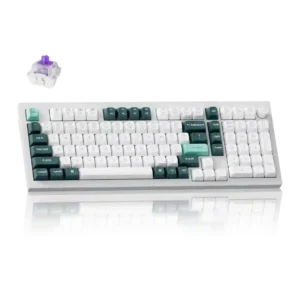
Good if you want a premium 96% Hall Effect keyboard for work and gaming with excellent build, sound, and customization. Skip it if you need cheaper esports-first speed, 8,000Hz polling,...
Choose it if competitive gaming speed, Rapid Trigger, and deep per-key customization matter more than extras. Skip it if you need wireless, dedicated arrows/media keys, adjustable height, or a lower-cost...
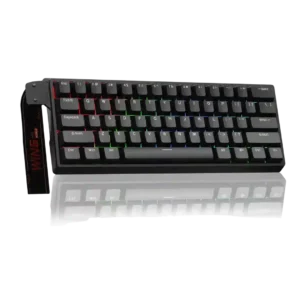
Good if you want a premium, quiet TKL Hall Effect keyboard for typing and gaming. Skip it if price, portability, 8,000Hz polling, or broad switch choice matters most.
Good if you want a premium full-size Hall Effect keyboard with smooth switches, quiet sound, and deep customization. Skip it if you need a portable, budget-friendly board or broad switch...