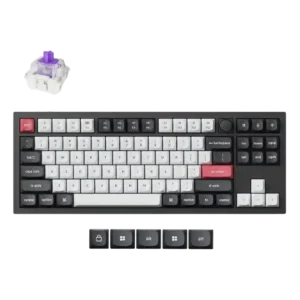
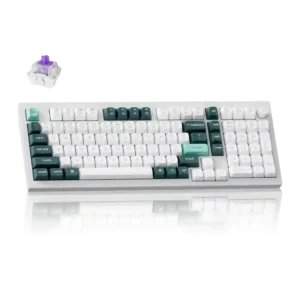
Keychron Q3 HE
Where It Has the Edge
No clear scored advantage over the other product.

Scorata scores summarize analyzed review evidence on a 1–5 scale; they are not laboratory measurements or a simple average of customer star ratings. Feature scores summarize the reviews covering that feature. The overall score averages feature scores within each review, then combines review averages. When both expert and customer evidence are available, those two groups receive equal weight. Products can have different review coverage, so small score gaps do not establish a winner.
Recommendations prioritize important features for the category, with a score of at least 3.5, a gap of at least 0.25 points and at least two supporting reviews per product. Features with widely varying scores or broad connectivity contexts are excluded from recommendations. These safeguards do not establish statistical significance.
Quick verdict
The available evidence supports the recommendation below, but does not establish an overall winner. Check the remaining features against your priorities.
There is not enough comparable review evidence to recommend Keychron Q3 HE over the other product.
Choose Keychron Q5 HE for macro customization and stabilizer quality.
No clear scored advantage over the other product.
Scores are out of 5. Missing scores mean missing review evidence, not a missing feature.
Ergonomics were mixed: one reviewer had no hand cramping, while another needed a palm rest because of the fixed angle.
Ergonomics were mixed: reviewers liked the angle or typing posture in some cases, but others criticized the high profile and lack of feet or included wrist rest.
Size and form factor were mostly positive for compact TKL use, though reviewers noted it is not a travel-focused board.
Size and form factor were broadly praised for combining a number pad and useful keys in a practical 96% layout, though the board remains large and heavy.
Typing comfort was consistently positive, with reviewers reporting no fatigue, comfortable keycaps, and a satisfying all-day typing experience.
Typing comfort was praised for low fatigue, productivity gains, and faster-feeling typing once actuation was tuned.
Build quality had unanimous strong praise, with every review describing the board as solid, sturdy, premium, or exceptionally well built.
Build quality was one of the strongest points, with reviewers repeatedly calling the keyboard sturdy, premium, solid, and exceptionally well built.
Design aesthetics were widely praised, with reviewers liking the clean colors, shell-white styling, and premium-looking TKL design.
Design aesthetics were widely praised, with reviewers calling the board clean, lovely, stunning, beautiful, and more refined than many gaming keyboards.
Durability evidence was positive, with reviewers expecting lasting construction and associating the materials with durability and stability.
Durability impressions were positive, with reviewers connecting the heavy aluminum build to long-term stability and durability.
Materials quality was repeatedly praised, especially the aluminum body, premium feel, sturdy construction, and included materials.
Materials quality was praised for the machined aluminum or metal body and the premium feel that comes from it.
Battery life was mixed: one reviewer found it really good, while another warned RGB wireless use noticeably taxes the battery.
Battery life received mixed evidence: it was usable in testing, but one reviewer said it pales beside other Keychron keyboards.
Hot-swap support was limited by compatibility, because the switches are swappable but not compatible with traditional mechanical switches.
One supplied review praised hot-swappable switch flexibility, though most Q5 HE-specific switch discussion focused on limited magnetic switch options.
Macro customization was mixed: reviewers recognized game usefulness but also questioned how often deeper press macros would matter.
Macro customization was praised for multi-action keys, comprehensive macro recording, and useful one-key command combinations.
Customization options were a major strength, spanning actuation tuning, key remapping, macros, lighting, keycaps, and per-key settings.
Customization options were a major strength, with reviewers praising actuation tuning, RGB control, macros, layers, and broad remapping.
Software quality was broadly praised as smooth, intuitive, easy, web-based, slick, and useful for actuation and remapping.
Software quality was mostly praised for power, web-based convenience, and ease of use, with one review noting confusing programming and another noting a small bug.
Media controls were praised through the clickable knob, including satisfying quick mute behavior and a nice click-down control.
Media controls were praised through positive comments about the rotary wheel, dedicated controls, and customizable knob behavior.
RGB customization was received positively, especially lighting effects that react to key presses and the praised Pixel Rain-style effect.
RGB customization was praised in the context of full RGB control and customization through the software.
Key stability had a moderate caveat because the spacebar was described as a bit wobbly in one review.
Key stability was praised thanks to the double-rail switch design, with reviewers noting reduced wobble and near-zero stem movement.
Portability was a weakness because the compact layout helps, but the heavy metal board was described as best kept on a desk.
Portability was a clear weakness because reviewers repeatedly emphasized the keyboard's heavy, desk-bound build.
Cable quality was positively received, with reviewers liking the braided cable and its practical connection options.
Cable quality was praised in the unboxing evidence as premium.
Stabilizers were mostly praised as smooth, rattle-free, and excellent, with one review noting slight wobble on larger keys.
Stabilizer quality was praised where discussed, with reviewers calling the stock stabilizers excellent, lubed, or brilliant.
Acoustics were a major strength: reviewers liked the quiet, muted, poppy, brilliant, or office-friendly sound profile.
Acoustics were a standout strength, with reviewers repeatedly praising the keyboard's sound as excellent, pleasing, thocky, and free of rattle or ping.
Switch choice was the clearest hardware limitation: reviewers noted one included switch set or proprietary magnetic-switch compatibility as disappointing or limiting.
Switch choice was one of the clearest weaknesses: reviewers repeatedly said the magnetic switch ecosystem is limited or proprietary.
Connectivity was mostly strong thanks to wired, Bluetooth, and 2.4GHz options, though one reviewer disliked flipping the rear switch between modes.
Connectivity was praised for Bluetooth, 2.4GHz, wired use, easy setup, and multi-device wireless options.
Frame rigidity and desk stability were strong positives, with reviewers noting solidity, lack of movement, and clean manufacturing.
Frame rigidity was strongly praised, with reviewers pointing to a solid metal body, sturdy construction, and zero flex.
Layout options were praised for the full TKL arrangement and separated navigation area, especially for users who value a knob and traditional spacing.
Layout options were praised because the 96% layout preserves productivity keys while remaining more compact than a full-size board.
Responsiveness was strongly praised, with reviewers describing accurate, ultra-responsive, twitch-fast key behavior that helped gaming and fast typing.
Key responsiveness was a major strength, with reviewers describing the switches as incredibly responsive, precise, and free of noticeable lag in use.
Extra gaming features were strongly praised, especially Rapid Trigger, Snap Tap, and multi-action key behavior.
Extra gaming features were praised as plentiful and useful, especially quad actuation, Rapid Trigger, Snap Tap-style behavior, and analog-style controls.
Desk space efficiency was praised by one reviewer who liked the Mac Magic Keyboard-like footprint for a compact workspace.
Desk space efficiency was viewed positively because the compact full-size layout saves width and gives more mouse-side room.
Latency evidence was positive in testing, with no input lag noticed during use.
Latency impressions were positive overall, with reviewers reporting no noticeable input lag, while still acknowledging some competitors measure faster.
Typing feel was one of the strongest positives, repeatedly described as tactile, satisfying, fast, comfortable, unique, and enjoyable.
Typing feel drew strong praise across reviews, with comments emphasizing bounce, smoothness, quietness, and productivity-friendly comfort.
RGB lighting quality was generally praised as gorgeous, subtle, pleasant, and visually strong, though one reviewer called it only fairly subtle.
RGB lighting quality was viewed positively where reviewers discussed it, especially for brightness, underglow, and general lighting appeal.
Reviewers consistently described the magnetic switches as smooth, responsive, bouncy, soft, and enjoyable, with several calling the feel highly refined.
Reviewers mostly praised the Hall Effect switch feel as smooth, pre-lubed, responsive, and pleasant, though one review noted it lacks the tactile feel of traditional switches.
Keycaps received positive comments for softness, crisp legends, lack of cheap feel, and overall quality.
Keycap quality was praised for PBT construction, durability, premium feel, and good overall execution.
Reviewers praised the actuation behavior for detecting small presses and activating precisely, supporting high confidence in press registration.
Adjustable actuation was praised for stability, precision, and false-press control, although one reviewer saw a slight gaming disadvantage versus faster rivals.
Polling-rate impressions were mixed: one reviewer found it quick and useful, while another criticized 1,000Hz against cheaper 8,000Hz competitors.
Polling rate was treated as adequate rather than elite: reviewers said 1,000Hz is fine for most gamers but noted rivals with higher polling rates.
Compatibility was praised for easy Mac and Windows use and usefulness across different platforms.
Compatibility was praised for working across Mac and Windows, with reviewers noting Mac-friendly behavior and OS support.
Backlight brightness was viewed as restrained rather than intense, with reviewers describing it as not overly bright or not super bright.
Backlight brightness received positive evidence from a reviewer who described the lighting as bright with excellent underglow.
Wireless performance was praised as accurate, responsive, and capable for wireless gaming.
Wireless performance was praised as lag-free or effectively free of noticeable input lag in reviewer testing.
Sound dampening was praised where discussed, with padding and internal construction credited for reducing unwanted noise and improving sound.
Sound dampening was viewed positively, with reviewers linking foam, gasket design, and dampening layers to bounce, reduced ping, and a softer typing experience.
Gaming performance was praised across reviews for responsive actuation, Rapid Trigger-style inputs, and competitive-feeling advantages.
Gaming performance was widely positive, especially for shooters and fast-paced play, though one reviewer said it is not the absolute best gaming performer.
Noise level was strongly positive, with reviewers repeatedly calling the keyboard quiet, subtle, not very loud, or free of annoying clickiness.
Noise level was generally praised as office-friendly, quiet, or not invasive while still sounding pleasant.
Multi-depth input was useful for walk/run and steering-style control, though one reviewer questioned how useful the extra depth mapping would be personally.
Analog input support was viewed as a strong gaming feature, with reviewers highlighting joystick-like behavior, gamepad emulation, and pressure-sensitive controls.
Rapid Trigger support was treated as a strong gaming advantage, described as handy, ideal for fast games, and outstanding.
Rapid trigger support was consistently praised as useful for fast inputs, quick reset, and competitive gaming responsiveness.
Value for money was split: some reviewers felt the premium build justified the price, while others said cheaper rivals offered better value.
Value for money was mixed: reviewers praised the premium package, but several also criticized the high price against cheaper or faster competitors.
Reliability had a minor concern in one review due to rare Bluetooth reconnection issues.
Ease of switch replacement was positive in the hands-on demonstration, where reinstalling a switch was described as simply clicking it back in.
Key spacing was praised in the TKL layout because separated keys helped avoid accidental hits.
Volume control was generally praised for the knob feel and convenience, though one reviewer preferred a different knob placement.
Wrist rest evidence was positive where reviewers discussed the separate palm rest, describing it as premium-feeling and welcome.
Legend visibility was positive overall, with crisp legends and usable visibility despite non-shine-through keycaps.
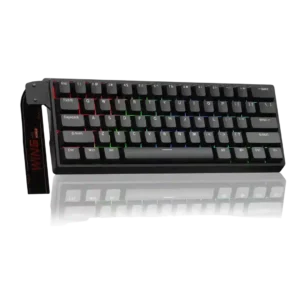
Choose it if competitive gaming speed, Rapid Trigger, and deep per-key customization matter more than extras. Skip it if you need wireless, dedicated arrows/media keys, adjustable height, or a lower-cost...
Pros: overall satisfaction, customization options
Cons: value for money, switch options
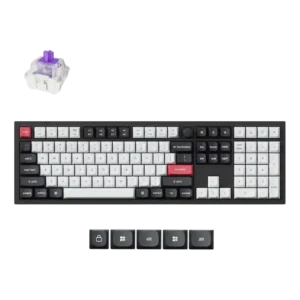
Good if you want a premium full-size Hall Effect keyboard with smooth switches, quiet sound, and deep customization. Skip it if you need a portable, budget-friendly board or broad switch...
Pros: build quality, keycap quality
Cons: switch options, portability
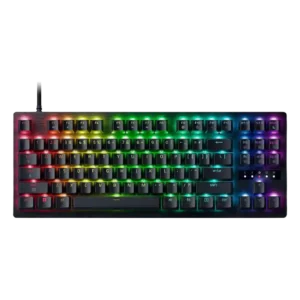
Good if you want esports speed, analog tuning, and deep customization. Skip it if typing comfort, quiet office use, or included extras matter more.
Pros: value for money, typing feel
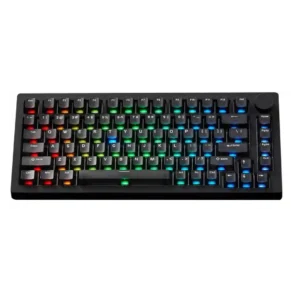
Best for a heavy aluminum 75% board with strong sound, battery life, modding, and gaming features. Skip it if you need travel portability, flawless RGB, or effortless Mac/Windows mode switching.
Pros: build quality, customization options
Cons: reliability