Scorata scores summarize analyzed review evidence on a 1–5 scale; they are not laboratory measurements or a simple average of customer star ratings. Feature scores summarize the reviews covering that feature. The overall score averages feature scores within each review, then combines review averages. When both expert and customer evidence are available, those two groups receive equal weight. Products can have different review coverage, so small score gaps do not establish a winner.
Recommendations prioritize important features for the category, with a score of at least 3.5, a gap of at least 0.25 points and at least two supporting reviews per product. Features with widely varying scores or broad connectivity contexts are excluded from recommendations. These safeguards do not establish statistical significance.
Quick verdict
What each product is best for
The review evidence points to a tradeoff: reliability and connectivity versus rapid trigger support and noise level. Choose according to which strengths matter more to you; the overall score alone does not settle that choice.
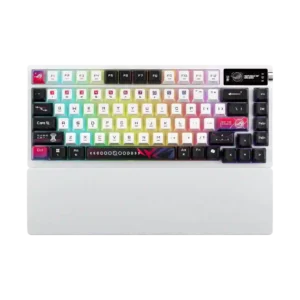
Choose ASUS ROG Azoth X for reliability and connectivity.
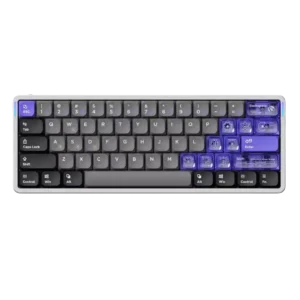
Choose NuPhy Air60 HE for rapid trigger support and noise level.
Why these recommendations?
ASUS ROG Azoth X
Where It Has the Edge
reliability is 4.4 vs 2.3. Reliability was mixed: wireless operation was stable, but software instability and finish scratching hurt confidence.
connectivity is 4.8 vs 2.4. Connectivity was highly praised: reviewers liked tri-mode support, dongle convenience, and smooth switching between wireless modes or devices.
legend visibility is 4.4 vs 2.2. Legend visibility was mostly praised thanks to clear labeling, visible lettering, and sharper printing, though small display icons...
NuPhy Air60 HE
Where It Has the Edge
rapid trigger support is 4.8 vs 2.0. Rapid Trigger support was repeatedly praised as responsive and useful, with reviewers noting near-instant reset and practical gaming...
noise level is 4.3 vs 3.2. Noise level was considered office-friendly or pleasantly controlled rather than truly silent.
gaming performance is 4.6 vs 4.2. Gaming performance was one of the strongest areas, with reviewers praising speed, responsiveness, Hall Effect control, and compact...
ASUS ROG Azoth X4.1 overall score
NuPhy Air60 HE4.0 overall score
Compare features
Scores are out of 5. Missing scores mean missing review evidence, not a missing feature.
Scored on both products
Comfort and build
Ergonomics
ASUS ROG Azoth X
4.8
Ergonomics were positive where covered, mainly due to the wrist rest and FR4/typing changes that improved comfort.
NuPhy Air60 HE
4.0
Ergonomics received limited but positive support around comfort adjustments and wrist positioning.
Durability
ASUS ROG Azoth X
4.1
Durability evidence was positive but limited, mainly tied to durable dye-sub legends and premium construction.
NuPhy Air60 HE
3.3
Durability was mixed, with PBT legends and solid keycaps praised, but one reviewer strongly criticized scratching during use and travel.
Size and form factor
ASUS ROG Azoth X
4.8
The 75% size was praised as practical, with reviewers calling it a useful and near-perfect form factor for gaming desks.
NuPhy Air60 HE
4.0
Size and form factor were usually praised for compactness and novelty, though one reviewer questioned the low-profile value because travel distance felt full-size.
Typing comfort
ASUS ROG Azoth X
4.6
Typing comfort was strong, with reviewers describing long sessions as comfortable, pleasant, and easy.
NuPhy Air60 HE
4.0
Typing comfort was praised by some reviewers as excellent, but others reported accuracy issues from the flat/light low-profile feel.
Materials quality
ASUS ROG Azoth X
3.2
Materials quality was mixed: PBT caps and metal elements helped, while plastic construction and finish complaints hurt the premium impression.
NuPhy Air60 HE
3.8
Materials quality was mixed: aluminum and PBT elements earned praise, while one reviewer criticized scratch-prone plastic and coatings.
Build quality
ASUS ROG Azoth X
4.3
Build quality was generally sturdy and solid, but the plastic base, premium-price expectations, and scratch-prone finish produced mixed marks.
NuPhy Air60 HE
4.5
Build quality was broadly praised, with reviewers describing the board as sturdy, solid, premium-feeling, or well put together.
Design aesthetics
ASUS ROG Azoth X
4.3
Design aesthetics were divisive but mostly positive: reviewers often liked the bold sci-fi white theme, while acknowledging it will not suit every desk setup.
NuPhy Air60 HE
4.4
Design aesthetics were usually praised as stylish, distinctive, and attractive, though a few reviewers disliked the keycap color mix in person.
Ownership and support
Reliability
ASUS ROG Azoth X
4.4
Reliability was mixed: wireless operation was stable, but software instability and finish scratching hurt confidence.
NuPhy Air60 HE
2.3
Reliability drew concerns from firmware-update problems and feet that did not lock securely in one critical review.
Rapid trigger support
ASUS ROG Azoth X
2.0
Rapid trigger support was a repeated weakness because reviewers noted the Azoth X lacks true rapid trigger or relies on Speed Tap instead.
NuPhy Air60 HE
4.8
Rapid Trigger support was repeatedly praised as responsive and useful, with reviewers noting near-instant reset and practical gaming benefits.
Value for money
ASUS ROG Azoth X
2.7
Value for money was the most common concern, with many reviewers calling the high price hard to justify despite the strong typing and wireless experience.
NuPhy Air60 HE
4.2
Value for money was usually praised, especially versus other Hall Effect boards, but one negative review argued the price made little sense.
Ease of switch replacement
ASUS ROG Azoth X
4.7
Switch replacement was praised as straightforward, with reviewers describing access or removal as quick and easy.
NuPhy Air60 HE
4.0
Switch replacement appeared physically easy in the one review that discussed removal directly.
Other features
Connectivity
ASUS ROG Azoth X
4.8
Connectivity was highly praised: reviewers liked tri-mode support, dongle convenience, and smooth switching between wireless modes or devices.
NuPhy Air60 HE
2.4
Connectivity was the most repeated drawback because the board is wired-only and side USB or cable placement bothered several reviewers.
Stabilizer quality
ASUS ROG Azoth X
4.5
Stabilizers were consistently praised, with reviewers noting no rattle, tuned large keys, and clatter-free stability.
NuPhy Air60 HE
2.5
Stabilizer quality was a recurring weak spot, mostly because multiple reviewers singled out the space bar for wobble, rattle, or clanky sound.
Switch options
ASUS ROG Azoth X
4.0
Switch choice received limited but positive coverage, with reviewers noting the option between tactile/clicky and smooth linear ROG NX V2 switches.
NuPhy Air60 HE
2.0
Switch choice was criticized as narrow, with reviewers noting the current low-profile magnetic ecosystem leaves only the two Gateron LP Jade variants.
Layout options
ASUS ROG Azoth X
4.5
Layout evidence was limited but positive, with one reviewer saying the layout made sense and was clearly labeled.
NuPhy Air60 HE
2.7
Layout options were a common limitation because the 60% layout omits arrows, function keys, and navigation keys that several reviewers missed.
Profile management
ASUS ROG Azoth X
4.5
Profile management had limited positive evidence, with one reviewer saying profile switching was quick and easy.
NuPhy Air60 HE
3.3
Profile management was mixed: the physical switch was appreciated, but the three-profile limit was a possible deal-breaker.
Key spacing
ASUS ROG Azoth X
3.5
Key spacing had limited mixed evidence, with one first-impression review noting the smaller-feeling keys may require adjustment.
NuPhy Air60 HE
2.5
Key spacing was criticized by reviewers who felt the flat or wide keys could cause accidental presses or strange typing.
Portability
ASUS ROG Azoth X
4.5
Portability had limited positive support, mainly from long battery life making the board better for LAN parties or mobile work.
NuPhy Air60 HE
3.6
Portability was mixed: reviewers liked the small, light body but repeatedly noted that wired-only operation undercuts travel appeal.
Typing feel
ASUS ROG Azoth X
4.4
Typing feel was the product’s strongest attribute: most reviewers found it smooth, satisfying, comfortable, and close to custom-keyboard quality, though one found it clunkier.
NuPhy Air60 HE
3.6
Typing feel was the most divided core attribute: several reviewers loved it, while others found the keycaps, low-profile shape, or light actuation less satisfying.
Keycap quality
ASUS ROG Azoth X
3.9
Keycap quality was mixed-positive: many liked the texture, printing, durability, and RGB diffusion, while some disliked the smooth or tacky feel.
NuPhy Air60 HE
3.1
Keycap quality split reviewers sharply: some praised PBT feel and solidity, while others disliked slipperiness, light bleed, scratching, or average legends.
RGB lighting quality
ASUS ROG Azoth X
4.3
RGB lighting quality was widely praised for its soft glow, strong brightness, and distinctive translucent-side effect, despite a few muted-lighting complaints.
NuPhy Air60 HE
3.8
RGB lighting quality was usually praised for brightness and visual effect, but keycap light bleed made it look odd to some reviewers.
Frame rigidity
ASUS ROG Azoth X
4.6
Frame rigidity was a strength, with reviewers repeatedly noting no deck flex, no rattle, and a stable body.
NuPhy Air60 HE
5.0
Frame rigidity was strongly praised in the PC Gamer review, which reported no flex or creaking.
Latency
ASUS ROG Azoth X
5.0
Latency evidence was strongly positive, with reviewers reporting delay-free input and no wireless latency problems in testing.
NuPhy Air60 HE
4.6
Latency was consistently praised as very low or imperceptible, with reviewers tying the board’s wired design and 8K capability to fast response.
Compatibility
ASUS ROG Azoth X
4.6
Compatibility was strong thanks to Mac support, PC/Mac switching, MX-style switch compatibility, and south-facing PCB keycap compatibility.
NuPhy Air60 HE
4.3
Compatibility was positive in the reviews that tested or valued laptop use plus Mac, PC, and Linux support.
Extra gaming features
ASUS ROG Azoth X
3.7
Extra gaming features were mixed: Speed Tap and the OLED were useful or fun, but reviewers questioned the OLED’s value and noted missing Hall-effect features.
NuPhy Air60 HE
4.0
Extra gaming features were extensive and often praised, though SOCD/Hyper Tap-style features raised usefulness or fairness concerns for some reviewers.
Actuation consistency
ASUS ROG Azoth X
4.5
Actuation consistency was praised where discussed, with reviewers noting consistent switch feel and minimal friction across keypresses.
NuPhy Air60 HE
4.8
Actuation behavior was described as stable and reliable, especially with the dual-rail switches and dependable Hall Effect functions.
Cable quality
ASUS ROG Azoth X
4.0
Cable quality had limited positive evidence: reviewers liked the sleeved/braided cable, though one noted its gray color did not match the white board.
NuPhy Air60 HE
4.3
Cable quality was mixed: the included angled cable was praised, while one reviewer found the side-port cable setup limiting for custom cables.
Wrist rest quality
ASUS ROG Azoth X
4.3
The wrist rest was broadly welcomed as comfortable and useful, though some disliked the lack of magnets or found it harder than alternatives.
NuPhy Air60 HE
4.5
The optional wrist rest was liked in the one review that evaluated it, where it was described as comfortable and stable.
Polling rate
ASUS ROG Azoth X
3.7
Most reviewers found the 1,000Hz polling rate adequate, but several treated the paid 8,000Hz booster requirement as a caveat.
NuPhy Air60 HE
3.9
Polling rate was viewed as a strong spec, though reviewers also cautioned that 8K may be imperceptible or cause jitter for some setups.
Key stability
ASUS ROG Azoth X
4.8
Key stability was praised through minimal stem wobble, stable keypresses, and no wobble or echo in typing tests.
NuPhy Air60 HE
4.7
Key stability was praised when reviewers focused on dual-rail or low-wobble behavior, with only limited criticism elsewhere.
Switch feel
ASUS ROG Azoth X
4.6
Reviewers generally liked the ROG NX Snow V2 switches, describing them as smooth, consistent, and pleasant, with a few noting they still lack Hall-effect gaming behavior.
NuPhy Air60 HE
4.5
Reviewers generally liked the low-profile magnetic Jade switches for smoothness, snappiness, and comfort, though one reviewer found the light force required adjustment.
Acoustics
ASUS ROG Azoth X
4.2
Acoustics were usually praised as crisp, deep, creamy, or fantastic, although the spacebar inconsistency kept this from being universally excellent.
NuPhy Air60 HE
4.2
Acoustics were generally liked, especially the muted or satisfying low-profile sound, but some reviewers criticized the space bar or found the sound lackluster.
Key responsiveness
ASUS ROG Azoth X
4.6
Key response was consistently praised as snappy, fast, and responsive across typing and gaming, especially with the light linear switches.
NuPhy Air60 HE
4.6
Responsiveness was a major strength across reviews, with reviewers praising fast keystrokes, snappy switches, and responsive in-game behavior.
Desk space efficiency
ASUS ROG Azoth X
4.5
Desk space efficiency was praised because the keyboard stayed compact without feeling cramped and saved space versus larger layouts.
NuPhy Air60 HE
4.5
Desk space efficiency was praised for freeing mouse space in gaming setups.
Performance
Legend visibility
ASUS ROG Azoth X
4.4
Legend visibility was mostly praised thanks to clear labeling, visible lettering, and sharper printing, though small display icons and stylized legends had caveats.
NuPhy Air60 HE
2.2
Legend visibility drew criticism because several reviewers found the legends, translucent keys, or light bleed distracting or unclear.
Noise level
ASUS ROG Azoth X
3.2
Noise level was mixed: dampening helped keep the board acceptable, but several reviewers complained about a loud or thunky spacebar and higher overall volume.
NuPhy Air60 HE
4.3
Noise level was considered office-friendly or pleasantly controlled rather than truly silent.
Gaming performance
ASUS ROG Azoth X
4.2
Gaming performance was positive for casual and mainstream play, but reviewers noted it is less compelling for players seeking Hall-effect or esports-focused features.
NuPhy Air60 HE
4.6
Gaming performance was one of the strongest areas, with reviewers praising speed, responsiveness, Hall Effect control, and compact competitive use.
Sound dampening
ASUS ROG Azoth X
4.4
Sound dampening was a clear strength, with reviewers crediting the foam stack and damping layers for reducing ping and improving sound.
NuPhy Air60 HE
4.7
Sound dampening was praised when reviewers mentioned the foam and silicone layers, which helped make the thin board sound more refined.
Backlight brightness
ASUS ROG Azoth X
4.3
Backlight brightness split reviewers: several found it exceptional or very bright, while one reviewer felt the lighting was underwhelming.
NuPhy Air60 HE
4.5
Backlight brightness was praised as bright and usable without being obnoxious.
Controls and connectivity
Hot-swappable switches
ASUS ROG Azoth X
4.2
Hot-swappable switches were seen as a meaningful enthusiast-friendly advantage, especially for users who want to experiment or replace switches.
NuPhy Air60 HE
2.5
Hot-swap support was limited in practical value because compatible low-profile magnetic switch choices were narrow.
Macro customization
ASUS ROG Azoth X
4.5
Macro customization was positive where discussed, with reviewers noting easy macro creation and broad remapping support.
NuPhy Air60 HE
3.3
Macro customization was mixed because one review praised available macros and custom delays while another said macro creation was missing.
Software quality
ASUS ROG Azoth X
3.9
Software quality was sharply mixed: Gear Link was praised as lightweight and easy, while Armoury Crate drew complaints about bloat, crashes, and setup friction.
NuPhy Air60 HE
4.7
Software quality was one of the most consistently praised attributes, with reviewers liking the web app, stability, clean UI, and broad controls.
Customization options
ASUS ROG Azoth X
4.6
Customization options were a major strength, covering disassembly, OLED settings, RGB, macros, web tools, and component tinkering.
NuPhy Air60 HE
4.5
Customization options were strongly praised for remapping, actuation tuning, lighting, layers, and Hall Effect controls.
RGB customization
ASUS ROG Azoth X
4.5
RGB customization had limited but positive support, with one reviewer highlighting bold color behavior and preset variety.
NuPhy Air60 HE
4.5
RGB customization was viewed positively, with reviewers liking the available effects, side lighting, and web-based lighting controls.
Evidence available for one product
Battery and charging
Battery life
ASUS ROG Azoth X
4.9
Battery life drew near-universal praise, with many reviewers calling it impressive even when RGB or OLED reduced rated endurance.
NuPhy Air60 HENo score yet
Ownership and support
Analog input support
ASUS ROG Azoth X
2.1
Analog input support was consistently marked down because reviewers repeatedly called out the absence of Hall-effect or analog switch features.
NuPhy Air60 HENo score yet
Controls and connectivity
Media controls
ASUS ROG Azoth X
4.1
Media controls were generally useful through the OLED and knob, but some reviewers wanted a more conventional or more satisfying control.
NuPhy Air60 HENo score yet
Other features
Volume control
ASUS ROG Azoth X
4.0
Volume control was useful for most reviewers, though the toggle implementation was less satisfying to some than a dedicated knob or roller.
NuPhy Air60 HENo score yet
Performance
Wireless performance
ASUS ROG Azoth X
5.0
Wireless performance was one of the strongest areas, with reviewers repeatedly reporting stable, drop-free, low-latency operation.
Good if you want a premium 96% Hall Effect keyboard for work and gaming with excellent build, sound, and customization. Skip it if you need cheaper esports-first speed, 8,000Hz polling,...
Choose it if competitive gaming speed, Rapid Trigger, and deep per-key customization matter more than extras. Skip it if you need wireless, dedicated arrows/media keys, adjustable height, or a lower-cost...
Good if you want a premium, quiet TKL Hall Effect keyboard for typing and gaming. Skip it if price, portability, 8,000Hz polling, or broad switch choice matters most.
Good if you want a premium full-size Hall Effect keyboard with smooth switches, quiet sound, and deep customization. Skip it if you need a portable, budget-friendly board or broad switch...