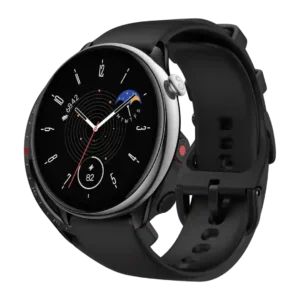
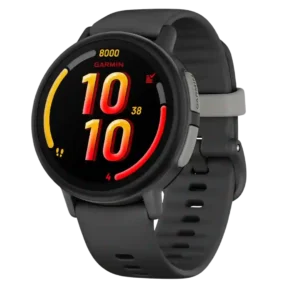
Amazfit GTR Mini
Where It Has the Edge
- sleep tracking accuracy is 4.2 vs 2.8. Sleep tracking drew mostly positive evidence, including detailed and accurate impressions, though one reviewer said the watch sometimes...

Scorata scores summarize analyzed review evidence on a 1–5 scale; they are not laboratory measurements or a simple average of customer star ratings. Feature scores summarize the reviews covering that feature. The overall score averages feature scores within each review, then combines review averages. When both expert and customer evidence are available, those two groups receive equal weight. Products can have different review coverage, so small score gaps do not establish a winner.
Recommendations prioritize important features for the category, with a score of at least 3.5, a gap of at least 0.25 points and at least two supporting reviews per product. Features with widely varying scores or broad connectivity contexts are excluded from recommendations. These safeguards do not establish statistical significance.
Quick verdict
The review evidence points to a tradeoff: sleep tracking accuracy versus materials quality and display quality. Choose according to which strengths matter more to you; the overall score alone does not settle that choice.
Choose Amazfit GTR Mini for sleep tracking accuracy.
Choose Garmin Bounce 2 for materials quality and display quality.
Scores are out of 5. Missing scores mean missing review evidence, not a missing feature.
GPS evidence was positive overall, with reviewers reporting quick or consistent location, improved route tracking, and accurate outdoor GPS performance.
Location tracking is the most polarizing part of the watch. Some families find it accurate and reassuring, while many report lag, incorrect positions, weak rural or indoor performance, and tracking that fails when it matters.
Sleep tracking drew mostly positive evidence, including detailed and accurate impressions, though one reviewer said the watch sometimes missed wakefulness.
Movement-only sleep tracking provides a rough estimate rather than dependable health data. It is better treated as a basic habit indicator than a diagnostic tool.
Coaching features had limited but positive support through PAI-style challenges that nudged the reviewer to stay active.
Step challenges, activity goals, games, and family competitions can genuinely motivate children to move. Chore rewards also appeal to some families, though not every child stays interested.
Workout variety was a clear strength, with reviewers repeatedly praising or emphasizing the extensive sport modes and trackable metrics.
The watch covers a broad mix of running, cycling, swimming, team sports, and other activities. It offers more sport variety than most child-focused wearables.
Score tracking had limited but positive evidence through PAI-style points that acted as a subtle challenge to stay active.
The digital golf scorecard exists, but its usefulness for the typical child was questioned.
Step counting received one clear positive assessment, with the pedometer said to work well and count accurately.
Step counts are generally useful and can record individual steps more precisely than some alternatives. One owner still relied on steps only because pairing failures disabled the connected features.
Battery life received the strongest agreement, with reviewers reporting about a week to two weeks or more depending on settings and usage.
Typical endurance lands around one and a half to two days, with some families getting slightly more. LTE, GPS, calls, and aging batteries can reduce it to a day or even several hours, making frequent charging the most consistent complaint.
Charging speed was acceptable to good, with reviewers calling roughly two hours normal or not bad and noting quick short top-ups.
A full charge takes about two hours and was considered quick by one family, though other sources view that duration as inconvenient for such short battery life.
Charging convenience was a weakness because reviewers disliked the proprietary, special, or very short charging cable.
The proprietary charging cable is a recurring annoyance and cannot be replaced by a common USB-C cable. One owner also experienced a complete charging failure.
Comfort was one of the strongest consensus points, with reviewers repeatedly praising the slim, light, easy-to-wear feel.
Its light weight works well on small wrists, but the fixed silicone band can be a deal-breaker for children with sensory sensitivities.
Materials quality was considered strong for the price, balancing high-quality or premium-looking materials with a plastic underside.
Fiber-reinforced polymer keeps the watch light while resisting rough handling. The soft silicone strap complements the durable body.
Build quality was praised overall, with reviewers saying quality was better than expected, not flimsy, and premium-looking for the price.
The watch body feels premium and meets Garmin’s usual construction standards. Even highly critical owners often separate the solid hardware from unreliable connected services.
Durability evidence was limited but positive, with reviewers saying the watch felt sturdy and not cheap.
The reinforced case and glass usually handle bumps, scrapes, swimming, and months of child use well. Long-term durability is less certain because some earlier Bounce concerns remain unresolved.
Water resistance was positively viewed for swimming and worry-free use, supported by multiple reviewers' 5 ATM-related comments.
The 5 ATM protection is one of the most dependable strengths, with successful use in pools, showers, rain, snow, and even the ocean.
Band quality was mixed, with one reviewer reporting skin irritation, another short-band concerns, and another praising flexible thin straps.
The soft silicone strap is easy to clean and comfortable for many children. Several families disliked the limited band choices, while one owner confirmed it can be replaced with a small watch tool.
Fit was generally good for slim wrists and secure wear, but evidence noted potential screen-size issues and short bands for some wrists.
The smaller, lighter case suits many young wrists better than the original Bounce. Even so, at least one eight-year-old found it too bulky.
Style and design were praised across reviews for the round dress-watch look, slim profile, clean aesthetic, and premium feel.
The round, colorful design looks more like a real watch than a toy, and children generally liked wearing it. One buyer found it bulky, but appearance is otherwise a clear strength.
Display quality was one of the strongest areas, with reviewers praising the AMOLED panel, clarity, crispness, resolution, and color.
The AMOLED screen is consistently described as sharp, vivid, and a major upgrade over the original model. Colors pop and graphics look unusually polished for a kids’ watch.
Brightness was usable but not perfect, with reviewers noting outdoor legibility while also saying direct sun made reading tougher.
The AMOLED panel is bright and colorful, making the interface lively and easy to see. It is a substantial visual improvement over the older screen.
Outdoor visibility was generally good, though direct sunlight produced mixed comments and one reviewer said sunny-day readability was only just enough.
The bright AMOLED screen remains clear outside and in direct sunlight. Children can read it easily during outdoor activities.
Reliability had limited direct evidence but one reviewer described the watch as suitable for users wanting reliable wearables.
Reliability ranges from excellent to deeply frustrating. Some families report dependable daily use, while others face pairing failures, delayed communication, charging problems, and services that work only intermittently.
Value for money was strongly praised, with reviewers repeatedly calling the price compelling for the battery, features, design, and tracking package.
The $299 hardware price plus an LTE subscription is difficult to justify when tracking or calling is unreliable. Families who prioritize waterproofing, parental control, and phone-free independence are more willing to accept the premium.
Onboard music storage was a clear weakness because one reviewer explicitly noted there is no on-device music storage.
Offline music is a welcome feature and can be easy to set up, but it is restricted to Amazon Music. Families already using other services may need another subscription or skip music entirely.
Customization was a major strength across watch faces, widgets, health settings, button shortcuts, and app-card arrangements.
Glances, contacts, schedules, and appearance can be adjusted, but hardware customization is weak. Fixed band choices and limited protective accessories frustrate some families.
Button controls were mixed: reviewers liked customization, but several missed rotating crown functionality or felt the button should scroll.
Physical side buttons make the watch easier to operate with wet, dirty, or gloved hands. They provide a dependable alternative to touch input.
Voice assistant support was limited because evidence noted no voice assistance in one review and Alexa dependence on a nearby phone in another.
Voice commands can start calls, set alarms, and check information, but they require rigid wording. It is useful once children learn the accepted phrases.
Pairing and device-transfer reliability had limited but very strong support, with one reviewer calling the backup and reconnection process magical.
Setup can take only minutes when everything works, but a failed or unstable app pairing disables most of the watch’s important connected features.
Review contexts may differ, so use caution when interpreting the score gap.
Call handling was consistently weak because reviewers noted the absence of speaker and microphone support, leaving call notifications without real watch-based calls.
Two-way calls and app-based messaging are convenient for younger children and work very well for some families. Many others report failed calls, delayed messages, poor indoor service, or frustration that every contact must use Garmin Jr.
Notifications were useful but limited, with repeated concerns about preset-only replies, iOS reply limits, and restricted message handling.
Boundary alerts automatically notify parents when a child enters or leaves a set area. They reduce the need to repeatedly open the app and check location.
Watch face quality was mixed: reviewers liked the quantity and customization, but one criticized many designs and paid options.
Watch faces offer some child-friendly personalization, but choices are limited and third-party designs are unavailable.
Menu navigation was praised as simple, reliable, snappy, and easy to understand.
Children tend to learn the menus quickly, and the glance-based layout keeps essential information easy to reach.
Music controls were useful but basic, with one reviewer finding quick playback control handy and another describing limited controls.
Music can be controlled from the watch, but the tiny speaker is not ideal. Bluetooth headphones provide the more practical listening experience.
Mapping and navigation had limited but positive evidence, with one reviewer showing the watch could map a run without carrying a phone.
LiveTrack can show both a child’s current position and route in real time, which is extremely helpful once the connection activates.
Review contexts may differ, so use caution when interpreting the score gap.
The operating system experience was praised as fast, simple, lightweight, and useful for a sports-watch experience.
The overall watch experience feels smooth and enjoyable in normal use. Basic navigation is quick even for young first-time smartwatch users.
Touchscreen responsiveness was positive, with reviewers reporting immediate response and no lag or hanging.
Swipes and taps feel quick, accurate, and natural for younger users. The responsive touchscreen helps the watch feel modern rather than toy-like.
The companion app was widely praised for deep controls, digestible data, customization, and more developed health views.
Garmin Jr. is usually considered clean, intuitive, and easy to set up, with strong contact and location controls. A minority of owners report poor syncing, missing family members, or unreliable notifications.
Third-party app support was repeatedly criticized as sparse or disappointing, even when reviewers could live with the limitation.
Third-party support is limited, especially for music. Amazon Music is the only offline service, and the lack of Spotify or broader app options frustrates many families.
Review contexts may differ, so use caution when interpreting the score gap.
Smartwatch features were useful for basic tasks and health support, but reviewers framed the watch more as a fitness device than a full smartwatch.
The focused mix of communication, safety, games, activities, music, and chores suits younger children who are not ready for a phone. Older children may find it restrictive or quickly want more apps and entertainment.
The user interface was considered easy to learn and understand, with reviewers emphasizing clean, lightweight, simple interactions.
The basic interface is easy for children to learn and use. Simple menus and clear controls are praised even by some owners who dislike the connected services.
The app ecosystem was limited overall, with reviewers citing a minimal or sparse app store, although one rarely missed the missing apps.
Garmin families benefit from shared challenges and centralized management, but communication remains heavily locked to Garmin Jr. Requiring approved contacts to install the app is one of the most repeated frustrations.
Review contexts may differ, so use caution when interpreting the score gap.
Software smoothness was positive in the limited evidence, with reviewers calling the OS snappy or very snappy.
Day-to-day operation is generally responsive and enjoyable, with menus reacting quickly. Live connected features can still introduce delays.
Activity auto-detection was mixed: one reviewer found some reports wayward, while another praised automatic workout logging.
The watch can classify completed activities automatically, adding convenience for children who forget to start a sport profile.
Heart rate accuracy was mixed, with one reviewer seeing elevated readings while others said results came close or seemed very accurate.
Fitness tracking accuracy was context-dependent: some reviewers found it satisfactory or excellent, while one called it ballpark and another noted indoor calibration needs.
Blood oxygen tracking was generally acceptable in the limited evidence, coming close to other devices but requiring better wrist placement for accuracy.
Reviewers split on health accuracy: one called readings ballpark, while others found health monitoring mostly on par or fairly accurate after calibration.
Stress tracking was treated cautiously because one reviewer said algorithm-based scores made accuracy hard to judge.
Wellness insights were useful for broader awareness and data review, especially through sleep, health, and app-based trend information.
Chores, virtual coins, and real-world rewards can turn routines into a motivating system. Some families use it enthusiastically, while others find children do not care enough to keep checking tasks.
Garmin Jr. works on both iOS and Android, so mixed-phone households can manage the watch without changing platforms.
The closed contact system limits strangers, apps, and social media, which gives parents more control than a smartphone. Continuous child-location data still requires trust in Garmin’s handling of sensitive information.
The educational games are fun and age-appropriate at first, but the small selection may lose appeal quickly. Some parents would rather remove games altogether.
Standalone LTE is essential to the watch’s phone-free appeal, but coverage quality varies dramatically. Indoor dead zones, country restrictions, and delayed service are common concerns.
Geofencing, live location, check-ins, and emergency assistance can provide excellent peace of mind when they work. Customer experiences are sharply divided because unreliable tracking and communication can undermine the watch’s core safety purpose.
Contactless payments were a clear miss, with one reviewer explicitly disappointed by the lack of NFC.
School mode, approved contacts, and feature restrictions give parents meaningful control. The controls are effective but still need more granular options for individual apps and family permissions.
Voice notes and automatic voice-to-text are easier for children than typing on a tiny screen, and several families enjoyed them. Poor audio or service failures can make the feature unreliable.
Wi-Fi setup is straightforward and can keep messaging working where cellular service or roaming is unavailable. Performance still depends on having a known, strong network.
Review contexts may differ, so use caution when interpreting the score gap.

Best for long battery life, accurate GPS and useful offline maps at a strong price. Skip it if you need payments, richer apps, a built-in LED flashlight or polished smartwatch...
Pros: mapping and navigation, value for money
Cons: smartwatch features, contactless payments

Best for accurate run tracking, deep Garmin coaching and phone-free Spotify in a light package. Skip it if you need full maps, triathlon mode, Apple Music support or the strongest...
Pros: value for money, GPS accuracy
Cons: mapping and navigation, third-party app support

Good if you want premium running features, long battery life, and maps for under $200. Skip it if you need flawless heart-rate data, multiband GPS, LTE, or richer app support.
Pros: value for money, battery life
Cons: heart rate accuracy, third-party app support

Best for accurate running metrics, excellent coaching tools, a bright AMOLED display, and dependable battery life. Skip it if you need offline maps, music storage, contactless payments, multi-band GPS, or...
Pros: battery life, value for money
Cons: mapping and navigation, smartwatch features