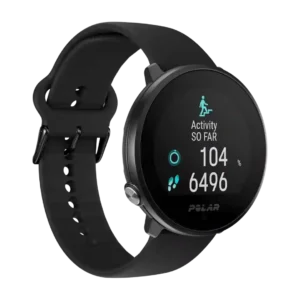
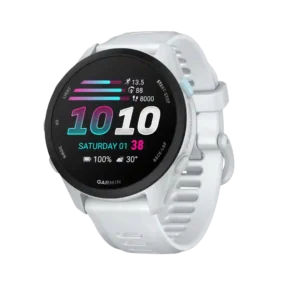
Polar Unite
Where It Has the Edge
- charging speed is 5.0 vs 4.4. Charging speed is praised by the two reviewers who measured or described it, including full charges in about...

Scorata scores summarize analyzed review evidence on a 1–5 scale; they are not laboratory measurements or a simple average of customer star ratings. Feature scores summarize the reviews covering that feature. The overall score averages feature scores within each review, then combines review averages. When both expert and customer evidence are available, those two groups receive equal weight. Products can have different review coverage, so small score gaps do not establish a winner.
Recommendations prioritize important features for the category, with a score of at least 3.5, a gap of at least 0.25 points and at least two supporting reviews per product. Features with widely varying scores or broad connectivity contexts are excluded from recommendations. These safeguards do not establish statistical significance.
Quick verdict
The review evidence points to a tradeoff: charging speed versus heart rate accuracy and fitness tracking accuracy. Choose according to which strengths matter more to you; the overall score alone does not settle that choice.
Choose Polar Unite for charging speed.
Choose Garmin Forerunner 70 for heart rate accuracy and fitness tracking accuracy.
Scores are out of 5. Missing scores mean missing review evidence, not a missing feature.
GPS accuracy is the major tradeoff: connected GPS can be acceptable, but several reviewers saw overreporting, connection gaps, or inconsistent pace and distance.
GPS tracking is consistently strong on roads, trails, and urban routes, often matching pricier multi-band watches. Dense city canyons and wooded areas can still expose occasional small errors.
Heart-rate evidence is mixed-positive: several reviewers found close averages against straps or other watches, while others saw slow starts, low readings, or spikes.
The older Gen 4 optical sensor performs well for steady running and often tracks closely with chest straps. Intervals, cycling, cold weather, and rapid recovery changes can produce occasional lag or errors.
Sleep tracking is a highlight for detail and recovery context, but accuracy varies by reviewer, with some praising it and others finding sleep periods or deep sleep off.
Sleep duration, bedtime, wake time, naps, and overall scores are generally useful and reasonably accurate. Sleep-stage breakdowns can still confuse light sleep with awake time.
Workout and fitness tracking are generally praised for useful analysis, though some accuracy issues around GPS-dependent outdoor data and health metrics remain.
Core tracking for pace, distance, steps, and heart rate is dependable across running, walking, swimming, and indoor workouts. Elevation data is less precise because there is no barometric altimeter.
Recovery insights are one of the strongest recurring positives, with Nightly Recharge and sleep-based guidance repeatedly described as useful or best-in-class.
Training Readiness, Training Status, acute load, Body Battery, and recovery time provide a detailed view of training condition. The tools are useful for beginners and experienced runners alike.
FitSpark and related coaching are repeatedly praised as approachable, useful, and especially strong for beginners, though one reviewer found suggestions occasionally off.
Training Readiness, Garmin Coach, Daily Suggested Workouts, and Quick Workouts provide unusually deep guidance for the price. Quick Workouts are convenient, though harder sessions can be overly aggressive.
Reviewers consistently praise the broad sport-profile support, from 100-plus modes to beginner-friendly exercise coverage.
More than 80 activity profiles cover running, cycling, swimming, gym sessions, team sports, and more. The missing triathlon and open-water swim modes remain important limitations for multisport athletes.
Step counting evidence is split, with one review calling it wildly optimistic and another finding only a small daily difference versus a comparison device.
Step counting was exceptionally accurate in a controlled walk, finishing within only a few steps of the manual tally. It is highly dependable for everyday movement tracking.
One reviewer generally credited the watch with fitness and sleep tracking, but the wider evidence shows enough accuracy caveats to keep confidence moderate.
Heart-rate and walking data align well with comparison devices in controlled tests. The overall health picture is dependable for everyday fitness use.
Wellness insights are viewed positively, especially daily activity context, sleep/recovery interpretation, and simple prompts that help users make healthier choices.
Body Battery, Health Status, morning reports, and recovery metrics make daily health trends easy to understand. The insights add useful context without replacing how the wearer actually feels.
Battery life is mixed: some reviewers met or exceeded the four-day claim, while others got closer to two or three days.
Typical use ranges from about five days with an always-on display to roughly a week or more with lighter settings. Endurance is good for a small AMOLED watch, though some rivals last longer.
Charging convenience is polarized: a few liked the no-cable clip, but many found the proprietary USB dongle awkward, easy to lose, or frustrating.
Quick mid-range charging makes brief top-ups practical, and the familiar Garmin connector is easy to use. Charging slows near full capacity as expected.
Charging speed is praised by the two reviewers who measured or described it, including full charges in about an hour and lightning-fast charging.
A full charge takes roughly an hour to 90 minutes depending on starting level. Partial charging is notably faster through the middle of the battery range.
Comfort is one of the strongest points, with many reviewers calling the watch light, low-profile, secure, or comfortable enough for sleep.
The light case is easy to wear around the clock, including during sleep and long runs. A small number of users may be sensitive to the plastic backing.
Materials quality receives positive limited evidence from one reviewer who found the plastic build premium-feeling.
Fiber-reinforced polymer keeps weight low and has held up well in normal use. It feels practical and sporty rather than premium.
Size options receive limited positive evidence because the included strap sizing was considered helpful for larger wrists.
Only one compact case size is available, which suits many runners but may still feel large on very slender wrists. There is no larger alternative for those who prefer bigger displays.
Band quality is sharply mixed, with praise for comfort and security offset by frequent complaints about fiddly pins, tight holes, pinching, or limited elegance.
The silicone band is generally soft, stretchy, and comfortable, though one owner disliked the stock strap enough to replace it. Fit and feel may depend on personal preference.
Fit is mixed: the flush sensor can help achieve a tight fit, but the strap design can make tightening difficult.
The compact case and adjustable band suit many wrists, especially runners who prefer smaller watches. The single size may still feel slightly large on very slender wrists.
Style and design are generally well liked, with reviewers calling it simple, modern, clean, cute, or more stylish than older Polar watches.
The compact shape, bright colors, and sporty appearance look appealing in person. The plastic construction prioritizes low weight over a premium aesthetic.
Durability has limited but positive evidence from one reviewer who found the watch solid and well-built for the price.
The lightweight plastic body can withstand ordinary drops and training use, but the lens is not Garmin’s toughest option. A screen protector may be worthwhile for rough environments.
Build quality is viewed positively for the price, with reviewers describing the lightweight plastic build as solid or premium-feeling.
The polymer construction feels light and reasonably sturdy rather than luxurious. It suits running well, but buyers expecting metal or premium materials may find it basic.
Water resistance is consistently treated as useful for swimming, sweat, showers, or pool use, though it is not presented as a rugged dive watch.
The 5ATM rating is adequate for pool swimming, showers, and sweaty training. Open-water and diving-focused users will need a more specialized model.
Display quality is generally good for the price, with reviewers liking brightness, readability, and color despite some sharpness or flat-tire compromises.
The 1.2-inch AMOLED screen is vivid, sharp, and easy to read, giving the budget model a much more premium feel. Its smaller size limits data space compared with larger Garmins.
Outdoor visibility is strong, with multiple reviewers finding the screen readable in bright daylight or on runs.
The AMOLED display remains clear in direct sunlight and during outdoor workouts. Very bright conditions may require a higher brightness setting, which reduces battery life.
Brightness is mostly praised, but one reviewer criticized the rise-to-wake/backlight behavior enough to lower the overall view.
The AMOLED panel is bright enough for outdoor training and everyday use, even if it does not match Garmin’s premium displays. Medium brightness can preserve battery without sacrificing much legibility.
Reliability has negative limited evidence from one reviewer who raised broad concerns about accuracy and reliability.
Day-to-day tracking and software are generally stable, with few complaints across extended testing. Occasional Bluetooth and syncing problems are the main reliability caveat.
Value depends heavily on use case: beginners and Polar Flow fans see strong value, but GPS-focused or smartwatch-focused reviewers often recommend alternatives.
The watch packs premium training analysis, accurate tracking, and a strong AMOLED display into Garmin’s lowest current Forerunner tier. Value is excellent inside Garmin’s ecosystem, though Coros and Suunto offer stronger hardware for similar money.
Third-party app support is limited: reviewers repeatedly note the absence of an app store or broader app experience.
Completed workouts sync easily to services such as Strava and Apple Health. The broad integration makes Garmin data easy to use across a larger fitness setup.
Review contexts may differ, so use caution when interpreting the score gap.
Music controls and music-related features are weak overall, with most reviews noting no music while one found limited phone-control behavior that did not work on iPhone.
Phone-based music playback controls work well with services such as Spotify. The watch can control audio, but it cannot store music for phone-free listening.
The companion app is a major strength, with Polar Flow repeatedly described as clear, detailed, intuitive, and pleasant to use.
Garmin Connect is powerful but can feel cluttered, with some settings difficult to locate. The watch itself is often easier to navigate than the mobile app.
Touchscreen responsiveness is one of the clearest weaknesses, with repeated complaints about lag, missed swipes, and unresponsive touch input.
Touch input is quick and responsive in normal conditions, with buttons available when hands are wet or gloved. Heavy rain may introduce a little lag.
Software smoothness is a recurring weakness, with lag, stale displayed data, and slow UI behavior appearing across multiple reviews.
The refreshed software feels faster, cleaner, and smoother than older entry-level Forerunners. Navigation and daily interactions benefit noticeably from the modern interface.
Mapping and navigation are weak because one reviewer identified no navigation as a clear gap in the Unite/Ignite series.
Breadcrumb routes and turn prompts work well for roads and simple trails, but there are no offline maps. Trail runners navigating complex junctions may need a higher-end watch.
Review contexts may differ, so use caution when interpreting the score gap.
Customization is modest: reviewers liked color and strap/watch-face options, but repeatedly noted limited face choices or minor customization depth.
Sport profiles, data pages, widgets, and watch faces offer extensive personalization. Runners can tailor controls and information layouts in unusually fine detail.
Pairing and sync reliability are mixed: setup or background sync frustrated some reviewers, while another reported no botched syncs.
Most connectivity works normally, but a few users experienced temperamental syncing and severe Bluetooth setup failures. Those issues were uncommon yet frustrating when they occurred.
Review contexts may differ, so use caution when interpreting the score gap.
Button controls are mixed: the single button is well placed for one reviewer, but others disliked relying so heavily on touch.
Five physical buttons make the watch easy to operate with sweaty hands, gloves, or rain. They complement the touchscreen especially well during workouts.
Contactless payment support scores poorly because multiple reviewers explicitly list payments among the missing smartwatch conveniences.
Garmin Pay is completely absent, so runners must carry a phone, card, or cash for purchases. This is one of the clearest reasons to consider the Forerunner 170.
Onboard music storage is absent in the reviewed evidence and counted as a clear smartwatch limitation.
The watch has no onboard music storage, so phone-free Spotify or downloaded playlists are unavailable. Music-focused runners need the Forerunner 170 Music or another model.
Call handling is weak because reviewers explicitly note that calls cannot really be handled from the watch beyond basic alerts.
Incoming call alerts appear on the wrist, but calls cannot be accepted or handled from the watch. It is notification support rather than true calling capability.
Smartwatch features are basic, mostly limited to notifications, with GPS, apps, payments, music, and broader conveniences often missing.
Notifications, widgets, media controls, and app support cover the basics, but calling, payments, offline music, and full maps are missing. It is primarily a sports watch rather than a full smartwatch.
Bluetooth and phone-connected behavior are a concern, especially around lost phone GPS connection and dropped connections during setup or workouts.
Bluetooth works normally for most syncing and sensors, but isolated failures made setup and phone reconnection extremely frustrating. A restart may be needed when pairing stalls.
Review contexts may differ, so use caution when interpreting the score gap.
The user interface is usually praised for being clear and simple, though one reviewer felt the data presentation overcomplicated things.
The updated interface is clean, polished, and easy to navigate. Key training information is faster to find than on older entry-level Garmin watches.
Menu navigation receives positive evidence from one reviewer who found the swipe-and-tap navigation easy.
The five-button layout and cleaner software make menus easy to move through during workouts or daily use. Touch remains available for faster scrolling.
The operating system experience receives strong praise in one review for its simple Polar-owned interface.
Garmin’s newer operating system brings the same polished interface and widgets found on more expensive watches. The experience feels modern and consistent across the lineup.
Watch face quality is limited by only two basic faces, even though color accents help slightly.
Connect IQ offers thousands of downloadable faces, but the preinstalled selection is limited and customization can require a separate app. The ecosystem is broad, yet the setup feels unnecessarily cumbersome.
The Polar Flow ecosystem is praised by reviewers who value the integrated watch, app, and data environment.
Garmin’s mature ecosystem adds current software features, Connect IQ apps, and broad service integration. It remains one of the watch’s clearest advantages over similarly priced rivals.
Review contexts may differ, so use caution when interpreting the score gap.
The missing temperature sensor limits advanced women’s health and overnight temperature insights. Buyers who need those features should consider the Forerunner 170 or a higher model.
Calories received negative evidence from one reviewer who found the burned-calorie estimate far off versus another device.
The watch works smoothly with both Android and iPhone, including mirrored notifications and media controls. Platform support is broad even though some Android features are more capable.
There is no built-in flashlight. It is not essential for most road runners, but the omission reduces usefulness for dark trails and emergencies.
LiveTrack and related safety tools let trusted contacts follow an activity when the phone is carried. The lack of cellular connectivity means these features still depend on a paired phone.
Wrist-based running power brings advanced training data without requiring a chest strap or foot pod. It is a standout capability at this price.
Notifications are present and sometimes useful, but reviewers also reported delays, one-way behavior, and limited smartwatch interaction.
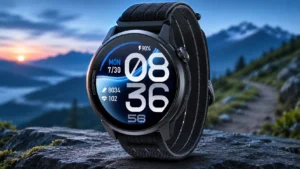
The Pace 4 Pro delivers an exceptional display, impressive battery life and reliable GPS in a remarkably light sports watch. Its wrist heart-rate tracking can be inconsistent during intense workouts,...
Pros: heart rate accuracy, display quality
Cons: band quality, smartwatch features
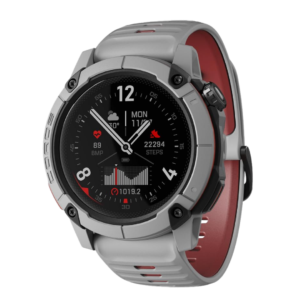
Best for long battery life, accurate GPS and useful offline maps at a strong price. Skip it if you need payments, richer apps, a built-in LED flashlight or polished smartwatch...
Pros: mapping and navigation, value for money
Cons: smartwatch features, contactless payments
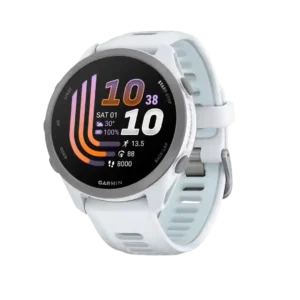
Best for accurate run tracking, deep Garmin coaching and phone-free Spotify in a light package. Skip it if you need full maps, triathlon mode, Apple Music support or the strongest...
Pros: value for money, GPS accuracy
Cons: mapping and navigation, third-party app support
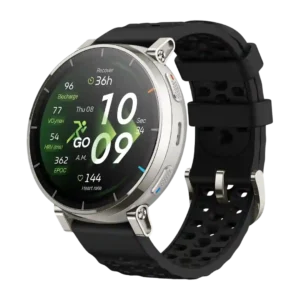
Good if you want premium running features, long battery life, and maps for under $200. Skip it if you need flawless heart-rate data, multiband GPS, LTE, or richer app support.
Pros: value for money, battery life
Cons: heart rate accuracy, third-party app support