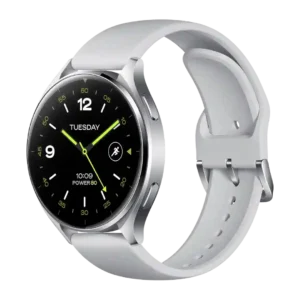
Xiaomi Watch 2
Where It Has the Edge
- materials quality is 3.5 vs 2.5. Materials quality was mixed: one review praised the premium feel, while another called the materials cheaper than more...

Scorata scores summarize analyzed review evidence on a 1–5 scale; they are not laboratory measurements or a simple average of customer star ratings. Feature scores summarize the reviews covering that feature. The overall score averages feature scores within each review, then combines review averages. When both expert and customer evidence are available, those two groups receive equal weight. Products can have different review coverage, so small score gaps do not establish a winner.
Recommendations prioritize important features for the category, with a score of at least 3.5, a gap of at least 0.25 points and at least two supporting reviews per product. Features with widely varying scores or broad connectivity contexts are excluded from recommendations. These safeguards do not establish statistical significance.
Quick verdict
The review evidence points to a tradeoff: materials quality versus fitness tracking accuracy and comfort. Choose according to which strengths matter more to you; the overall score alone does not settle that choice.
Choose Xiaomi Watch 2 for materials quality.
Choose Samsung Galaxy Watch 9 for fitness tracking accuracy and comfort.
Scores are out of 5. Missing scores mean missing review evidence, not a missing feature.
Heart-rate accuracy was split sharply: one tester saw close agreement with a Garmin reference, while others reported unreliable or inconsistent readings.
Heart-rate results are mixed. Several controlled workouts track closely to chest straps, but other tests show startup errors, cadence lock, wider ranges, or weaker performance in difficult activities.
GPS accuracy was mostly praised for dual-band precision and strong real-world performance, with one reviewer finding it less exact.
Dual-frequency GPS is usually a strength, producing accurate routes in open areas, cities, and even dense woodland. Some tests still show slow initial lock, cut corners, building errors, or imperfect elevation.
Fitness tracking accuracy was mixed: basic tracking worked well for some reviewers, but others found workout data rudimentary or inconsistent in accuracy and usefulness.
Fitness tracking is generally reliable across common workouts, with strong results for runs and everyday exercise. Accuracy can vary by activity, and tougher motion patterns expose more errors.
Sleep tracking was generally one of the better health features, with several reviewers saying it was detailed or matched their experience, though one noted it was not perfectly precise.
Sleep tracking is often very good, with some tests closely matching dedicated reference devices and accurately capturing sleep timing. Other reviewers report optimistic scores, missed wake-ups, or gaps, so consistency is not perfect.
Recovery insights were criticized because suggested recovery times could be unrealistic enough that the reviewer learned to ignore them.
Cardio Load and related recovery guidance can help decide when to push harder or back off. Some runners find the targets jumpy or overly strict, so the guidance is not universally trusted yet.
Coaching was mixed: running and workout guidance existed, but sleep advice was described as generic.
Sleep and training coaching are generally useful for turning raw tracking into practical goals. They are most valuable when enough nights and workouts have accumulated for personalized guidance.
Workout variety was viewed as broad, with 150+ or 160+ modes, though one reviewer cautioned that many modes can feel like simple exercise tags.
Workout coverage is broad enough for most casual and serious users, spanning common gym, run, swim, and outdoor activities. Dedicated athletes may still miss specialized modes found on Ultra or sports-watch rivals.
Step counting was included in a positive basic-tracking judgment from one reviewer who felt daily steps were handled well.
Step counting has a recurring false-step problem. Multiple testers report extra steps while driving or small overcounts in manual tests, making this one of the weaker basic fitness metrics.
Wellness insights were limited; reviewers wanted more proactive tracking and described some health presentation as bare-minimum.
Samsung packs in a remarkably broad, subscription-free health suite with Vitals, Heart Health, Fitness Index, sleep and more. The main tension is interpretation: some find the context useful, while others see too many disconnected scores.
Reviewers treated general health data as useful directional guidance rather than professional-grade measurement; one review was positive about raw data while another warned not to treat it as hard fact.
Core health measurements compare well with reference devices in several tests. Body-composition and broader health readings are useful for trends, though they should not be treated as medical-grade conclusions.
Blood oxygen tracking received positive practical comments, including useful breathing-score context and close comparison to another oximeter-style device.
Blood-oxygen readings looked very close to a medical-grade pulse oximeter in one direct comparison, giving this metric a strong accuracy result.
Calorie tracking usefulness was weak because Mi Fitness sometimes showed glitched calorie figures that did not match the watch.
Calorie estimates drew a clear accuracy complaint, with one long-term tester finding workout calories consistently overestimated enough to reduce their usefulness.
Battery life was the biggest split: one review praised two days, but several others found one-day endurance or daily charging disappointing.
Battery life is the clearest recurring weakness. A few testers approach two days or beat expectations, but most report daily charging, heavy drain with workouts or AOD, and little improvement over recent Galaxy Watches.
Charging speed was consistently praised as fast, often offsetting some frustration with short battery life.
Charging speed is a major consensus complaint, often taking roughly 80-120 minutes and sometimes longer. A few tests were quicker, but inconsistency and slow short top-ups remain common frustrations.
Charging convenience was poor because reviewers disliked the proprietary or orientation-sensitive magnetic puck.
Charging is inconvenient for a watch built around round-the-clock health and sleep tracking. Daily top-ups and the loss of phone-based PowerShare make it harder to keep the watch on the wrist continuously.
Comfort was a consistent strength, with reviewers praising the light body for daily wear, workouts, and sleep.
Comfort is one of the Watch 9's strongest traits. Its thin, light body sits close to the wrist, works well for sleep tracking, and is frequently described as easy to forget you're wearing.
Materials quality was mixed: one review praised the premium feel, while another called the materials cheaper than more expensive rivals.
The aluminum body keeps the Watch 9 light and comfortable, but reviewers comparing it with titanium Ultra models find it less rugged and less premium.
Size options were a weakness because reviewers noted only one case size and concern for smaller wrists.
The 40mm and 44mm choices make it easier to balance wrist fit, screen size, and battery capacity. Reviewers see real value in having both rather than a single oversized model.
Water resistance was generally appreciated for swimming or showers, but one review noted the limitation of 5ATM with no IP rating.
IP68 and 5ATM protection make the Watch 9 well suited to showers, rain, and swimming. It lacks the deeper diving credentials of the Ultra models, but everyday water resistance is strong.
Build quality ranged from superb or premium-feeling for the price to noticeably less premium than leading watches.
The Watch 9 feels premium and well built despite using aluminum rather than the Ultra's more rugged materials. Its finish and everyday construction earn strong marks.
Durability had mixed evidence, with one reviewer feeling confident and another faulting the lack of military durability and sapphire glass.
Sapphire glass, IP68, 5ATM, and military-grade ratings give the Watch 9 solid everyday toughness. It is less rugged than the Ultra line, but testers generally trust it for workouts, swimming, showers, and normal outdoor use.
Band quality was mixed to weak: the included TPU band suited workouts but felt cheap or awkward for everyday use.
Band impressions vary widely by material and wrist. Some praise the light, soft feel and easy changes, while others find the silicone sweaty, sizing awkward, or Samsung's first-party bands poor value.
Fit was acceptable but size-dependent; reviewers found it large or noticeable despite light weight.
The slim case generally fits wrists well and stays unobtrusive, especially for sleep. Strap sizing can be less forgiving, with some users landing between holes or at the edge of a supplied size.
Style and design divided reviewers: some liked the minimalist look, while others found it plain or characterless.
The thin, minimal body and premium finish win many fans, but the circle-on-squircle look remains divisive. Some grow to like it while others still prefer Samsung's older fully round design.
Display quality was one of the strongest areas, with multiple reviewers praising the AMOLED panel, clarity, and screen appearance.
Display quality is a major strength: sharp, vibrant, responsive, and premium-looking across sizes. Reviewers repeatedly describe the AMOLED panel as excellent even though it changes little from the Watch 8.
Outdoor visibility was strong overall, with reviewers saying the display remained bright or visible outdoors.
Outdoor visibility is excellent. The 3,000-nit AMOLED remains easy to read in direct sun, during workouts, and from awkward angles with very few complaints.
Brightness was praised as sufficient, including in direct sun or sunny-day use.
The 3,000-nit panel is consistently praised as bright enough for outdoor use. Even reviewers comparing it with brighter Ultra hardware generally consider the Watch 9's brightness more than sufficient.
Reliability was positive in Wareable’s Watch 2 review because earlier Xiaomi Wear OS bugs were not encountered.
Reliability concerns center on charging behavior and isolated software freezes. Most daily operation is stable, but charging inconsistency is serious enough to lower confidence for some testers.
Value for money was the strongest consensus point: reviewers repeatedly called it affordable, good value, or a bargain for Wear OS.
Value depends heavily on what you already own and current street pricing. First-time buyers and older-watch upgraders see a strong package, while Watch 8 owners are repeatedly told the modest changes do not justify full price.
Activity auto-detection was criticized as trigger-happy and inconsistent about stopping activities.
Automatic workout detection is a standout strength, reliably picking up walks and even swims without manual starts. Multiple testers praised how little intervention it needs.
LTE connectivity was a repeated drawback because the standard Watch 2 lacks cellular support and pushes untethered users toward the Pro model.
LTE adds real phone-free usefulness for calls and data, but it also increases battery drain. That tradeoff matters most on a watch whose endurance is already limited.
ECG functionality was treated as a missing advanced feature, softened only by the watch’s lower price.
ECG is useful as part of Samsung's broad health suite, but its Galaxy-phone requirement sharply limits access for users of other Android brands.
Cross-platform compatibility was a weakness because the watch is Android-focused and loses potential or support outside that ecosystem.
The Watch 9 works broadly with Android, but important health and syncing features remain locked to Galaxy phones. That restriction is a repeated frustration for Pixel, OnePlus, and other Android users.
Touch responsiveness was mixed: one reviewer found typing acceptable, while another said responsiveness could be slow after startup.
Touch input is consistently responsive, including swipes, typing, and the digital bezel. Reviewers report precise interaction even on the compact display.
Operating system experience was mixed: Wear OS gave strong app access, but reviewers criticized the older Wear OS 3.5 base and uncertain update path.
Wear OS 7 with One UI 9 Watch is consistently praised as polished, mature, and pleasant to use. Samsung's refinements give the watch a strong everyday software experience.
Companion app quality was split: some found Mi Fitness intuitive or fine, while Wareable called analysis a chore.
Samsung Health's redesign is widely praised for cleaner organization, customizable views, and better presentation of health data. The main complaint is setup friction when enabling the many advanced metrics.
Contactless payments worked well and were convenient, but the required screen lock was an annoyance.
Samsung Wallet payments are described as seamless and convenient, making wrist-based NFC purchases a useful everyday feature.
The user interface was easy to learn overall, but small-screen typing and interaction still required patience.
One UI 9 Watch is widely praised as easy to navigate, well organized, and highly customizable. Tile stacks and gesture navigation help surface dense information without making the watch feel overwhelming.
Mapping and navigation were mixed: one reviewer found directions unclear, while another showed GPS navigation working well.
Navigation is functional but not athlete-leading. One sports-focused review specifically cites navigation among the areas that still lag dedicated training watches.
Review contexts may differ, so use caution when interpreting the score gap.
Notification handling was polarized: several reviewers found replies and mirroring reliable, while one highlighted Wear OS notification delays.
Notifications are a strong everyday feature, arriving reliably from a wide range of phone apps and helping users leave the phone in a pocket more often.
Menu navigation was mostly intuitive, though the lack of a crown made swiping more necessary.
Samsung's menu structure is praised as intuitive and well organized, with important functions usually only a swipe or two away.
Pairing and syncing were positive in the YouTube review that described automatic pairing and syncing with the Mi Fitness app.
Samsung-to-Samsung setup is clean and well integrated, with the phone automatically handling much of the companion software setup.
Review contexts may differ, so use caution when interpreting the score gap.
Button controls were generally usable and customizable, but reviewers missed the Pro model’s crown.
Physical controls are mixed. Accidental presses appear improved, but workout interaction can feel clunky and some reviewers still prefer more dedicated hardware controls.
Smartwatch features were considered strong for the price, with reviewers calling the watch packed or complete enough for everyday smartwatch tasks.
The Watch 9 handles core smartwatch jobs—calls, notifications, apps, smart-home control, and assistant tasks—very well. Reviewers repeatedly describe it as a complete everyday smartwatch.
Software smoothness was mostly good, with reviewers calling it slick or fluid, though some still saw occasional sluggishness or stutter.
Performance is one of the biggest upgrades. Apps open quickly, scrolling is fluid, and the Snapdragon Wear Elite removes many of the tiny pauses that made older Galaxy Watches feel less polished.
The app ecosystem was a strength because Wear OS provided Google services, downloadable apps, and broad wrist-based functionality.
Wear OS gives the Watch 9 a strong app selection, and tested Google and third-party apps generally run smoothly. This helps it feel like a full smartwatch rather than only a fitness tracker.
Review contexts may differ, so use caution when interpreting the score gap.
Onboard music storage was praised as ample for playlists, apps, and offline listening.
The 32GB storage is enough for several offline Spotify playlists, making phone-free listening practical even though capacity trails some rivals.
Third-party app support was a major advantage, with multiple reviewers praising access to Google Play apps and big-name services.
Third-party app support is excellent, with popular fitness, audio, navigation, and productivity apps available through Wear OS. That breadth is a major advantage over simpler fitness-first wearables.
Review contexts may differ, so use caution when interpreting the score gap.
Watch faces were praised for looking good on the AMOLED screen and offering customization.
Watch faces offer strong customization and useful information density, and several reviewers like the new defaults. One reviewer dislikes Samsung's visual style overall, so aesthetics remain personal.
Voice assistant quality was generally useful thanks to Google Assistant, though one reviewer noted recognition could be slow.
Gemini is one of the Watch 9's best smart features, with fast responses and useful hands-free Raise to Talk access. Occasional gesture misses keep it from being flawless.
Customization was a clear strength, including many watch faces, complications, straps, and Wear OS personalization options.
Customization is extensive, spanning tiles, watch faces, complications, app layouts, colors, and shortcuts. Reviewers consistently appreciate how much can be tailored on-watch or from the phone.
Bluetooth connectivity was praised in one review for staying reliable throughout testing.
Bluetooth 6 is viewed as a meaningful upgrade because it can extend useful distance from the phone while improving efficiency.
Review contexts may differ, so use caution when interpreting the score gap.
Call handling was consistently positive, with reviewers saying watch calls sounded good or were easy to take from the wrist.
On-wrist calls are useful for short conversations and moments when reaching for a phone is inconvenient. LTE versions add more independence when away from the phone.
The Antioxidant Index draws mixed reactions. Some see dietary context in the beta-carotene estimate, while others find it of limited practical use.
Hearing-exposure alerts are a useful addition for concerts and loud environments, but not everyone sees a regular use case. The Watch 9 also lacks some emergency health features available on certain rivals.
The vibration motor is criticized as too weak, continuing a complaint from the previous generation and making alerts easier to miss.
Body temperature tracking was a missing feature and was called a consideration for users who specifically want it.
Fitness Index and other health scores can summarize complex data well, especially for strengths and weaknesses. At the same time, the growing number of scores can feel unfocused or overwhelming.
Music controls worked, but the experience had a caveat because album art was missing in one reviewer’s test.

Best for long battery life, accurate GPS and useful offline maps at a strong price. Skip it if you need payments, richer apps, a built-in LED flashlight or polished smartwatch...
Pros: mapping and navigation, value for money
Cons: smartwatch features, contactless payments

Best for accurate run tracking, deep Garmin coaching and phone-free Spotify in a light package. Skip it if you need full maps, triathlon mode, Apple Music support or the strongest...
Pros: value for money, GPS accuracy
Cons: mapping and navigation, third-party app support

Good if you want premium running features, long battery life, and maps for under $200. Skip it if you need flawless heart-rate data, multiband GPS, LTE, or richer app support.
Pros: value for money, battery life
Cons: heart rate accuracy, third-party app support

Best for accurate running metrics, excellent coaching tools, a bright AMOLED display, and dependable battery life. Skip it if you need offline maps, music storage, contactless payments, multi-band GPS, or...
Pros: battery life, value for money
Cons: mapping and navigation, smartwatch features