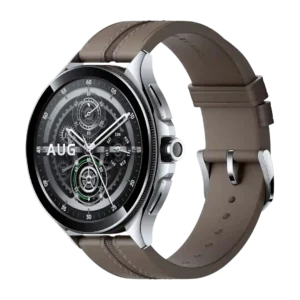

Xiaomi Watch 2 Pro
Where It Has the Edge
- value for money is 4.3 vs 3.4. Value for money was broadly positive because reviewers saw premium Wear OS features at a lower price, though...

Scorata scores summarize analyzed review evidence on a 1–5 scale; they are not laboratory measurements or a simple average of customer star ratings. Feature scores summarize the reviews covering that feature. The overall score averages feature scores within each review, then combines review averages. When both expert and customer evidence are available, those two groups receive equal weight. Products can have different review coverage, so small score gaps do not establish a winner.
Recommendations prioritize important features for the category, with a score of at least 3.5, a gap of at least 0.25 points and at least two supporting reviews per product. Features with widely varying scores or broad connectivity contexts are excluded from recommendations. These safeguards do not establish statistical significance.
Quick verdict
The review evidence points to a tradeoff: value for money versus GPS accuracy and coaching features. Choose according to which strengths matter more to you; the overall score alone does not settle that choice.
Choose Xiaomi Watch 2 Pro for value for money.
Choose Samsung Galaxy Watch Ultra 2 for GPS accuracy and coaching features.
Scores are out of 5. Missing scores mean missing review evidence, not a missing feature.
Heart rate data was acceptable for steady use in some reviews, but interval changes, sleep anomalies, and strength training exposed clear accuracy problems.
Heart-rate tracking is often very strong during running and cardio, with several tests showing close agreement with Polar straps, Apple Watch and other references. Harder conditions such as strength work, swimming or cadence-heavy movement can still produce errors.
GPS accuracy was mixed: several reviews found it accurate or reliable, while others saw disappointing dual-band results compared with stronger sports watches.
Dual-band GPS is usually fast to lock and highly accurate, often matching Garmin or other reference devices closely on distance and route shape. Some tests still found corner cutting or small deviations, so it is excellent rather than perfect.
Fitness tracking accuracy was polarizing: some reviewers reported accurate or responsive exercise tracking, while others found bugs, weak sports-watch value, and average accuracy.
General exercise tracking is strong, with several controlled tests showing close agreement on distance, steps and body metrics. Accuracy is not flawless across every sport or metric, but the overall fitness-tracking performance is competitive.
Sleep tracking usually delivered useful basic or detailed sleep data, but reviewers noted comfort issues, limited depth, app bugs, or imperfect accuracy.
Sleep tracking is one of the most inconsistent areas: some testers found stages and duration closely matched other wearables, while others saw missed periods or implausible scores. The comfort improvements make overnight wear easier, but the data itself is not uniformly dependable.
Coaching features were weak overall because reviewers criticized VO2 max, recovery, training-load guidance, and broader training-analysis depth.
Samsung’s running, fitness and health coaching can turn scores into personalized goals and suggested workouts, and several users found it genuinely helpful. Pacing errors, calibration requirements and some iFIT-linked workouts keep the experience from feeling universally polished.
Recovery insights were sharply divided, with one reviewer finding them genuinely useful and others calling recovery or training-load figures rough, useless, or missing.
Energy Score, Cardio Load and related recovery tools can help decide whether to push harder or back off, and several users found the guidance useful. Some advice can feel generic, stale or less sophisticated than Garmin, Oura or Google alternatives.
Workout variety was widely praised for the huge mode count, though some reviewers questioned whether all modes added meaningful sports-watch depth.
The Ultra 2 offers a very broad workout library plus new trail-running and diving tools, making it versatile for general fitness and outdoor use. Serious athletes still note missing modes and deeper sport-specific features, so breadth does not always equal depth.
Reviewers split on health tracking: core features were praised by some, while body composition and broader health estimates were often described as rough or inconsistent.
Health measurements are broadly credible, with some metrics aligning closely with scales or other wearables. There are also reports of missed readings, questionable outliers and body-composition bias, so not every metric deserves equal confidence.
Stress tracking was mixed: one reviewer distrusted the results, while another found the stress feedback useful for understanding daily reactions.
Stress tracking is reported to work normally alongside Samsung’s other core health measurements. There is little dedicated testing of the stress metric itself, so the positive signal is limited.
Score tracking had limited positive evidence from sleep scoring, which one reviewer said roughly matched how they felt.
Fitness Index, Heart Health Score and related scores make large amounts of health data easier to digest and give users concrete targets. The best implementations point toward what to improve rather than simply reporting past activity.
Step counting accuracy drew negative evidence, with reviewers reporting inconsistent steps or early glitches where step totals failed to update correctly.
Step accuracy is sharply mixed. Manual walking tests can be nearly exact, but multiple sources reported phantom steps while driving and one test produced a dramatically inflated count.
Wellness insights were generally viewed positively when reviewers focused on sleep, stress, body data, or overall helpful health information.
Samsung’s Vitals, Heart Health Score, Cardio Load and other wellness tools are widely praised for turning raw sensor data into understandable trends and prompts. Some features need a week or more of baseline data, but the overall health context is a major strength.
Blood oxygen tracking received limited but positive accuracy evidence, with one reviewer calling a 1% deviation acceptable and another saying SpO2 ranges were in a good place.
Blood-oxygen tracking is described as working normally alongside the watch’s other core health sensors. There is little standalone testing of SpO2 accuracy, so confidence is more limited than for heart rate or GPS.
Body temperature tracking had limited positive evidence, with reviewers saying skin/body temperature readings were in line or accurate.
Skin-temperature trends can feed Vitals and flag unusual overnight changes, giving the metric a practical role beyond simply showing a number. The usefulness comes mainly from baseline alerts rather than isolated temperature readings.
Battery life was the most divided major attribute, ranging from one-day disappointment to solid two-day or multi-day performance depending on reviewer and use.
Battery life is one of the Ultra 2’s biggest upgrades, commonly landing around two to three days and sometimes longer depending on settings and GPS use. Heavy navigation and workouts cut that endurance, but most users no longer need to plan around daily charging.
Charging speed was consistently strong, with reviewers reporting fast top-ups and full charges around 40–85 minutes.
Charging speed is inconsistent across testing: some units reach useful top-ups or a full charge in roughly 90 minutes, while others take closer to two hours or initially far longer. Even positive testers often wish the large battery refilled faster.
Charging convenience was mixed to negative because the proprietary or pin charger was inconvenient, precarious, or non-wireless, despite one positive magnet comment.
Charging convenience is a recurring weakness because the Ultra 2 relies on Samsung-compatible magnetic charging and often refuses standard Qi or third-party multi-device stands. That makes travel and bedside setups less flexible than the watch’s premium price suggests.
Comfort was one of the biggest tradeoffs: the watch felt bulky or unpleasant for sleep/exercise to many, though one reviewer found it comfortable.
The thinner case and softer bands make the Ultra 2 dramatically easier to wear than the first model, and many testers could comfortably keep it on overnight. Its 47mm body is still large and can feel cumbersome on smaller wrists or for sensitive sleepers.
Materials quality was praised for stainless steel, premium materials, and sturdy construction.
Titanium and sapphire give the Ultra 2 a distinctly premium, durable feel. The materials are tough and corrosion-resistant, though the titanium case can still pick up cosmetic marks over time.
Fit was a concern for smaller wrists because reviewers repeatedly described the case as large, chunky, or better suited to bigger wrists.
The slimmer body, flatter stance and secure band system improve how the Ultra 2 sits on the wrist. Fit is still highly wrist-dependent because the single 47mm case can overwhelm smaller wrists despite the comfort gains.
Water resistance was positively received for rain, showering, swimming, snorkeling, and everyday water exposure.
Water durability is exceptional, with 10ATM, IP69K and EN13319 diving certification giving the Ultra 2 much stronger aquatic credentials than a normal smartwatch. Several testers view it as legitimately dive-ready rather than merely swim-safe.
Build quality was mostly strong thanks to solid construction, premium feel, and stainless-steel durability, with only limited reservations.
The titanium construction feels solid, premium and cohesive, with a case that looks and feels appropriate for a flagship outdoor watch. The hardware is repeatedly described as exceptionally well put together.
Band quality was generally good, with praise for softness, easy replacement, and strap quality, though one review wanted more solidity.
Samsung’s redesigned bands are generally softer, lighter, more flexible and more breathable than the first Ultra’s straps, making long wear and sleep easier. The proprietary attachment and high accessory pricing remain notable drawbacks, and one Marine Band was still found rough.
Style and design were subjective: some called it elegant or the best-looking watch they had used, while others found it plain or generic.
The squircle-and-circle design is polarizing in theory but wins over many users in practice, especially with the slimmer profile, engraved bezel and premium finishes. A few details, such as the orange center button or sheer size, still divide opinion.
Size options were consistently weak because the watch is effectively one large case size, frustrating reviewers focused on smaller wrists.
The single 47mm case is a repeated complaint. Even with the thinner design, buyers with smaller wrists have no compact Ultra option and may be better served by the standard Galaxy Watch line.
Durability had limited but positive evidence, with one reviewer saying the watch still looked new after several weeks.
Titanium, sapphire crystal, IP69K protection, 10ATM water resistance and military-grade testing make the Ultra 2 exceptionally rugged. It handles daily knocks confidently, although exposed case edges can still collect cosmetic scratches.
Display quality was one of the strongest attributes, with repeated praise for AMOLED sharpness, clarity, color, and overall visual quality.
The Super AMOLED display is a standout strength, repeatedly praised for sharp text, vibrant color, excellent contrast and generous screen space. Several testers called it among the best smartwatch displays they have used.
Brightness was generally strong and readable, though some reviewers noted auto-brightness or reflection limitations.
The 5,000-nit panel is consistently praised as exceptionally bright, even if some consider that level more than most situations require. Its extra headroom becomes genuinely useful in harsh sun and for the screen-based flashlight.
Outdoor visibility was praised in the reviews that tested it, with sunlight and varied lighting conditions handled well.
Outdoor readability is close to unanimous praise. The 5,000-nit display remains clear in direct sun, on trails and even around water, making workout data and navigation easy to glance at without shading the screen.
Reliability was a concern in several reviews because of app unresponsiveness, loading-screen lockups, bugs, and odd behavior.
A small but important set of tests found intermittent gaps in heart-rate or sleep data even when the watch was worn consistently. Those misses make sensor reliability a concern for buyers who depend on uninterrupted health records.
Value for money was broadly positive because reviewers saw premium Wear OS features at a lower price, though some tied value to accepting caveats.
The $699 price produces the most divided opinions. The battery, display, durability and outdoor features can justify the premium for active users, but the Galaxy Watch 9 and discounted older Ultras deliver much of the everyday experience for less.
Running power support was weak because a sports-focused reviewer explicitly said the watch lacks advanced running metrics such as running power.
Native running-power support is still missing, which is a notable omission for performance-focused runners. Dedicated sports watches remain better equipped for this metric.
ECG support was scored poorly because reviewers explicitly noted that ECG functionality is absent despite related electrical sensors.
ECG readings generally worked as expected and one comparison produced results similar to a dedicated Kardia device. It remains a wellness feature rather than a substitute for clinical diagnostic equipment.
Activity auto-detection was limited: one review said workouts cannot auto-track, while another found walking prompts useful but imperfect.
Automatic workout recognition is usually quick and dependable, with several testers praising reliable starts and responsive pausing. A few sessions were split after longer stops, so manual starts are still safer when one continuous track matters.
Cross-platform compatibility was mixed: non-Xiaomi Android support was praised, but iPhone pairing was described as less intuitive.
Compatibility is one of the Ultra 2’s clearest limitations: it is Android-only, and ECG, blood pressure, sleep-apnea features and some integrations can require a Galaxy phone. Other Android phones still get much of the experience, but not the complete feature set.
LTE connectivity was viewed as useful for untethered use, but reviewers also noted battery, carrier, or pricing tradeoffs.
Built-in LTE can make the Ultra 2 genuinely independent for calls, messages and workouts without a phone, and cellular battery use has improved. The forced LTE configuration, lack of 5G, extra plan cost and battery drain make it unnecessary overhead for some buyers.
Pairing reliability had limited positive evidence, with a reviewer reporting no syncing issues through the Mi Fitness app.
Initial Samsung-phone setup can be clean and automatic, but connectivity is not flawless. One real-world run lost the phone connection and interrupted media playback, leaving this a limited and mixed area.
Review contexts may differ, so use caution when interpreting the score gap.
Menu navigation was mostly praised as easy or intuitive, especially with the rotating crown, though the experience was not universally perfect.
Navigation is mixed: the digital bezel can feel intuitive and responsive, but several users still miss a physical rotating bezel for precision, gloves or wet hands. Touch-based scrolling can also obscure content or overshoot.
Companion app quality was mixed: some video reviews liked Mi Fitness simplicity, while written reviews criticized clutter, bugs, and weak presentation.
Samsung Health is generally praised for clearer organization, useful health cards and an approachable amount of detail. It can still feel fragmented across multiple Samsung apps, and occasional lag, freezes or awkward organization appear in heavier use.
Contactless payments worked and were valued, but reviewers noted the security passcode requirement as an annoyance.
Google Wallet and Samsung’s payment support make quick purchases from the wrist easy and genuinely phone-free. Testers who used it viewed payments as one of the practical everyday smartwatch benefits.
Onboard music support was useful because of ample storage and offline listening, but one reviewer found manual file transfer awkward.
The 64GB storage provides ample room for offline playlists, podcasts, maps and apps. It meaningfully improves phone-free runs because music can stay on the watch and play directly to Bluetooth earbuds.
Voice note usefulness had limited positive evidence: voice replies were considered less awkward than typing on the tiny keyboard.
Voice notes become much more useful when recordings sync to a Galaxy phone for AI summaries and generated notes. The integration turns a basic recorder into a practical capture tool.
Wear OS made the watch much more capable, but reviewers disagreed on execution because Xiaomi’s skin and update path raised polish concerns.
Wear OS 7 with One UI Watch 9 is powerful, polished and tightly integrated with Android, with a strong app library and long software-support promise. The overall OS experience is one of the watch’s strongest everyday advantages.
The app ecosystem was one of the biggest strengths thanks to Wear OS and Play Store access, though a few reviewers felt Xiaomi’s implementation lacked polish.
Wear OS gives the Ultra 2 an unusually strong smartwatch app library, with Google Maps, Spotify, WhatsApp, Gmail, YouTube Music and other familiar tools working directly on the wrist. App availability is one of its clearest advantages over many dedicated sports watches.
Review contexts may differ, so use caution when interpreting the score gap.
The user interface split reviewers: several found it seamless or clean, while others flagged unintuitive workout access, bugs, or software issues.
One UI Watch is usually intuitive, customizable and easy to learn, especially for existing Samsung users. Feature density and a few interaction choices can make some menus busier or more awkward than necessary.
Smartphone notifications were consistently praised as easy to view, manage, reply to, or otherwise handle from the wrist.
Notification delivery has improved substantially and can be seamless once configured, with direct replies working well. Default app permissions and Samsung’s notification settings can still require manual cleanup and occasionally cause missed alerts.
Voice assistant quality was mostly positive, with useful Google Assistant access and strong voice pickup, though one reviewer called it occasionally borky.
Gemini is one of the Ultra 2’s most consistently praised smart features, especially for Raise to Talk, timers, questions and app actions without touching the screen. A few tests found the raise gesture inconsistent, but most found it fast and genuinely useful.
Watch face quality was broadly positive, with reviewers praising variety, customization, and appealing designs.
Samsung and the Play Store offer a large, attractive selection of watch faces with useful complications and strong customization. The bright, large display gives those faces plenty of room to work.
Third-party app support was strongly positive, with reviewers highlighting access to apps such as Google Maps, Spotify, WhatsApp, YouTube Music, and the Play Store.
Third-party app support is excellent for a smartwatch, with useful Wear OS options such as Spotify, Strava and WhatsApp working directly on the watch. This breadth is a major advantage over more closed fitness-watch platforms.
Review contexts may differ, so use caution when interpreting the score gap.
Button controls were mostly useful and intuitive, though reviewers criticized missing remap or rotating-control behavior in some areas.
The Quick Button and side keys are generally tactile, responsive and useful for fast workout or shortcut access. Opinions are less positive about the missing rotating bezel, occasional button crowding and controls that can be awkward during sweaty workouts.
Smartwatch features were generally considered broad and capable, especially for Android users, even when reviewers criticized sports or software polish.
As an everyday smartwatch, the Ultra 2 is exceptionally capable, covering calls, messages, payments, apps, music, LTE, AI and health tools without constant phone use. Even critical sports-focused testers generally agree that its core smartwatch experience is excellent.
Bluetooth connectivity was positive in the reviewed evidence, with stable phone, earbuds, and app syncing reported.
Bluetooth support is useful for phone-free audio and, notably, direct cycling power-meter connections. The connection options broaden the watch’s usefulness without requiring a phone for every activity.
Review contexts may differ, so use caution when interpreting the score gap.
Touchscreen responsiveness was positive, with reviewers describing smooth, responsive input and quick app/watch-face loading.
Touch input is generally fast and responsive, including the improved touch bezel. Wet or sweaty workout conditions still make physical controls preferable, but the touchscreen itself earns strong marks.
Call handling was praised for strong microphone and speaker performance, including clear calls and reliable voice pickup.
Calls are a strong everyday feature: audio is loud enough to hear, the speaker is clear, and callers reported good microphone quality. The watch works well for quick phone-free conversations.
Customization was a strength, especially through watch faces, app settings, tile options, button shortcuts, and strap/watch-face personalization.
Watch faces, tiles, complications, gestures, shortcuts and swappable bands give the Ultra 2 extensive room for personalization. Proprietary band hardware is the main constraint in an otherwise flexible setup.
Software smoothness was a consistent strength, with reviewers repeatedly calling performance smooth, responsive, fast, or zippy.
The Snapdragon Wear Elite platform makes the interface, apps and animations fast and fluid in most testing, a clear improvement over older Galaxy watches. A few users still noticed stutters or heavier-app hiccups, so it is not perfectly consistent.
Mapping and navigation were good for Google Maps and turn-by-turn use, but weak for sports users who wanted route loading during training.
GPX routes, turn-by-turn guidance, off-route warnings and Google Maps make navigation genuinely useful for hikes and runs. Route loading, missing map labels, limited rerouting and the lack of a full always-available offline map system keep it behind dedicated outdoor watches.
Review contexts may differ, so use caution when interpreting the score gap.
Wi-Fi connectivity had limited but positive evidence because one review said the watch can work independently at home over Wi-Fi.
Wi-Fi is useful as a fallback when the phone is absent, allowing messaging and other connected functions without LTE. There is little direct testing of Wi-Fi performance beyond that use case.
Review contexts may differ, so use caution when interpreting the score gap.
The Antioxidant Index attracts curiosity but little enthusiasm. It is repeatedly described as hard to act on or more of a gimmick than a genuinely useful health metric.
Samsung Health earns credit for allowing users to download their collected data, which supports data ownership. At the same time, AI-training settings may warrant an opt-out for users who are uncomfortable with that use of their data.
The screen-based flashlight benefits directly from the very bright display and is surprisingly useful for dark rooms, nighttime checks and quick tasks. It cannot match a dedicated hardware flashlight, but it is far from a throwaway feature.
Several headline outdoor features arrived incomplete or unavailable, including parts of the diving experience and built-in trail discovery. Buyers interested in those specific capabilities should not assume every announced function is ready on day one.
Automatic pause and resume behavior works especially well during stops such as traffic lights, restarting quickly when movement resumes. This makes everyday activity tracking feel more hands-off and precise.
Emergency SOS, fall detection and the loud siren are repeatedly viewed as reassuring additions for outdoor use. They are features most owners hope never to need, but they strengthen the Ultra 2’s adventure credentials.
Haptics are a standout detail, with strong, precise feedback that can reliably signal calls and messages without sound. Several testers rank the vibration quality among the best they have used on a smartwatch.
Blood-pressure readings are a welcome addition and can be useful once configured, but setup requires cuff calibration and some phone restrictions still apply. Experiences range from readings that work fine to frustration with the setup burden.
Daily calorie-burn estimates were considered surprisingly believable and close enough to other calculations to be useful. This is limited to one detailed assessment, but it was strongly positive.
Climb and descent guidance is useful for trail runners and cyclists because it surfaces gradient, elevation and upcoming hill information. The concept is strong, but separate elevation-accuracy concerns mean serious athletes may still want a dedicated sports watch.
Native external-sensor support is a major sports limitation. Several testers strongly criticized the lack of straightforward chest-strap and broader sensor pairing inside Samsung’s workout environment, forcing workarounds or third-party apps.
Music control works well from the wrist, including full YouTube Music browsing and playback management. It is a useful part of the watch’s ability to replace short phone interactions.

Best for long battery life, accurate GPS and useful offline maps at a strong price. Skip it if you need payments, richer apps, a built-in LED flashlight or polished smartwatch...
Pros: mapping and navigation, value for money
Cons: smartwatch features, contactless payments

Best for accurate run tracking, deep Garmin coaching and phone-free Spotify in a light package. Skip it if you need full maps, triathlon mode, Apple Music support or the strongest...
Pros: value for money, GPS accuracy
Cons: mapping and navigation, third-party app support

Good if you want premium running features, long battery life, and maps for under $200. Skip it if you need flawless heart-rate data, multiband GPS, LTE, or richer app support.
Pros: value for money, battery life
Cons: heart rate accuracy, third-party app support

Best for accurate running metrics, excellent coaching tools, a bright AMOLED display, and dependable battery life. Skip it if you need offline maps, music storage, contactless payments, multi-band GPS, or...
Pros: battery life, value for money
Cons: mapping and navigation, smartwatch features