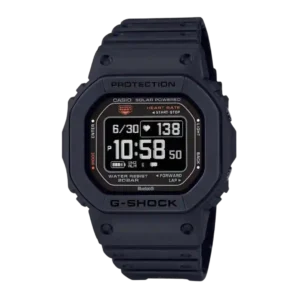
Casio G-Shock DW-H5600
Where It Has the Edge
No clear scored advantage over the other product.

Scorata scores summarize analyzed review evidence on a 1–5 scale; they are not laboratory measurements or a simple average of customer star ratings. Feature scores summarize the reviews covering that feature. The overall score averages feature scores within each review, then combines review averages. When both expert and customer evidence are available, those two groups receive equal weight. Products can have different review coverage, so small score gaps do not establish a winner.
Recommendations prioritize important features for the category, with a score of at least 3.5, a gap of at least 0.25 points and at least two supporting reviews per product. Features with widely varying scores or broad connectivity contexts are excluded from recommendations. These safeguards do not establish statistical significance.
Quick verdict
The available evidence supports the recommendation below, but does not establish an overall winner. Check the remaining features against your priorities.
There is not enough comparable review evidence to recommend Casio G-Shock DW-H5600 over the other product.
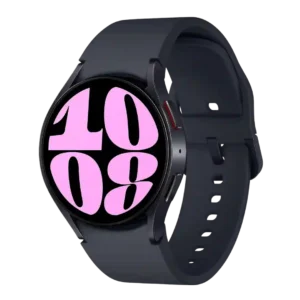
Choose Samsung Galaxy Watch 6 for workout tracking variety and coaching features.
No clear scored advantage over the other product.
Scores are out of 5. Missing scores mean missing review evidence, not a missing feature.
GPS performance depends on phone-connected GPS and ranges from surprisingly accurate to unreliable or far off.
GPS accuracy ranged from fast and accurate lock-on to route wandering, corner cutting, and enough error to concern serious runners.
Heart rate accuracy splits sharply: several reviewers found readings close to reference devices, but others saw elevated maximums or large deviations.
Heart rate accuracy was mixed: steady efforts often aligned well, while interval spikes and some workouts produced lag or inconsistent readings.
Sleep tracking is generally acceptable and sometimes close to trusted trackers, though reviewers also found it inconsistent or confusing.
Sleep tracking accuracy was mixed: some reviewers saw strong alignment and useful sleep scores, while others reported stage errors, overcounting, or poor snoring tracking.
Fitness tracking works for casual use, but reviewers repeatedly warned that accuracy and depth fall short of dedicated fitness watches.
Fitness accuracy was mixed: general tracking looked good in some tests, but weight training and serious training accuracy drew notable criticism.
Workout mode variety is limited, with reviewers noting only a few core activities and little appeal for serious fitness users.
Workout variety was one of the clearest strengths, with reviewers repeatedly highlighting more than 90 or 100 activity profiles and broad sport coverage.
Recovery insights have potential through Polar-derived features, but reviewers often found the guidance opaque or unhelpful.
Recovery insights had limited but positive evidence around at-a-glance sleep and skin-temperature recovery-related data.
Coaching and training guidance exists, but reviewers found it less motivational, poorly implemented, or abstract compared with stronger platforms.
Coaching features were useful but not universally compelling, with praise for heart-rate zone guidance and sleep plans but caveats about general-user relevance and gimmickry.
Calorie and energy-use estimates drew skepticism because reviewers tied them to unreliable heart-rate or movement data.
Calorie tracking was supported by one reviewer whose workout results aligned well with other wearables for active calories and related stats.
Health tracking is useful but inconsistent: one reviewer found it solid, while others saw inflated values or only broad health guidance.
Health tracking accuracy was generally useful for body composition and overall health insights, but reviewers also noted awkward measurements and technology limits.
Step counting can be solid in normal daily use, but arm movement, workouts, and distance estimation produced notable overcounts or shortfalls.
Step counting accuracy was supported by one reviewer whose steps, active calories, and average heart rate matched other watches well.
Wellness insights provide useful data for casual users, but presentation and interpretation are uneven and sometimes feel superficial.
Wellness insights were praised for useful sleep insights, health baselines, coaching, and comprehensive well-being views, though some wanted deeper synthesis.
Blood oxygen tracking is useful as a spot-check feature, but reviewers reported stillness requirements and occasional errors.
Blood oxygen tracking drew concern because two reviewers reported overnight readings that seemed unusually or slightly low compared with other devices.
Stress support is limited, with the guided breathing experience described as very basic.
Stress tracking had limited mixed evidence, with one reviewer finding the stress view interesting but hard to inspect closely.
Comfort is mixed but generally favorable: many found it wearable, while others felt the rear sensor or thickness irritated the wrist.
Comfort depended heavily on size and model: lighter standard watches were comfortable, while the large Classic could be either surprisingly wearable or uncomfortable overnight.
Materials quality is mixed: reviewers like the soft matte bio-resin feel, but some saw fingerprints and scratches.
Materials quality was praised for the Classic’s shinier, more durable stainless steel case.
Fit is strong overall because the strap offers many holes and enough adjustability, though size remains a concern for smaller wrists.
Fit was criticized in the long-term Classic review, where the 47mm model felt too large for the reviewer’s wrist.
Band quality is widely praised for softness, flexibility, and adjustability, fitting the watch’s active-use role.
Band feedback was mixed: reviewers liked comfort and easier new release buttons, but some found the mechanism forceful or fiddly when reattaching straps.
Water resistance received positive treatment as part of the rugged package, specifically with excellent water resistance noted.
Water resistance received positive real-world evidence from beach and general water-resistant use.
Durability is one of the strongest points, with reviewers describing the watch as extremely tough, bulletproof, and hard to destroy.
Durability was consistently praised, with reviewers noting sapphire crystal, water/dust protection, scratch resistance, and successful real-world wear.
Build quality is widely praised as rugged and authentically G-Shock, despite one concern about removable shroud behavior.
Build quality was described as durable and premium, especially with crystal glass and a lightweight but sturdy body.
Style and design are the clearest consensus strengths, with reviewers repeatedly praising the classic square G-Shock look and retro appeal.
Style and design were praised across reviews for polish, looks, and refinement, though the large Classic’s boldness was not for everyone.
Battery life ranges from poor with always-on features to strong for lighter use, commonly landing around a week.
Battery life was the most divided and repeated issue, ranging from severe daily-charge complaints to better results with always-on disabled or larger models.
Charging speed is acceptable but not impressive, with reviewers reporting around one to three hours depending on the source.
Charging speed earned strong marks across reviews, with several reviewers reporting roughly half charges in 30 minutes or full charges in about 45–80 minutes.
Charging convenience is mixed: some liked the clip or solar assist, while others found the proprietary clip awkward or frustrating.
Charging convenience was mixed: reverse charging and quick top-ups helped, but daily charging and daytime charging for sleep tracking were recurring annoyances.
Display quality is a standout strength thanks to the MIP screen, though one reviewer disliked the small data and menu text.
Display quality was one of the strongest consensus areas, with reviewers praising the larger AMOLED screen, clarity, sharpness, and overall screen experience.
Outdoor visibility is a clear strength, with repeated praise for bright-light readability and legibility at angles.
Outdoor visibility was a major strength, with reviewers repeatedly saying the brighter display was easy to read in sunlight and outdoor conditions.
Brightness and backlight performance are mostly praised, but the small screen can still make workout stats hard to check outside.
Brightness was widely praised outdoors, though one reviewer found adaptive brightness too aggressive indoors.
Reliability has some uncertainty because reviewers encountered delayed run data and hoped future updates would fix issues.
Reliability was positive overall but not perfect, with one reviewer calling it solid and another reporting an isolated overheating incident.
Value depends heavily on buyer type: G-Shock fans often see value, while reviewers focused on smartwatch or fitness depth see better alternatives.
Value depended on context: reviewers liked the Android feature set and discounted pricing, but several warned upgrades were modest or not worth it for recent owners.
Third-party support is the most criticized connected feature, with repeated complaints about missing or limited integration and export options.
Third-party app support was strong in the scored reviews, especially through Google Play and well-integrated Wear OS apps.
Review contexts may differ, so use caution when interpreting the score gap.
The operating system experience is held back by a dated, complicated, and laggy interaction model.
The operating system experience was praised as a strong Wear OS implementation, though app and ecosystem restrictions kept it from being flawless.
The app ecosystem is a recurring weakness, with limited gamification, weak trend visibility, data lock-in, and a subpar app experience.
The Wear OS and Play Store ecosystem was seen as a major strength, with broad third-party app access, though one long-term reviewer still wanted faster app growth.
Review contexts may differ, so use caution when interpreting the score gap.
The companion app is consistently criticized for clunkiness, learning curve, slow performance, ads, and weak data presentation.
Samsung Health and the companion experience were praised for clear data presentation, useful insights, and deep settings control, despite some complaints about old UI or limits.
Menu navigation is polarizing: one reviewer found it intuitive, but most found scrolling, button flow, or missing reverse controls cumbersome.
Menu navigation scored highly where reviewers liked the touch or rotating bezel and easy layouts, though long-term impressions noted some randomness or friction.
The user interface is one of the weaker areas, especially around data discovery, button-driven navigation, and non-intuitive behavior.
The interface was often called intuitive and clear, though some reviewers found Samsung’s layout, app clutter, or ecosystem flow clunky.
Software smoothness is uneven, with slow data appearance, early hurdles, longer syncing, and charging/status quirks.
Software smoothness was mostly strong, with repeated praise for quick apps and smooth performance, balanced by several lag or slowdown complaints.
Pairing reliability is mixed, with some reliable use but multiple complaints about manuals, updates, and inconsistent syncing.
Pairing and setup were generally reliable on Samsung phones and device transfers, though one reviewer found Pixel setup more tedious.
Review contexts may differ, so use caution when interpreting the score gap.
Smartwatch capability is useful but basic; reviewers praised the essentials while emphasizing that it is not a full smartwatch replacement.
Smartwatch features were widely praised, with reviewers calling the Watch 6 series robust, consistent, and feature-rich despite battery caveats.
Watch face quality is mixed: reviewers appreciated some faces and sport display options but criticized the small selection and cramped layouts.
Watch faces were praised for stock options, complications, and broad customization, including always-on usefulness.
Button controls are a major complaint because the recessed, stiff buttons are hard to press, especially during workouts.
Button and bezel controls were a tradeoff: rotating-bezel reviewers loved the tactile control, while workout pausing and limited button mapping frustrated others.
Customization is useful for workouts, widgets, and function ordering, but reviewers also wanted more face and display flexibility.
Customization was a strength through watch faces, strap options, and settings, with reviewers specifically praising the improved band customization experience.
Notifications are useful for basic alerts, but reviewers disliked limited replies, firehose-style delivery, and awkward reading controls.
Notifications were praised for wrist-based convenience and readable, glanceable delivery.
Auto-detection received one clear positive mention for recognizing started workouts well.
Reviewers repeatedly praised automatic workout detection for walks, runs, cycling, and general activity, calling it reliable, convenient, and among the best smartwatch implementations.
Bluetooth syncing generally worked in the one clear review mention, though that review still noted occasional extra steps elsewhere.
Review contexts may differ, so use caution when interpreting the score gap.
Call handling was praised for clear audio, easy acceptance/rejection, and strong speakerphone performance from the wrist.
Wallet and NFC use were treated positively as convenient smartwatch features for wrist-based payments and day-to-day utility.
Mapping and navigation were praised in both scored reviews, especially for wrist-based maps, route display, and Google Maps usefulness.
Review contexts may differ, so use caution when interpreting the score gap.
Music controls had positive evidence from one reviewer who found Spotify worked well on the watch.
Onboard music storage was only indirectly evaluated, with one reviewer noting Samsung app clutter consumed space that could hold offline music or podcasts.
Touchscreen responsiveness was polarizing: some reviewers called it fast and responsive, while others criticized the touch bezel as clunky or unreliable.
Google Assistant impressed reviewers who used it, with praise for fast, seamless, useful wrist access.
Voice recording had limited positive evidence, with one reviewer reporting no issues recording and playing voice notes on the watch.
Temperature tracking split reviewers: one praised working skin-temperature readings, another found object temperature checks wrong, and one noted cycle prediction limits.
Cross-platform compatibility was a clear weakness, with multiple reviewers criticizing Samsung-phone-only health features and a more tedious non-Samsung setup.
Data control received positive notes where reviewers valued Health Connect portability and easy deletion of cycle-tracking data.
ECG functionality was seen as potentially valuable but limited by Samsung-phone restrictions, confusing result presentation, and low personal usefulness for some reviewers.
Safety features were appreciated for fall detection and emergency tools, but missing crash detection and failed fall tests were important caveats.
Size options were appreciated, but the largest Classic was criticized as too big and heavy by one reviewer.
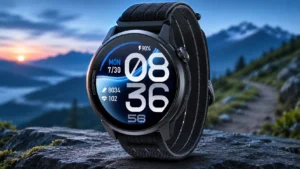
The Pace 4 Pro delivers an exceptional display, impressive battery life and reliable GPS in a remarkably light sports watch. Its wrist heart-rate tracking can be inconsistent during intense workouts,...
Pros: heart rate accuracy, display quality
Cons: band quality, smartwatch features
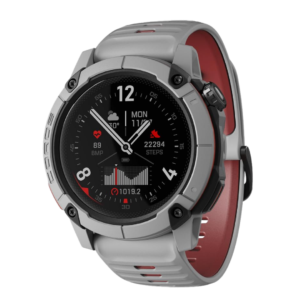
Best for long battery life, accurate GPS and useful offline maps at a strong price. Skip it if you need payments, richer apps, a built-in LED flashlight or polished smartwatch...
Pros: mapping and navigation, value for money
Cons: smartwatch features, contactless payments
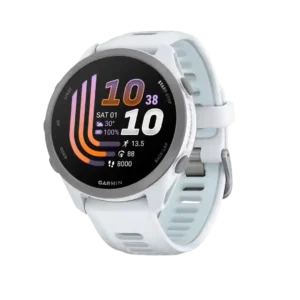
Best for accurate run tracking, deep Garmin coaching and phone-free Spotify in a light package. Skip it if you need full maps, triathlon mode, Apple Music support or the strongest...
Pros: value for money, GPS accuracy
Cons: mapping and navigation, third-party app support
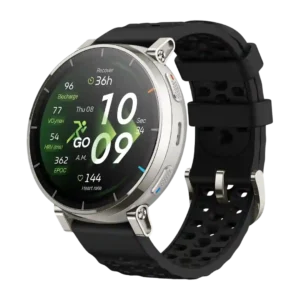
Good if you want premium running features, long battery life, and maps for under $200. Skip it if you need flawless heart-rate data, multiband GPS, LTE, or richer app support.
Pros: value for money, battery life
Cons: heart rate accuracy, third-party app support