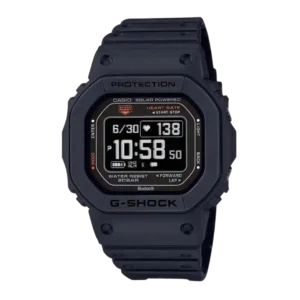
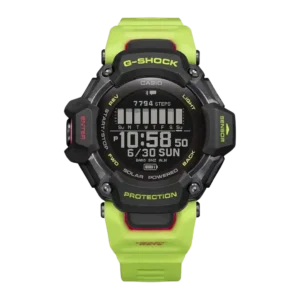
Casio G-Shock DW-H5600
Where It Has the Edge
- style and design is 4.6 vs 4.2. Style and design are the clearest consensus strengths, with reviewers repeatedly praising the classic square G-Shock look and...

Scorata scores summarize analyzed review evidence on a 1–5 scale; they are not laboratory measurements or a simple average of customer star ratings. Feature scores summarize the reviews covering that feature. The overall score averages feature scores within each review, then combines review averages. When both expert and customer evidence are available, those two groups receive equal weight. Products can have different review coverage, so small score gaps do not establish a winner.
Recommendations prioritize important features for the category, with a score of at least 3.5, a gap of at least 0.25 points and at least two supporting reviews per product. Features with widely varying scores or broad connectivity contexts are excluded from recommendations. These safeguards do not establish statistical significance.
Quick verdict
The review evidence points to a tradeoff: style and design versus fitness tracking accuracy and battery life. Choose according to which strengths matter more to you; the overall score alone does not settle that choice.
Choose Casio G-Shock DW-H5600 for style and design.
Choose Casio G-Shock GBD-H2000 for fitness tracking accuracy and battery life.
Scores are out of 5. Missing scores mean missing review evidence, not a missing feature.
GPS performance depends on phone-connected GPS and ranges from surprisingly accurate to unreliable or far off.
GPS distance and tracks were often accurate, but slow satellite lock and occasional drift made the experience inconsistent across reviewers.
Heart rate accuracy splits sharply: several reviewers found readings close to reference devices, but others saw elevated maximums or large deviations.
Heart-rate evidence is split: several running and chest-strap comparisons were strong, but cycling, tattoos, and some outdoor sessions produced questionable or inflated readings.
Fitness tracking works for casual use, but reviewers repeatedly warned that accuracy and depth fall short of dedicated fitness watches.
Overall fitness tracking is broadly respected, especially for casual running and activity logging, though one review flagged wider data discrepancies.
Sleep tracking is generally acceptable and sometimes close to trusted trackers, though reviewers also found it inconsistent or confusing.
Sleep tracking received strong praise from reviewers who could wear the watch overnight, but one reviewer could not get sleep data because fit and comfort interfered.
Recovery insights have potential through Polar-derived features, but reviewers often found the guidance opaque or unhelpful.
Recovery insights are useful when the underlying data is accurate, but some reviewers found the numbers abstract while others praised the actionable HRV-style feedback.
Workout mode variety is limited, with reviewers noting only a few core activities and little appeal for serious fitness users.
Workout variety is improved over prior G-Shock models but still trails fuller sports watches, with reviewers repeatedly calling the supported profile list limited.
Coaching and training guidance exists, but reviewers found it less motivational, poorly implemented, or abstract compared with stronger platforms.
Coaching feedback is basic and sometimes hard to interpret, though some Polar-powered training messages were appreciated.
Calorie and energy-use estimates drew skepticism because reviewers tied them to unreliable heart-rate or movement data.
Energy-use and calorie-related views were appreciated as useful workout context, though accuracy depends on the heart-rate data feeding them.
Stress support is limited, with the guided breathing experience described as very basic.
Stress tracking is not a strength; one review grouped it with other deeper health metrics that are largely absent.
Blood oxygen tracking is useful as a spot-check feature, but reviewers reported stillness requirements and occasional errors.
Blood oxygen tracking was lightly covered but positively judged in the one review that evaluated it directly.
Health tracking is useful but inconsistent: one reviewer found it solid, while others saw inflated values or only broad health guidance.
Health metrics were treated as directionally useful, with trends matching reviewer expectations even when the watch was not positioned as a deep health device.
Wellness insights provide useful data for casual users, but presentation and interpretation are uneven and sometimes feel superficial.
Wellness insights collect a lot of useful sleep, recovery, and body-state information, but presentation and actionability are uneven.
Battery life ranges from poor with always-on features to strong for lighter use, commonly landing around a week.
Battery life is one of the strongest areas, with reviewers praising solar assistance, week-plus use, and sometimes near charge-free ownership.
Charging convenience is mixed: some liked the clip or solar assist, while others found the proprietary clip awkward or frustrating.
Charging convenience is excellent because solar charging reduces how often users need the proprietary cable.
Charging speed is acceptable but not impressive, with reviewers reporting around one to three hours depending on the source.
Charging speed is considered acceptable to good, with reviewers reporting roughly two to two-and-a-half hours for a full or top-up charge.
Comfort is mixed but generally favorable: many found it wearable, while others felt the rear sensor or thickness irritated the wrist.
Comfort is surprisingly strong for such a large watch, helped by light weight and strap design, though cycling and overnight wear were issues for some.
Materials quality is mixed: reviewers like the soft matte bio-resin feel, but some saw fingerprints and scratches.
Materials quality is mixed; one reviewer appreciated the lightness but felt the plastics and resin were less premium.
Durability is one of the strongest points, with reviewers describing the watch as extremely tough, bulletproof, and hard to destroy.
Durability is usually a major strength, though one drop-test failure shows the toughness is not unlimited.
Style and design are the clearest consensus strengths, with reviewers repeatedly praising the classic square G-Shock look and retro appeal.
Style and design are a major selling point for G-Shock fans, though the bold look is not universally liked.
Fit is strong overall because the strap offers many holes and enough adjustability, though size remains a concern for smaller wrists.
Fit is strong when the strap and lugs hold the watch in place, especially compared with older bulky models.
Build quality is widely praised as rugged and authentically G-Shock, despite one concern about removable shroud behavior.
Build quality is praised as rugged and tank-like, with reviewers noting the watch looked good after hard outdoor use.
Band quality is widely praised for softness, flexibility, and adjustability, fitting the watch’s active-use role.
Band quality is one of the most consistently praised physical attributes, with reviewers calling it flexible, comfortable, pliable, and secure.
Water resistance received positive treatment as part of the rugged package, specifically with excellent water resistance noted.
Water resistance is praised as a strong G-Shock advantage, with reviewers highlighting 200m protection.
Display quality is a standout strength thanks to the MIP screen, though one reviewer disliked the small data and menu text.
Display quality is generally strong for outdoor readability and glanceable stats, but a few reviewers disliked its basic monochrome presentation.
Brightness and backlight performance are mostly praised, but the small screen can still make workout stats hard to check outside.
Brightness and backlight impressions were very positive where reviewers mentioned them.
Outdoor visibility is a clear strength, with repeated praise for bright-light readability and legibility at angles.
Outdoor visibility is a major strength, with multiple reviewers finding the display easy to read outdoors and in bright sunlight.
Reliability has some uncertainty because reviewers encountered delayed run data and hoped future updates would fix issues.
Reliability is uneven: ruggedness earns praise, but app bugs and missed workout starts hurt confidence.
Value depends heavily on buyer type: G-Shock fans often see value, while reviewers focused on smartwatch or fitness depth see better alternatives.
Value is highly context-dependent; G-Shock fans often see value, while sports-watch reviewers criticize the $399 feature tradeoff.
The operating system experience is held back by a dated, complicated, and laggy interaction model.
The operating system is viewed as a meaningful step forward by one reviewer, but another still found the overall experience only middling.
Button controls are a major complaint because the recessed, stiff buttons are hard to press, especially during workouts.
Button controls divide reviewers: some found them easy and tactile, while many complained about mushy, unresponsive, or multi-press behavior.
Menu navigation is polarizing: one reviewer found it intuitive, but most found scrolling, button flow, or missing reverse controls cumbersome.
Menu navigation is a weak spot, with reviewers calling it fiddly and difficult to move between pages.
Watch face quality is mixed: reviewers appreciated some faces and sport display options but criticized the small selection and cramped layouts.
Watch face quality was judged positively by the one reviewer who discussed the available face choices.
Third-party support is the most criticized connected feature, with repeated complaints about missing or limited integration and export options.
Third-party app support is one of the clearest weaknesses, especially the lack of Strava, Polar Flow, Apple Health, Google Fit, and export options.
Review contexts may differ, so use caution when interpreting the score gap.
Software smoothness is uneven, with slow data appearance, early hurdles, longer syncing, and charging/status quirks.
Software smoothness is a recurring complaint, with lag, slow menu movement, and processor-speed criticism appearing in multiple reviews.
The app ecosystem is a recurring weakness, with limited gamification, weak trend visibility, data lock-in, and a subpar app experience.
The app ecosystem is restrictive, with reviewers repeatedly objecting to trapped data and limited syncing with outside services.
Review contexts may differ, so use caution when interpreting the score gap.
Notifications are useful for basic alerts, but reviewers disliked limited replies, firehose-style delivery, and awkward reading controls.
Notification handling is mixed: some reviewers found it sufficient for glanceable alerts, while others complained about delays, buzzing, and no replies.
The user interface is one of the weaker areas, especially around data discovery, button-driven navigation, and non-intuitive behavior.
The user interface ranges from basic-but-workable to complicated and not user-friendly, with the negatives outweighing the positives.
Customization is useful for workouts, widgets, and function ordering, but reviewers also wanted more face and display flexibility.
Customization is mostly good, especially data pages and watch-face options, though one reviewer wanted more watch-face control.
Smartwatch capability is useful but basic; reviewers praised the essentials while emphasizing that it is not a full smartwatch replacement.
Smartwatch features are modest; reviewers liked some widgets and sensors but consistently placed it below full smartwatch experiences.
The companion app is consistently criticized for clunkiness, learning curve, slow performance, ads, and weak data presentation.
The companion app is the largest usability complaint: it can work, but reviewers frequently called it clunky, confusing, ad-heavy, or poorly organized.
Bluetooth syncing generally worked in the one clear review mention, though that review still noted occasional extra steps elsewhere.
Bluetooth connectivity was generally dependable in positive reviews, though one owner still reported occasional app-side bugs.
Review contexts may differ, so use caution when interpreting the score gap.
Pairing reliability is mixed, with some reliable use but multiple complaints about manuals, updates, and inconsistent syncing.
Pairing and syncing are inconsistent: one setup was straightforward, while other reviewers reported connection terminations and repeated sync attempts.
Review contexts may differ, so use caution when interpreting the score gap.
Auto-detection received one clear positive mention for recognizing started workouts well.
Auto-pause was praised as accurate and useful during runs.
Call handling is essentially absent and was criticized when compared with fuller smartwatches.
Contactless payment support is absent and was listed as part of the watch’s minimal smartwatch feature set.
Mapping and navigation are repeatedly criticized because the watch records GPS but lacks route import, breadcrumb guidance, or meaningful navigation help.
Review contexts may differ, so use caution when interpreting the score gap.
Music controls are weak or absent, with reviewers noting no music support or media-control capability.
ECG is effectively a missing health feature, noted as part of the watch’s limited deep-health toolkit.
Size options are a limitation because reviewers repeatedly warn that the large case will not suit every wrist.
Step counting can be solid in normal daily use, but arm movement, workouts, and distance estimation produced notable overcounts or shortfalls.

Best for long battery life, accurate GPS and useful offline maps at a strong price. Skip it if you need payments, richer apps, a built-in LED flashlight or polished smartwatch...
Pros: mapping and navigation, value for money
Cons: smartwatch features, contactless payments

Best for accurate run tracking, deep Garmin coaching and phone-free Spotify in a light package. Skip it if you need full maps, triathlon mode, Apple Music support or the strongest...
Pros: value for money, GPS accuracy
Cons: mapping and navigation, third-party app support

Good if you want premium running features, long battery life, and maps for under $200. Skip it if you need flawless heart-rate data, multiband GPS, LTE, or richer app support.
Pros: value for money, battery life
Cons: heart rate accuracy, third-party app support

Best for accurate running metrics, excellent coaching tools, a bright AMOLED display, and dependable battery life. Skip it if you need offline maps, music storage, contactless payments, multi-band GPS, or...
Pros: battery life, value for money
Cons: mapping and navigation, smartwatch features