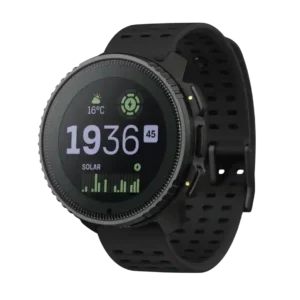
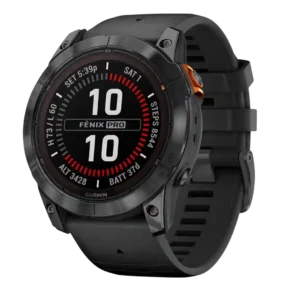
Suunto Vertical
Where It Has the Edge
- comfort is 4.5 vs 3.6. Comfort was positive, especially band feel, weight, and daily wearability.

Scorata scores summarize analyzed review evidence on a 1–5 scale; they are not laboratory measurements or a simple average of customer star ratings. Feature scores summarize the reviews covering that feature. The overall score averages feature scores within each review, then combines review averages. When both expert and customer evidence are available, those two groups receive equal weight. Products can have different review coverage, so small score gaps do not establish a winner.
Recommendations prioritize important features for the category, with a score of at least 3.5, a gap of at least 0.25 points and at least two supporting reviews per product. Features with widely varying scores or broad connectivity contexts are excluded from recommendations. These safeguards do not establish statistical significance.
Quick verdict
The review evidence points to a tradeoff: comfort versus heart rate accuracy and GPS accuracy. Choose according to which strengths matter more to you; the overall score alone does not settle that choice.
Choose Suunto Vertical for comfort.
Choose Garmin fēnix 7X Pro for heart rate accuracy and GPS accuracy.
Scores are out of 5. Missing scores mean missing review evidence, not a missing feature.
Heart-rate accuracy was the clearest recurring flaw, with multiple reviewers reporting underestimation, failures, or unreliable wrist readings during workouts.
Heart rate accuracy was generally strong, especially versus prior Garmin sensors, though reviewers still noted cycling, descents and strength work caveats.
GPS accuracy was strongly praised across reviews for hiking, running, city use, and difficult terrain, though some reviewers separated this from weaker open-water results.
GPS accuracy was one of the strongest consensus areas, with reviewers praising fast lock, precise tracks and reliability in challenging terrain.
Fitness prediction accuracy was mixed, with one reviewer finding race estimates overly ambitious.
Fitness tracking accuracy was praised by lab and review testing, but one backcountry user found strength and non-activity tracking less impressive.
Sleep tracking drew mixed evidence: some reviewers found it surprisingly accurate, while others questioned awake-time or motion-based accuracy.
Sleep tracking accuracy was mixed, with praise for sleep-time accuracy and usefulness but one report of false nap detection.
Coaching features were viewed as useful after updates, especially Suunto Coach and training widgets, though evidence was not as broad as for maps or battery life.
Coaching features were praised for guiding training load, avoiding overuse and adjusting recommendations when recovery or sleep is poor.
Recovery insights were viewed positively, with praise for Suunto’s recovery and fitness feedback plus personalized training guidance.
Recovery insights were praised for Training Readiness and related metrics that help decide training intensity and recovery needs.
Workout variety was a strength, with reviewers highlighting broad sport-mode support and a large set of activity profiles.
Workout tracking variety was strongly praised, with reviewers highlighting an almost endless or complete activity-profile set.
Calorie tracking was praised in one review for producing more realistic results than another tested watch.
Calorie tracking drew a strong complaint from a reviewer who felt it could not accurately account for unstated hiking or rucking effort.
Everyday heart-rate tracking was described as close enough for general health use, separate from weaker sports HR results.
Health tracking accuracy was mixed: one reviewer found Garmin health metrics consistent, while another worried reduced sensor sensitivity hurt daily accuracy.
Wellness insights were supported by positive HRV feedback as a useful health and readiness tool.
Wellness insights were praised for Body Battery, acclimation, sleep and recovery context, though some reviewers only used them occasionally.
Battery life was the strongest consensus strength, praised across every review for long use, multi-day trips, and class-leading endurance.
Battery life was one of the strongest themes, often called superb or expectation-beating, though one long-term backcountry reviewer found real-world life below the advertised claim.
Charging speed was mixed: one reviewer reported very fast charging, while another could not get fast or full charging in testing.
Charging speed was criticized by one reviewer who said the watch still takes nearly two hours to charge.
Charging convenience was mixed because the magnetic charger was easy to attach, but the proprietary cable frustrated another reviewer.
Charging convenience was mixed because long battery life helps, but one field user still warned that big days require keeping a charger handy.
Comfort was positive, especially band feel, weight, and daily wearability.
Comfort was mixed: some reviewers found the strap and 47mm case comfortable, while the 7X size and rubber band drew bulk and heat complaints.
Materials quality was praised for the shell, construction, and rugged premium feel.
Materials quality was praised for the watch’s nice materials and sleek premium look.
Build quality was strongly praised, with repeated descriptions of a rugged, premium, sturdy watch.
Build quality was strongly praised, with reviewers noticing the premium feel and comparing it favorably with lower-end Garmin models.
Style and design were consistently praised, with reviewers liking the rugged, clean, and distinctive look.
Style and design were praised repeatedly as rugged, good-looking and wearable beyond workouts.
Durability was strongly supported by long-term and hands-on evidence, including no durability concerns after heavy use.
Durability was a strong point, with reviewers praising the rugged chassis, scratch resistance and premium construction.
Band quality had limited but positive evidence from praise for the strap construction and feel.
The silicone strap drew positive comments for softness and comfort, with close buckle spacing helping fit.
Fit had limited but positive evidence from one reviewer who said it did not feel chunky on the wrist.
Fit was generally positive around strap adjustability and the 47mm case, though the 7X Pro was called bulky for smaller wrists.
Display quality was mostly positive for readability and screen size, but several reviewers wanted a larger or more modern display.
Display quality was mostly praised for readability and improved contrast, but reviewers still noted AMOLED alternatives look better and auto-brightness can disappoint.
Brightness was positive indoors and outdoors for some reviewers, though one reviewer felt visibility did not beat bright-display alternatives.
Brightness opinions were mixed: several reviewers liked the brighter display, while others criticized auto-backlight dimness and daylight visibility.
Outdoor visibility was usually strong in bright sun, but long-term testing noted glare in some cloudy conditions.
Outdoor visibility was split between praise for readable data fields at high output and complaints that the screen is hard to see in daylight.
Reliability had limited positive evidence from one reviewer who described the watch as dependable.
Reliability was praised across GPS, heart-rate and daily use, with reviewers saying the watch worked well and was hard to fault.
Value was mixed: reviewers saw the watch as a worthwhile outdoor investment but repeatedly called out high pricing and competitive alternatives.
Value for money was divided: reviewers justified the price for serious users but warned budget buyers and Fenix 7 owners may not benefit enough.
One reviewer criticized the missing resume-later option as a serious weakness for multi-day activities.
The resume later function earned direct praise from one reviewer as a favorite activity feature.
Cross-platform planning got positive evidence from the ability to use the Suunto app on tablet or macOS desktop.
Cross-platform compatibility was limited for iPhone use because one reviewer said the Garmin-to-iPhone connection was essentially notifications only.
Flashlight usefulness was mixed: early reviews criticized activation as cumbersome, while later use found it handy after shortcut changes.
The flashlight received broad, enthusiastic praise as practical, frequently used and more useful than expected.
Safety features had limited positive evidence from storm/weather alert usefulness and sunset/weather alerts.
Safety features were praised for inReach control and backcountry peace of mind, with flashlight safety also reinforcing this theme.
ECG was criticized by omission in a smartwatch-feature comparison because reviewers noted the Vertical lacks ECG functionality.
ECG functionality was a clear weakness because reviewers repeatedly noted the hardware was not enabled and had no guaranteed future.
Bluetooth connectivity was mixed because sport sensor support exists but the sensor management experience was criticized.
Bluetooth support was viewed positively, with one reviewer saying it was enough and another appreciating ANT+ and Bluetooth compatibility.
Review contexts may differ, so use caution when interpreting the score gap.
Touchscreen responsiveness was mixed: usable in adverse conditions, but several reviewers reported laggy touch interactions.
Touchscreen responsiveness was praised as responsive and usable even in wet conditions, while buttons remained preferred for some outdoor use.
Third-party app support was praised as practical add-on functionality rather than cosmetic extras.
Third-party app support was mixed: Garmin’s store and watch-face options helped, but broader integrations and app depth drew criticism.
Review contexts may differ, so use caution when interpreting the score gap.
The companion app was a major strength, especially route planning, map downloads, training data, and general usability.
The companion app split reviewers, with praise for Garmin Connect’s experience and integration but criticism that the app feels dated, desktop tools lag and offline workflow is weak.
The app ecosystem was useful because of partner apps and SuuntoPlus options, but one-app-at-a-time limits reduced flexibility.
The ecosystem was praised as impressive when judged around Garmin’s outdoor-focused UI, features and design.
Review contexts may differ, so use caution when interpreting the score gap.
The user interface was generally considered easy or intuitive, despite some lag-related caveats.
The user interface was polarized, earning praise from one reviewer but strong criticism from another for deep, unintuitive menus.
Wi-Fi map downloads were appreciated when simple, but reviewers also noted desktop-download wishes and slow downloads.
Wi-Fi connectivity worked for downloads, but map downloads over Wi-Fi were criticized as slow.
Review contexts may differ, so use caution when interpreting the score gap.
Button controls were mostly praised for simplicity, glove usability, and feel, though one reviewer wanted a five-button layout.
Button controls were consistently praised for intuitive navigation, glove/rain usability and reliable interaction during activity.
Onboard music storage was repeatedly criticized as missing, especially given competitors and the watch’s internal storage.
Onboard music storage existed, but one reviewer criticized the syncing process as dated.
Watch faces were mixed to weak, with reviewers wanting better faces or noting limited complication choices.
Watch face quality was weak for stock faces, though third-party faces helped improve the experience.
Smartwatch features were a weakness because reviewers found some smart functionality incomplete.
Smartwatch features were mixed: reviewers liked the lifestyle basics, but several said it is not an Apple Watch-level smartwatch.
Customization was praised for watch-face, shortcut, and mode flexibility.
Customization was praised for letting runners tailor screens, functions and analytics closely to their needs.
Menu navigation was mixed, with one review citing slower movement through menus and another calling navigation back to the watch face fiddly.
Menu navigation was mixed: one reviewer liked the recent-menu shortcut, while another found the overall menu system unintuitive.
The operating system experience was considered usable but not especially polished or distinctive.
Operating system experience was polarized, with one review calling it one of the best user experiences and another finding Garmin interfaces frustrating after Apple.
Contactless payments were a weakness because reviewers explicitly noted the lack of NFC payments.
Contactless payments were criticized mainly for limited bank support, especially in the UK.
Smartphone notifications worked, but the review evidence was qualified by limited emoji support.
Smartphone notifications were useful and readable, but iPhone reply limits and clunky app interaction kept the score moderate.
Mapping and navigation were a core strength, praised for offline maps, app route planning, trail use, and real-world navigation.
Mapping and navigation were widely praised as class-leading, but reviewers also noted screen size, weather-overlay placement and phone-map comparisons as limitations.
Review contexts may differ, so use caution when interpreting the score gap.
Software smoothness was mixed to weak: lag was repeated, though one long-term review saw noticeable improvement after updates.
Software smoothness had some caveats, including slower post-workout chart handling and calls for more responsive map hardware.
One reviewer criticized the watch for not reminding them to stop a workout, making activity auto-detection feel incomplete.
Standalone connectivity was a limitation, with one reviewer saying users far from their phone would be better off with an Apple Watch.
Blood oxygen tracking drew criticism from one reviewer who saw automatic measurements as superfluous and battery-costly.
Hill tracking through Hill Score was mixed, with some appreciating the concept but others finding the scores hard to interpret or unrealistic.
Score tracking was mixed: Endurance and Hill Scores were interesting, but several reviewers found them unpolished, hard to validate or inconsistent.
Stress and resource tracking received positive long-term feedback when one reviewer said it matched how they felt.
Music controls were mixed, ranging from good controls to complaints that Spotify/offline music feels less clean than Apple-style watches.
Pairing and syncing reliability were positive, with reviewers reporting no sync issues and working route transfer workflows.
Review contexts may differ, so use caution when interpreting the score gap.
Size options were praised because reviewers liked the 47mm fit and appreciated that all sizes get the main Pro features.
Water resistance had limited but positive evidence from one review saying it was suitable for ocean or pool use.
The Pace 4 Pro delivers an exceptional display, impressive battery life and reliable GPS in a remarkably light sports watch. Its wrist heart-rate tracking can be inconsistent during intense workouts,...
Pros: heart rate accuracy, display quality
Cons: band quality, smartwatch features
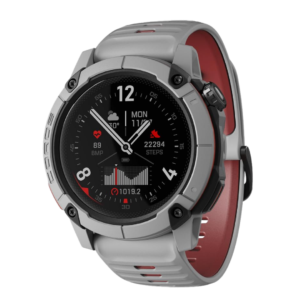
Best for long battery life, accurate GPS and useful offline maps at a strong price. Skip it if you need payments, richer apps, a built-in LED flashlight or polished smartwatch...
Pros: mapping and navigation, value for money
Cons: smartwatch features, contactless payments
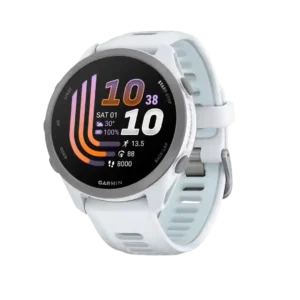
Best for accurate run tracking, deep Garmin coaching and phone-free Spotify in a light package. Skip it if you need full maps, triathlon mode, Apple Music support or the strongest...
Pros: value for money, GPS accuracy
Cons: mapping and navigation, third-party app support
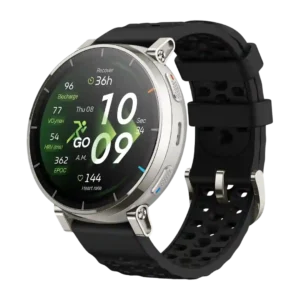
Good if you want premium running features, long battery life, and maps for under $200. Skip it if you need flawless heart-rate data, multiband GPS, LTE, or richer app support.
Pros: value for money, battery life
Cons: heart rate accuracy, third-party app support