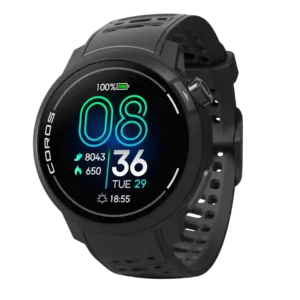
Coros Pace 4
Where It Has the Edge
- battery life is 4.6 vs 4.1. Battery life was a standout across nearly every review, especially given the small case and AMOLED screen.

Scorata scores summarize analyzed review evidence on a 1–5 scale; they are not laboratory measurements or a simple average of customer star ratings. Feature scores summarize the reviews covering that feature. The overall score averages feature scores within each review, then combines review averages. When both expert and customer evidence are available, those two groups receive equal weight. Products can have different review coverage, so small score gaps do not establish a winner.
Recommendations prioritize important features for the category, with a score of at least 3.5, a gap of at least 0.25 points and at least two supporting reviews per product. Features with widely varying scores or broad connectivity contexts are excluded from recommendations. These safeguards do not establish statistical significance.
Quick verdict
The review evidence points to a tradeoff: battery life versus heart rate accuracy and fitness tracking accuracy. Choose according to which strengths matter more to you; the overall score alone does not settle that choice.
Choose Coros Pace 4 for battery life.
Choose Suunto Run 2 for heart rate accuracy and fitness tracking accuracy.
Scores are out of 5. Missing scores mean missing review evidence, not a missing feature.
Heart-rate accuracy was usually good for steady running, but reviewers repeatedly saw weaker results in intervals, cycling, gym work, or cadence-lock situations.
The redesigned wrist sensor is a substantial improvement, often matching chest straps during running and intervals. Outdoor cycling, upper-body lifting and occasional unexplained spikes remain weak points for some users.
GPS accuracy drew the strongest agreement: most reviewers found tracks and distances excellent, with only occasional drift or margin-of-error complaints.
Dual-band GPS produces strong distance and route results for most road runs and rides. Dense trees, buildings, fast mountain descents and open-water swims can introduce noticeable errors.
Core fitness tracking was viewed as accurate and useful overall, with some caveats around open-water swim and more difficult sensor scenarios.
Distance and workout measurements generally hold up well against competing devices, particularly for land-based cardio. Swimming, wrist-heavy lifting and some wellness measurements are less consistent.
Sleep timing was often acceptable, but sleep-stage accuracy and the watch’s judgment of poor sleep were questioned by several reviewers.
Sleep duration can be close to other trackers, but several testers found missed awakenings, late sleep starts or false naps. Sleep-stage results are less dependable than broad trends.
Coaching and training features were useful and unusually complete for the price, though Garmin-style guidance and some plan options were still stronger elsewhere.
Adaptive coaching, virtual pacing and structured workouts add real training value. The AI plans are still evolving and not every athlete finds them convincing.
Reviewers praised the broad workout profile selection and multisport coverage, even while noting that some adventure-focused modes stay on higher-end models.
Running modes are extensive and there is useful multisport, cycling and gym coverage. The roughly 35 modes and simpler triathlon tools trail the Race models.
Recovery and training-load insights were useful for interpreting fitness, although one reviewer criticized Coros’s weekly training-load reset.
Recovery and overnight HRV trends can help guide training decisions, though some recovery estimates conflict with training-load measures and lack clear actionable explanations.
Step counts were reported as aligning well with Garmin and Apple watches in testing.
Step totals tend to be understated, sometimes substantially even during running. It is a poor choice if accurate daily step counts are important.
Wellness insights such as HRV, readiness-style guidance, and training trends were helpful for many users, but not every wellness check felt actionable.
The watch offers a useful collection of health and fitness trends that can help put training and recovery into context.
Comfort was one of the clearest strengths, with reviewers repeatedly praising the light, small watch for all-day and overnight wear.
The slim, lightweight body and generally comfortable strap make the watch pleasant to wear through long workouts and sleep.
Materials quality was mixed: the plastic helped weight and comfort, but several reviewers called it budget or not lavish.
A steel bezel, Gorilla Glass and polymer construction deliver a premium feel without flagship weight; some testers would still prefer tougher glass or less plastic.
Durability raised concerns because mineral glass and the low bezel were seen as less protective than tougher premium materials.
The lightweight construction feels durable for regular workouts and light trails, though rocky outings may warrant a screen protector.
Build quality was acceptable and functional, but the lightweight plastic design kept it from feeling premium.
The case feels solid and more premium than many plastic-heavy competitors while keeping weight low.
Style and design were well received, with reviewers calling the watch sleek, clean, attractive, and helped by the AMOLED display.
The understated Nordic case, metallic bezel and colorful straps give the watch a distinctive, premium sports-watch appearance.
Band quality was mixed: silicone was practical and straps were comfortable, while nylon drew complaints for holding sweat or moisture.
The removable silicone strap is soft and stretchy, but multiple testers experienced the keeper or clasp popping loose. Others found its fastening secure.
Fit was positive in the available evidence, with the 43 mm case sitting well on the wrist.
The low-profile case fits well on a range of wrists, although the band keeper can compromise an otherwise secure fit.
Battery life was a standout across nearly every review, especially given the small case and AMOLED screen.
Several days between charges is realistic, often about four to seven with regular exercise. Always-on display and maps reduce runtime, and low-battery GPS estimates can be unreliable.
Charging convenience was mixed: the small USB-C adapter and keychain were handy, but needing a separate cable added friction.
The keyed magnetic puck is a welcome improvement, particularly for flat charging. Some testers found it easy to dislodge or disliked carrying a separate cable.
Display quality was a major upgrade, with reviewers repeatedly praising the sharp, colorful AMOLED panel.
The sharp AMOLED panel provides crisp workout figures and clear maps, with a significant brightness improvement over the first Run.
Outdoor visibility was consistently good, with reviewers reporting clear readability in sunlight and varied conditions.
Workout data and route lines remain easy to read in bright sunshine, including exposed paths and harsh midday glare.
Brightness was usually strong outdoors and in daily use, though one reviewer found the default mode conservative.
The 2,000-nit peak is generally more than sufficient outdoors, though some similarly priced rivals go brighter and the minimum setting can be harsh at night.
Reliability was positive in the available evidence, with the watch described as a solid sports-watch performer overall.
Reported problems include incomplete charging, incorrect battery estimates, always-on display glitches and sleep-schedule bugs. Experiences vary.
Value for money was the strongest consensus point, with every review framing the Pace 4 as unusually competitive for its price.
Excellent tracking hardware and free maps offer substantial value, but the jump from the original Run makes lower-priced and more feature-rich rivals harder to ignore.
The Coros ecosystem scored well because training analysis is broadly shared across the range and app/training-lab access was praised as free.
The Suunto ecosystem has useful training tools, but the Run 2 cannot access the SuuntoPlus sports app store available on pricier models.
Review contexts may differ, so use caution when interpreting the score gap.
Operating system experience was praised for strong performance on the updated processor.
The separate Run software platform is faster than before, but its differences from other Suunto watches, missing integrations and occasional bugs are frustrating.
Mapping and navigation were the most common tradeoff: breadcrumb navigation worked for many runs, but the lack of offline maps pushed some reviewers toward Pace Pro or higher-end watches.
Free offline maps add useful terrain context and make route following far better than breadcrumbs alone. Street labels, advanced climb tools and automatic rerouting are generally limited.
Review contexts may differ, so use caution when interpreting the score gap.
Third-party app support was a clear limitation, with reviewers flagging the lack of app expansion versus smarter watches.
Activity synchronization with services such as Strava and TrainingPeaks is useful, but externally authored structured workouts and additional sports apps are restricted.
Review contexts may differ, so use caution when interpreting the score gap.
Touch responsiveness was mostly good, but accidental touchscreen or dial input was a recurring annoyance.
Touch controls feel responsive and smooth, a notable improvement over older Suunto models.
Button controls were useful for shortcuts and navigation, but reviewers disliked the digital dial during runs and the limited action-button behavior outside activities.
The rotating crown and tactile buttons are appreciated during sweaty workouts. Some users would prefer extra buttons, consistent start/stop controls or one-press lap recording.
Customization was solid for sports fields, structured workouts, and button functions, with some limitations in watch-face flexibility.
Widgets, faces and button shortcuts offer useful personalization, but certain settings can only be changed in the app or on the watch and some data fields are locked.
Pairing reliability was positive in the available evidence, with the reviewer reporting no issue connecting wireless headphones.
Initial Bluetooth pairing was quick and trouble-free in the reported setups.
Review contexts may differ, so use caution when interpreting the score gap.
Menu navigation was simple and practical, but one reviewer felt the interface lacked smartwatch polish.
The crown, grouped activities and widgets make navigation fairly straightforward, although some familiar actions are moved to different buttons and menus can take adjustment.
Contactless payments were missing, which reviewers treated as part of the broader smartwatch-feature gap.
The absence of wrist payments is particularly frustrating for runners who want to leave their phone behind and still buy refreshments or transport.
Software smoothness was a strength, with reviewers describing the watch as snappy and lag-free, though less glossy than Garmin in places.
Menus and scrolling are noticeably smoother than earlier Suunto watches. Some wake-up and page-specific lag still occurs.
The companion app was praised for ease of use, improved polish, and transcription support, though voice content stayed inside the Coros ecosystem.
The app is rich in route planning, detailed activity graphs and customizable dashboards. Its navigation earns praise, while jargon-heavy training information and some restrictions make it less polished.
Onboard music support was limited because it depends on owned audio files and lacks Spotify, Apple Music, or other streaming-service integration.
Local audio storage enables phone-free listening, especially on the 64GB model. Manually transferring audio files is less convenient than streaming-service downloads.
Smartwatch features were consistently described as basic, making the Pace 4 more of a training tool than a full smartwatch.
Everyday smartwatch extras trail rivals: music streaming, payments and broader app support are missing, even though basic phone controls are available.
The user interface was generally considered easy, simple, and understandable, even if it remains more basic than some rivals.
The interface is clean and responsive, but its navigation conventions and presentation are not always as intuitive as competing watches.
Watch faces were attractive by default, but reviewers wanted more customization and richer watch-face options.
There are attractive, useful faces and photo-based customization, but the overall selection and third-party face access are limited.
Music controls were mixed: some reviewers praised phone media controls, while others noted absent or not-yet-available controls during testing.
Phone media controls are handy in principle but can be unreliable about recognizing active playback.
Notifications were a weak point, with reviewers calling them basic, tiny, or nearly useless while running.
Phone notifications can be inconsistent and interactions are limited, making them less useful than on more fully featured smartwatches.
The display flashlight was useful in a pinch, but several reviewers said it could not match a dedicated LED flashlight.
The screen-based flashlight is adequate for small nearby tasks but cannot replace a dedicated LED flashlight.
Initial setup is generally easy, although installing maps and learning some software conventions can take extra effort.
Sleep mode dims the screen appropriately, but occasional lost sleep schedules undermine its consistency.
The updated charger shares the newer Suunto magnetic design according to several testers, but the original Run cable is incompatible and one account described it as model-specific.
The separate operating system raises concerns about future feature updates, although the original Run received meaningful updates over time.
A tester could not access the advertised EnergySense feature during testing, despite expecting to try it.
Pace and distance are often responsive and consistent, but one tester found lap pace unstable at the beginning of a lap.
Wireless map transfer works smoothly, but large regions may take hours to download.
Maps pan and zoom smoothly, with relatively little delay when moving between sections.
Only one watch can be paired with the Suunto app at a time, making alternating between multiple watches inconvenient.
Morning and weekly reports make the data already collected by the watch more convenient to review.
The clean, thoughtfully designed packaging makes a strong first impression.
The display can take too long to reach full brightness after a wrist gesture, making quick workout glances less convenient.
The absence of more advanced safety and live-tracking tools is a disadvantage compared with Garmin alternatives.
EnergySense offers a promising live endurance estimate, but its pace-based behavior on hills and uncertain usefulness make it best treated as rough guidance.
The 4GB model is usually sufficient for local maps; 64GB is useful for extensive regions and audio libraries. Some testers question the large gap between configurations.
Core coaching and app features can be used without an additional monthly subscription.
Training load, recovery and progress data are comprehensive, but acronyms, inconsistent predictions and less actionable explanations make the insights harder to use.
Haptic feedback is useful, but its timing and alignment with on-screen elements are less polished than competing watches.
The featherweight body sits close to the wrist and is notably less bulky than larger endurance watches.
The remaining-runtime display can substantially overestimate how much GPS recording time is left, especially at low battery levels.
Charging typically takes around two hours, which is acceptable for routine weekly charging but slower than some alternatives.
Bluetooth headphone pairing worked reliably with the tested Apple and Anker headphones.
Bluetooth connectivity was positive in the limited evidence, with wireless headphones connecting without issue.
Review contexts may differ, so use caution when interpreting the score gap.
Offline playback is limited to manually loaded audio files; there is no native Spotify or other streaming service integration.
Clear maps and off-route alerts make routes easy to follow. Navigation is less sophisticated than on fully routable maps, particularly for replanning and street detail.
Reviewers liked the workout voice notes when transcription worked well, but several treated the feature as niche or less convenient than it could be.
The silicone band is straightforward to clean after sweaty workouts.
Estimated finishing times can be noticeably slower than actual performances, limiting their usefulness for pacing goals.
Elevation profiles broadly align with other devices, but sweat and occasional offsets can produce incorrect ascent totals.
Health tracking was generally useful for big-picture trends, though reviewers found some accuracy limits when heart-rate and sleep data became more demanding.
Overnight HRV readings aligned closely with other trackers in the reported comparisons.
The heat-strain estimate is limited by its reliance on ambient conditions rather than actual core temperature.
Workout screens and lap displays make important pacing and effort information easy to see, although some layouts and manual-lap requirements limit flexibility.
Different activity segments combine seamlessly into one workout with both individual and combined statistics.
Stress tracking was treated as accurate enough for a general picture when combined with sleep and heart-rate data.
Custom workout screens and intervals are valuable, but fixed duration fields, duplicate profiles and app-only changes restrict flexibility.
Support for cycling power meters and compatible chest straps expands the watch’s usefulness for serious training.
Installing maps is straightforward for several users, but first-time Wi-Fi setup can be confusing.
The brighter screen, improved sensor and offline maps represent a meaningful upgrade, although the higher price is harder to justify if those features are unnecessary.
Size options were a limitation because reviewers wanted more than one case size and found the single smaller size unsuitable for some users.
Water resistance was adequate for wet use and casual swimming, but reviewers did not treat it as a rugged diving-level feature.
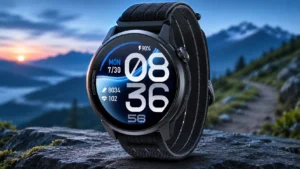
The Pace 4 Pro delivers an exceptional display, impressive battery life and reliable GPS in a remarkably light sports watch. Its wrist heart-rate tracking can be inconsistent during intense workouts,...
Pros: heart rate accuracy, display quality
Cons: band quality, smartwatch features
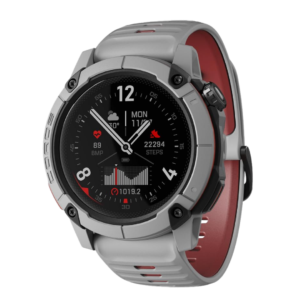
Best for long battery life, accurate GPS and useful offline maps at a strong price. Skip it if you need payments, richer apps, a built-in LED flashlight or polished smartwatch...
Pros: mapping and navigation, value for money
Cons: smartwatch features, contactless payments
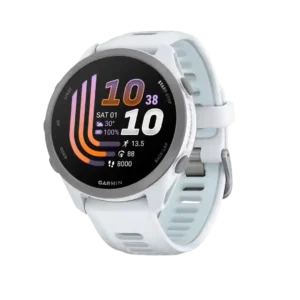
Best for accurate run tracking, deep Garmin coaching and phone-free Spotify in a light package. Skip it if you need full maps, triathlon mode, Apple Music support or the strongest...
Pros: value for money, GPS accuracy
Cons: mapping and navigation, third-party app support
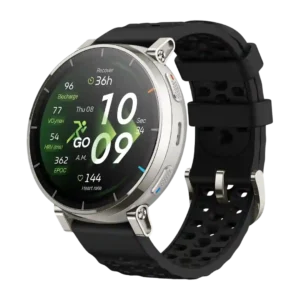
Good if you want premium running features, long battery life, and maps for under $200. Skip it if you need flawless heart-rate data, multiband GPS, LTE, or richer app support.
Pros: value for money, battery life
Cons: heart rate accuracy, third-party app support