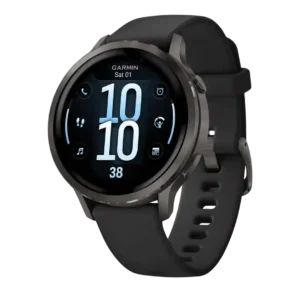
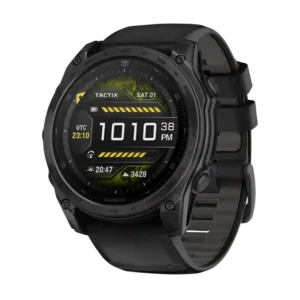
Garmin Venu 4
Where It Has the Edge
- materials quality is 4.7 vs 4.3. Materials quality improved with the full metal chassis and more premium wrist feel.

Scorata scores summarize analyzed review evidence on a 1–5 scale; they are not laboratory measurements or a simple average of customer star ratings. Feature scores summarize the reviews covering that feature. The overall score averages feature scores within each review, then combines review averages. When both expert and customer evidence are available, those two groups receive equal weight. Products can have different review coverage, so small score gaps do not establish a winner.
Recommendations prioritize important features for the category, with a score of at least 3.5, a gap of at least 0.25 points and at least two supporting reviews per product. Features with widely varying scores or broad connectivity contexts are excluded from recommendations. These safeguards do not establish statistical significance.
Quick verdict
The review evidence points to a tradeoff: materials quality versus GPS accuracy and sleep tracking accuracy. Choose according to which strengths matter more to you; the overall score alone does not settle that choice.
Choose Garmin Venu 4 for materials quality.
Choose Garmin Tactix 8 for GPS accuracy and sleep tracking accuracy.
Scores are out of 5. Missing scores mean missing review evidence, not a missing feature.
GPS accuracy was one of the strongest points, with reviewers praising fast acquisition, stable tracks, and dual-band performance, while one walking test exposed transport-related distance errors.
GPS accuracy received strong praise across outdoor, running, cycling, and remote-use evidence, with routes described as precise and dependable.
Heart-rate evidence was mostly positive across runs, workouts, and chest-strap comparisons, with a few reviewers noting minor dips, lag, or blips during intervals and gym work.
Heart rate feedback was broadly praised for accuracy and faster updates, though one athletic test found strength training still benefits from a chest strap.
Sleep tracking was considered useful and often aligned with competing trackers, but reviewers also found occasional errors around awake time, sleep stages, or scoring strictness.
Sleep tracking drew positive confidence from reviewers, who said its patterns matched experience or improved over the prior generation.
Fitness tracking accuracy was a strength overall, covering workouts, reps, and sports data, though strength training and high-intensity sessions still produced some caveats.
Fitness tracking was praised as comprehensive and accurate across workouts, especially when combining heart rate, GPS, and detailed activity data.
Reviewers liked the broader activity coverage and felt the expanded workout options helped elevate the Venu line beyond older or more basic models.
Workout variety was a major strength, with reviewers highlighting rucking, dozens of programs, 80 sports profiles, and broad tracking flexibility.
Coaching features were widely praised, with reviewers highlighting Training Readiness, suggested workouts, race tools, Garmin Coach, and more advanced training feedback.
Coaching features were valued for personal-trainer-style guidance, visual workout suggestions, and readiness breakdowns.
Recovery tools such as Body Battery, Training Readiness, and recovery recommendations were consistently described as helpful and well matched to how reviewers felt.
Recovery insights were one of Garmin's strongest areas, with reviewers relying on training recommendations, recovery timing, and readiness guidance.
Stress and lifestyle-related tracking was useful in concept, but reviewers split on the manual logging burden and whether they would keep using it.
Stress tracking was described as useful for personalized relaxation and emotional management rather than just a passive metric.
Wellness insights were a major strength, especially Body Battery, Health Status, Lifestyle Logging, and morning/evening reports, though some reviewers disliked manual habit logging.
Wellness insights were motivating for users who wanted health accountability, progress feedback, and practical reasons to keep moving.
Reviewers generally trusted the Venu 4's broader health signals, especially Health Status and HRV-style trend alerts, while treating them as wellness guidance rather than medical proof.
One experienced Tactix-series user judged the newer sensor package as noticeably more accurate for overall health tracking than the prior model.
Calorie data received narrow but positive evidence from one extended walking test where the reviewer said calories and related data looked sound.
Calorie tracking evidence was mixed: rucking weight was credited for improving calorie estimates, while one reviewer questioned whether pack weight changes the result.
Comfort was mostly strong, with many reviewers finding it wearable all day and during sleep, though a few reported weight, nighttime discomfort, or skin irritation.
Comfort evidence was limited but favorable: the watch can be worn daily once users adapt, and the silicone strap was called comfortable.
Materials quality improved with the full metal chassis and more premium wrist feel.
Materials quality was praised for titanium and sapphire, though one long-term user raised a coating-wear caveat.
Band quality had narrow but positive evidence, with the strap described as understated and stylish.
Band quality was mixed to negative, with some silicone-band improvement noted but strong criticism of the expensive nylon strap.
Fit evidence was limited to one reviewer, who found the 45mm version well balanced on a medium-to-large wrist.
Fit was mixed because the 51mm watch is thick on the wrist even when the owner adapted to it.
Build quality was praised for a more premium, sturdier metal-forward design.
Build quality was judged very high, rugged, stylish, and consistent with a premium outdoor watch.
Durability evidence was limited but positive, with no scratches or visible wear after swims and workouts.
Durability was a major strength, with reviewers reporting rugged construction, military-grade toughness, and good real-world scratch resistance.
Style and design were among the strongest points, with reviewers repeatedly calling the Venu 4 elegant, premium, date-night-ready, and less obviously sporty.
Style and design were consistently praised for the rugged tactical look, flatter bezel, and strong visual appeal.
Battery life was widely praised as far better than mainstream smartwatches, though always-on display, GPS, and the Venu 3 comparison reduced enthusiasm for some.
Battery life was one of the clearest strengths, with reviewers often reporting multi-week use, though AMOLED always-on settings reduce endurance.
Charging convenience was a weakness because reviewers disliked Garmin's proprietary cable even when long battery life softened the issue.
Charging convenience was mixed: rare charging was a major benefit, but the proprietary cable frustrated one long-term user.
Charging speed was acceptable to good, with one reviewer reporting useful quick top-ups and another noting a full charge can take around two hours.
Charging speed had limited positive evidence, with one source citing about an hour and another reporting under two hours from 17% to full.
Display quality was strongly praised for AMOLED color, sharpness, and visual pop.
Display quality was one of the strongest themes, with AMOLED clarity, bright readability, and impressive display options repeatedly praised.
Brightness was a clear strength, with reviewers noting the brighter screen and easy readability.
Brightness was strongly positive, with reviewers calling the screen brighter, crisper, adaptive, and easy to see.
Outdoor visibility was excellent across reviews, with repeated praise for direct-sunlight readability and no need to squint.
Outdoor visibility was praised for sunlight readability and visible display performance outside.
Reliability was mixed: one reviewer experienced workout freezes, and another saw tracking hiccups during an extended walking test.
Reliability was praised through real-world durability, capability, and software performance evidence.
Value was the most divided attribute: reviewers saw meaningful upgrades and occasional deal appeal, but the $100 price jump and competition made it harder to recommend casually.
Value for money was the most mixed attribute: reviewers acknowledged exceptional capability but repeatedly stressed the high price.
The app ecosystem was a consistent limitation, with reviewers saying Garmin's app breadth and polish lag far behind Apple or Google.
The app ecosystem was described as vast, mainly through the breadth of available Garmin widgets and apps.
Review contexts may differ, so use caution when interpreting the score gap.
Third-party app support was useful enough to boost the smartwatch side for one reviewer, but another stressed that the watch still lacks the extra apps found on fuller smartwatch platforms.
Third-party app support was positively noted for easy route loading and AllTrails-connected navigation support.
Review contexts may differ, so use caution when interpreting the score gap.
The companion app was mixed because Garmin Connect supplied useful lifestyle logging but buried the feature behind several menus.
The companion app experience was praised for setup guidance and deep drill-down analytics.
Garmin Pay was useful in theory but limited by passwords and uneven bank support, making contactless payments a mixed attribute.
Contactless payment support was viewed as easy and premium, though the evidence was brief.
Smartwatch features were serviceable for essentials, but reviewers repeatedly framed the Venu 4 as fitness-first and underpowered compared with Apple, Google, or Galaxy watches.
Reviewers consistently framed the Tactix 8 as a powerful, feature-dense smartwatch, though some lifestyle features were unnecessary for certain users.
Button controls were one of the most repeated tradeoffs: the two-button layout looks cleaner, but several reviewers missed more physical controls during activity.
Button controls were mostly praised for texture and feel, but dive-rated buttons created mixed feedback from users who preferred older tactile clicks.
Navigation was useful for routes, breadcrumb guidance, back-to-start, and staying on course, but the lack of full-color maps remained a repeated limitation.
Mapping and navigation were praised for precise routes, excellent navigation, and useful map experiences, but one hunter said it cannot replace onXhunt.
Review contexts may differ, so use caution when interpreting the score gap.
Notifications were adequate but not smartwatch-class: reviewers liked that they displayed effectively, while replies and interactions could feel limited or cumbersome.
Notifications were treated as useful everyday smartwatch support, especially when paired with voice assistance or general connected features.
The user interface was polarizing: several reviewers liked the cleaner, faster experience, while others found touch-first navigation fiddly during workouts.
The user interface earned strong praise for being user-friendly, faster, and more elegant despite the huge amount of data available.
Menu navigation was quick and convenient in normal use, but the evidence was limited and tied to the touchscreen-led interface.
Menu navigation was described as more user-friendly and easy to learn, especially for users new to complex Garmin watches.
Call handling was useful for quick calls, but speaker volume and phone dependence kept it from feeling like a core strength.
Call handling was repeatedly praised as convenient and surprisingly useful, though it depends on a paired phone rather than standalone cellular service.
Touchscreen responsiveness was strong in ordinary navigation, but reviewers found touch less reliable or convenient during sports, rain, gloves, or sweaty workouts.
Touchscreen response was mostly positive, with praise for responsiveness, though one prior Tactix user felt the solar model touch feel was slightly worse.
Customization evidence was limited but positive, with focus modes making the watch feel more personalized and adaptable.
Customization options were a strength, covering personalized dashboards, settings, bands, watch layout, and menus.
Voice assistant quality was mixed-to-weak: some found it useful or responsive, while several reviewers called it clunky, buggy, unreliable, or poor compared with phone assistants.
Voice assistant evidence was split, with one source calling it convenient and another finding some tactical commands did not trigger.
Offline music storage was praised as strong for a non-smartwatch brand, though app availability was not perfect.
Onboard music storage was valued because offline music and podcast use reduce dependence on an internet connection.
The newer Garmin OS and unified platform were generally viewed as a meaningful improvement, with smoother menus, better accessibility, and potential quality gains.
Operating system experience was praised in the display comparison for upgraded organization and easier access to activities.
Software smoothness had limited but positive evidence, centered on faster syncing, smoother animations, and broader parity in the updated platform.
Software smoothness was positive overall, with reviewers reporting responsive use, little lag, and smoother movement than older models.
Opinionated evidence was limited, but automatic track detection worked well in the one clear hands-on account.
Activity auto-detection had limited but positive evidence from a fringe-sport use case where automatic measurement helped track progress.
LTE was a clear weakness because the Venu 4 lacks cellular independence, which several reviewers called a downside or limitation.
LTE connectivity was a weak point because one reviewer explicitly noted the watch lacks built-in carrier service and must stay linked to a phone.
The flashlight was one of the most consistently praised new features, described as genuinely useful for night runs, household use, and quick visibility.
The flashlight was one of the most loved practical features, repeatedly described as bright, useful, and convenient for camping, night tasks, and everyday use.
Safety-feature evidence was limited but positive, focused on the flashlight strobe improving visibility during night runs.
Safety features had limited positive evidence from off-route navigation alerts during hiking.
Cross-platform support was considered a plus because the core experience works across iOS and Android, but Android users get more messaging and map-related features.
Data privacy evidence was positive but narrow, centered on passcode, kill switch, and data-wiping/security features.
The ECG feature received limited but positive opinionated evidence, with one reviewer saying the wrist measurement worked reliably.
Size options were useful for smaller wrists, though one reviewer found the smaller screen somewhat cramped.
Water resistance was positive overall, including scuba/free-dive support, though one reviewer would only use it as a secondary dive device.
Step counting performed well in explicit testing and event use, with exact or sound counts reported despite separate distance-tracking hiccups.
Watch face quality had limited but positive evidence, mainly around multiple styles and configurable faces.

Best for long battery life, accurate GPS and useful offline maps at a strong price. Skip it if you need payments, richer apps, a built-in LED flashlight or polished smartwatch...
Pros: mapping and navigation, value for money
Cons: smartwatch features, contactless payments

Best for accurate run tracking, deep Garmin coaching and phone-free Spotify in a light package. Skip it if you need full maps, triathlon mode, Apple Music support or the strongest...
Pros: value for money, GPS accuracy
Cons: mapping and navigation, third-party app support

Good if you want premium running features, long battery life, and maps for under $200. Skip it if you need flawless heart-rate data, multiband GPS, LTE, or richer app support.
Pros: value for money, battery life
Cons: heart rate accuracy, third-party app support

Best for accurate running metrics, excellent coaching tools, a bright AMOLED display, and dependable battery life. Skip it if you need offline maps, music storage, contactless payments, multi-band GPS, or...
Pros: battery life, value for money
Cons: mapping and navigation, smartwatch features