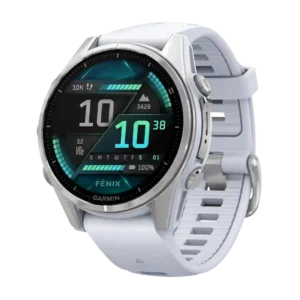
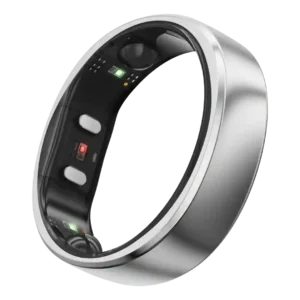
Garmin Fenix 8
Where It Has the Edge
No clear scored advantage over the other product.

Scorata scores summarize analyzed review evidence on a 1–5 scale; they are not laboratory measurements or a simple average of customer star ratings. Feature scores summarize the reviews covering that feature. The overall score averages feature scores within each review, then combines review averages. When both expert and customer evidence are available, those two groups receive equal weight. Products can have different review coverage, so small score gaps do not establish a winner.
Recommendations prioritize important features for the category, with a score of at least 3.5, a gap of at least 0.25 points and at least two supporting reviews per product. Features with widely varying scores or broad connectivity contexts are excluded from recommendations. These safeguards do not establish statistical significance.
Quick verdict
There is not enough consistent, comparable evidence for a clear recommendation. Use the feature details and supporting reviews to weigh the tradeoffs.
There is not enough comparable review evidence to recommend Garmin Fenix 8 over the other product.
There is not enough comparable review evidence to recommend RingConn Gen 2 over the other product.
No clear scored advantage over the other product.
No clear scored advantage over the other product.
Scores are out of 5. Missing scores mean missing review evidence, not a missing feature.
GPS accuracy was one of the strongest areas, with repeated praise for industry-leading tracks in cities, mountains, open water, and workouts.
GPS accuracy evidence was limited and mixed, with one reviewer saying it sometimes had problems but was usually fine.
Heart-rate accuracy was usually strong and often close to chest straps, though interval, ultra, and wrist-optical limitations created some mixed results.
Heart rate accuracy was split: overnight or casual readings often looked close, but workout heart rate drew serious criticism for being too high, too low, or unreliable.
Fitness tracking accuracy was praised as among the best available, with strong activity, movement, and output tracking across reviewers.
Sleep tracking was positively judged for accurately capturing sleep and wake times and matching day-to-day energy impressions.
Sleep tracking was broadly liked and often matched other wearables, but one scientific review and a few comparisons raised concerns about exact sleep accuracy.
Coaching features were praised for training, racing, recovery, and training-load guidance rather than just raw data.
Recovery insights were praised as useful and well aligned with perceived energy, training readiness, and recovery needs.
Recovery insights were viewed positively by reviewers who wanted broader wellness and recovery context rather than pure workout metrics.
Workout tracking variety was a standout strength, with reviewers repeatedly saying the Fenix 8 covers nearly every sport or training scenario.
General activity tracking was viewed as good for basic health use, with some reviewers saying metrics were accurate, but not positioned as a serious training tool.
Automatic workout detection was consistently weak or absent, with reviewers repeatedly noting that workouts must be started manually.
Blood oxygen tracking was mixed, with one reviewer finding it on point across key metrics and another saying SpO2 estimates were off during sleep apnea checks.
Calorie tracking was considered only approximate, with one reviewer saying calorie burn can struggle without stronger workout tracking.
Connected GPS reliability was limited because reviewers had to bring a phone for accurate outdoor distance tracking.
Distance tracking drew a limitation because accurate distance depends on bringing a phone, weakening the minimal standalone fitness experience.
Fitness coaching was mixed: reviewers liked AI planning potential, but others found the advice basic or still underused.
Goal tracking was positively received, especially the clear wellness view and satisfying activity-ring style progress.
Habit tracking was useful for awareness and healthy behavior nudges, including badges and stress/sleep reflection.
Menstrual cycle tracking was useful for period awareness and predictions, though one privacy-conscious reviewer disabled it.
Resting heart rate tracking was one of the safer metrics, with reviewers saying overnight resting heart rate matched closely or was probably still decent.
Route tracking was limited by the lack of built-in GPS and the need to carry a phone for run or ride routes.
Sleep stage tracking was mixed to weak: some reviews found it close, while others reported wakefulness errors, stage disagreements, and poor REM agreement.
Step counts were usually close enough for daily tracking, though a few reviews noted undercounting, overcounting from hand movement, or smart-ring limits for exact step totals.
Stress tracking was generally useful and interesting for spotting patterns, though one reviewer saw false stress during fast walking.
Wellness insights were praised as comprehensive and useful, especially Body Battery, Training Readiness, and Garmin’s broader fitness-optimization data.
Workout mode variety was consistently criticized because the ring supports only a small set of running, walking, and cycling modes.
Workout tracking accuracy was the clearest weakness, especially for serious exercise; reviewers found it limited, spotty with movement, or poor for training data.
Comfort was mixed: straps and some sizes felt comfortable, but larger or heavier models could become obtrusive over long wear.
Comfort was a major strength, with many reviewers saying the ring was light, unobtrusive, easy to forget, or comfortable enough for 24/7 wear.
Materials quality was praised where mentioned, especially the combination of accurate sensors and premium materials.
Band quality was generally acceptable to good, with silicone described as comfortable and cleanable but improved by aftermarket nylon options.
Build quality was consistently praised as rugged, tank-like, premium, and improved over prior generations.
Build quality was generally strong, with titanium and premium feel praised, though one reviewer said the finish felt less premium than pure titanium rivals.
Design and appearance were widely praised as sleek, subtle, minimalist, stylish, and closer to normal jewelry than obvious tech.
Durability evidence was strong, with reviewers noting element resistance, clean sapphire condition, and minimal visible wear after extended use.
Durability was mixed: some reviewers saw no wear after use, while others reported scratches or expected finish deterioration over time.
Fit depended heavily on wrist size, with wide fit adjustability offset by reports of twisting or too-large sizing for smaller wrists.
Fit was mostly positive when sized correctly, though reviewers emphasized using the sizing kit and noted swelling or removal discomfort in some cases.
Size options were mixed: reviewers liked the three sizes, but criticized confusing choices and limitations for smaller wrists or the 43mm version.
Style and design were generally praised as premium or compliment-worthy, though one reviewer disliked the rugged/puck-like look.
Water resistance and dive readiness were viewed positively, especially the 40m dive certification, leakproof buttons, and no-subscription dive tools.
Water resistance was widely praised, with reviewers reporting successful showers, swimming, handwashing, dishes, and everyday wet use.
Battery life was one of the clearest strengths, repeatedly meeting specs or lasting many days to weeks depending on model and settings.
Battery life was the strongest consensus point, repeatedly described as excellent, impressive, and far longer than competing smart rings.
Charging convenience was mixed: the proprietary cable was less convenient than magnetic charging but viewed as reliable.
Charging convenience was heavily praised because the portable case enables travel charging, many recharges, and less outlet dependence.
Charging speed was positively judged in the one opinionated mention, with a full charge taking around an hour.
Charging speed was acceptable but not exceptional, with 90-minute charging described as a bit long by one reviewer.
Display quality was widely praised, especially the AMOLED option’s bright, sharp, colorful presentation and more attractive daily experience.
Brightness was generally strong on AMOLED, though one reviewer tied always-on use to noticeably higher battery drain.
Outdoor visibility was mixed: AMOLED and solar improvements helped readability, but reflection and glare remained concerns for some outdoor-focused users.
Reliability improved after firmware updates, and reviewers also praised the watch’s broader premium build reliability.
Reliability was positive where discussed, with reviewers saying the ring worked quietly in the background, stayed reliable, and exceeded expectations.
Data syncing was generally reliable and fast, with only occasional delays or mild issues reported.
Subscription value was an overwhelming strength: reviewers consistently praised full feature access with no monthly fee.
Value for money was the main concern: nearly every reviewer flagged the very high price, especially versus older Garmin models or narrower feature needs.
Value for money was strongly positive overall, driven by low relative pricing, no subscription, strong battery life, and competitive core tracking.
The only opinionated auto-detection evidence was negative: Move IQ-style automatic tracking was described as convenient but not accurate enough to rely on.
Activity reminders and vital alerts were viewed as useful for goal plans and abnormality prompts, though evidence was limited to a few app-focused reviews.
Cross-platform support is mixed: Android gets fuller text-response options, while iPhone limitations still restrict what Garmin can do.
Data privacy evidence was limited but cautious, with one reviewer disabling cycle data because of privacy concerns.
Google Fit compatibility was positive where tested, with reviewers saying Google Fit syncing was flawless or straightforward.
Health trend insights were mixed: trend views and outlier alerts helped some reviewers, while others wanted friendlier summaries and more personalized advice.
LTE connectivity was a repeated weakness: reviewers specifically called out the lack of cellular/LTE as disappointing or missing.
The Wellness Balance/readiness-style score was useful for one reviewer but less clear and less glanceable for another.
Safety features scored strongly, driven mainly by the repeatedly praised flashlight and outdoor safety usefulness.
Reviewers treated sleep apnea monitoring as a standout differentiator, often valuing the peace of mind, while several cautioned that trust is limited without medical approval or consistent accuracy proof.
Strava compatibility was a clear missing integration for one reviewer who relied on Strava to help interpret activity levels.
Weight was a standout positive, with reviewers repeatedly praising how thin, light, and barely noticeable the ring feels.
Reviewers saw Garmin’s ecosystem as deep enough to offer extra software, but weaker than Apple or Samsung for broader third-party app depth.
Review contexts may differ, so use caution when interpreting the score gap.
Apple Health compatibility was mostly positive, with reviewers reporting working iPhone use, ecosystem support, or straightforward syncing.
Bluetooth sensor and headphone connections were described as easy during workouts, with no noted pairing problems in the supporting review.
Review contexts may differ, so use caution when interpreting the score gap.
Bluetooth reliability was supported by one setup review where the ring quickly found the phone once Bluetooth was enabled.
Button controls remain useful and reliable, but the new leakproof/inductive feel drew mixed reactions compared with older mechanical buttons.
Call handling was mixed to weak: reviewers liked having calls on-wrist, but repeatedly criticized quiet speakers or poor call sound.
Garmin Connect and related companion tools were praised for depth, customization, maturity, and usefulness, though not every customization task has moved to the phone.
Companion app quality was mixed: several reviewers praised simplicity and clarity, while others called it dense, basic, cluttered, or less polished than rivals.
Contactless payments were counted as part of Garmin’s complete smartwatch-tool package in the supporting review.
Customization remains a strength, with reviewers praising deep options for watch faces, text size, widgets, and overall functionality.
Customization options were praised in one review for letting users rearrange busier app menus to prioritize the data they care about.
Mapping and navigation were strongly praised overall for topo maps, routing, rerouting, on-watch navigation, and backcountry usefulness despite some lag.
Review contexts may differ, so use caution when interpreting the score gap.
Menu navigation split reviewers: some found the settings redesign logical and easier, while others found the watch slow to learn or cumbersome.
Music controls were positively included in the watch’s complete smartwatch toolkit, though detailed control testing was limited.
Onboard music storage performed well in the supporting review, with playlist downloads described as much faster than older watches.
Operating system experience was mixed: Garmin’s system is powerful and improving but remains less fluid and less app-rich than rivals.
Pairing and service setup looked reliable in testing, with Strava and Spotify syncing immediately for an existing Garmin user.
Review contexts may differ, so use caution when interpreting the score gap.
Pairing reliability was praised as seamless, easy, and quick in the reviews that discussed setup.
Review contexts may differ, so use caution when interpreting the score gap.
Smartphone notifications were viewed positively where tested, with orderly display and useful rich/photo notification support.
Smartwatch features were broad and improving, but reviewers still framed Garmin as fitness-first rather than a true mini-phone replacement.
Software smoothness was inconsistent: firmware improved the experience for some reviewers, but others still reported lag, slower MIP response, or an unsmooth UI.
Third-party compatibility was a weakness in two reviews, including missing platform sync claims and limited integrations.
Third-party app support was a weakness compared with Apple, Samsung, watchOS, or Wear OS options.
Review contexts may differ, so use caution when interpreting the score gap.
Touchscreen responsiveness ranged from excellent to frustrating: reviewers liked touch unlock and responsive AMOLED use, but one MIP tester reported repeated taps.
The user interface was the most divisive area, with some useful modernization but repeated frustration around complexity, lag, and unintuitive changes.
The user interface was mostly easy to understand, especially for casual users, though one reviewer found the app less intuitive.
Voice assistant quality was mostly positive for timers, activity starts, and off-grid commands, though it still requires a button and is not always faster.
Watch faces were seen as highly customizable, but one reviewer still found the built-in variety limited.
Wi-Fi was praised indirectly through the phone setup flow, where adding apps and customizing from home was described as easy.
Review contexts may differ, so use caution when interpreting the score gap.

Best for long battery life, accurate GPS and useful offline maps at a strong price. Skip it if you need payments, richer apps, a built-in LED flashlight or polished smartwatch...
Pros: mapping and navigation, value for money
Cons: smartwatch features, contactless payments

Best for accurate run tracking, deep Garmin coaching and phone-free Spotify in a light package. Skip it if you need full maps, triathlon mode, Apple Music support or the strongest...
Pros: value for money, GPS accuracy
Cons: mapping and navigation, third-party app support

Good if you want premium running features, long battery life, and maps for under $200. Skip it if you need flawless heart-rate data, multiband GPS, LTE, or richer app support.
Pros: value for money, battery life
Cons: heart rate accuracy, third-party app support

Best for accurate running metrics, excellent coaching tools, a bright AMOLED display, and dependable battery life. Skip it if you need offline maps, music storage, contactless payments, multi-band GPS, or...
Pros: battery life, value for money
Cons: mapping and navigation, smartwatch features