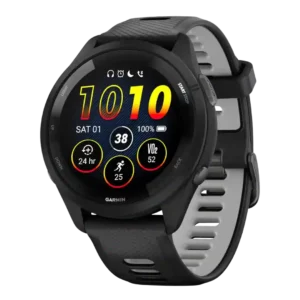
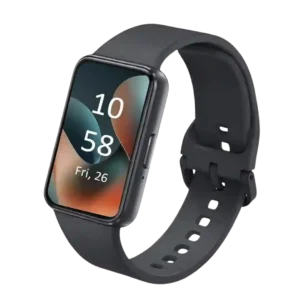
Garmin Forerunner 265
Where It Has the Edge
No clear scored advantage over the other product.

Scorata scores summarize analyzed review evidence on a 1–5 scale; they are not laboratory measurements or a simple average of customer star ratings. Feature scores summarize the reviews covering that feature. The overall score averages feature scores within each review, then combines review averages. When both expert and customer evidence are available, those two groups receive equal weight. Products can have different review coverage, so small score gaps do not establish a winner.
Recommendations prioritize important features for the category, with a score of at least 3.5, a gap of at least 0.25 points and at least two supporting reviews per product. Features with widely varying scores or broad connectivity contexts are excluded from recommendations. These safeguards do not establish statistical significance.
Quick verdict
There is not enough consistent, comparable evidence for a clear recommendation. Use the feature details and supporting reviews to weigh the tradeoffs.
There is not enough comparable review evidence to recommend Garmin Forerunner 265 over the other product.
There is not enough comparable review evidence to recommend Samsung Galaxy Fit3 over the other product.
No clear scored advantage over the other product.
No clear scored advantage over the other product.
Scores are out of 5. Missing scores mean missing review evidence, not a missing feature.
GPS accuracy received very strong agreement, with reviewers repeatedly calling tracks fast, consistent, spot-on, or close to perfect.
GPS accuracy was a major limitation because the Fit3 lacks built-in GPS and depends on a phone for better outdoor tracking.
Heart-rate accuracy was one of the strongest areas across reviews, with several chest-strap comparisons looking very close, though one reviewer had serious tattoo-related read failures.
Heart-rate accuracy was one of the better-tracked areas, often close to reference devices, though intense intervals could expose lag or variance.
Fitness tracking accuracy was broadly praised for runs, rides, swims, and general workouts, with only running-dynamics precision described as approximate.
Sleep tracking drew mixed-to-positive feedback: several reviewers liked the sleep summaries, while one found sleep stages and scores inconsistent across Garmin watches.
Sleep tracking drew the most mixed evidence: several reviewers found it good or accurate, while others reported gaps, overestimates, missed wake periods, or low confidence.
Coaching features were strong for runners through audio prompts, suggested workouts, plans, and workout-building, but one reviewer disliked the limited training-plan choice.
Recovery insights were widely praised, especially Training Readiness, HRV, Body Battery, and overtraining guidance, though usefulness depends on reliable heart-rate data.
Recovery-style sleep scores were appreciated by some reviewers but questioned by others when the sleep score did not match perceived rest.
Workout variety was seen as deep and runner-focused, with extensive sport profiles, though one reviewer felt Garmin trailed Polar on sheer profile count.
Reviewers generally found basic activity readings useful and often accurate enough, though the evidence is about broad tracking rather than athlete-grade precision.
Automatic workout detection was split: several reviewers liked it, while others found missed or unreliable detection.
Blood oxygen tracking was viewed positively, including on-demand readings and close readings against a pulse oximeter in some testing.
Cadence tracking scored strongly in one controlled comparison where cadence matched the Apple Watch Ultra 2 exactly.
Calorie tracking was criticized as too generic for some workout modes rather than deeply useful.
Connected GPS was specifically described as affecting tracking accuracy and proving fiddly in at least one review.
Distance estimates suffered when the tracker lacked reliable phone GPS support, especially on runs without a phone.
Elevation tracking had positive hands-on expectations because the barometer was appreciated for hiking-style use.
Fitness coaching evidence was positive where sleep coaching and Samsung Health guidance were described as genuinely useful.
Goal tracking and activity targets were motivating, with reviewers liking target prompts and auto-detected activity logs.
Guided workouts were valued because Samsung Health training programs were free.
Habit tracking was useful in concept, especially water logging, but one reviewer wanted more flexible input options.
Reviewers found the health metrics strong when heart-rate readings worked, but tattooed skin could undermine the whole health-tracking stack.
Cycle tracking was useful to have, but one reviewer considered early predictions too much like estimates.
Pace tracking was limited by the lack of built-in GPS, with reviewers warning against expecting truly accurate phone-free pace data.
Resting heart-rate tracking was described as accurate for basic steady-state monitoring.
Route tracking was limited or inaccurate without a phone, and reviewers missed reliable maps or route capture.
Sleep-stage tracking was useful in presentation but inconsistent in accuracy, with gaps or questionable awake-time estimates in some reviews.
Step-counting evidence was limited but positive in one review that described step count as spot-on alongside other tracking.
Step counts were usually close or good in simple tests, but a few reviewers saw ghost or fake steps, making this mostly positive with caveats.
Stress tracking was generally useful, especially for breathing prompts, body-battery context, and reminders to take breaks.
Stress tracking was one of the weaker health metrics, with reviewers saying it misread calm or stressful moments.
Swimming tracking received positive feedback for lap and swim-type tracking, though one review lost swim data after a sync issue.
Wellness insights split reviewers: Body Battery and stress metrics helped some users, while another found sleep and Body Battery more descriptive than actionable.
Workout mode variety was a clear strength, with reviewers repeatedly noting more than 100 activities and broad coverage.
Workout tracking was broadly praised for casual fitness, though detailed training accuracy was not strong enough for serious athletes.
Comfort was a major strength, with reviewers repeatedly praising the light weight, silicone strap, sleepability, and all-day wear, despite one longer-wear caveat.
Comfort was a major strength, with most reviewers calling the Fit3 light and easy to wear, though a few disliked strap pressure or fit.
Materials quality was a recurring caveat because the polymer/plastic construction felt cheaper than metal or sapphire rivals.
Band quality was mostly positive for comfort, stretch, cleaning, and adjustability, with one caveat about band length on larger wrists.
Band quality was mixed, with good silicone feel in several reviews but frustration around proprietary strap options.
Build quality was mixed: plastic felt cheap to one reviewer, while another long-term test found the watch still looked new.
Build quality was praised for a well-made feel and robust aluminum body.
Design and appearance were strongly positive, with reviewers calling it handsome, elegant, premium-looking, or attractive.
Durability evidence was mixed, with scratch concerns in one review, a pristine long-term sample in another, and a caution about plastic and Gorilla Glass.
Durability was generally positive, with water resistance and months of use without visible damage, though scratches were possible.
Fit was positive for running access and sleeve clearance, but one review warned the watch could feel bulky during sleep.
Fit was criticized in one review because putting it on and removing it squeezed the strap against the skin.
Size options were appreciated, especially the smaller 265S for small wrists and the large display for those who want more screen.
Size options were limited, with one reviewer noting essentially one band option.
Style and design were mixed: reviewers liked the modern AMOLED look, colors, and premium feel, but several still saw a sporty or plasticky watch.
Water resistance performed well in hands-on use, including showering, submersion, pool, and ocean exposure.
Water resistance was praised for peace of mind when swimming and showering.
Battery life was broadly strong for an AMOLED sports watch, though ultra runners and users coming from MIP or solar watches wanted more.
Battery life was widely praised as better than most smartwatches, but real-world results varied from about two days with heavy always-on use to a week or more.
Charging convenience was mixed: one reviewer disliked the USB-C plug situation, while another appreciated faster USB-C charging.
Charging convenience was mixed because the proprietary cable was sometimes useful but also criticized as custom, dated, or unreliable.
Charging speed was praised across reviews, with top-offs and full charges described as quick.
Charging speed was mixed: several reviewers found charging fast, while others found it slow or merely average.
Display quality was one of the strongest consensus positives, with reviewers repeatedly praising the AMOLED screen as crisp, bright, vivid, and modern.
Display quality was one of the strongest themes, with reviewers praising the AMOLED panel, size, clarity, and vividness.
Brightness was strongly praised, with reviewers finding the AMOLED display vivid, clear, and easy to read.
Outdoor visibility was mostly strong in bright conditions, though one reviewer had trouble on sunny days and another noted polarized-sunglasses caveats.
Outdoor visibility was mostly good, with repeated praise for bright sunlight readability, but a few reviewers said direct sun could be weaker.
Screen brightness was generally positive, especially auto-brightness and raise-to-wake, though outdoor brightness was not perfect in every review.
Reliability concerns centered on LiveTrack/messages, which came through sporadically in one review.
Reliability was mixed because some reviewers saw stable daily use while others found firmware instability or lower reliability than Samsung watches.
Data syncing reliability was a real concern in one review because sync failures caused data loss.
Subscription value was a clear positive where a reviewer praised access to features without extra subscription fees.
Value depended on use case: many reviewers found the 265 worth it for serious runners, while others balked at the price, plastic build, or missing maps.
Value for money was the strongest consensus: reviewers repeatedly called it brilliant, affordable, or a strong bargain.
Auto-detection was a weak point because reviewers noted that runs and walks must be started manually.
The alarm function was considered useful, especially with customizable vibration alerts.
Breathing exercises were described as useful for regaining balance during stress.
Cross-platform support was mixed because Android users get quick replies while iPhone users are more limited.
Reviewers treated ECG as a clear missing health feature rather than a working capability.
Find My Phone was strongly praised by reviewers who called it handy or a godsend.
Health insights were praised through Samsung Health’s engaging advice and data presentation.
LTE was repeatedly called out as missing, limiting phone-free connected use.
The lack of a fuller readiness or energy score was noticed as a drawback compared with higher-end wearables.
Safety features had limited evidence, with LiveTrack working well for a time but showing signal-dependent issues.
Sleep apnea monitoring was viewed as a missing advanced capability that would have been useful.
The stopwatch was explicitly called useful.
Text alerts were workable through canned responses, but the experience was not ideal.
The timer was described as handy for everyday reminders.
Weight was praised repeatedly; reviewers liked the light body for sleep and all-day wear.
App alerts were part of the positively described notification mirroring package.
The Garmin ecosystem was powerful for data, apps, and customization, but some reviewers wanted stronger smartwatch-style apps or killer AMOLED use cases.
Review contexts may differ, so use caution when interpreting the score gap.
Bluetooth performance was positive in the one detailed account, where earbuds connected quickly.
Review contexts may differ, so use caution when interpreting the score gap.
Bluetooth reliability had positive evidence where the tracker did not fail to reconnect to the smartphone.
Button controls were widely praised for workout reliability, tactile feedback, and the larger Run button, though one reviewer disliked squishy secondary buttons.
Button controls were simple and functional, with one reviewer appreciating the single-button return behavior.
Call alerts were limited because the Fit3 shows calls but cannot take them.
Call handling was consistently limited because reviewers could accept or reject calls only with a paired phone and could not talk through the watch.
The companion app was powerful and fast, but reviewers also found Garmin Connect overwhelming or less intuitive than ideal.
Companion app quality was a strength, especially Samsung Health and Galaxy Wearable for clear data, setup, and customization.
Garmin Pay was useful when supported, but bank compatibility could make contactless payments worthless for some users.
Customization was a major strength, spanning watch faces, shortcuts, data screens, workouts, and Garmin Connect settings.
Customization options were praised for easy strap or visual customization.
Mapping and navigation were the most consistent weakness for trail and ultra use; breadcrumb routing was useful for some, but missing full maps and failed TracBack frustrated others.
Review contexts may differ, so use caution when interpreting the score gap.
Menu navigation was mixed: Garmin's depth brought a learning curve, though workout data screens were easy to move through once learned.
Music controls were useful for controlling phone playback from the band.
Onboard music was a recurring strength, letting runners store or download playlists and leave the phone behind.
The operating-system experience was functional but not very modern, and one reviewer criticized Garmin's software segmentation.
Pairing was easy and seamless in the reviews that discussed phone setup.
Review contexts may differ, so use caution when interpreting the score gap.
Pairing reliability was generally positive, with quick setup and mostly smooth pairing.
Review contexts may differ, so use caution when interpreting the score gap.
Smartphone notifications were useful but basic; Android quick replies helped, while iPhone limitations and lack of full interaction held the feature back.
Smartphone notifications were a strength, with instant notifications, syncing, and comprehensive mirroring mentioned positively.
Smartwatch features were mixed: the AMOLED screen made the watch feel more modern, but missing mic, speaker, LTE, ECG, and richer apps kept it fitness-first.
Software smoothness was generally acceptable, but reviewers noted stutter, motion blur, and that Garmin software is improving rather than flawless.
Third-party app compatibility was consistently limited, with no app store or installable apps.
Third-party workout syncing was praised as very easy, especially for sending activities to external services.
Review contexts may differ, so use caution when interpreting the score gap.
Touchscreen responsiveness was generally good, including in rain and sweat, but several reviewers still preferred buttons during workouts.
Touchscreen responsiveness was widely praised as accurate, fluid, and responsive, with only occasional lag or ASR-noted roughness.
The user interface was mostly praised as intuitive, easy to use, and rich with on-watch data.
The user interface was usually described as smooth, clean, fast, and easy to navigate.
Voice-assistant support was essentially absent because the watch lacks the mic/speaker hardware needed for assistant interaction.
Watch face options were mixed: reviewers liked the variety, but limits on loaded or third-party faces reduced flexibility.
Watch faces were praised for AMOLED color, variety, stock quality, and Connect IQ options.

Best for long battery life, accurate GPS and useful offline maps at a strong price. Skip it if you need payments, richer apps, a built-in LED flashlight or polished smartwatch...
Pros: mapping and navigation, value for money
Cons: smartwatch features, contactless payments

Best for accurate run tracking, deep Garmin coaching and phone-free Spotify in a light package. Skip it if you need full maps, triathlon mode, Apple Music support or the strongest...
Pros: value for money, GPS accuracy
Cons: mapping and navigation, third-party app support

Good if you want premium running features, long battery life, and maps for under $200. Skip it if you need flawless heart-rate data, multiband GPS, LTE, or richer app support.
Pros: value for money, battery life
Cons: heart rate accuracy, third-party app support

Best for accurate running metrics, excellent coaching tools, a bright AMOLED display, and dependable battery life. Skip it if you need offline maps, music storage, contactless payments, multi-band GPS, or...
Pros: battery life, value for money
Cons: mapping and navigation, smartwatch features