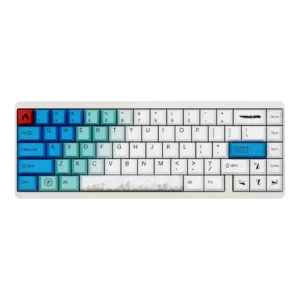
Varmilo Muse65 HE Magnetic Keyboard
Where It Has the Edge
- typing feel is 4.2 vs 3.8. Typing feel was positive overall, with reviewers calling the typing experience good and the regular keys pleasant.

Scorata scores summarize analyzed review evidence on a 1–5 scale; they are not laboratory measurements or a simple average of customer star ratings. Feature scores summarize the reviews covering that feature. The overall score averages feature scores within each review, then combines review averages. When both expert and customer evidence are available, those two groups receive equal weight. Products can have different review coverage, so small score gaps do not establish a winner.
Recommendations prioritize important features for the category, with a score of at least 3.5, a gap of at least 0.25 points and at least two supporting reviews per product. Features with widely varying scores or broad connectivity contexts are excluded from recommendations. These safeguards do not establish statistical significance.
Quick verdict
The review evidence points to a tradeoff: typing feel versus RGB customization and size and form factor. Choose according to which strengths matter more to you; the overall score alone does not settle that choice.
Choose Varmilo Muse65 HE Magnetic Keyboard for typing feel.
Choose GravaStar Mercury V75 Pro for RGB customization and size and form factor.
Scores are out of 5. Missing scores mean missing review evidence, not a missing feature.
Ergonomics had limited positive evidence because light switches reduced fatigue during longer use.
The adjustable legs were viewed positively for typing angle control and satisfying physical feedback.
Typing comfort was praised in limited evidence, especially for long typing sessions.
Typing comfort was acceptable but not excellent in one review, mainly because the keycap feel limited the experience.
Size and form factor were mixed: one reviewer preferred TKL, while another liked the 65% layout for arrow-key access.
The 75% form factor was considered usable and not overly crowded, with enough keys for most needs outside a numpad.
Reviewers repeatedly praised the Muse65 HE's appearance, calling it striking, good looking, beautiful, and nice across all five reviews.
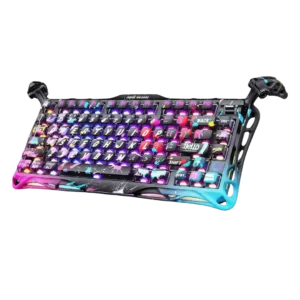
Design was the most polarizing trait, ranging from love and excitement to strong dislike of the Neon Graffiti look.
Build quality was a consistent highlight, with reviewers describing the keyboard as premium, solid, metal, and tank-like.
Build quality received strong praise across reviews, with repeated comments about premium feel, sturdy construction, and high quality.
Durability evidence was positive, with reviewers tying the aluminum build and tank-like construction to a premium, durable feel.
One review expected the keyboard to withstand years of use.
Materials quality was praised for the aluminum case and premium-feeling construction.
Materials were praised for metal feel, premium heft, and high-quality aluminum construction.
Reliability was hurt by software crashes and finicky setup behavior in the negative reviews.
Reliability was mostly fine in one review, but rare spacebar double clicking kept the score from being high.
Value for money was split: some reviewers liked the $155 price, while another felt better value was available elsewhere.
Value was highly split: some reviewers felt the price was justified, while others called it expensive or not worth the money.
Rapid Trigger was well received, with reviewers saying it felt nice, worked as intended, and helped with fast resets.
Rapid trigger was repeatedly praised as useful for gaming, competitive advantage, and quick key deactivation.
Profile management was criticized because one reviewer could not find a way to set different profiles.
One reviewer found profile switching easy.
Extra gaming features were criticized because the Muse65 HE lacks premium features like Snap Tap and quad-actuation.
Reviewers valued the extra Hall-effect gaming features, especially Rapid Trigger, LKP, and customizable behavior.
Compatibility was criticized in limited evidence because software setup required a Windows laptop.
Compatibility comments were modestly positive for keycap support and Windows/Mac switching.
Stabilizer quality was mixed to weak because one reviewer specifically criticized the spacebar sound.
One reviewer said the stabilizers sounded pretty good.
Connectivity had a small caveat because one reviewer found the USB-C opening too narrow for a coiled cable.
Connectivity was a notable drawback for reviewers who wanted wireless, because the keyboard is wired-only.
RGB lighting quality had limited but positive evidence, with one reviewer saying the RGB looked pretty nice.
Lighting quality drew broad praise for underglow, dual RGB systems, glow, side lights, and leg lights.
Keycap quality was praised for soft-touch PBT feel and generally nice surface quality.
Keycap opinions split sharply: several reviewers liked the texture or quality, while one strongly disliked the painted feel.
Actuation behavior was mostly strong, though one reviewer noted accidental deactivation at a zero bottom dead zone.
Actuation tuning was viewed positively where tested, with reviewers describing it as accurate and working well.
Typing feel was positive overall, with reviewers calling the typing experience good and the regular keys pleasant.
Typing feel was mixed: one review praised the out-of-box experience, while another said the keycap surface took away from it.
Switch choice was divisive: one review criticized the limited options, while another felt the available Gateron choices were strong.
Switch choice was a limitation: reviewers noted Hall-effect switches are restricted to linears and wished for more stock options.
Acoustics were generally positive but not perfect, with several reviewers liking the sound while one wanted better spacebar sound.
Sound impressions were generally positive and clacky, though one review framed it as a louder, more direct sound.
Frame rigidity and heft were praised because the heavy board felt stable, solid, and hard to knock around.
The frame and case were praised as heavy duty, sturdy, high quality, and unusually detailed.
High polling support was viewed positively, with reviewers calling it fast or smooth for competitive-style play.
Most reviewers treated the 8,000Hz polling as effective or accurate, though one called the practical benefit a marketing gimmick.
Latency was praised in testing, with no input lag noticed during gameplay.
Latency impressions were very positive, with reviewers reporting no lag and one latency test calling the measured result crazy fast.
Layout options had limited positive evidence from a reviewer who liked the 65% layout because it includes arrow keys.
Layout-related feedback was positive for alternative layout presets and a liked layout with function layers.
Switch feel was consistently positive, with reviewers liking the light force, smoothness, and Gateron dual-rail feel.
Reviewers liked the Gateron Jade feel, describing the switches as nice to type on and hard to beat among linears.
Responsiveness was a major strength, with reviewers describing the switches and in-game input response as highly responsive or flawless.
Responsiveness was a consistent strength, with reviewers reporting prompt command registration and instant key presses.
RGB customization was criticized because reviewers had trouble making lighting changes apply to the board.
RGB customization was viewed favorably through dual-system personalization, many effects, and customizable modes.
Hot-swappable switch support was scored low from one review because switch choice and hot-swap ability were described as limited.
One reviewer highlighted the Hall-effect switches as easy to swap.
Software quality was the clearest weakness, ranging from merely early and improvable to janky, confusing, crashing, and very frustrating.
Software feedback leaned positive for web-based customization and ease of use, though one reviewer experienced an early stuck state.
Customization options were mixed: the board offers layers and actuation control, but reviewers criticized the software workflow and sliders.
Customization was praised for Hall-effect tuning, broad feature access, and the number of available controls.
Noise level had limited positive evidence, with one reviewer describing it as not too loud for a rapid-trigger keyboard.
Noise feedback was mixed-positive: one reviewer found it louder and clacky, while another noted it did not sound scratchy.
Sound dampening was viewed positively in limited evidence, with one reviewer saying the construction made the keyboard sound more premium.
Reviewers connected the board's dampened build with a clean, clacky sound and visible effort to improve acoustics.
Gaming performance was one of the strongest areas, with reviewers reporting snappy movement, indistinguishable Hall-effect performance, and flawless play.
Gaming performance was one of the strongest areas, with reviewers calling it a clear gamer improvement and strong in fast-paced play.
One reviewer said the RGB backlighting gets pretty bright.
A reviewer praised the oversized themed legends as still very legible despite the bold styling.
The included cable disappointed one reviewer because it was not braided.
One reviewer found the 75% layout not too sparse while still keeping most needed keys outside the numpad.
One reviewer praised the layout gaps and spacing for making arrow navigation easy by touch.
One reviewer praised the switches as stable with minimal wiggle or wobble.
Per-key lighting control was criticized in one review because custom lighting changes did not appear to sync to the keyboard.
Portability was a weakness because reviewers pointed to the board's weight, legs, and lack of Bluetooth for travel use.
The volume lever/flipper was generally liked for tactile feel and practical usefulness.
One reviewer said the switches can be swapped easily.
Macro customization had limited positive evidence, with one reviewer calling macro setup very customizable.
Media controls were received positively as tactile and useful, especially for editing and day-to-day use.
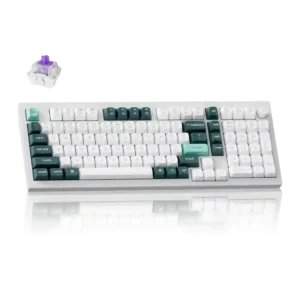
Good if you want a premium 96% Hall Effect keyboard for work and gaming with excellent build, sound, and customization. Skip it if you need cheaper esports-first speed, 8,000Hz polling,...
Pros: size and form factor, typing feel
Cons: switch options, portability
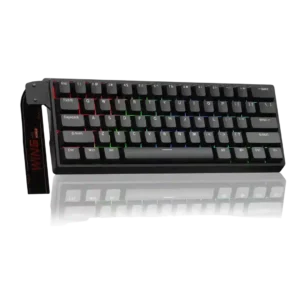
Choose it if competitive gaming speed, Rapid Trigger, and deep per-key customization matter more than extras. Skip it if you need wireless, dedicated arrows/media keys, adjustable height, or a lower-cost...
Pros: overall satisfaction, customization options
Cons: value for money, switch options
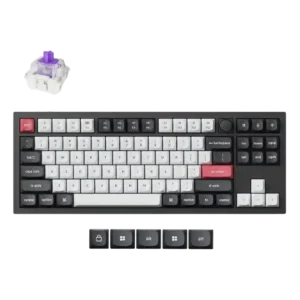
Good if you want a premium, quiet TKL Hall Effect keyboard for typing and gaming. Skip it if price, portability, 8,000Hz polling, or broad switch choice matters most.
Pros: build quality, switch feel
Cons: switch options
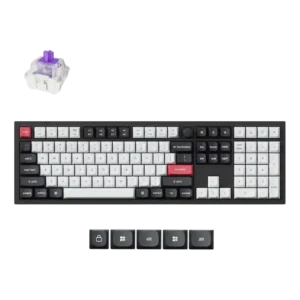
Good if you want a premium full-size Hall Effect keyboard with smooth switches, quiet sound, and deep customization. Skip it if you need a portable, budget-friendly board or broad switch...
Pros: build quality, keycap quality
Cons: switch options, portability