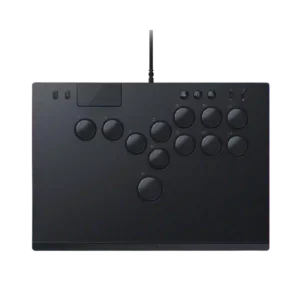
Razer Kitsune Controller
Where It Has the Edge
- hand fatigue over long sessions is 4.5 vs 2.5. Long-session fatigue evidence was positive, with reviewers reporting no pain and less effort during play.

Scorata scores summarize analyzed review evidence on a 1–5 scale; they are not laboratory measurements or a simple average of customer star ratings. Feature scores summarize the reviews covering that feature. The overall score averages feature scores within each review, then combines review averages. When both expert and customer evidence are available, those two groups receive equal weight. Products can have different review coverage, so small score gaps do not establish a winner.
Recommendations prioritize important features for the category, with a score of at least 3.5, a gap of at least 0.25 points and at least two supporting reviews per product. Features with widely varying scores or broad connectivity contexts are excluded from recommendations. These safeguards do not establish statistical significance.
Quick verdict
The review evidence points to a tradeoff: hand fatigue over long sessions versus included accessories and customization depth. Choose according to which strengths matter more to you; the overall score alone does not settle that choice.
Choose Razer Kitsune Controller for hand fatigue over long sessions.
Choose Corsair Novablade Pro for included accessories and customization depth.
Scores are out of 5. Missing scores mean missing review evidence, not a missing feature.
Brand software support had limited but positive evidence, with Razer described as listening to player feedback.
The lack of iCUE integration is a notable omission for a Corsair peripheral with so many settings. Reviewers felt software support could make configuration much easier to verify and manage.
Software customization was mixed: reviewers criticized an early SOCD constraint, while firmware later improved configuration.
Software customization is a clear weakness because the controller lacks a desktop configuration app. One reviewer specifically criticized the absence of software for checking and managing settings from a PC.
Programmable support drew criticism from one reviewer who wanted more useful front-facing aux functions.
The extra programmable buttons give fighting-game players useful places for parry, tag, jump, and other actions. Reviewers generally liked the flexibility, especially for moves that would otherwise require awkward finger reaches.
Customization depth was mixed: switch and keycap compatibility were praised, but vinyl art and limited optical-switch options drew caveats.
Customization is exceptionally deep, covering actuation, SOCD behavior, profiles, mappings, lighting, and more. The tradeoff is complexity: several reviewers love the control, while others say the abundance of settings becomes a blessing and a curse.
Responsiveness was widely praised as fast, smooth, and immediate, with one reviewer finding the buttons too sensitive at first.
Face-button response is a major strength, with reviewers describing inputs as smooth, sensitive, reliable, and extremely quick. Several testers said execution felt cleaner or easier once actuation was tuned.
Button quality was a major strength overall, but stock switch feel drew some criticism for limited feedback or mushiness.
Most reviewers liked the buttons' feel, reliability, click, and smoothness, with several calling them especially satisfying. The main dissent comes from concerns about their tall shape and one review that felt the physical design undermined otherwise fast response.
Button travel was viewed as fast and short, though one reviewer noted heavier force and aggressive spring-back.
The adjustable 0.1-4.0mm actuation range is widely praised, but the physical 4mm travel is polarizing. Some enjoy the deeper press, while others find the tall buttons slower for slides or wish the total travel were much shorter.
Firmware update support was positive overall, with reviewers noting SOCD/profile improvements and configurable settings.
Firmware updating drew criticism for requiring a supported browser, PC, and internet connection. One prototype tester also experienced failed update attempts, making the process feel less robust than the hardware.
Setup evidence was very positive, with the controller described as plug-and-play for PS5 or PC.
Ease of setup is mixed. Hardware mode switching and basic remapping can be straightforward, but several reviewers found the shortcut system confusing, hard to remember, or frustrating until they learned it.
Value was polarized: reviewers admired the product, but price was a repeated concern unless the buyer is serious or finds a sale.
The $250 price is undeniably premium, but most reviewers think the feature set, PS5 support, wireless performance, and build justify it within the high-end leverless market. Beginners and price-sensitive players are the main group likely to question the value.
Macro support was limited in reviewer evidence, with complaints that extra action or macro buttons were poorly placed or missing.
Macros can be handy for training and advanced customization, but the implementation is not universally loved. Real-time recording and PC-only limits make the feature more cumbersome for some players.
The touchpad drew a caveat from one reviewer who used it often in training but found it mushy.
The touchpad is useful for PlayStation navigation and training functions, and on PC it can act as a mouse surface. Reviewers who discussed it consistently treated it as a welcome convenience.
Included accessories were a weakness, with reviewers wishing for a shorter cable or bundled carrying case.
The protective shell or cover is widely appreciated for guarding the buttons in a bag, even if its styling is not universally loved. Reviewers also valued the practical travel protection it provides.
Long-session fatigue evidence was positive, with reviewers reporting no pain and less effort during play.
Two reviewers reported hand discomfort or cramping during use, although both were also adapting to leverless play. This makes fatigue a possible concern for players changing input styles.
PlayStation compatibility was mixed: reviewers valued licensed PS5 support but repeatedly criticized the lack of native PS4 support.
Official PS4 and PS5 licensing is considered a meaningful advantage over unlicensed leverless controllers that need authentication adapters. The native console support adds convenience and value for PlayStation players.
Material quality was mixed: reviewers liked the aluminum and smooth plate, but one complained about smell and another about fingerprints.
Reviewers liked the mix of metal, plastic, rubber, and protective detailing, with the aluminum surface receiving particular praise. The materials consistently read as high quality rather than cheap.
RGB usefulness was mixed: some liked the glow, while others found it unnecessary, forgettable, or hard to see during gameplay.
RGB is broadly praised for looks and for showing settings such as actuation or mode status. A few reviewers wanted finer color control or found some effects distracting, but the overall reception is strongly positive.
Repairability and maintenance were positive where discussed, especially easy cap removal and fast button replacement.
Repairability is mixed. Several reviewers worry about proprietary caps, switch availability, or hard-to-source replacements, while one tester found the switch and keycap area easy to access and compatible with standard-style parts.
Premium feel was often praised, though one reviewer felt the plain black model did not look like a $300 product.
The controller is repeatedly described as premium, sturdy, and high-end, with metal construction, substantial weight, and polished details. Even reviewers with setup or price complaints generally agreed it feels expensive in hand.
USB-C convenience was generally positive, especially the detachable locking cable, but reviewers noted cable length and cable-fit caveats.
The locking USB-C connection is frequently praised for keeping the cable secure in tournament play. The main caveat is that one reviewer disliked how the lock can conflict with some third-party cables.
Casual gaming suitability was mixed: casual 1v1s and beat-'em-ups could work well, but some non-fighting uses required adjustment.
Casual appeal is mixed: wireless couch play is convenient, but the $250 price and specialized leverless layout are hard to justify for newcomers or general gaming. It makes most sense for casual players already invested in fighting games.
Consistency evidence was positive, with reviewers reporting smooth performance across games and no issues after setup.
One month-long user reported no noticeable performance issues and kept using the controller as a daily driver. That longer stint supports strong consistency across repeated sessions.
Input lag evidence was positive, with one reviewer saying they felt no lag or delay.
Overall input response is one of the product's strongest performance traits. Reviewers repeatedly described the controller as snappy, fast, and responsive with no meaningful sense of delay.
One reviewer saw the Kitsune as a useful middle ground between tiny leverless pads and larger, chunkier fight sticks.
The Novablade Pro is heavy for a leverless controller, but many reviewers liked the planted, substantial feel. A few considered it among the heaviest options and near the upper limit they would want to carry.
Fighting game suitability was the strongest use case, with reviewers praising the Kitsune across fighting titles despite the learning curve.
The controller is overwhelmingly praised for fighting games, especially Street Fighter, Tekken, and other execution-heavy titles. Most reviewers rate it among the strongest premium leverless options, though one critic strongly disliked the button-travel design.
Portability was one of the strongest points, with reviewers praising the slim, light, backpack-friendly design.
Despite its heavy build, the controller is repeatedly considered easy to carry because it is thin, compact, and backpack-friendly. Several reviewers specifically liked it for tournaments and travel.
The learning curve was a repeated drawback, especially for players coming from sticks or standard controllers.
The leverless layout and shortcut-heavy settings system take time to learn. Some reviewers adjusted quickly, but others needed the manual repeatedly or found even basic configuration frustrating.
Travel friendliness was praised in direct evidence about easy travel and storage.
Reviewers repeatedly found the thin chassis easy to carry to locals or majors, even with its substantial weight. Several specifically described it as a strong or ideal travel leverless.
Competitive suitability was strong, with reviewers highlighting tournament appeal and competitive edge.
Tournament-oriented features are a major strength, including Game Mode, SOCD controls, extra mappings, fast input response, and wired or low-latency wireless options. Reviewers consistently see the Novablade Pro as built for serious competitive fighting-game play.
Durability evidence was split between a reviewer saying it can take abuse and another finding the cable-lock flap flimsy.
One review highlighted the switch design as built for an unusually high number of presses, presenting longevity as a major strength. Long-term real-world wear was not otherwise deeply tested.
Ergonomics were generally praised for the button layout and low profile, but one reviewer felt Razer missed a chance to push the layout further.
The full non-slip base, stable desk footprint, and slightly angled chassis make the controller feel planted and easy to use on a lap. Reviewers repeatedly liked how little it moves during play.
Reviewers mostly found the Kitsune comfortable because it is slim, light, and works well on a lap or table, though one reviewer found the layout uncomfortable in Tekken.
Most reviewers found the Novablade Pro comfortable on a lap or desk, with good palm space and a shape that works for long sessions. Comfort praise is broad even though a couple of users reported hand discomfort during adaptation.
Build quality received strong praise across reviews, especially for the aluminum construction, slim profile, and premium-feeling form factor.
Build quality is one of the clearest strengths: reviewers repeatedly described the chassis as tank-like, solid, and exceptionally well constructed. The metal top and rigid body reinforce that premium impression.
Size suitability depended on hand size: reviewers with big or wide hands liked the spacing, while small-hand use was called harder.
One smaller-handed reviewer liked most of the spacing but found a particular thumb reach uncomfortable. Larger hands may have an easier time with that part of the layout.
Wired performance was strong, with reviewers tying the wired setup to responsiveness and reporting smooth play.
Wired play is consistently treated as the lowest-latency, tournament-safe option, and the locking USB-C design keeps the cable secure. The included cable sits snugly during serious play.
One long-term tester confirmed roughly 40 hours of wireless play with RGB at full brightness, matching the stated figure. That result supports strong real-world battery performance.
The 2.4GHz dongle is a standout feature, with testers calling it fantastic, exceptionally fast, and effectively free of noticeable latency. It is the preferred wireless mode in the reviews.
Directional accuracy was praised for precise controls, SOCD help, and reduced ambiguity compared with stick input.
Rapid Trigger is usually praised for quicker releases, sharper movement, and easier execution, especially in Street Fighter. Its value is not universal: one casual tester barely noticed it, while one critic strongly disliked how it interacts with the tall button travel.
Accessibility evidence was positive, with the all-button layout framed as helpful for players who find arcade sticks a barrier.
The included braided USB cable receives direct praise for being long, sturdy, and unusually high quality. Reviewers who mentioned it treated it as a premium accessory.
PC compatibility was praised with no reported compatibility problems and plug-and-play use.
Control placement is mixed: the core layout and centered jump position get praise, while some extra buttons can be accidentally hit or feel too far away. Hand size and preferred fighting-game binds strongly affect the experience.
Grip feedback was consistently positive, with rubber padding and the underside mat helping the controller stay planted.
Five onboard profiles are a meaningful strength, letting players keep multiple setups without external software. The storage is useful, though profile management contributes to the controller’s configuration complexity for one reviewer.
Overall sentiment is strongly positive: most reviewers recommend the Novablade Pro, call it premium, or choose it as a regular controller. A small minority are mixed or sharply negative, mainly over complexity and button-travel design.
One review highlighted the 1,000Hz polling rate available over wired and 2.4GHz on PC as a strong performance feature. Console use has more connection-specific limits.
Wireless flexibility is a major differentiator, especially the 2.4GHz option for PC and PlayStation. Reviewers like the freedom from cables for home use, while serious tournament play still tends to favor wired connections.
Reviewers consistently found 2.4GHz latency extremely low, often describing it as indistinguishable from wired play. Difficult fighting-game inputs and combos worked reliably over the dongle.
Retail 2.4GHz wireless was repeatedly described as stable and problem-free, including month-long use. One prototype reviewer had a dongle failure, so the only significant negative report came from preproduction hardware.
Bluetooth is the weakest connection option in the coverage. Reviewers noted higher latency than 2.4GHz or wired and criticized its PC-only limitation.
Visible button labels are appreciated because they make remapping and learning the leverless layout easier. Reviewers specifically contrasted this with unlabeled controllers that are harder to configure.
Button sound is polarizing. Several reviewers call the main buttons loud or distracting, while others enjoy the clicky sound or find it satisfying and rhythmic.
Remapping is usually considered quick and easy directly on the controller, with several reviewers calling it a major advantage. One reviewer disliked that certain remaps disable the original input, but the overall sentiment is strongly positive.
Reviewers wanted a companion app or screen to make the controller's many settings easier to understand. The lack of one leaves users relying on button combinations, lights, and the manual.
Connection reliability was praised thanks to the locking cable design and confidence in licensed PS5 connectivity.
One reviewer coming from a cheaper leverless called the Novablade Pro a significant upgrade, especially in materials, features, layout, and wireless response.
The black aluminum look, sleek shape, and lighting are widely praised as premium and attractive. Minor complaints include fingerprints, limited faceplate options, and some RGB effects that can distract.
The pause and top-panel controls are easier to reach than on the reviewer’s previous controller, making menu access a meaningful quality-of-life improvement.
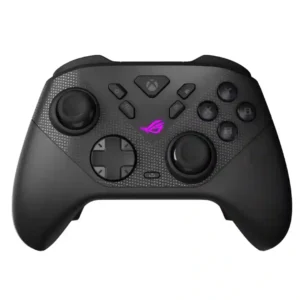
Best for precise TMR sticks, fast trigger stops, low-latency 2.4GHz play, and deep tuning. Skip it if you want a cheaper all-rounder, softer buttons for long sessions, or painless console-only...
Pros: overall satisfaction, button quality
Cons: d-pad accuracy, charging dock support
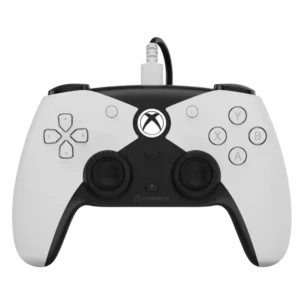
Best for a comfortable, affordable Xbox/PC pad with precise Hall sticks, a PlayStation-style layout, and useful rear buttons. Skip it if wireless play, deep software tuning, or consistently top-tier D-pad...
Pros: overall satisfaction, value for money
Cons: wired performance, vibration quality
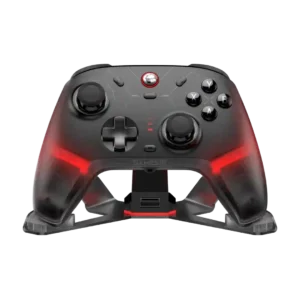
Choose the GameSir Cyclone 2 if you want a low-cost PC/Switch/mobile controller with precise sticks, deep customization, and a dock. Skip it if Xbox/PS5 support, premium buttons, or flawless dock/battery...
Pros: value for money, charging dock support
Cons: d-pad feel, compatibility with Xbox
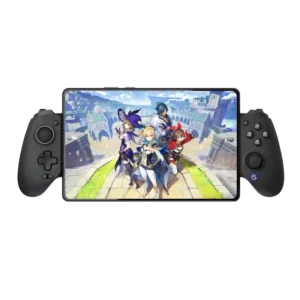
Best for console-like comfort, precise Hall controls, reliable wired play, and iPhone or iPad mini support. Skip it if you need pocketable hardware, Switch compatibility, polished software, or dependable mobile...
Pros: value for money, phone grip and fit
Cons: companion app quality, vibration quality