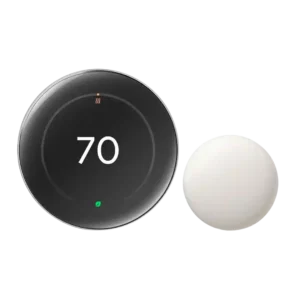
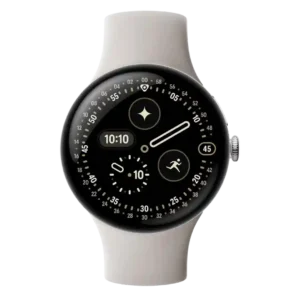
Google Nest Learning Thermostat 4th Gen
Where It Has the Edge
No clear scored advantage over the other product.

Scorata scores summarize analyzed review evidence on a 1–5 scale; they are not laboratory measurements or a simple average of customer star ratings. Feature scores summarize the reviews covering that feature. The overall score averages feature scores within each review, then combines review averages. When both expert and customer evidence are available, those two groups receive equal weight. Products can have different review coverage, so small score gaps do not establish a winner.
Recommendations prioritize important features for the category, with a score of at least 3.5, a gap of at least 0.25 points and at least two supporting reviews per product. Features with widely varying scores or broad connectivity contexts are excluded from recommendations. These safeguards do not establish statistical significance.
Quick verdict
There is not enough consistent, comparable evidence for a clear recommendation. Use the feature details and supporting reviews to weigh the tradeoffs.
There is not enough comparable review evidence to recommend Google Nest Learning Thermostat 4th Gen over the other product.
There is not enough comparable review evidence to recommend Google Pixel Watch 4 over the other product.
No clear scored advantage over the other product.
No clear scored advantage over the other product.
Scores are out of 5. Missing scores mean missing review evidence, not a missing feature.
Reliability was generally good in durability and day-to-day use, though some reviewers noted inconsistency in battery, notifications, GPS, or gestures.
Alexa support had limited but positive evidence through Matter-based cross-platform control and voice-assistant flexibility.
Most reviewers found installation approachable and well-guided, though one reviewer had a notably poor setup experience that took hours.
Geofencing was mixed: phone-location presence was described as more reliable, but Away mode initially took longer for one reviewer.
Google Home support was positive where reviewers valued integration with Google smart-home devices and Google voice control.
Matter support was repeatedly treated as a standout upgrade that broadened platform choice and future-proofing.
Remote control was viewed as reliable and convenient through apps and Apple Home, with only minor lag or update delay mentioned.
Setup guidance was usually praised for app prompts, visual aids, and wiring help, but one reviewer reported opaque errors and failed setup attempts.
Utility demand-response/Nest Renew support was only lightly covered and received a mixed note about limited peak-hour time-frame setup.
Value was context-dependent: reviewers liked the premium features, but price was repeatedly framed as high or only worth it for the right user.
Value was usually positive because pricing stayed competitive, but Fitbit Premium, LTE surcharges, and cheaper rivals limited enthusiasm.
Comfort was generally strong thanks to the light, curved body, though sleep wear and the 41mm battery tradeoff created some caveats.
Band feedback was mixed to negative: the stock strap was called dull or fiddly, though one reviewer liked the mechanism despite its proprietary limits.
Build quality benefited from repairability and a solid overall hardware package.
Comfort consistency was generally positive, especially with AI and sensors, but default eco-leaning presets could feel uncomfortable.
Design and finish quality received the strongest agreement, with reviewers repeatedly calling it sleek, beautiful, premium, or art-like.
Durability evidence was mixed: several long-term testers saw little wear, but others worried the exposed Gorilla Glass would scratch or take impact damage.
Fit was helped by the 41mm and 45mm options, with smaller-wrist reviewers saying the 41mm still offered enough usable screen.
Materials were mostly praised for premium aluminum and finishes, though strap and glass choices were not universally loved.
The two case sizes were viewed positively and helped address fit and battery preferences.
Design split reviewers: many loved the sleek domed pebble style, while a few found it plain or not rugged enough.
Water resistance had limited but positive evidence from a submersion test.
Battery life was broadly improved, with many reviewers getting roughly 1.5 to 2+ days, though smaller-size and heavier-use scenarios were less impressive.
The new side dock was widely praised for reliability and convenience, though a few reviewers wanted stronger magnets or disliked another charger change.
Charging speed was one of the clearest strengths, repeatedly described as very fast and useful for quick top-ups.
Automatic activity detection was generally useful for walks and missed workouts, though one reviewer found the delayed or absent prompts frustrating.
Away mode was split: some reviewers liked automatic away behavior, while others found delays or false eco switching.
C-wire flexibility was praised as a practical installation advantage because the thermostat can work without a common wire in some setups.
Compatibility was good across Android phones, with fewer lock-ins than Samsung, but the watch still excludes iPhone users.
ECG was treated as a valuable health and safety tool when reviewers discussed the health feature set.
Energy-saving recommendations were a major positive, though one reviewer stressed savings depend on habits and may take time to show.
Energy reporting was useful but lightly covered, with evidence around informed energy choices and dashboard data.
Equipment diagnostics were viewed positively for potentially spotting HVAC problems before they become costly.
Humidity sensing/helper features were useful, but one reviewer warned the dehumidifying behavior could be costly or overcool the home.
HVAC maintenance alerts had limited positive evidence, with one reviewer calling system-health monitoring nice and preventative.
Reviewers saw broader system support as a plus, especially the expanded backplate compatibility noted against older Nest models.
Learning and auto-schedule features were consistently praised for adapting to preferences, routines, and temperature changes.
LTE was valued for phone-free contactability and satellite safety access, though the added cost remained a caveat.
Manual override flexibility was positive, with reviewers liking approval/rejection of suggestions and full manual control.
Multi-room balancing was praised for helping reduce hot/cold room differences and fine-tuning whole-home comfort.
On-device controls were widely liked for the intuitive dial, smooth turning, satisfying press/twist interaction, and premium feel.
Presence automation was useful when it worked, but reviewers noted imperfections with motion sensing and household phone-based detection.
The included Room Sensor was a recurring highlight for tracking or prioritizing rooms away from the main thermostat.
Safety features were a major strength, led by satellite SOS, fall/crash/loss-of-pulse tools, and ECG, though fall detection was not perfect in one test.
Scheduling flexibility was a strength, with reviewers citing plentiful temperature events, manual schedule options, and suggestion/auto modes.
Shared household access had limited mixed evidence, mainly around presence detection when one app owner leaves while someone remains home.
The included mounting/back plate was useful for fitting existing holes or covering wall imperfections during installation.
Adaptive intelligence was praised for using weather, humidity, sun, and behavior context to adjust comfort more intelligently.
Calorie estimates drew skepticism, with reviewers noting higher calorie burn than comparison devices.
Coaching evidence was mixed: automatic workout generation impressed one reviewer, while Fitbit Coach and unfinished AI coaching limited enthusiasm elsewhere.
Fitness tracking was mostly praised for accurate, detailed activity data, although some reviewers framed Fitbit as better for mainstream than elite users.
GPS accuracy improved substantially with dual-frequency support, but one in-depth reviewer found a serious cycling bug in specific conditions.
General health tracking was usually described as accurate, comprehensive, or aligned with comparison wearables.
Heart-rate accuracy was a clear strength across many tests, with some reviewers reporting close agreement with chest straps and rival watches.
Recovery insights were helpful when calibrated, especially Readiness and Load, but some readiness results felt odd or overly anxiety-inducing.
Sleep tracking was usually accurate or useful, but a few reviewers found it unnecessary or noted stillness and nap-detection limitations.
Step counting accuracy had limited but strong evidence from one manual-count test.
Stress tracking was one of the weakest health areas, repeatedly described as rudimentary, hit-or-miss, or not valuable.
Wellness insights were generally praised for contextualizing data and giving useful activity or recovery guidance.
Workout variety was good for mainstream users with 50+ modes, but data fields, lap controls, and some missing activities drew criticism.
Reviewers praised the Wear OS Play Store and app availability, saying the ecosystem is robust and includes the major third-party options.
Review contexts may differ, so use caution when interpreting the score gap.
Apple Home/HomeKit support was a clear win for Apple-focused reviewers, with reliable Apple Home control noted after setup.
The Google Home app was generally considered easy for scheduling, setup, and adjustments, with praise for clear controls.
Bike metric streaming over Bluetooth worked well in the reviews that evaluated it.
Review contexts may differ, so use caution when interpreting the score gap.
Button and control feedback was mixed: gestures and crown use often worked well, while manual laps or the thin side button drew complaints.
Call handling was split, with one reviewer finding calls acceptable and another saying the speaker was too quiet in public.
The Fitbit app was usually praised as intuitive, readable, and easy to understand, with some setup or paywall frustrations.
Google Wallet/contactless payments were mentioned positively where reviewed.
Customization was useful for faces and settings, but quick-settings controls and watch-face options left some reviewers wanting more.
Navigation was mixed: Google Maps support was useful, but sport routing, map integration, and bike-display mapping were limited.
Review contexts may differ, so use caution when interpreting the score gap.
Menu navigation was usually easy and pleasant, especially with Wear OS 6 and the domed display.
Music controls had limited evidence and one reviewer criticized delayed always-on media control support.
Wear OS 6 and Material 3 Expressive were widely praised as polished, charming, and well matched to the round screen.
Pairing and setup were mostly straightforward, but one reviewer reported a failed phone transfer and another noted account-related setup friction.
Review contexts may differ, so use caution when interpreting the score gap.
Room prioritization controls were valued for scheduling around specific sensors or zones during different parts of the day.
Smart-home ecosystem compatibility was a major strength, especially through Matter and cross-platform flexibility, though Google ecosystem commitment remained a caveat.
Notification handling was mixed: rich notifications and smart replies impressed some reviewers, while Google Home alerts, wake behavior, and visibility frustrated others.
As an all-round smartwatch, reviewers called it well-rounded, easy to recommend, and often the best Pixel or Wear OS watch yet.
Software smoothness was consistently strong, with reviewers describing the watch as smooth, speedy, and responsive after early updates.
Third-party app support was strong, with reviewers saying major apps and options were present.
Review contexts may differ, so use caution when interpreting the score gap.
Physical press feedback was praised in one review, but other reviewers criticized the lack of a true touchscreen.
Touch response was generally good, especially on the curved display, though wet use was a limitation.
The user interface drew strong praise for fluidity, color, rounded layouts, and Material 3 Expressive polish.
Gemini and Raise to Talk were major highlights, but false positives, online dependence, and limited Fitbit integration kept the score from being perfect.
Voice control was praised as convenient and immediate, especially through Google speakers and voice assistants.
Watch faces were a recurring weak spot, with several reviewers wanting more original or dome-optimized designs.
Wi-Fi stability had limited evidence; one reviewer only reported a minor connection hiccup during setup.
Brightness was consistently praised, with reviewers highlighting the 3,000-nit display and better outdoor use.
Display quality was the strongest consensus attribute: reviewers repeatedly praised the domed Actua 360 screen as gorgeous, immersive, and distinctive.
Display feedback was strongly positive, with reviewers praising readability, a larger screen, Farsight behavior, and animated/weather views.
Occupancy detection was mixed, with one reviewer praising distance sensing and another finding thermostat-only motion detection ineffective.
Outdoor visibility was consistently strong thanks to the brighter screen and readable display.
Temperature accuracy was excellent in lab testing, with the measured difference described as too small to notice.
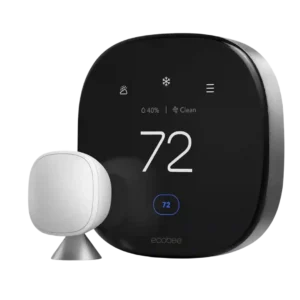
Best for polished design, easy controls, strong sensors, and useful energy data. Skip it if you want the cheapest thermostat or do not need premium extras like air quality, voice...
Pros: Room Sensor, value for money
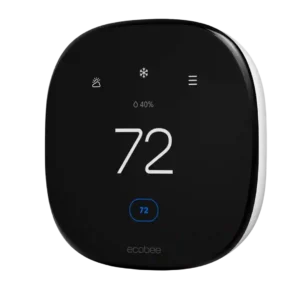
Good if you want an easy, clear smart thermostat with strong app, display, scheduling, and ecosystem support. Skip it if you need Premium-only sensors, built-in Alexa, air-quality monitoring, or deeper...
Pros: display readability, value for money
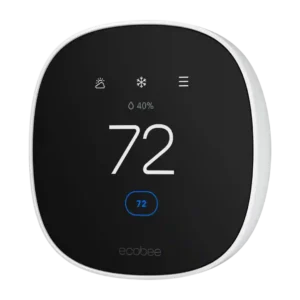
Best for easy controls, strong smart-home support, and budget value. Skip it if you need Matter, bundled room sensors, advanced learning, or a no-C-wire install without extra parts.
Pros: on-device control usability, smart-home ecosystem compatibility
Cons: C-wire requirement flexibility, Room Sensor
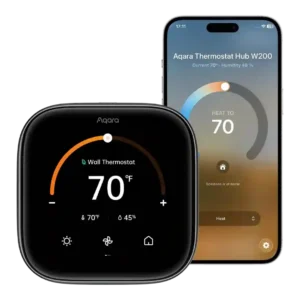
Choose the Aqara W200 if you want Apple Home-first climate automation, Matter hub extras, easy installation, and strong value. Skip it if you need advanced heat-pump controls, multi-sensor averaging, included...
Pros: smart-home ecosystem compatibility, occupancy detection accuracy