If you want better learning/auto-schedule effectiveness
Choose Aqara Hub W200. It scores 4.9 vs 4.0 for learning/auto-schedule effectiveness, with a 4.1 overall score.

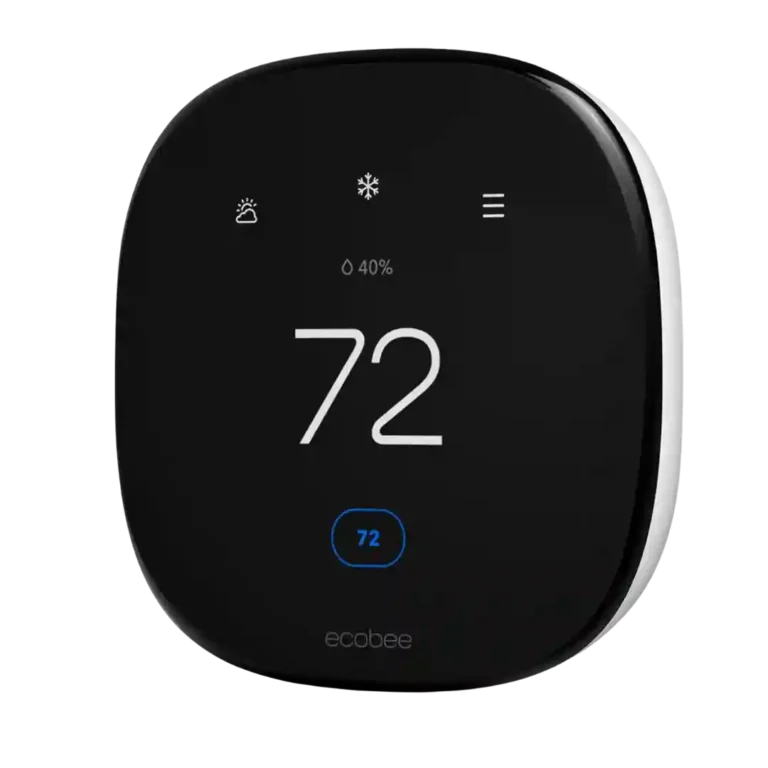
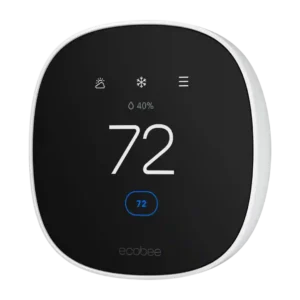
Choose the ecobee Smart Thermostat Enhanced if you want an easy, clear smart thermostat with strong app, display, scheduling, and ecosystem support. Skip it if you need Premium-only sensors, built-in Alexa, air-quality monitoring, or deeper complex-HVAC wiring.
Best for users with typical HVAC systems who want a clear touchscreen, easy app control, flexible scheduling, and broad voice-assistant or HomeKit integration without paying for every Premium feature.
Not for users who need the deepest complex-HVAC wiring support, a bundled room sensor, built-in Alexa or Siri speaker hardware, air-quality monitoring, or guaranteed utility-provider Eco+ participation.
Across the reviews, the ecobee Smart Thermostat Enhanced comes across as a polished, easy-to-live-with thermostat rather than the most fully loaded ecobee. Reviewers repeatedly praised the larger display, simple on-device controls, mobile app, scheduling, and broad voice-assistant compatibility. Installation evidence was also positive, especially because the app guidance and included power extender kit reduce common setup friction. The tradeoff is that Enhanced sits below Premium for complex HVAC wiring, built-in Alexa, bundled room sensors, finish materials, and air-quality monitoring. Its smart features and Eco+ tools were liked, but utility-provider support and real savings may vary.
Compared with other Smart Thermostats, this product is above average in included C-wire adapter, Wi-Fi stability, manual hold/override flexibility, near average in display readability, occupancy detection accuracy, below average in utility demand-response support, HVAC system compatibility depth, adaptive recovery intelligence.
| Attribute | This product | Category average | Difference |
|---|---|---|---|
| included C-wire adapter | 4.5 | 2.4 | +2.1 |
| utility demand-response support | 2.0 | 3.6 | -1.6 |
| Wi-Fi stability | 5.0 | 3.8 | +1.2 |
| manual hold/override flexibility | 4.5 | 3.7 | +0.8 |
| C-wire requirement flexibility | 4.3 | 3.5 | +0.7 |
| app usability | 4.8 | 4.1 | +0.7 |
| multi-room balancing effectiveness | 4.2 | 3.6 | +0.6 |
| voice control quality | 4.5 | 3.9 | +0.6 |
Choose Aqara Hub W200. It scores 4.9 vs 4.0 for learning/auto-schedule effectiveness, with a 4.1 overall score.
Choose Google Nest Learning Thermostat 4th Gen. It scores 4.4 vs 3.4 for HVAC system compatibility depth, with a 4.4 overall score.
Choose ecobee Smart Thermostat Essential. It scores 4.8 vs 4.0 for humidity sensing, with a 4.1 overall score.
Choose Ecobee Smart Thermostat Premium. It scores 4.5 vs 2.0 for utility demand-response support, with a 4.5 overall score.
Products reviewers directly compared with this model, grouped into quick takeaways.
Reviewers generally found installation easy, with one calling the app-guided process a breeze and another reporting a 15-20 minute install. The included power extender kit helps when a common wire is missing.
The display was one of the most praised areas. Reviewers described it as larger, clearer, easy to read, and easier to use for temperature adjustments.
Reviewers reported strong ecosystem support, especially across Alexa, Google Home, Siri, and HomeKit. The Apple-focused review was especially positive about HomeKit support.
No reviewer evidence said the Enhanced includes a room sensor in the box. Reviews said it supports ecobee room sensors, but they must be purchased separately.
It was viewed as good for typical furnace, air-conditioner, and standard heat pump setups. For complex systems, reviewers pointed to the Premium model as the stronger option because it has more terminals.
Reviewers liked the Eco+ smart features, scheduling, humidity adjustment, and away behavior. One reviewer could not use utility-linked savings features because their provider was not listed.
These are a few of the reviews included in our analysis.

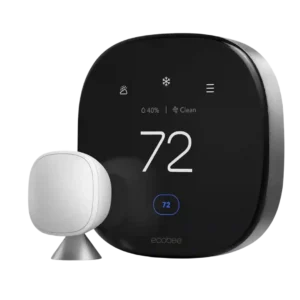
Best for polished design, easy controls, strong sensors, and useful energy data. Skip it if you want the cheapest thermostat or do not need premium extras like air quality, voice...
Pros: Room Sensor, value for money
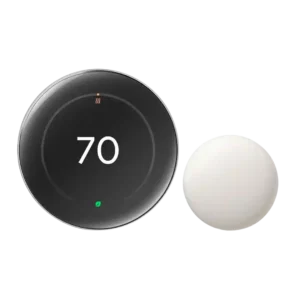
Choose it if you want a premium-looking thermostat with Matter, strong learning, room sensors, and polished controls. Skip it if the price, Google-account dependence, or occasional setup/presence-sensing hiccups outweigh the...
Pros: design and finish quality, display readability
Cons: touchscreen responsiveness
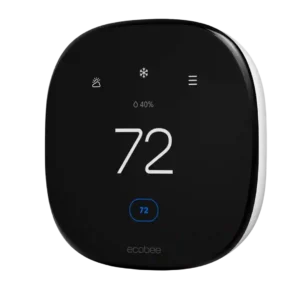
Good if you want an easy, clear smart thermostat with strong app, display, scheduling, and ecosystem support. Skip it if you need Premium-only sensors, built-in Alexa, air-quality monitoring, or deeper...
Pros: display readability, value for money
Best for easy controls, strong smart-home support, and budget value. Skip it if you need Matter, bundled room sensors, advanced learning, or a no-C-wire install without extra parts.
Pros: on-device control usability, smart-home ecosystem compatibility
Cons: C-wire requirement flexibility, Room Sensor