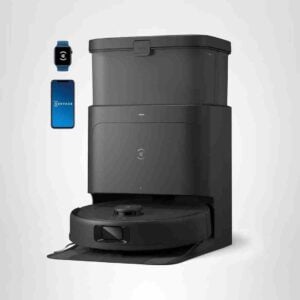
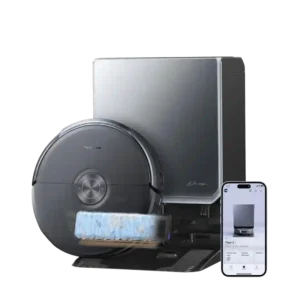
Ecovacs Deebot N30 Robot Vacuum and Mop
Where It Has the Edge
- Carpet — Low-Pile Pickup is 4.1 vs 3.0. Low-pile and general carpet pickup was generally good, but not uniformly excellent across tests.

Scorata scores summarize analyzed review evidence on a 1–5 scale; they are not laboratory measurements or a simple average of customer star ratings. Feature scores summarize the reviews covering that feature. The overall score averages feature scores within each review, then combines review averages. When both expert and customer evidence are available, those two groups receive equal weight. Products can have different review coverage, so small score gaps do not establish a winner.
Recommendations prioritize important features for the category, with a score of at least 3.5, a gap of at least 0.25 points and at least two supporting reviews per product. Features with widely varying scores or broad connectivity contexts are excluded from recommendations. These safeguards do not establish statistical significance.
Quick verdict
The review evidence points to a tradeoff: Carpet — Low-Pile Pickup versus Emptying and Mess Control and Solution / Liquid system. Choose according to which strengths matter more to you; the overall score alone does not settle that choice.
Choose Ecovacs Deebot N30 Robot Vacuum and Mop for Carpet — Low-Pile Pickup.
Choose Narwal Flow 2 for Emptying and Mess Control and Solution / Liquid system.
Scores are out of 5. Missing scores mean missing review evidence, not a missing feature.
Ease of use was strongly positive in one review, centered on time savings and convenience.
Core operation is beginner-friendly, with clear setup and simple room, zone, vacuum, and mop commands. Once configured, the robot can run with very little intervention.
Automatic obstruction response was praised because the robot stopped immediately after pulling a cord.
The robot shut itself down when high-pile carpet overheated the wheel motors. That protective response prevented continued strain but also exposed a serious surface-compatibility limitation.
Crevice and nook pickup was positive where the extending mop reached small spaces a traditional mop could not.
Grout lines and floor grooves repeatedly retain flour, coffee, mud, or colored residue after the flat surface looks clean. Uneven tile floors will still need manual attention.
Emptying and mess control had a serious spot-cleaning weakness in two related reviews that called the results disastrous.
Auto-emptying is powerful and reliable, moving debris into a long-life dock bag with little mess. The sealed waste handling reduces how often users touch dust.
Included accessories were criticized because one review said the vacuum does not come with extras.
The box includes the essentials needed to start cleaning, including the initial cleaning solution, so there is no immediate accessory hunt.
Clogging prevention looked strong in one pet-heavy test where hair and debris moved to the bin without issue.
The dirty-water path may trap larger particles in areas users cannot directly reach. That raises a long-term clogging concern even though everyday operation was generally smooth.
Hair-removal channel issues were minimal in one test because longer hair did not require manual removal.
An extreme long-hair test left strands wrapped around a wheel and a loose hair ball that required manual removal. The main brush itself avoided a full jam.
The liquid system was criticized because detergent or hard-floor cleaner was not included or could not be evaluated.
Automatic detergent dosing makes mopping more hands-off and avoids measuring solution each run. The requirement to use Narwal’s approved cleaner limits flexibility.
Small-space suitability was positive because the robot could squeeze through a tight table-leg gap repeatedly.
The robot itself is fairly low, but the large dock claims meaningful floor space. Small homes need to measure both furniture clearance and a permanent station location.
Residue and streaking were mixed to weak, with reports of slight stickiness, smearing, and visible residue after passes.
The continuously refreshed hot-water mop usually leaves no sticky film and avoids dragging dirty water across the floor. Oil or unusually heavy messes can still leave a faint residue.
Hair pickup on carpets was mixed because one longer test found deep carpet hair cleaning difficult.
Carpet pet-hair pickup is consistently strong, with high test scores and clean-looking rugs in shedding households. A few low-pile runs still needed extra passes.
Heavy-duty suitability was limited where ketchup and mud stains proved too challenging.
The machine handles demanding daily messes, muddy tracks, sticky spills, and family cleanup surprisingly well. Grout, very large food debris, and extreme wet messes can still require a conventional cleaner.
Hard-floor fine-dust pickup was consistently strong across comparison, home, and lab tests.
Fine-dust pickup is inconsistent. Some hard-floor runs were excellent, while flour, sand, and dust in joints often needed repeat passes or left a visible film.
Area rug handling was a weakness, especially with tassels or thicker throw rugs.
Ordinary rugs can be detected and protected from wet mopping, but default carpet settings are confusing and some rugs cause stuck or pickup problems. Rug-heavy homes need careful setup.
Large debris intake on hard floors was mixed because some debris scattered, though a second run could clean it up.
Large hard-floor debris is a weak spot when pieces approach cereal size. Cheerios were pushed, crushed, or trapped around the wheels instead of being cleanly collected.
Dried-on stain performance was mixed, ranging from near-zero residue on one test to needing repeated passes on coffee and wine.
Coffee, jam, syrup, ketchup, and other dried messes often disappear after targeted repeat passes. One controlled stain test scored well below average, so results can vary by stain, settings, and firmware.
Obstacle avoidance was decent to good overall, but reviewers noted limitations around cameras, cords, docks, and rivals.
Obstacle avoidance is exceptional across cords, shoes, toys, pets, and simulated waste. Very small items and one difficult carpet environment are the main exceptions to otherwise confident hands-off operation.
Low-pile and general carpet pickup was generally good, but not uniformly excellent across tests.
Low-pile carpet cleaning is adequate rather than class-leading. Hair and embedded debris may require repeat passes, even though everyday visible dirt is usually reduced.
Child lock was initially confusing but easy to undo.
The child lock is a useful safeguard for homes where toddlers might press the robot’s controls and interrupt a run.
Fresh liquid pickup was good in one test, with the mop removing almost all residue.
Liquid pickup is a standout strength. Wine, soy sauce, creamer, egg, pet drips, and other spills are often removed in one or a few targeted passes without spreading far.
The heating element earned qualified praise because hot-air drying helps reduce mildew, even where hot-water washing was absent.
Heated water noticeably helps with grease, sticky spills, and dried-on residue. The tradeoff is a several-minute warm-up before some mopping runs.
Versatility was supported by the many cleaning configurations available for different vacuuming and mopping routines.
It can vacuum, mop, run both together, or sequence the jobs across mixed hard floors and carpets. That flexibility suits varied whole-home routines rather than a single surface type.
Mop lifting was praised for protecting rugs and working well on carpets.
The mop lifts about 10 to 12mm to cross most rugs without wetting them. Long-pile fibers can still touch the damp track, so thick carpets need exclusion zones.
Mapping and path efficiency were generally strong, though there were caveats about navigation behind one rival and incorrect room layouts.
Mapping is usually fast, detailed, and efficient, with purposeful repeat passes over dirtier zones. Remapping, unusual room divisions, and a few route failures show that navigation is not flawless.
Under-furniture pickup was praised in one home review where the robot got under nearly every chair.
The 3.7-inch body reaches beneath beds and some low furniture, helped by its towerless profile. Several cabinets and couches remain too low, so clearance should be measured before buying.
High-pile carpet compatibility looked poor where shaggy carpet caused contact and docking issues.
High-pile rugs are a poor match. The robot can get stuck, overheat its wheel motors, wet long fibers, or fail to navigate the surface at all.
Maneuverability was positive in one tight-space test where the robot squeezed through a narrow gap successfully.
The robot moves deliberately around furniture and gives fragile objects wider clearance. Its measured handling helps it clean a busy room without bulldozing everything in its path.
Packaging quality was praised as secure and recyclable.
The product arrives neatly organized and well protected, with the main parts secured for setup.
Storage footprint drew a caveat because the base station requires extra space.
The dock looks polished enough to remain visible in a living space, but it is still a substantial flagship station that needs a planned parking spot.
Bin and bag evidence was mixed: one reviewer found the dust bag small, while another reported effective emptying.
The dock’s long-life dust bag and automatic emptying reduce hands-on debris handling. Its location beneath the water tanks is less convenient than a front-access compartment.
Runtime was a clear strength, with multiple reviews saying estimates held up or battery was not an issue.
Runtime is excellent, supporting large homes, long sessions, and back-to-back vacuuming and mopping without routine recharging. Return-and-resume behavior covers larger layouts when needed.
Odor control was positive in one test, with no odors or mold noticed during the evaluation period.
Self-washing and drying usually prevent mustiness, but extreme food and oil cleanups or neglected dirty-water tanks can create odors. Occasional manual rinsing remains important.
Stuck resistance was mixed: one reviewer praised determination, while another reported a chair-base hang-up.
Most units rarely need rescue and handle clutter or thresholds confidently. High-pile carpet and one standard-carpet environment caused repeated stalls, wheel errors, or failed returns.
Floor drying time was excellent in one home review, with large areas drying within about five minutes.
Water output is well controlled, leaving floors lightly damp rather than soaked. Cleaned surfaces dry quickly after a pass.
Medium-pile carpet pickup was weak in lab-style testing, especially for embedded debris.
Medium-pile carpet results range from above-average sand pickup to disappointing navigation and extraction in tougher homes. It can clean this surface well, but performance is less consistent than on hard floors.
Overall opinion was mostly positive, though later reviews were more cautious about competition and mopping limits.
The Flow 2 is widely regarded as a top-tier robot vac-mop, especially for hard-floor homes that value automation. High-pile carpet, edge work, grout, and premium pricing prevent a universal recommendation.
Large debris handling was positive in one review after a second pass, though other hard-floor debris tests were less clean.
Large debris can be handled effectively when the robot recognizes the pile and changes strategy. Some granules may scatter before later passes collect them.
Water tank handling was praised in one review because the tanks were easy to refill and clean.
The clean- and dirty-water tanks support long sessions and often need attention only about once a week. Users still have to refill and empty them, and their placement can complicate access to the dust bag.
Adaptive chassis lift was praised because the wheels made it easier to enter rooms and cross thresholds.
The lift system crosses unusually tall thresholds and adapts the robot’s height during floor transitions. It succeeded on obstacles that stop many robots, though one 1.4-inch test remained too much.
Maintenance requirements were low overall, with reviewers emphasizing reduced base interaction and hands-off cleaning.
Daily upkeep is minimal because the dock empties, washes, dries, and tracks consumables. Water tanks, the dock tray, filters, and occasional trapped debris still need periodic attention.
Hair-wrap resistance was one of the best-supported strengths, with repeated no-tangle or clean-brush outcomes.
The tapered anti-tangle brush is one of the most reliable strengths, often showing little or zero wrapped hair after demanding tests. Long household hair generally feeds into the bin instead of winding around the roller.
Innovation stood out in one review, especially the extending mop and anti-tangle improvements.
The visual-language model, valuables detection, adaptive mess strategies, and continuously refreshed track mop feel genuinely different from routine feature upgrades. The intelligence adds practical cleaning behavior rather than novelty alone.
Pet suitability was strongly supported by one reviewer who framed it as one of the best options for homes with pets.
Pet modes, camera check-ins, targeted pet-zone cleaning, and strong hair handling make this a natural fit for animal households. Careful obstacle avoidance also reduces trouble around toys and pets.
Edge-following accuracy was positive in one test where the robot cleaned close to moved objects without confusion.
The robot can follow clear edges closely, yet certain floor moldings make it twist inward and repeatedly reset. Edge tracking depends on the room’s trim geometry.
Edge and baseboard cleaning was one of the strongest areas, with repeated praise for the extending mop and wall-edge cleaning.
Edge and baseboard cleaning is the most repeated weakness. The extending mop can get very close, but many homes still see thin missed strips, scattered debris, or a need for occasional manual touch-ups.
Ownership cost evidence was mixed because self-emptying convenience still brings ongoing dust-bag costs.
Proprietary detergent is the clearest ownership-cost frustration. The cleaner is relatively expensive, can be hard to source, and using third-party formulas may threaten warranty coverage.
Comparative performance was mixed: it looked well-rounded in one comparison but lagged some rivals in later mopping-focused reviews.
Its AI and track-mop system compete strongly with premium flagships, often at a lower sale price. Slimmer rivals retain an advantage under furniture, while specialized models can perform better on carpet.
Dock noise was mixed: one reviewer said the base noise kicked in, while another found auto-emptying relatively quiet.
The dock is often quieter than competing auto-empty stations, but brief washing and emptying bursts can feel loud during naps or overnight runs.
Mopping performance was polarized: some praised deep or edge cleaning, while others found tough stains lagged competitors.
Mopping is the headline strength in most homes, particularly for liquid and sticky messes. Controlled stain scores, grout, and edge tests reveal enough inconsistency to keep it from being flawless.
Self-cleaning was a strong point, with reviewers praising mop washing, drying, and odor prevention.
The FlowWash system continuously removes dirty water from the mop, while the dock washes and dries it after a run. This self-cleaning loop is central to the cleaner floors and lower daily maintenance.
Reviewers consistently praised the strong suction, saying it picked up well on hardwood and made short work of dust and debris.
Suction is usually flagship-strong on hard floors and respectable on carpet. Fine flour, embedded grit, and some bulky pieces expose a gap between the huge pressure rating and real pickup.
Corner cleaning received a mild caveat in one review because occasional corners could still be missed.
Corner cleaning is inconsistent and commonly weaker than the center of a room. Meticulous settings and firmware updates help, but square corners often retain debris.
Overall cleaning convenience was strongly positive in one home review focused on time savings and efficiency.
Scheduling, adaptive routines, self-emptying, mop washing, and drying dramatically reduce manual floor care. In one busy household, the system replaced nearly a full workday of weekly vacuuming and mopping.
Noise feedback was positive overall, with multiple reviewers comfortable running it nearby or describing it as very quiet.
The robot is unusually quiet during normal cleaning, often leaving pets undisturbed and allowing early-morning or late-night runs. Maximum suction can still be heard, but it rarely dominates a room.
Software-update and feature-longevity evidence was weak because one reviewer noted a daylight-saving time miss.
Firmware changes improved corner or stain behavior during testing, and the learning-based system has room to get better over time. Continued software support matters because several weaknesses appear fixable.
App, automation, and smart features were mixed: reviewers liked configurability but also reported firmware and scheduling issues.
Adaptive cleaning is the product’s defining strength: it recognizes obstacles and mess types, changes suction or mop behavior, and revisits dirty areas. The feature depth is impressive, though occasional misclassification and complex settings remain.
Controls and UI were mixed to negative, with awkward low buttons, difficult map editing, and over-aggressive room subdivision.
The app offers deep room, schedule, carpet, camera, and cleaning controls, and many find the main interface intuitive. Carpet defaults, remapping, and buried advanced settings can make it more complicated than necessary.
Low-profile design was praised in one review for fitting under kitchen or bathroom counter spaces.
At roughly 95mm tall, the towerless body is low for a flagship and reaches under many beds or desks. It still misses lower cabinets and portions of some couches.
The floorhead design was praised for its refreshed anti-tangle approach.
The tapered main brush resists tangles exceptionally well. The unconventional side brush is less consistent, sometimes scattering debris or missing corners compared with motorized extending designs.
Design impressions were positive, with reviewers liking the more characterful station and better-looking full-featured design.
The redesigned robot and dock earn broad praise for their subdued premium finish, ambient lighting, and furniture-friendly appearance. Both black and white versions are meant to blend into modern interiors.
Build quality was praised in one review as robust and well built.
The robot and dock generally feel solid, well engineered, and premium, with sturdy plastics and a refined finish. Isolated arrival blemishes and concerns about inaccessible internal plumbing are the main cautions.
Support and reliability were limited by poor documentation for key features.
Most units operated dependably, backed by solid warranty coverage and responsive app features. One severe carpet-navigation experience and scattered connectivity concerns keep reliability from feeling universal.
Value was a clear strength, with reviewers repeatedly calling it well-priced, a solid deal, or compelling for the feature set.
The launch price feels steep, especially when cleaning limitations appear. Discounts around $1,049 to $1,099 make the feature set much easier to justify and shift it toward a compelling premium buy.
Docking and auto-empty reliability were strong overall, with praise for the modern base, flawless returns, and reduced maintenance.
The dock normally charges, washes, fills, and empties the robot reliably. Moving the base or a severe carpet-navigation failure can confuse homing and require assistance.
Value-for-money was supported by one reviewer who highlighted advanced technology at a cheaper price point.
Value is strongest at discounted pricing, where the combination of advanced AI, a capable dock, and strong mopping undercuts some premium rivals. At full price, edge and carpet limitations are harder to overlook.
Assembly and setup were praised as quick, mostly pre-installed, and intuitive.
Setup is consistently quick and beginner-friendly, often moving from unboxing to a usable map in about 15 to 20 minutes. Pairing, filling the tanks, and initial mapping require little technical skill.
Battery and charging evidence was excellent in one longer review, which said battery was not a concern.
The 7,000mAh battery supports long whole-home sessions and multiple passes without frequent charging. Combined vacuum-and-mop routines use more power, but disruptive mid-job pauses are uncommon.
App-based consumable tracking makes it easy to see when filters, brushes, and other wear parts need replacement.
Heated mopping frequently leaves tile and hardwood visibly shiny and cleaner under bare feet.
Reverse-first cleaning keeps the side brush away from wet spills and lets the mop attack liquid before a forward pass. The strategy improves targeted spill cleanup.
Hot-water washing and warm-air drying help keep the mop and debris bag fresher between uses. The system adds useful hygiene, even though floor-level water temperatures are not true sterilization.
Stair or level-change handling was poor in one home layout because the robot had to be manually moved across a step.
Loose hair on hard floors is collected effectively during normal cleaning, including busy pet areas.
The automatic LED helps the cameras and cleaning system work more effectively in dark areas and under furniture.
Baby Care can reduce noise near cribs and avoid crawl zones, while the child lock prevents accidental button presses. The dock’s less accessible bag compartment is also harder for small children to open.
Onboard tool storage was criticized because one reviewer missed hidden cleaning tools from an earlier model.
The redesigned ramp is easy for the robot to enter and feels more substantial and warp-resistant than the thinner plastic used before.
The finish stays attractive with normal use, but black surfaces may reveal dust and micro-scratches more readily. Protective trim helps with routine scuffs.
The app warns when cleaning supplies run out, helping prevent interrupted routines. It does not always provide a continuous detergent-level reading.
The 44-pound package is cumbersome to carry into position, even though the robot itself is manageable. Buyers with mobility limitations may need help during setup.
After months of regular use, the robot remained in good condition, suggesting the redesigned hardware can hold up well in everyday service.
Live camera access can be PIN-protected, and cloud recognition is optional in some configurations. The lack of clear disclosure before home images are uploaded is a legitimate privacy concern.
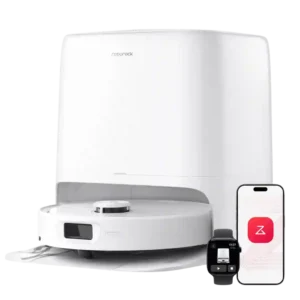
Best for excellent carpet pickup, strong suction, low-clearance reach, and highly automated daily cleaning. Skip it if sticky spills, stubborn wet messes, flawless small-object avoidance, or a compact dock matter...
Pros: Suction and Airflow, Obstacle Avoidance (Robot)
Cons: Streaking / Residue, Solution / Liquid system
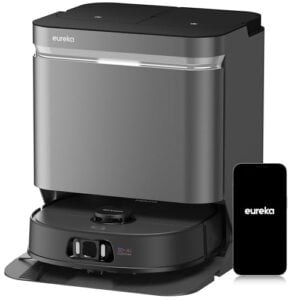
Choose the Eureka J15 Ultra for hands-free vacuuming/mopping, strong suction, edge coverage, and value. Skip it if you need the most advanced obstacle avoidance, compact dock, detergent dispensing, or quieter...
Pros: Obstacle Avoidance (Robot), Maintenance requirements
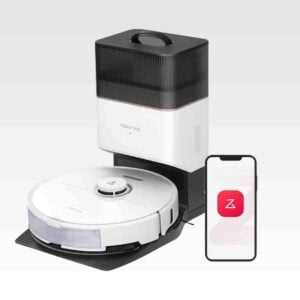
Best for excellent vacuuming, mapping, pet-hair handling, and low-touch daily upkeep. Skip it if you expect deep mop scrubbing, quiet auto-emptying, or premium value in a small or multi-story home.
Pros: Overall opinion, Map and Path Efficiency (Robot Vacuums)
Cons: Dock noise, Price and Value
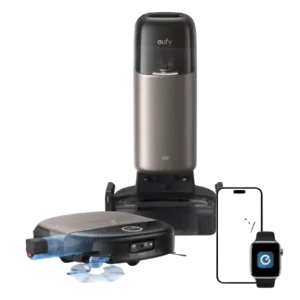
Best for excellent hard-floor mopping, sustained suction and nearly tangle-free hair handling. Skip it if precise edge cleaning, quiet maximum-power operation or flagship value matters more.
Pros: Overall opinion, Mopping performance
Cons: Support and Reliability, Price and Value