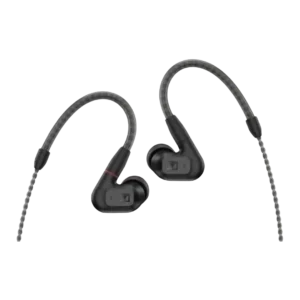
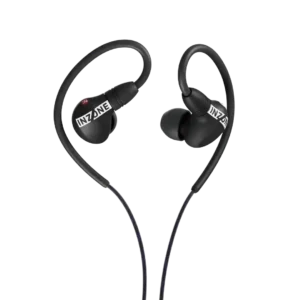
Sennheiser IE 200 Wired Earbuds
Where It Has the Edge
No clear scored advantage over the other product.

Scorata scores summarize analyzed review evidence on a 1–5 scale; they are not laboratory measurements or a simple average of customer star ratings. Feature scores summarize the reviews covering that feature. The overall score averages feature scores within each review, then combines review averages. When both expert and customer evidence are available, those two groups receive equal weight. Products can have different review coverage, so small score gaps do not establish a winner.
Recommendations prioritize important features for the category, with a score of at least 3.5, a gap of at least 0.25 points and at least two supporting reviews per product. Features with widely varying scores or broad connectivity contexts are excluded from recommendations. These safeguards do not establish statistical significance.
Quick verdict
The available evidence supports the recommendation below, but does not establish an overall winner. Check the remaining features against your priorities.
There is not enough comparable review evidence to recommend Sennheiser IE 200 Wired Earbuds over the other product.
Choose Sony Inzone E9 for Included accessories and Carry case quality.
No clear scored advantage over the other product.
Scores are out of 5. Missing scores mean missing review evidence, not a missing feature.
Reviewers broadly liked the IE 200's sound, describing it as clear, balanced, detailed, and enjoyable, though one reviewer found its technical performance only mid-tier.
Sound quality depends heavily on the use case. Competitive games get repeated praise for clarity and detail, but music and cinematic titles often sound flat, hollow, bass-light, or clinical; a handful of listeners instead find the tuning rich and enjoyable.
Reviewers generally found the tuning balanced, clean, accurate, or target-aligned, though often with a mild V-shaped tilt rather than strict neutrality.
Tonal accuracy is disputed. One reviewer hears honest, natural timbres, while another considers the dongle-driven tuning far from accurate and overly shaped for gaming.
Bass was usually praised as controlled, punchy, clean, and satisfying rather than bloated; some reviewers wanted more depth, slam, or bass quantity.
Bass is the most divisive part of the tuning. Many find it restrained, hollow, or lacking punch for music and cinematic games, while a smaller group likes the cleaner low end or gets fuller bass with the right seal, dongle, or EQ.
Depth was more mixed than width: some heard impressive depth and immersion, while others found staging shallow, intimate, or flatter than premium models.
Depth cues are strong enough to distinguish whether action is far away, mid-range, close, or nearby. Spatial processing can add further depth, although it may trade some tonal naturalness for competitive information.
Passive isolation was good when seal and tip choice were right, especially with foam tips; it was not treated as a substitute for ANC.
Passive isolation is one of the E9’s clearest strengths, especially with the dedicated isolation tips and a good seal. Most users report substantial blocking of voices, keyboards, and room noise without active noise cancellation.
Soundstage width earned strong praise for openness, breadth, and spacious imaging at the price, though one reviewer wanted a wider presentation.
The E9 generally presents a wide, precise stage that helps locate sounds across the field. It is more tactical than atmospheric, prioritizing positional awareness over a lush sense of musical space.
Dongle dependence was a usability annoyance for modern phones without headphone jacks.
The USB-C audio box is widely seen as a valuable part of the package because it unlocks Hub features, spatial processing, EQ, and broader device connections. Some dislike needing it for the best experience, and one listener strongly criticized its stock tuning.
Included accessories were adequate but not complete, with reviewers wishing for adapters or better extras despite included tips and pouch.
The E9 is generally considered well equipped, with multiple tip sets, a USB-C audio box, case, and small cable-management extras. The bundle helps it feel ready for PC and travel use out of the box.
Carry case feedback was mixed: the pouch was appreciated by some but criticized by others as cheap or not protective enough.
The included case is one of the most consistently liked extras, with useful organization for the earbuds and dongle. A minority finds it bulkier than necessary, but most consider it practical for travel or tournaments.
Treble was often described as clear, sweet, crisp, or well controlled, with a minority finding it bright, sibilant, swishy, or less extended than higher models.
Treble opinions are mixed but lean critical. Some hear crisp, detailed highs, while many find the top end subdued, lacking brilliance, or—at the other extreme—too sharp and fatiguing.
Cable quality divided reviewers sharply: some liked the braided, durable feel, while many criticized tangling, microphonics, cheap feel, or proprietary fit.
The long cable is usually a strength for desktop PC setups and is often described as practical or well made. It can become cumbersome on controllers or phones, and a few users disagree on whether its length suits their setup.
Stability was consistently strong when fitted properly, with reviewers noting secure, flush fit during runs, flights, or daily use.
The earhook design usually keeps the lightweight buds securely in place, even during long sessions. One owner reported earpiece parts coming off in the ear, making stability less uniformly positive than comfort.
The detachable cable was valued for repairability, but recessed or proprietary MMCX behavior made third-party replacement less convenient.
Cable replaceability gets mixed reports and mixed reactions. Where reviewers describe the cable as detachable, they appreciate easier replacement but note connector limitations; others describe their unit as fixed and see that as a durability drawback.
Instrument separation was one of the clearest strengths, with reviewers repeatedly hearing distinct instruments, voices, and spatial placement.
Separation is a standout competitive strength. Reviewers repeatedly say individual footsteps, voices, effects, and layers remain distinguishable even in dense firefights or busy mixes.
Volume and drive impressions were mixed: some found the IE 200 easy to drive, while others wanted more headroom or used higher source volume.
Volume feedback is mixed: one reviewer calls the E9 detailed and loud, another says it is loud enough, while one customer finds the output too low. Output level may therefore depend on source and personal preference.
The lack of an integrated microphone was repeatedly cited as an inconvenience for calls and general on-the-go use.
The lack of a built-in microphone is a recurring drawback. Competitive players with a separate mic may not care, but headset users who expect one-device game chat often see it as an inconvenience or value problem.
Midrange clarity was generally strong, especially for vocals and instrument body, but a few reviewers heard low mids as thin or less vivid than pricier IE models.
Midrange performance is generally strong, with dialogue, voices, footsteps, and other critical cues sounding clean and forward. One review finds the mids somewhat hollow or overemphasized, but clarity remains a core competitive advantage.
Eartips and fit were highly dependent on ear shape and tip choice, ranging from secure seals to awkward, collapsing, or gimmicky tip behavior.
Most users can find a secure, comfortable seal thanks to the broad tip selection, and a good seal can materially improve bass and isolation. Fit is still personal, with some needing aftermarket or alternate tips to get comfortable.
Ear tip options were well regarded, with reviewers appreciating multiple sizes and both silicone and foam choices.
Sony’s generous mix of tip sizes and styles is consistently praised. The range makes it easier to find a secure seal and choose between general-use and stronger-isolation tips.
Comfort was one of the strongest points, with many reviewers wearing them for hours or even in bed without discomfort.
Comfort is a major strength for most users, with many wearing the E9 for several hours without irritation or fatigue. A smaller group reports stiff earhooks, tip sensitivity, or ear discomfort after extended sessions.
Build quality was mixed: reviewers praised parts of the construction, but plastic shells and cost-cutting were common caveats.
Build impressions range from excellent to concerning. Several owners describe the hardware as high quality, but others report cheap-feeling plastic, a defective first unit, earpiece issues, or an immediate failure.
Design impressions were mostly positive for the minimalist, sleek, discreet look, though some found the plastic shell plain.
The E9’s look is understated, compact, and functional rather than flashy. Most like the subtle, lightweight styling, though some find the buds plain or parts of the construction visually cheap.
The very low weight repeatedly contributed to comfort, with reviewers highlighting the tiny 4g earbuds and light feel.
The earbuds are repeatedly praised for feeling very light. Their low weight helps reduce awareness and fatigue during long sessions.
Value was broadly positive because the IE 200 delivers strong sound for its price, but cable, tip, and accessory issues limited enthusiasm for some reviewers.
Value is highly use-case dependent. Dedicated competitive players often consider the price justified by positioning, comfort, accessories, and software, while generalists and several owners think $150 is too much for weak versatility or no microphone.
The USB-C audio box worked successfully with Android in hands-on use, including a Samsung Galaxy phone. Android users can get audio through the dongle even though the full Hub app experience remains PC-focused.
The matte finish hides fingerprints very well. It keeps the understated shells looking cleaner during regular handling.
One reviewer specifically praised clarity at high volume, saying the sound did not turn muddy even when pushed.
The E9 works across a wide mix of PCs, consoles, phones, and other USB-C or 3.5mm devices. The hardware is broadly compatible, but Windows has the strongest software support and console users lose some tuning options.
The E9 earns strong praise when judged as a specialized competitive-FPS tool, especially for positioning, isolation, and comfort. Satisfaction drops sharply among listeners wanting one pair for music, cinematic games, chat, or a warmer all-purpose sound.
One owner liked the overall unboxing but criticized the paper ear-tip holder as flimsy and cheap. The packaging itself is therefore less convincing than the included case and accessories.
The compact wired IEM format is easy to stow and much easier to travel with than a full headset. The protective case further improves portability for tournaments and handheld gaming.
Preset quality is mixed. Some competitive profiles help emphasize useful cues, while others add little, sound unnatural, or are considered excessive compared with simply using a custom EQ.
The included USB-C adapter broadens device support and can make the wired E9 convenient with modern phones and computers. It is useful, though some older PCs may still need another adapter.
One reviewer flagged the lack of water resistance as a clear limitation for how the earbuds should be used.
INZONE Hub is generally easy to use and adds useful profiles, EQ, spatial sound, and app-sync features. The main frustration is platform support: Windows gets the full experience while consoles, Mac, Linux, and mobile lose customization.
Control usability was a repeated weakness because there are no in-line buttons for volume, playback, or track control.
The 10-band EQ and profile controls are useful for tailoring the E9, especially when adding bass or emphasizing competitive cues. Results are limited by the underlying tuning, and customization is most complete on Windows through the dongle.
Call performance was weak because the earbuds lack a built-in microphone, leaving callers unable to hear through the buds.
Setup is usually straightforward, from plug-and-play use to the clean single-screen Hub interface. Complexity rises when users juggle the dongle, separate microphone, per-app profiles, or platform-specific limitations.
The wired connection was praised for eliminating latency and audio lag. That direct path suits competitive play where timing matters.
One reviewer specifically praised the wired path for avoiding data loss. The direct connection also supports the E9’s low-latency competitive focus.
Positional accuracy is the E9’s defining strength: most reviewers can locate footsteps, gunfire, distance, and movement with exceptional precision. A small minority strongly disagrees, but the dominant pattern is excellent competitive directionality.
Spatial processing is usually praised for improving direction, distance, and immersion, and several users consider it exceptionally accurate. A few find it filtered, muffled, or less natural, so its value depends on the listener and mode.
Replacement tips should be easy to source because the included styles come from Sony’s established tip lines. That makes long-term replacement less troublesome.
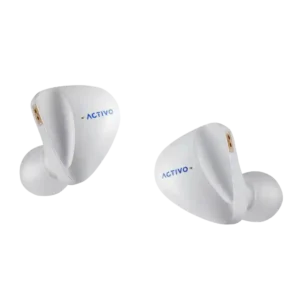
Best for detailed, natural wired sound, three connector options, and standout value around $99. Skip it if you need wireless features, stronger bass, softer treble, or a compact fit for...
Pros: Value for money, Multi-platform compatibility
Clear calls and a remarkably comfortable, secure fit make these compact earbuds an appealing value. Wind handling and touch-control convenience are less consistent, while ANC performance varies more than the...
Pros: Integrated microphone, Microphone quality for calls
Cons: Spatial audio
Choose these for excellent, balanced sound, a comfortable redesign, deep EQ tools and uniquely replaceable batteries. Skip them if you need class-leading ANC, consistently great calls or the smoothest treble...
Pros: User-replaceable batteries, Overall satisfaction
Cons: Auracast support, Sensors

Choose the AirPods 5 for strong open-ear ANC, clearer sound, easy Apple-device switching, and excellent value. Skip them if you need all-day battery, a very secure workout fit, or full...
Pros: Overall satisfaction, Sound quality
Cons: Battery, Eartips fit