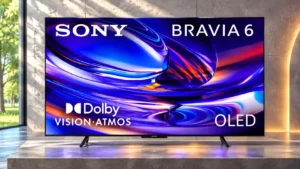
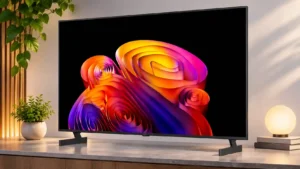
Sony BRAVIA 6 OLED
Where It Has the Edge
- build quality is 4.8 vs 4.4. Construction is sturdy and tidy, without apparent assembly flaws. The simple design feels well put together.

Scorata scores summarize analyzed review evidence on a 1–5 scale; they are not laboratory measurements or a simple average of customer star ratings. Feature scores summarize the reviews covering that feature. The overall score averages feature scores within each review, then combines review averages. When both expert and customer evidence are available, those two groups receive equal weight. Products can have different review coverage, so small score gaps do not establish a winner.
Recommendations prioritize important features for the category, with a score of at least 3.5, a gap of at least 0.25 points and at least two supporting reviews per product. Features with widely varying scores or broad connectivity contexts are excluded from recommendations. These safeguards do not establish statistical significance.
Quick verdict
The review evidence points to a tradeoff: build quality versus picture quality and motion handling. Choose according to which strengths matter more to you; the overall score alone does not settle that choice.
Choose Sony BRAVIA 6 OLED for build quality.
Choose LG B6E OLED for picture quality and motion handling.
Scores are out of 5. Missing scores mean missing review evidence, not a missing feature.
In the right room the OLED delivers beautiful blacks and attractive colors. Bright scenes, reflections, and weaker image processing prevent it from matching the best similarly priced TVs.
OLED blacks, vivid colors and sharp texture make an excellent overall image, tempered by some color inconsistency and modest daylight performance.
Small HDR highlights lack sparkle, and scenes with large bright areas look especially restrained. This is among the TV's most consequential picture weaknesses.
HDR highlights have satisfying punch for an affordable OLED, but larger bright scenes look subdued beside premium LG models.
Compression smoothing can reduce coarse artifacts, but it may erase fine detail and give low-quality video a waxy appearance.
Compression artifacts and blockiness are handled extremely well, giving rough streams a cleaner appearance.
Deep blacks produce excellent contrast, but dim highlights and muted bright scenes limit the HDR wow factor. Better OLEDs produce a more vivid cinematic image.
Strong contrast and colorful highlights make HDR enjoyable, although peak and full-screen brightness leave room for improvement.
Both HDR highlights and large bright SDR scenes are relatively dim. Brighter rival OLEDs make much more impact in daytime light and HDR showcases.
The B6E is noticeably brighter than some older budget OLEDs, yet substantially dimmer than the C6 and G6 and not equipped for very bright rooms.
Brightness drops noticeably as larger parts of the image become light. Sports and snowy or sunlit scenes can look especially subdued.
The panel cannot maintain the same visual punch when much of the screen is bright, a drawback for sports and sunny outdoor scenes.
Even moderate ambient light can overcome the modest screen brightness. Windows and reflections make this a poor choice for bright daytime rooms.
Reasonable ambient light is manageable, but bright windows can wash out the experience and make the screen mirror its surroundings.
Color looks reasonably natural out of the box, and much better after calibration. Bright SDR material can still look too cool or washed out before adjustment.
The B6E can look accurate out of the box, but a green cast appears in some side-by-side scenes. Other content renders skin tones vibrantly and naturally.
The TV can produce very accurate images after calibration, with natural colors and controlled whites. The limited calibration toolkit makes some HDR errors harder to correct.
Many scenes look beautifully balanced and natural, but a greenish cast is visible in certain side-by-side comparisons.
Instant-feeling control response and sharp OLED motion make games enjoyable. Support for several consoles is excellent, even if HDR punch is limited.
Quick response, extremely low input lag and refined 120Hz motion make this one of the strongest areas of the B6E.
Internal sound is serviceable for voices but underpowered for cinematic effects and large rooms. An external sound system would provide fuller bass and impact.
Basic viewing is serviceable, but thin bass, limited volume and a narrow presentation leave the speakers behind the picture.
The built-in system produces little deep bass or cinematic rumble. Explosions and music have much less weight than they would through a good soundbar.
Low-end impact is restrained, so engines and dramatic effects lack the rumble that the vivid OLED picture deserves.
The OLED panel can display highlights beside completely black pixels for effectively infinite contrast. This particularly enhances dimly lit scenes.
Near-infinite OLED contrast brings deep blacks and expressive highlights to films and games, particularly in darker rooms.
Evening viewing brings out the strengths of the OLED panel: rich blacks, high contrast, and immersive shadows. Peak brightness is less of an obstacle when the room is dark.
This is where the B6E is at its best: dark scenes retain deep blacks, strong contrast and the vivid look that makes OLED attractive.
Factory white balance is imperfect, especially in bright SDR scenes, though calibration can produce excellent results.
White balance can look close to ideal by default, but a visible green or yellow bias appears in some scenes alongside the C6 and B5.
Pixel response is excellent for games and fast-moving content, but some 60p video is hampered by poor judder removal. Results depend on the source.
Fast action looks clean with minimal smearing, although lower-frame-rate material can still reveal stutter.
Controller actions appear onscreen almost immediately, with very little perceptible delay. This is a strong point for fast games.
Gaming-mode latency is exceptional, supporting nearly immediate responses to controller inputs.
Google TV menus can feel fast and straightforward, but another hands-on assessment found freezes that repeatedly interrupted operation. Daily use is therefore less consistently polished than the interface suggests.
webOS menus are generally intuitive and well organized, even if the software can occasionally feel heavier than expected.
Native apps and 24p sources avoid judder, but 60p boxes can show choppy, uneven motion. This is a notable weakness for some older media devices.
Most film and TV signals play with even frame pacing, although a few unusual frame-rate combinations can retain judder.
A full calibration can improve accuracy dramatically, but the controls are limited. In particular, there is no full color management system for nuanced corrections.
Calibration is straightforward and can refine accuracy, although the default image is already strong enough that gains may be subtle.
Standard-resolution material scales sharply, but compression smoothing is less convincing. Poor-quality streams can lose texture and appear waxy.
Compression cleanup and texture enhancement help older or low-quality video look cleaner without excessive sharpening.
Simple blade-style feet hold the screen securely. Their placement has limited flexibility compared with adjustable-width stands.
The feet provide adequate support but look and feel cheaper than the metal stand parts on the B5.
At 120Hz, game movement remains sharp and responsive. The ceiling is lower than the 165Hz offered by some similarly priced OLED rivals.
Fast 120Hz play is sharp and fluid, with variable refresh rate helping avoid tears when frame rates fluctuate.
Image processing is a divisive area: some previews anticipated Sony's usual advantage, but tests found weaker streaming cleanup and loss of fine texture. The missing premium XR processing is significant.
Normal processing cleans up many low-quality sources without destroying fine detail, though an optional sharpening mode on the regular B6 can look artificial.
A genuinely enjoyable dark-room OLED picture and outstanding connectivity are offset by weak brightness, middling value, and reports of severe software glitches. The balance is less favorable than the Sony name might suggest.
The B6E succeeds as a versatile, good-value OLED with exceptional gaming and dark-room pictures. Reflections and several cost-saving details keep it below pricier models.
The native 120Hz panel produces crisp movement and is well suited to consoles. It falls short of the higher maximum rates offered by some similarly priced gaming OLEDs.
The 120Hz panel gives games convincingly fluid, crisp motion, though it does not reach the higher rates of premium gaming displays.
Most DCI-P3 content is handled competently, but the TV struggles with the wider BT.2020 gamut. Fully saturated red and green tones are harder to reproduce.
The B6E handles mainstream HDR color well but covers less of the widest color spaces than some alternatives and even its predecessor.
Four full-speed HDMI 2.1 inputs simplify mixed entertainment setups with consoles, PCs, and external media devices. The breadth of compatible audio formats is an additional strength.
Four high-bandwidth HDMI connections accommodate several modern devices, but rear-facing sockets complicate tight wall mounts.
Voices are intelligible through the internal speakers. There is no sophisticated room-correction system to compensate for the acoustics of a particular space.
Speech can be clear during ordinary watching, but it can also sound uneven and patchy. A soundbar offers more consistent voices.
The OLED SE panel delivers genuine OLED black levels but lacks the brightness and color strength of premium tandem OLED models. It is an entry-grade OLED rather than a flagship panel.
The newer budget WOLED panel excels at black levels but does not match tandem OLED for maximum brightness or rich highlight colors.
Saturated color looks convincing in darker scenes but loses intensity as picture brightness rises. Bright scenes can appear washed out.
Rich reds, blues and other saturated colors look engaging in ordinary scenes, but the brightest colors can fade and higher-end OLEDs have more punch.
The full Google TV experience includes ads, and turning off ad personalization does not reduce their number. An ad-free basic-TV setup sacrifices smart features.
A large webOS banner ad can crowd the home page. Home-screen promotions can be disabled, but ads remain on the apps page.
Fast objects remain distinct without long blur trails, thanks to rapid OLED pixel transitions. Some persistence blur is still possible at 60Hz.
The instant OLED pixel response produces exceptionally crisp moving objects, especially at 120Hz.
VRR keeps compatible games nearly free of tearing even during frame-rate fluctuations. Older AMD cards without supported VRR technology are a notable exception.
VRR works across a broad span of refresh rates and helps gameplay stay smooth and tear-free.
The dim panel and conspicuous direct reflections make glare control a notable weakness. Closing blinds improves dark-scene visibility considerably.
The glossy panel does little to hide window or lamp reflections, especially when darker scenes are playing.
Mid-gray screens show little central mottling, a benefit during sports and large camera pans. Slight edge darkening remains but is usually minor.
The central picture stays fairly clean on gray fields, with only minor patchiness that is unlikely to stand out at normal distances.
The picture retains its appeal from off-center seats, making the screen an excellent fit for wide group seating.
Colors and contrast stay remarkably consistent off-axis, with only mild fading from extreme positions.
Bright objects stay cleanly separated from dark surroundings, without the halos associated with backlit LCD televisions.
Bright objects sit against dark backgrounds without distracting halos, thanks to individually controlled OLED pixels.
The blade feet give the TV a secure base without noticeable wobble.
The two stand feet support the thin display securely despite their basic materials.
Clips built into the feet make it easier to route cables discreetly behind the television.
Clips behind the stand feet provide a simple, useful way to keep cables tidier.
Four HDMI inputs offer plenty of room for consoles, media players, and other AV devices. Their full bandwidth makes the count more useful than a simple four-port specification.
Four inputs provide room for several consoles, streamers or a PC without constantly swapping cables.
Very minor transition overshoot can appear in dark tones, but it is difficult to notice in ordinary viewing.
Dark detail is generally strong, but occasional black crush and inaccurate shadow rendering can hide fine textures.
Bright static elements such as logos, news tickers, and game HUDs carry a meaningful risk of permanent burn-in over time. Mixed content is much safer than leaving fixed graphics onscreen for long stretches.
Static logos or news banners pose a meaningful permanent burn-in risk. Mixed viewing helps, but caution is worthwhile for fixed content.
Direct lights and windows are plainly visible, often obscuring dark scenes. The screen coating only partly mitigates ambient reflections.
Glossy mirror-like reflections are one of the most consistent complaints, with strong lamps and windows disrupting darker scenes.
Compatible consoles automatically trigger low-lag operation, avoiding the need to change picture modes manually before gaming.
Connected consoles can trigger Game Optimizer automatically, helping players get the TV’s fastest responses without changing settings manually.
Four full-bandwidth HDMI 2.1 connections are the clearest hardware advantage. Consoles, PCs, and other high-rate devices can stay connected without choosing which inputs get the best features.
Four HDMI 2.1 inputs are unusually generous for a budget-oriented OLED and make it easy to connect multiple modern systems.
Individual OLED pixels switch fully off for truly deep blacks. Dark-room contrast is excellent and a consistent strength.
Perfect, inky OLED blacks are a standout strength across dark scenes, helping highlights and shadows feel sharply separated.
Completely black areas are beautifully uniform thanks to the self-lighting panel, with no halos around bright objects. This does not prevent visible banding in near-black gray scenes.
Black screens remain truly dark without the glow or haloing that can appear on backlit TVs.
G-SYNC support helps keep compatible PC gaming smooth and nearly free of tearing, even as frame rates vary.
NVIDIA G-SYNC compatibility helps reduce tearing for supported gaming PCs.
The RGWB subpixel arrangement improves compatibility with PC text rendering, helping text appear crisp. Static desktop interfaces still warrant careful long-term use.
A revised subpixel structure improves the sharpness of computer text compared with less PC-friendly OLED arrangements.
The simpler remote has attracted criticism for its design and layout. Its functionality is conventional rather than especially premium.
The supplied B6E remote is simpler than the B6’s Magic Remote and misses its motion and voice conveniences; the more advanced remote can be bought separately.
OLED pixels change almost instantly, preventing noticeable trails behind fast-moving objects. This helps both games and sports.
OLED pixel transitions are nearly instantaneous, keeping fast game movement exceptionally crisp.
Near-black scenes can be marred by obvious vertical banding, even though fully black areas look perfect. Gray-field uniformity is considerably better.
Very dark gray scenes can reveal distracting vertical bands even though ordinary gray screens are relatively clean.
Foot placement is not especially flexible, so the furniture must accommodate the fixed stand width. Check dimensions before buying.
Fixed, widely spaced feet take up a substantial amount of furniture space.
Low-resolution DVDs and similar sources are enlarged cleanly without obvious oversharpening. This strength does not extend fully to compressed-stream cleanup.
DVDs and HD streams gain clear, natural-looking detail without aggressive edge sharpening.
Adaptive refresh performs well across the supported range, including low frame rates when the source supports compensation. Tearing is kept to a minimum.
Low-frame-rate compensation extends variable refresh operation below the panel’s normal minimum to reduce tearing.
Panel longevity looks reasonable with varied content, but static graphics pose burn-in risk. Operational freezes in one review introduce a separate concern about day-to-day dependability.
The panel has relatively low risk of many common failures, but static imagery can burn in and edge-pixel issues may appear with age.
HDMI Forum VRR and G-SYNC work well, but lack of FreeSync excludes VRR on certain older AMD graphics cards. Check PC graphics compatibility before relying on tear-free play.
AMD FreeSync support contributes to the broad, smooth variable-refresh gaming package.
The four full-bandwidth HDMI connections are a genuine benefit, but the picture is dimmer and often less refined than cheaper OLED rivals. Even a sale price may not erase concerns about software reliability.
Discounted pricing makes the B6E a standout introduction to OLED, but a cheaper B5 or a closely priced C6 can change the calculation.
Dolby Atmos and other Dolby and DTS formats broaden external audio compatibility. For cinematic impact, an upgraded sound system is still preferable to the modest built-in speakers.
Dolby Atmos material can be played, but the built-in speakers struggle to reproduce spacious effects convincingly.
Games look sharp at 4K and can run as fast as 120Hz, with excellent input response. The missing 1440p option is a smaller compatibility drawback.
Modern games look sharp and run smoothly, with the HDMI bandwidth and gaming modes to make the most of 4K sources.
Dolby Vision offers a useful range of picture modes, including cinema and gaming options. It can improve some scenes but cannot fully compensate for the panel's low brightness.
Dolby Vision streaming looks vivid and detailed, though compatibility with the newer Dolby Vision 2 format is uncertain.
Current consoles and compatible PCs can play at 4K/120Hz on every HDMI input. Native 1440p signals are not supported, so some alternate output setups are more restrictive.
4K/120Hz gaming is a clear highlight, with strong compatibility across modern consoles and the responsive motion OLED is known for.
Every HDMI port carries high-bandwidth gaming features rather than reserving them for only two inputs. This is an unusually flexible arrangement for a Sony OLED.
All four HDMI inputs offer high-bandwidth gaming support, including 4K/120Hz and variable refresh rate.
The TV tracks much of the intended HDR brightness curve closely. However, it cuts off highlights abruptly rather than preserving the brightest gradations.
HDR luminance tracking closely follows the intended image, preserving subtle differences in bright details.
Google TV's normal navigation is fast and direct, although that responsiveness does not guarantee freedom from occasional system faults.
webOS does not always feel as smooth as its well-organized interface suggests, with occasional hesitation.
Google TV navigation feels quick and intuitive during normal operation. More severe reliability problems were noted in another test, so speed is not the entire story.
The redesigned webOS layout is easier to navigate, though some operation can feel sluggish as the software becomes more demanding.
Google TV provides a wide assortment of mainstream streaming services. Actual playback reliability is a separate concern in light of reported freezes.
A wide selection of familiar streaming services helps make webOS a complete television platform.
Google TV offers easy navigation and broad access to streaming services. It is flexible in principle, though one test uncovered disruptive operating glitches.
webOS has broad app support and intuitive menus, though sluggish moments and persistent advertising interrupt an otherwise polished experience.
Google TV has a large catalog of familiar streaming services and entertainment apps. App availability itself is a strength even though operation is not universally trouble-free.
webOS offers an expansive app library for streaming and gaming, leaving few obvious gaps for everyday entertainment.
Using Google TV includes advertising, but a basic setup without a Google sign-in offers an ad-free alternative. The tradeoff is losing many smart functions.
Some home-screen promotions and suggested content can be turned off for a cleaner interface, but apps-page ads remain.
Much of the HDR signal follows the intended luminance curve accurately. The brightest areas nevertheless clip rather than holding fine gradations.
Highlights retain smooth gradation, though the TV sometimes protects detail by limiting how bright tiny elements appear.
Construction is sturdy and tidy, without apparent assembly flaws. The simple design feels well put together.
Construction feels solid and generally premium, even if the stand feet and some finishing touches are less upscale than flagship alternatives.
Thin framing on all four sides keeps the front unobtrusive and places visual attention on the picture.
The screen has a clean, thin-edged appearance, although the B6E’s bezels are thicker than those on some premium OLEDs.
The BRAVIA 6 has clean, restrained styling, slim bezels, and simple feet. It looks attractive without a flashy finish.
Slim styling, narrow borders and a restrained profile look attractive in a living room, without the bulk of many conventional TVs.
The TV tops out at 120Hz even at 4K, while some similarly priced OLED rivals can accept higher 4K refresh rates. High-frame-rate PC enthusiasts have faster alternatives.
DTS compatibility is particularly helpful for Blu-ray collectors and external home-theater systems. It provides broader audio-format flexibility than many competing setups.
eARC can deliver high-bitrate, uncompressed surround audio from connected devices to a compatible receiver or soundbar.
There is no HDR10+ decoding, so HDR10+-only titles rely on a compatible fallback format. Dolby Vision support helps offset the omission on other content.
HDR10, HLG, and Dolby Vision cover the major formats many viewers use. HDR10+ is absent, so that particular format requires fallback playback.
An ATSC 3.0 tuner supports NEXTGEN TV broadcasts in the United States, making the television flexible for compatible over-the-air services.
The set can run in a basic mode without a Google sign-in. That removes advertising but also strips away many connected-TV conveniences.
Optional black-frame insertion can reduce perceived blur, but its 60Hz-only operation limits flexibility.
Near-black scenes can display pronounced vertical bars and streaks across the panel. These artifacts are an important drawback for darker movies and games.
webOS organizes entertainment with helpful Quick Cards, while settings allow a cleaner home page if suggestions feel intrusive.
The 100Mbps wired network port should handle everyday streaming, but it can be a bottleneck for extremely high-bitrate local files. Faster networking arrangements may be preferable for demanding home media libraries.
Subtle refresh-related brightness dips should not bother most viewers, but the picture is not entirely flicker-free.
Game Optimizer offers accessible controls for tuning responsiveness and other gameplay settings.
Game Optimizer delivers excellent responsiveness, while ordinary picture modes can add noticeable input delay.
Very bright HDR elements can lose fine texture as the set reaches its brightness ceiling. Delicate highlights are less convincing than on brighter OLED competitors.
Some rear-facing HDMI ports are awkward to reach, especially when the television is mounted close to a wall.
An 83-inch configuration allows a very large OLED image with deep blacks. It makes most sense where the furniture and viewing distance can accommodate its size.
The B6E’s modest speaker output struggles to fill loud or large spaces.
TruMotion can smooth sports and panning shots, but its frame cadence is not always consistent and may introduce choppiness.
Without the Magic Remote’s pointer and built-in microphone, some navigation and smart functions are less convenient out of the box.
The simplified remote design has drawn unfavorable reactions. Hotkeys remain, but the overall button arrangement may not appeal to everyone.
The coating reduces some total reflected light, but windows and lamps remain quite visible. Direct reflections can overwhelm dark scenes.
Around 32GB of stated internal storage is seen as enough for typical streaming apps and everyday software.
Slow camera pans in movies can look jumpy because the OLED pixels transition so quickly; fast games are less affected.
Playing video files from a USB stick was not dependable in one hands-on evaluation. A local media library is not a risk-free alternative to streaming.
The television can be mounted, but backward-facing HDMI ports may require angled adapters for a close-to-wall installation.
AI Sound Pro can improve clarity and detail, but it cannot make the built-in speakers deliver deep bass or a wide soundstage.
eARC and wide format compatibility allow high-quality audio to pass to a soundbar or receiver. This is a useful asset for surround-sound systems.
The regular B6 offers a reduced set of sound presets, while the B6E needs the optional Magic Remote for room correction.
Ambient-light adjustment may make casual viewing easier, but it changes the picture as room lighting shifts. Those who need a steady image should pay attention to the setting.
Self-lit WOLED pixels deliver true blacks and bloom-free contrast, although the affordable panel is less luminous than premium OLED designs.
Per-pixel OLED control achieves the effect of perfect local dimming, with no zone transitions to distract from dark scenes.
Textures and skin detail look clean and natural, although a direct Samsung comparison found slightly crisper fine details on the rival.
Filmmaker Mode suits darker dramatic scenes while Cinema Home enhances colorful films and animation.
Clearance depends on stand configuration and soundbar height. One assessment found a low position could obstruct the screen, while another describes raising the stand for extra room.
Sound largely stays inside the width of the screen rather than creating an enveloping cinematic field.
One hands-on test encountered crashes or freezes that required physically unplugging the TV. This serious weakness sits uneasily beside otherwise smooth interface reports.
webOS works with a broad range of connected-home platforms, making the TV adaptable to existing setups.
The basic B6E remote lacks the microphone needed for some voice features; using those functions requires an optional Magic Remote.
The 48-, 55-, 65-, 77-, and 83-inch range covers compact setups and expansive theaters. Some rivals additionally offer 42-inch models.
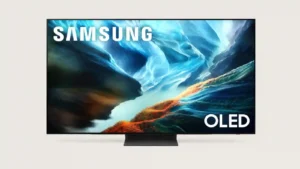
Choose the S90H for bright-room OLED viewing, deep blacks and top-tier gaming without flagship pricing. Skip it if you want Dolby Vision, a glossy screen or the simplest smart-TV software.
Pros: glare resistance, black levels
Cons: Dolby Vision support, color gamut
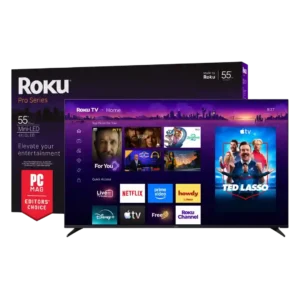
Best for bright Mini-LED picture, excellent built-in audio, easy Roku navigation, and responsive 4K/120 gaming. Skip it if you want ad-free menus, premium motion consistency, or stronger confidence in long-term...
Pros: overall satisfaction, picture quality
Cons: reliability, portability and versatility
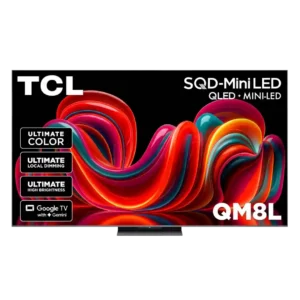
Choose the QM8L for a big, brilliantly bright TV with vivid HDR, deep mini-LED blacks, low input lag, and four HDMI 2.1 ports. Skip it if you need OLED-clean motion,...
Pros: picture quality, value for money
Cons: stand quality, judder handling
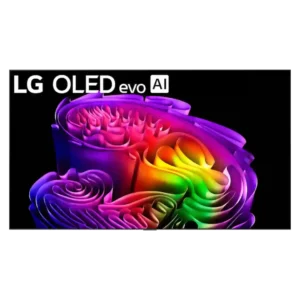
Choose the G6 for class-leading bright-room OLED picture, rich color, deep blacks and elite gaming. Skip it if you want strong built-in audio, polished launch firmware, no account sign-in, or...
Pros: picture quality, peak brightness
Cons: value for money, sound quality