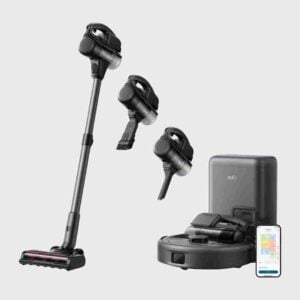
eufy E20 Robot Vacuum 3-in-1 Stick Vacuum
Where It Has the Edge
- Ease of use is 4.6 vs 3.2. Ease of use was strong in direct scoring and handheld use, though other attributes capture specific tool and...

Scorata scores summarize analyzed review evidence on a 1–5 scale; they are not laboratory measurements or a simple average of customer star ratings. Feature scores summarize the reviews covering that feature. The overall score averages feature scores within each review, then combines review averages. When both expert and customer evidence are available, those two groups receive equal weight. Products can have different review coverage, so small score gaps do not establish a winner.
Recommendations prioritize important features for the category, with a score of at least 3.5, a gap of at least 0.25 points and at least two supporting reviews per product. Features with widely varying scores or broad connectivity contexts are excluded from recommendations. These safeguards do not establish statistical significance.
Quick verdict
The review evidence points to a tradeoff: Ease of use versus Onboard tool storage and Map and Path Efficiency (Robot Vacuums). Choose according to which strengths matter more to you; the overall score alone does not settle that choice.
Choose eufy E20 Robot Vacuum 3-in-1 Stick Vacuum for Ease of use.
Choose iRobot Roomba Max 705 Robot Vacuum for Onboard tool storage and Map and Path Efficiency (Robot Vacuums).
Scores are out of 5. Missing scores mean missing review evidence, not a missing feature.
Ease of use was strong in direct scoring and handheld use, though other attributes capture specific tool and app caveats.
Cleaning routines become straightforward once everything is mapped, but setup and editing rooms can require patience.
The included tools expand use cases, but reviewers repeatedly criticized the lack of integrated storage and some attachment awkwardness.
Extra filters and bags help owners get started, with replacement consumables available for routine maintenance.
Small-space suitability was strong because the compact combo can replace multiple appliances in apartments or smaller homes.
Sophisticated navigation and a dedicated station may be excessive for small apartments where simpler, less expensive robots could suffice.
Weight was a standout positive for handheld and stick use, with multiple reviewers calling it light or among the lightest tested.
The body feels solid but somewhat heavy when picked up, adding to its less-than-compact profile.
Onboard storage was partial: the crevice tool storage helped, but wand and floor-head storage were widely criticized.
Storage for a spare replacement dust bag inside the dock is a useful space-saving touch.
The robot and dock were often praised for saving space, while accessory storage and station stability were recurring drawbacks.
The separate charging station needs floor space and room for access, making self-contained designs more suitable for cramped rooms.
Emptying was convenient through the dock but could be fiddly, gross, noisy, or messy when switching modes.
Sealed dust collection helps keep disposal tidy, but the dock does not always completely evacuate the robot’s small onboard bin.
Obstacle avoidance was highly inconsistent across reviewers, ranging from full marks to poor object-test scores and cable failures.
Obstacle detection is a standout: cables, toys, and simulated pet messes are frequently avoided. Small or thin objects can still slip through.
Mapping and path efficiency were polarized, with Vacuum Wars praising efficient LiDAR coverage while other reviewers reported clunky maps or erratic navigation.
LiDAR maps rooms quickly and produces orderly routes, even in dim lighting. Room editing and setup can be less polished than the navigation itself.
Medium-pile carpet feedback ranged from strong lab scores to weaker results that required higher suction or multiple passes.
Low- and medium-pile carpets generally respond well to the rubber rollers and suction, which can lift embedded debris.
Runtime was mixed, with some reviewers praising real-home coverage or no recharge interruption while Vacuum Wars found below-average efficiency.
Runtime is sufficient for many ordinary cleaning schedules, with multi-room coverage varying by suction mode and home size.
Hard-floor hair pickup was mixed, from reasonable household performance to trouble with dog hair in WIRED's testing.
Pet hair and crumbs are often collected effectively from hard floors without multiple interventions.
Large hard-floor debris results were often excellent in robot tests, though Vacuum Wars found stick mode could snowplow larger debris.
Crumbs and coffee grounds are generally collected quickly on hard flooring, often within one or two passes.
Filtration feedback was split between praise for dust containment and AeroTurbo-style filtration and a Vacuum Wars fog-test failure.
The enclosed disposal bag helps retain fine particles, but it should not be confused with verified HEPA filtration for the robot itself.
Hair-wrap resistance was split: detangle tests were excellent in some reviews, while other reviewers found human hair or clumps around rollers.
Rubber rollers handle loose hair better than traditional bristles for some owners, but long strands can still wrap around the roller ends.
Carpet hair pickup was often strong in lab tests and pet homes, though not every hair-related issue was solved.
Rubber rollers and strong suction are particularly good at lifting embedded hair and fibers; roller-end tangling remains the main caveat.
Stuck-resistance evidence was mixed, from one studio test with no stuck events to failures on cables and rug tassels.
It rarely gets stranded on ordinary objects in open layouts, but taller thresholds and tightly packed furniture are challenges.
Overall sentiment was mostly positive, with reviewers liking the concept and value while noting limitations around bin size, carpets, and obstacle handling.
Its powerful vacuuming and smarter navigation earn substantial praise, offset by a high price and uneven dock reliability.
Maintenance was manageable and sometimes easier than rivals, but filter, brush, and bag upkeep remained necessary.
The bagged dock reduces daily handling, but filters, sensors, and wrapped hair still need periodic attention.
Thick-carpet evidence was weak because a reviewer noted the side brush slowed on really thick carpet.
High-pile results are conditional: the vacuum can lift embedded material, but tests note incomplete grit pickup and slower progress.
Hard-floor fine-dust results were generally strong, with reviewers saying it cleaned hardwood or flour-like debris well.
Hard-floor crumbs and hair are generally cleared well, although fine settled dust and grout-like debris proved difficult in one detailed test.
One family-home review was very pleased with carpet performance in robot mode, covering low-pile-style household carpet evidence.
Loose debris on low- and medium-pile carpets is usually picked up well, sometimes requiring a second pass.
The auto-empty bag system was convenient, but the shared onboard bin was repeatedly called small or hard to manage.
The small onboard dustbin is adequate with regular auto-emptying, but fills quickly during heavier pet-hair and spot-cleaning sessions.
Price sentiment was strongly positive, especially around sale pricing and the value of getting robot and cordless functions together.
Buyers repeatedly object to flagship-level pricing for a vacuum-only machine when rivals add mopping. Discounts make it considerably more appealing.
Setup was consistently praised as quick, easy, or requiring little assembly.
Initial pairing can be manageable, but broken QR codes, mandatory updates, and unclear progress indicators make first setup needlessly frustrating.
Auto-emptying was generally useful and automation-enhancing, but some reviewers noted awkward docking choreography or undocking/clog concerns.
The auto-empty station saves routine dustbin trips, but emptying failures and awkward dock alignment repeatedly undermine that convenience.
Corner-cleaning evidence was negative from one household review that found debris left at room edges.
The side brush helps with corners, though it sometimes scatters light crumbs or leaves edges imperfect.
Cleaning convenience was the core promise, but some reviewers said details like imperfect cleaning or workflow friction held it back.
Automatic routines and bagged emptying make everyday floor maintenance noticeably easier, provided the station behaves.
Edge and baseboard results varied: robot mode could clean edges well, but some reviewers still found edge residue or border grime.
The perimeter can be missed on a second cleaning pass, leaving some material along room edges or baseboards.
Reviewers generally found suction strong in robot or handheld modes, though some measured weaker airflow or cordless performance than premium stick vacuums.
Powerful suction earns praise for pulling crumbs, dust, and hair from floors and carpets, although one controlled test questions how much deep grit it actually extracts.
Mopping scored poorly because the E20 lacks a mop, which several reviewers treated as a meaningful limitation.
The Max 705 Vac is strictly for vacuuming, so households that need wet cleaning must buy a different robot; the simpler maintenance is an upside for vacuum-focused users.
Compared with rivals, reviewers often praised robot performance and value but saw the stick-vac or suction side as below premium separates.
Against older Roombas, its mapping and obstacle detection stand out; controlled carpet testing and richer competing combo robots complicate the overall comparison.
Dock noise was a clear concern in one family review, especially during auto-emptying.
Dust transfer at the station makes a loud but brief burst, so the dock is more disruptive than the robot’s normal cleaning noise.
Noise feedback was mixed: robot mode could be quiet in one test, while other reviewers called the vacuum and dock noisy.
Normal cleaning is fairly quiet by robot-vacuum standards, but stronger suction increases the hum and the dock is distinctly louder.
Ownership-cost evidence centered on needing replacement bags and the disappointment of receiving only one bag.
Consumable bags and replacement parts add to the cost of ownership, especially compared with cheaper competing vacuum-mop robots.
Build quality opinions were mixed: some called parts solid or premium, while others found the base or stick-vac feel plasticky.
Solid casing, responsive bumpers, and protective details create a well-made impression, although long-term durability remains uncertain.
The robot's thick body limited access to tight spots in one review.
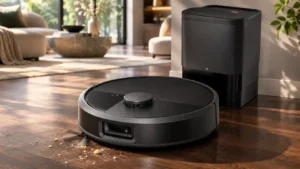
Its raised sensor housing restricts access beneath low sofas and TV stands, despite decent clearance under taller furniture.
Design feedback was positive overall, with reviewers calling it clean, compact, cute, and modern.
The matte black robot and clean-looking dock are restrained and attractive without demanding visual attention.
Battery and charging feedback was mixed: fast charging was praised, but shared battery capacity and robot efficiency were concerns.
Several accounts describe enough battery for ordinary full-floor runs, though very large layouts may need a recharge break.
One reviewer was skeptical of Eufy's long-term software-update follow-through based on prior Eufy app experience.
Forced firmware updates, stalled progress bars, and occasional resets make software maintenance a weak point.
App and smart features were mostly well liked, especially mapping and schedules, though connectivity and zoning bugs appeared in some reviews.
Room scheduling, cleaning zones, and routines offer useful flexibility. Less intuitive map editing and occasional lag are common annoyances.
Controls and app responsiveness were often liked, though some reviewers found power-button behavior or mode controls less intuitive.
Accessible home and power buttons are convenient, though some app settings and menus are hard to locate.
Threshold handling earned praise in one review because the E20 cleared raised door thresholds better than some pricier robots.
Rug handling was a limitation when the robot tangled in rug tassels.
False full-bag messages can interrupt automation even when the dock’s collection bag still has room.
Automatic suction increases on carpets can lag or fail to activate, particularly compared with models using dedicated carpet sensors.
The dual rollers removed test fibers without the carpet-fiber tearing seen on some older vacuums.
WIRED reported that automated dust collection could clog the disposal chute, hurting debris-prevention confidence.
One review liked the concept but said the cordless workflow lacked the grab-and-go convenience of a wall-mounted stick vac.
Crevice pickup was solid to excellent in lab-style tests and car/edge use, though not always premium-class.
A carpeted charging base causes unreliable alignment in several tests; placing the station on hard flooring reduces this problem.
Long hair can accumulate at brush ends and the side brush, requiring occasional manual removal.
Reviewers repeatedly framed the E20 as a genuinely interesting or innovative 3-in-1 design rather than just a normal robot vacuum.
A missing paper manual and ineffective QR instructions frustrate setup, with the more useful guide hidden inside the app.
Large and heavy debris pickup was praised in Vacuum Wars testing, especially for cat litter and sand in cordless mode.
Manual handling was broadly positive, with reviewers calling the handheld or stick configuration light, compact, and maneuverable.
Pet suitability is limited by the small shared dustbin, even though several reviews liked hair pickup in some modes.
Several tests found the robot backing up multiple times or sitting crooked on its dock, particularly when the dock is on carpet.
Suction multipliers and the workings of smart sensing are poorly documented, making advertised performance difficult to compare with rivals.
Heavy-duty suitability was limited: reviewers described it as better for light cleaning or interesting but not perfect.
Ordinary doorway transitions are manageable, but taller steps can stop the robot from finishing its route.
Most reviewers found switching between robot, handheld, and stick modes easy, but tool compatibility and one stiff attachment created caveats.
It can reach beneath taller furniture but misses dust below low couches and compact media stands.
Above-floor and upholstery cleaning was a major benefit, with reviewers using handheld mode successfully on sofas, cars, and hard-to-reach areas.
Versatility was one of the strongest themes: reviewers liked one machine acting as robot, stick, and handheld, with some performance caveats.
Carpet pickup is often strong for surface debris and hair, especially with extra passes. Deep dust extraction draws more mixed assessments.
Smart dirt detection can revisit concentrated messes and increase suction, though a targeted test found that it triggered much less often than expected.
Reviewers valued the handheld/stick mode for stairs, while noting a missed opportunity for a smaller stair-cleaning head.
Selectable suction is useful, but tests disagree on whether automatic Carpet Boost reliably reaches the desired higher power.
The detachable motor/shared vacuum design was widely praised as clever, useful, and genuinely convertible.
Floorhead feedback was mixed, handling hard floors and carpets adequately but struggling to agitate edge dirt in one test.
Long-term evidence was limited, but one reviewer saw no obvious weak spot and expected the unit to last well.
Laser navigation works in dim rooms and supports cleaning when overhead lights are off.
WIRED liked that the laser-guided navigation avoids AI-enabled cameras, supporting a privacy-positive interpretation.
Voice controls offer convenient room-specific commands where supported, although some promised smart-home connections were not available at launch.
Compatible aftermarket filters and bags can lower replacement costs, although owners should check exact part dimensions.
One reviewer explicitly described the robot as convenient and reliable after testing.
Value-for-money sentiment was consistently strong because the E20 combines robot, stick, handheld, and auto-empty functionality at midrange pricing.
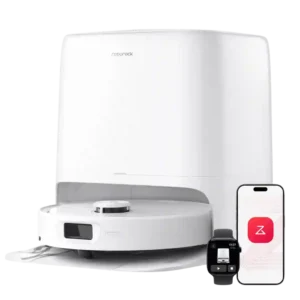
Best for excellent carpet pickup, strong suction, low-clearance reach, and highly automated daily cleaning. Skip it if sticky spills, stubborn wet messes, flawless small-object avoidance, or a compact dock matter...
Pros: Suction and Airflow, Obstacle Avoidance (Robot)
Cons: Streaking / Residue, Solution / Liquid system
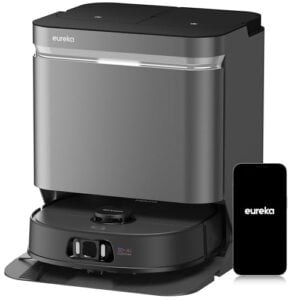
Choose the Eureka J15 Ultra for hands-free vacuuming/mopping, strong suction, edge coverage, and value. Skip it if you need the most advanced obstacle avoidance, compact dock, detergent dispensing, or quieter...
Pros: Obstacle Avoidance (Robot), Maintenance requirements
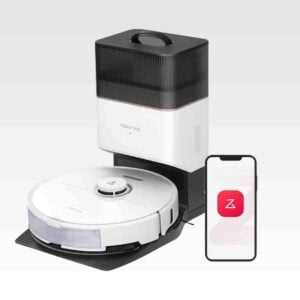
Best for excellent vacuuming, mapping, pet-hair handling, and low-touch daily upkeep. Skip it if you expect deep mop scrubbing, quiet auto-emptying, or premium value in a small or multi-story home.
Pros: Overall opinion, Map and Path Efficiency (Robot Vacuums)
Cons: Dock noise, Price and Value
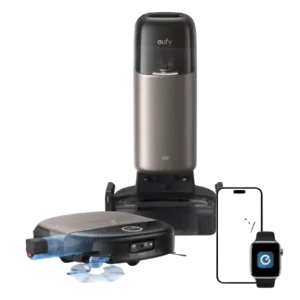
Best for excellent hard-floor mopping, sustained suction and nearly tangle-free hair handling. Skip it if precise edge cleaning, quiet maximum-power operation or flagship value matters more.
Pros: Overall opinion, Mopping performance
Cons: Support and Reliability, Price and Value