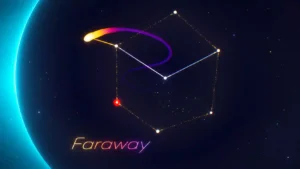
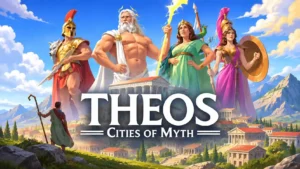
Faraway
Where It Has the Edge
No clear scored advantage over the other product.

Scorata scores summarize analyzed review evidence on a 1–5 scale; they are not laboratory measurements or a simple average of customer star ratings. Feature scores summarize the reviews covering that feature. The overall score averages feature scores within each review, then combines review averages. When both expert and customer evidence are available, those two groups receive equal weight. Products can have different review coverage, so small score gaps do not establish a winner.
Recommendations prioritize important features for the category, with a score of at least 3.5, a gap of at least 0.25 points and at least two supporting reviews per product. Features with widely varying scores or broad connectivity contexts are excluded from recommendations. These safeguards do not establish statistical significance.
Quick verdict
The available evidence supports the recommendation below, but does not establish an overall winner. Check the remaining features against your priorities.
There is not enough comparable review evidence to recommend Faraway over the other product.
Choose Theos: Cities of Myth for user interface design and art direction.
No clear scored advantage over the other product.
Scores are out of 5. Missing scores mean missing review evidence, not a missing feature.
A single button and a basic interface make the initial interaction easy to grasp. That welcoming simplicity conceals considerable depth.
Straightforward menus and relatively accessible management rules make city construction easier to grasp than some deeper simulations.
The design earns praise for inventive minimalism and an unusually fresh puzzle approach.
Its familiar Zeus, Pharaoh and Caesar mechanics can feel overly predictable to experienced city-builder players.
One especially enthusiastic assessment calls the game technically perfect despite acknowledging subjective frustrations and a confusing menu.
Well-finished city-building controls contrast with military systems needing refinement and other rough edges that diminish the overall package.
The combination of motion, light, and music can make the cosmos easy to sink into. That absorption is powerful for some players but fleeting for others.
The lively visuals and generic background audio do not always align, leaving settlements quieter and less believable than they appear.
The expanding one-button puzzle concept feels fresh and exciting, even to a player frustrated by its steep learning demands.
Modern route controls and meaningful divine patrons refresh the familiar formula. Critics disagree on how far that goes, with some finding the game much too cautious.
The constellation concept invites creativity, but limited steering and automatic star choice can make that freedom feel constrained.
Free-form city growth is an attractive alternative to Adventure goals. Yet preset maps, restricted god choices and missing custom seeds curb the freedom some players expect.
Linking stars, extending a run, and pursuing better scores can be exceptionally compelling. Repetition and execution frustrations prevent that appeal from landing equally well for everyone.
Starting from a few homes and building a functioning polis is consistently satisfying. Each expansion creates new supply-chain and service problems worth resolving.
Handcrafted stages and procedural runs provide some variation within a narrow design. The same central mechanic and restrained visuals can eventually feel monotonous.
Adventure and Sandbox offer structured and free-form approaches, a pairing many welcome. One critic found only two modes and the selection of scenarios too limiting.
The one-button orbital system hides considerable creative depth. Its focused design earns strong admiration, though control restrictions and quickly understood fundamentals limit its appeal for some.
Clearer explanations of service coverage mean city-wide problems usually feel traceable to planning decisions rather than opaque rules.
Bold neon trails and clean geometric shapes create an attractive, readable cosmos. The concentrated style serves the mechanics well, although some find it visually undynamic over time.
Its warm, vivid picture-book take on ancient Greece, with marble temples and busy streets, is one of the most consistently praised qualities. The stylisation may not appeal to players who prefer realism.
Short introductions and focused technique missions can teach useful patterns effectively. Some players still want clearer explanations before the game’s deeper demands become enjoyable.
Playable tutorials cover the basics clearly enough for newcomers, but guidance on fires and complex coverage failures can fall short.
The sparse cosmic presentation is well suited to the game, with neon trails and soft particles looking particularly attractive on a large display.
Bright, charming visuals make growing settlements rewarding to watch. The deliberately stylised look may feel too lightweight to players wanting detailed realism.
Level openings and the gradual dimming of a dying star give the sparse presentation expressive movement.
Small worker movements, lively citizens and amusing building animations make settlements more engaging to watch. The overall animation technology is functional rather than cutting-edge.
Fast restarts encourage another attempt, and slower constellation work can create a useful pause after travel. Lengthy score calculations interrupt the flow for one account.
A measured introduction helps beginners but may seem slow to veterans. Certain objectives drag, and the nostalgic formula can wear thin during longer play.
Hypnotic space imagery and well-matched electronic music establish a soothing, enveloping mood. Several enthusiastic accounts describe it as a major reason to return.
Bustling markets, winding roads and imposing sanctuaries create a welcoming mythological city. Watching everyday activity amid monumental buildings is rewarding in its own right.
The demanding skill ceiling is rewarding for some and discouraging for others. Slower settings help with orientation, but even the easiest setting does not remove the need for precise execution.
The basics are approachable, but large settlements introduce complicated dependencies and the occasional disaster. Some critics enjoy the planning pressure while others find routine upkeep tiresome.
Light, simple storytelling includes an amusing touch that adds personality to the minimalist presentation.
Quirky worker gestures and little visual gags give the city a playful personality without disrupting the traditional management gameplay.
The simple interface and gradual introduction can make early success welcoming. Even introductory shapes may require several attempts before their execution becomes clear.
Gradual Adventure unlocks and dedicated lessons make the foundational systems welcoming. More troubleshooting guidance, especially for fires and missing services, would help.
Enthusiastic assessments call it a standout indie achievement, while less convinced players find its limited scope and frustrating controls hold it back. Its appeal depends heavily on enjoying mastery of one concentrated idea.
Theos is a charming and capable revival of classic Greek city building, with rewarding logistics and delightful scenery. Rough combat, repetitive patrol management and restrictive options keep it from feeling essential for everyone.
Responsive cues, natural audio transitions, and arcade-like connection sounds reinforce actions without overwhelming the experience.
Generic ambient noises fail to convey the bustle visible on screen, leaving the audio much flatter than the attractive city visuals.
Handcrafted puzzle stages complement endless runs by asking for deliberate decisions about spacing, timing, and economical lines.
Some Adventure objectives feel built around waiting for resources to accumulate instead of varied, demanding tasks.
A basic interface supports easy entry, but the visually pleasing menu can make the main mode unnecessarily confusing to find.
Menus, building tools and service-path indicators are much clearer than in the older games that inspired Theos. A few broader management views still leave troubleshooting to the player.
One-button play is immediately simple, but automatic star selection divides opinion. Unwanted targets and missed captures can spoil carefully planned constellations.
Military orders do not always register or behave precisely enough, making troop movement frustrating and combat unsatisfying.
The urge to improve personal records is a strong draw for many players. Others find that a single central mechanic cannot sustain their attention over the long term.
Different patrons provide fresh building priorities, and one player repeatedly restarted after disasters. Still, familiar mechanics can feel less compelling after long sessions.
Basic resource production can run smoothly without constant input, but automatic service patrols can miss homes. Repeated manual fixes become especially wearing in larger cities.
Overlapping units and confusing engagements make it hard to read what is happening in military encounters.
Battles are the most consistent weakness: critics describe limited tactics, repetitive clashes and clumsy unit control. City management is significantly more rewarding.
Cleaner construction and better management controls make it easier to develop neighbourhoods without struggling against older city-builder interface conventions.
The tightly focused package executes a particular idea well, but its sparse systems and story can leave players wanting a fuller experience.
A failed run ends with the shooting star slowly becoming another light in the sky, making failure feel graceful and unusually beautiful.
Regional relationships add some welcome complexity to trade and expansion, but diplomacy also draws criticism for being thin and functional.
Food, labour, industry, storage and markets form engaging, interconnected systems. Finding and fixing shortages provides much of the satisfaction, particularly as a city expands.
Completed constellations can feel intensely rewarding, while reactive light and the star’s gradual fading lend the journey emotional weight. Frustration can share space with that sense of achievement.
Markets, workshops, mines and inhabitants give the streets plenty of visual movement and personality. Several critics enjoyed simply zooming in to observe the activity.
Searching the void for another group of stars adds a welcome spark of excitement under the countdown.
Slingshotting between stars can feel thrilling and fair when trajectories work as intended. Automatic capture and limited speed control leave other players wishing for more precise steering.
Creating a successful constellation delivers clear satisfaction. Some players remain mentally engaged without finding the repeated failures or limited variety consistently enjoyable.
The available challenges can be seen in a couple of hours once the mechanics click. Further longevity comes from improving records rather than discovering much more content.
Some Adventure objectives rely on prolonged waiting and repetitive production rather than clever challenges, making progress feel laborious.
Subtle DualSense haptics and adaptive triggers add a gentle physical accompaniment to slingshot movement.
Battle hits can register unclearly, weakening the already unconvincing military encounters.
The star field is easy to read, and previewed orbits help identify useful release points.
Simple inputs take time to become reliable technique. Guided challenges help some players find their rhythm, while others remain confused or frustrated after hours of attempts.
Separately accessible handcrafted puzzles provide a useful change of pace from the endless score challenge.
Movement earns praise for fluid, weightless travel and thrilling slingshots. Restricted turning and the lack of direct braking can instead make it feel awkward and aggravating.
Poetic framing leaves room to find personal meaning without much exposition. Anyone expecting frequent story hooks may find the narrative too thin.
The seven Olympian patrons offer distinct blessings and priorities that meaningfully shape development. Gods and sanctuaries give familiar economic systems a strong mythological identity.
Pause and speed controls help players handle competing civic demands without rushing every decision.
Orbital movement can feel fair and support a satisfying flow once learned. Other experiences describe unfair-feeling failures that weaken confidence in execution.
Echoes and Ascent provide focused opportunities to learn shapes, test optimization, and rehearse advanced techniques. Their value is clear, though they do not make mastery straightforward for everyone.
Higher scores introduce more demanding formations and unlock challenges that develop technique. At its best, new ideas arrive as the player becomes ready for them.
Directly drawing worker patrols is a valuable improvement over old unpredictable walkers. As a settlement grows, checking and redrawing those routes can become repetitive work.
The expanding economy rewards anticipation, efficient layout and solving interdependent supply problems. One critic, however, found the broader city-management systems too shallow and inflexible.
Trade partners and colonies provide access to scarce resources and make the world feel larger than the home settlement. They add another useful layer to economic planning.
Glowing orbits, neon trails, and soft particles make the minimalist cosmos feel responsive and alive.
Brief, funny storytelling adds character, although its playful presentation can interfere with clarity in the menu.
Performance-responsive procedural worlds can keep runs fresh and challenging. Dense formations and awkward arrival angles can also expose limits in the movement system.
Visible routes, patrol markers and service feedback make logistical paths easier to understand and diagnose.
Planning uncrossed routes and building loops gives constellation creation satisfying depth. The best solutions feel rewarding, although timing pressure and execution difficulty can interfere with the pleasure of solving them.
Myth-inspired hero quests add a pleasant storybook flourish to the city-management routine.
Classic roads, housing, services and industrial chains form a strong city-building foundation, with modernised controls that generally make expansion pleasant.
Everyday Greek civic life, famous historical figures and imposing Olympian monuments coexist naturally, creating a distinctive mythological setting.
The game includes several interface languages, including German, but the absence of Croatian is a drawback for players who need it.
PlayStation 5’s subtle DualSense haptics and adaptive triggers complement the movement without dominating it.
The low entry price strengthens the recommendation, especially for players who keep returning to improve their scores.
The attractive menu makes the main mode harder to identify than it should be, with playful framing obscuring navigation.
Catchy synth music and cosmic electronic textures consistently earn praise. Adaptive layers support constellation building and give movement a sense of significance.

Best for fluid traversal, rewarding exploration, striking art, and forgiving quality-of-life features. Skip it if you want deep combat, radical genre innovation, or consistently demanding bosses.
Pros: difficulty balance, boss design
Cons: innovation, sandbox freedom

Best for superb combat, inventive builds, and richly voiced characters. Skip it if repeated runs, resource gathering, or visually busy battles outweigh the appeal of steady progress.
Pros: overall quality, combat system
Cons: pacing, grind level

Good if you want a beautiful, demanding survival sandbox built around exploration, building, progression, and memorable co-op. Skip it if long resource runs, harsh death recovery, and deliberate pacing sound...
Pros: town-building system, exploration quality
Cons: grind level, fast travel convenience

Choose Clair Obscur if you want a story-rich RPG with thrilling timed combat, gorgeous art, and standout music. Skip it if poor maps, tight parry timing, or occasional bugs and...
Pros: narrative quality, combat system
Cons: map and navigation design, menu usability