
A Talent for Murder
Where It Has the Edge
No clear scored advantage over the other product.

Scorata scores summarize analyzed review evidence on a 1–5 scale; they are not laboratory measurements or a simple average of customer star ratings. Feature scores summarize the reviews covering that feature. The overall score averages feature scores within each review, then combines review averages. When both expert and customer evidence are available, those two groups receive equal weight. Products can have different review coverage, so small score gaps do not establish a winner.
Recommendations prioritize important features for the category, with a score of at least 3.5, a gap of at least 0.25 points and at least two supporting reviews per product. Features with widely varying scores or broad connectivity contexts are excluded from recommendations. These safeguards do not establish statistical significance.
Quick verdict
The available evidence supports the recommendation below, but does not establish an overall winner. Check the remaining features against your priorities.
There is not enough comparable review evidence to recommend A Talent for Murder over the other product.
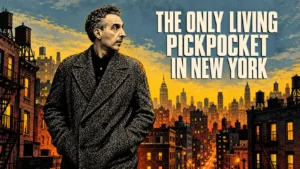
Choose The Only Living Pickpocket in New York for pacing and runtime.
No clear scored advantage over the other product.
Scores are out of 5. Missing scores mean missing review evidence, not a missing feature.
The thinly drawn characters can make it hard to care about their fortunes, leaving the story emotionally distant.
The caregiving and father-daughter scenes can carry substantial grief, regret, and tenderness. A minority feel detached from the wider journey despite recognizing the power of individual moments.
The film's balance suffers when the expanding story sidelines Mirren, whose central contest is often its strongest material.
The small supporting roles make Harry’s world feel populated and alive, even with the lead at the center of nearly every scene.
Mirren's American accent draws a specific complaint for sounding exaggerated, even from an otherwise enthusiastic response to her performance.
Turturro’s New York accent is praised as an effective, natural part of bringing Harry to life.
A slow opening and momentum lost away from Highsmith's house are recurring complaints. Supporters find the deliberate buildup absorbing or increasingly rewarding, while others experience repetition and boredom.
Many enjoy the short film’s deliberate, breezy rhythm or find it surprisingly brisk. Dissenters experience meandering stretches and too little urgency for a story built around a deadline.
Highsmith makes an intriguing adversary: difficult to read, mischievous, and apparently several moves ahead of her visitor.
The young antagonist is a major dividing point. His entitled unlikability works for some, while others see a thin, implausible, or insufficiently intimidating obstacle.
The film works best as a cerebral, performance-led thriller. Some enjoy its seductive literary games, while others find too little urgency or surprise to satisfy the genre promise.
It succeeds most consistently as an intimate crime drama with wit and an old-fashioned feel. Its caper pleasures work best when they remain connected to character.
The running time feels cramped to accounts wanting fuller development of the nested thriller. Another response finds the overall experience quick and breezy despite occasional dragging scenes.
The roughly 88-minute length is usually welcomed as lean and economical. One dissenting view finds the brevity leaves too little time to know the characters deeply.
The brutal murder plotting is enjoyable as thriller entertainment for one account, while another regards even the relatively restrained violence as a mature-content concern.
The restraint is praised: violence works as pressure rather than spectacle. The crime story can retain force without leaning on bloodshed or gratuitous on-screen brutality.
Several accounts struggle to care about the invented murders because the story feels hypothetical or the social advancement too assured. The absence of meaningful risk weakens the thriller's urgency.
A few critics find the deadline personal and tense, especially through Harry’s relationships. More skeptical responses find the villain unthreatening or the urgency too manufactured to feel real.
The ending is the biggest dividing point: some enjoy its open questions and gathering momentum, but many find it weak, abrupt, overcomplicated, or less ingenious than promised.
The ending can feel soulful, moving, and visually inspired. Others find its plotting overcalibrated or its surprise encounter less natural than the scenes before it.
The dramatic games can be clever and engaging, though the combination of literary drama and thriller is less convincing to some.
The restrained personal drama is strongest when small gestures and quiet exchanges carry the feeling. Its human scale gives the story weight beyond the criminal predicament.
The attempted blend of literary drama and psychological thriller does not fully click for one account, leaving the performances stronger than the combined story.
The mix of reflective drama and crime thriller is not seamless for everyone. Some find the mechanics distract from the personal story or the danger never quite emerges from the relaxed mood.
The screenplay's clever metafictional premise earns real admiration, but its theatrical dialogue, competing narratives, and uncertain conclusion are frequent obstacles. Opinions differ sharply on whether ambiguity enriches the script or exposes its weaknesses.
The script can convey character and a changing city through small details rather than explanation. Convenient coincidences, familiar backstory, and a neatly engineered finale trouble several critics.
The stylized fiction is grounded enough for some viewers. Others struggle with the characters' supposedly dangerous nature, the intellectual connection, or romantic encounters that make little practical sense.
The performances and ordinary interactions often feel naturally human. Extreme technological ignorance, convenient deadlines, and some late plot developments can strain credibility.
The ominous string score is admired for its atmosphere, but its insistence can also promise more thrills than the movie delivers or reveal emotional turns too clearly.
The jazz-and-funk score is widely appreciated for its loose, old-school city mood. Its limited escalation during dangerous passages is the main musical complaint.
Ehrenreich's character gains layers as confidence and menace emerge, and Mirren reveals vulnerability beneath hostility. Clementine is repeatedly considered underwritten, while one brief supporting character supplies welcome emotional depth.
Many find a rich portrait in Harry’s routines, gestures, and relationships. Others think his contradictions and the supporting characters remain too thin, with the daughter scene hinting at depth the rest of the film rarely matches.
The initial train meeting is singled out as a clever way to launch the story and introduce its literary echoes.
The opening efficiently introduces Harry through observation and carries a strong musical impact. It is praised for conveying character before much needs to be said.
Reversals divide opinion between ingenious surprise and predictable, low-impact plotting. Several accounts feel the final turns either go on too long or fail to reframe the story convincingly.
Some enjoy the film’s sleight of hand and eventual surprises. A dissenting view finds the plot telegraphs its moves too clearly.
Some find the mixture of lighter real-world scenes and darker invented ones well balanced. Others see a film uncertain of its own identity or lacking conviction.
The gentle, wistful mood often holds comedy and sadness together beautifully. Some find the later move toward family drama or thriller stakes less smooth.
One account credits the visibly convincing location work with strengthening the film's sense of place.
Real neighborhoods, pawnshops, diners, and subway rides give the city unusual specificity beyond Manhattan landmarks. New York often feels like a full participant in the story.
The overlapping realities can be an intriguing puzzle or a source of persistent confusion. Visual and performance cues help some viewers follow the shifts, but the ending leaves others unsure what they have watched.
One assessment welcomes the story’s inviting directness, while another finds the cryptocurrency mechanics more complicated than necessary.
Corbijn's strongest work creates tension through controlled staging and carefully chosen images. Detractors find the approach flat or too theatrical, particularly when the film tries to expand beyond the central house.
The film’s restraint, attention to ordinary behavior, and command of place win substantial praise. Its transition into higher-stakes thriller mechanics is a recurring reservation.
The central literary challenge is a compelling hook, and the nested story can be inventive and immersive. Less favorable responses find the plotting dull, stale, or unable to connect its competing strands.
The modest theft-and-retrieval premise works best as a vehicle for Harry’s character and relationships. Reactions weaken when the chase feels predictable, overcomplicated, or less compelling than the personal story.
The story-within-a-story device feels fresh to some, but others see a derivative inheritance scheme and a familiar Ripley imitation. Its inventiveness is more contested than its cast's appeal.
Its humane, contemporary take on an old-fashioned crime movie feels fresh to many. Others see a familiar framework whose pleasures come mostly from execution and performance.
The insults and verbal volleys can be sharply funny, even top-notch. Other responses find the lines insufficiently cutting, unnaturally assembled, or repetitive by the later scenes.
Some admire the plainspoken exchanges and economical meaning, while others hear flat or recycled lines. The daughter scene is particularly divisive as writing, despite frequent praise for its acting.
The ensemble can feel exceptionally well chosen, but one account finds the insistence on Edward's youth awkward beside the actor's clearly adult appearance.
The veteran ensemble and Turturro’s fit for the lead are widely admired. Price’s suitability as the threat and the casting of a late surprise role are more divisive.
The isolated house and cool European settings create an appealing mix of cozy intimacy and menace. Some find the mood absorbing, while others wish the landscape or claustrophobia had been used more effectively.
A melancholy, street-level cool is one of the most consistent pleasures. The easygoing mood can remain appealing even when the crime story feels slight.
Mirren and Ehrenreich's verbal duel is frequently the film's strongest element. Ehrenreich and Cooke also generate convincing romantic heat, though chemistry cannot always overcome doubts about the situations.
Turturro’s established rapport with Buscemi and Esposito gives their scenes an immediate shared history. His brief exchange with Maslany also generates exceptional emotional force.
Identity, concealed impulses, and the connection between an author and a fictional creation give the film substantial interpretive appeal. Not everyone thinks its ambitious questions receive enough depth or payoff.
Its best ideas connect time, responsibility, regret, and the value of human relationships. Some find those reflections moving, while others want more depth or a less familiar treatment.
Mirren's long absences are a recurring frustration because the housebound contest is often the main attraction. Cooke likewise has less material than her performance seems capable of supporting.
Several memorable actors have only a little material to work with. Critics who want deeper relationships especially regret how briefly the daughter and other supporting figures appear.
Hitchcock-inspired visual techniques give the film a pleasing classical-thriller flavor, especially in its close-ups, juxtapositions, and understated staging.
The film draws warmly on street-level crime cinema of earlier decades. Many appreciate the homage for capturing a sensibility rather than simply copying familiar images.
Mirren's timing makes the barbed remarks land, with both a critic and an audience reaction singling out her comic precision.
Turturro’s deft comic timing makes Harry’s small reactions and understated behavior especially effective.
The montage of shifting faces helps turn changing identities into a distinctly cinematic experience.
Sharp inserts reveal how events happened without spelling everything out, and the joined locations preserve a convincing world. The editing helps make the compact story feel precise.
Dry insults, uncomfortable exchanges, and sly dark comedy provide much of the entertainment. Mirren's caustic delivery is a particularly reliable source of laughs.
Technology confusion, generational friction, and dry exchanges provide effective laughs. The humor generally supports the melancholy instead of overwhelming it.
Rich color, European scenery, and expressive light and shadow are major strengths. Even less favorable responses often admire the photography, though a few find the Swiss landscape underused.
Warm textures, attentive close-ups, and confident city framing make this a widely admired visual experience. The outer boroughs and final skyline images receive especially strong praise.
The conversational contest can create electric psychological tension. The invented plot's weaker stakes, predictable turns, and departures from the chamber setting often blunt that suspense.
The ticking clock and uncertain consequences generate tension for some. Others remain too comfortable in the jazzy, unhurried atmosphere to feel much danger.
This is an acquired taste: patience for a contained, conversational mystery matters more than a general appetite for thrillers.
One enthusiastic assessment finds the film easy and breezy enough to recommend widely.
Edward works as a worthwhile protagonist for some, but the thinner, status-driven characters can make emotional investment difficult.
Harry is charming, fallible, and easy to root for despite his profession. The most persuasive portraits keep his generosity and regret visible without excusing his theft or past failures.
The title sounds somewhat like a direct-to-video thriller to one account, underselling the film's more sophisticated ambitions.
One viewer finds the long title cumbersome to say, making it a minor annoyance around an otherwise highly enjoyable film.
Strong performances and attractive craft make this an enjoyable diversion for many. Enjoyment depends on tolerating the slow start and an ambiguous payoff that some find fascinating and others reject outright.
Most find an engaging, breezy watch driven by performance and city atmosphere. More reserved responses enjoy individual elements without finding the whole film exceptional.
Memorability is a weakness: several accounts describe fleeting entertainment, forgettable sequences, or little desire for a second viewing.
One dissatisfied response finds the emotional connection too weak to inspire revisiting or sharing the film.
The production values are gorgeous enough to stand out even in a strongly negative response to the movie overall.
Shooting in real outer-borough locations adds tangible richness to the small-scale production.
The handsome, richly colored presentation and giallo-like imagined sequences are frequent pleasures. A dissenting response finds the film visually anonymous despite its attractive material.
The digital photography evokes the warmth and texture of older crime cinema without turning into a conspicuous imitation. Several critics admire how naturally the retro style fits a present-day setting.
Elegant clothes add visual pleasure, while smaller wardrobe changes help distinguish the nervous editor from his more polished fictional counterpart.
Harry’s understated coat gives him a dapper, sophisticated silhouette while helping him blend into the crowd. Its practical design fits the precision of his trade.
The leading work is usually a major reason to watch, particularly Mirren's intimidating wit and Ehrenreich's transformations. A few responses find parts theatrical or less convincing, but the leads regularly outperform the material.
Turturro makes Harry feel lived in through watchful eyes, small gestures, easy charm, and buried grief. Even several critics who find the story thin consider his performance the reason to watch.
The cast is the most dependable attraction, with Mirren's acidic presence and Ehrenreich's shifting identities drawing frequent praise. Strong acting often carries scenes whose plotting earns a less enthusiastic response.
Quiet, precise acting gives the film much of its weight. Turturro dominates, while veteran supporting players often make brief appearances count.
Brief supporting performances add charm and intrigue, with Brennan especially praised for emotional layers and a comforting presence.
The supporting ensemble supplies warmth, local flavor, and concentrated emotional impact. Buscemi, Esposito, and Maslany often stand out, though some characters have too little substance.
The limited action does little to lift the pace for one viewer, who wanted more happening between the talk-heavy scenes.
The film finds poignancy in a skilled older man discovering that the world has changed around him. Its strongest reflections connect obsolescence with regret, dignity, and dependence on others.
The fictional Highsmith portrait earns both appreciation and frustration. Some find a convincing late-life personality, while others see a softened caricature or little more than a collection of biographical details.
The treatment of a real author is contentious, especially where her prejudices are softened or murderous possibilities are suggested. An explicit acknowledgment that the story is fictional offers some reassurance.
The late surprise appearance gets enthusiastic praise from some and feels out of place or miscast to others. Its success depends on how naturally the final confrontation fits the preceding character study.
The social-climbing plot loses force for one critic because advancement seems assured, without enough risk of exposure or loss of status.
A supposedly seductive surprise involving a bedroom intrusion and a knife is criticized as crossing the boundaries implied by the invitation.
The imagined collaboration between Highsmith and Edward is exhilarating when their intellectual, artistic, and psychological sparring comes together.
The best moments turn inventing a murder into a revealing contest between author and collaborator. Opinions split on whether the film explores that process sharply enough or wanders too far into the story they create.
Rosie’s lack of speech and movement is handled with notable sensitivity. Small expressions and stillness preserve a sense of her inner life.
The near-constant smoking is distracting for one viewer, who finds it excessive rather than an effective part of the period atmosphere.
Harry’s daily devotion to Rosie gives his choices a tender, personal dimension. The care is valued as a source of love and atonement rather than simply background motivation.
One favorable account finds the film's Ripley-like figure close to the personality of Highsmith's novels, especially his dissatisfaction with himself and hunger for social advancement.
The family material divides opinion: one view finds it superfluous or familiar, while another sees it as the beautiful emotional center of the film.
Premeditated murder, sexual material, and profanity limit the film's appeal as entertainment for families with younger children.
Harry’s damaged family bonds supply some of the film’s most affecting moments. The brief daughter encounter reveals the lasting cost of his choices.
Claustrophobic close-ups and carefully juxtaposed faces give the psychological exchanges visual force and emphasize unstable identities.
Old professional and personal connections feel convincingly lived in. The easy banter and mutual respect help make the friendships warmer than routine crime-story alliances.
The deliberately unflattering haircut contributes to Mirren's convincing lack of glamour as the reclusive author.
The pickpocketing has slick, satisfying precision, and the later caper mechanics can stay pleasantly breezy. Watching Harry work is often more rewarding than the conspiracy around him.
The strong language contributes to the mature-content reservation, especially for anyone seeking a gentler mystery.
The handling of sexuality divides opinion: one account appreciates its integration with identity themes, while another objects that a story about a queer figure remains heavily heterosexual.
Cold Alpine light and warmer noir shadows distinguish the film's different worlds. Low light and firelit interiors are also praised for expressing the characters' hidden sides.
The film can feel like a clever lost Highsmith tale, capturing her interest in deception and dark impulses. Other accounts see fan fiction that misses the originality, nastiness, and elegant plotting of its model.
The strangers-on-a-train opening supplies a clever, recognizable nod to Highsmith that adds pleasure for viewers who catch the reference.
The lined, pasty physical appearance supports a committed, deliberately unglamorous version of Highsmith.
Strong atmosphere and performance leave a worthwhile impression for some. Others regard the film as pleasant but slight rather than a lasting standout.
The premise offers intriguing literary games, but the mystery does not always match the standard it invokes. A missing-agent thread is also criticized as underdeveloped.
The romance offers fun and heat but often feels secondary to the author-editor contest. Implausible encounters and time spent away from Mirren reduce its value for some.
A few jump scares work effectively because Mirren's presence and the uneasy staging make small jolts count.
The sensual moments are enjoyable for one account, while another sees them as a reason to reserve the film for mature viewers. The sexual material is not considered especially explicit by R-rated thriller standards.
The face-transition effect earns a strong complaint for looking poorly executed at a crucial late moment.
Opening the play into multiple screen realities is clever and cinematic for some viewers. Others find the expansion stiff, overcomplicated, or less tense than the basic two-person contest.
The clash between cash-era skills and digital crime gives the film humor and poignancy. It works best as a humane reflection on adaptation, although Harry’s technological ignorance can feel overstated.
One viewer repeatedly stumbles over the long title and finds it cumbersome to say.
Bloody murder, sexual scenes, and strong language make this a mature thriller rather than an appropriate choice for younger audiences.
Its affection for an older New York and older filmmaking styles is a major attraction. The wistfulness usually feels humane, although some detect a touch of romanticizing the past.
The opening narration suggests an intriguing possibility about who is inventing the story, but that possibility is considered underdeveloped.
The promotional impression can make the film look safer and more conventional than its adult wit, dark comedy, and ambiguous design actually are.
New York-centered songs fit the film’s love and frustration with the city, with the LCD Soundsystem opener especially admired. The selections give the emotional tone an immediate identity.
Highsmith's weapon-filled, cluttered home vividly communicates her personality, while the glamorous interiors offer a contrasting world. The sets are among the most consistently admired parts of the production.
The film’s overall sound presentation receives positive notice alongside its visuals and funky music.

Choose this inventive, unsettling documentary for fearless questioning, dark humor, and unpredictable storytelling. Skip it if you want a short, straightforward exposé with definitive answers.
Pros: originality, humor

Extraordinary performances and richly observed relationships make this a rewarding, emotionally forceful drama. Its nearly three-hour length and slow opening demand patience and undivided attention.
Pros: class commentary, character development

Best for a hypnotic, bookish mystery with tactile visuals and cerebral chills. Skip it if reading-heavy, attention-demanding storytelling sounds more exhausting than exciting.
Pros: Atmosphere, cinematography
Cons: audience appeal

Best for an intimate, searching documentary that rewards focused attention and invites discussion. Skip it when devastating grief, addiction footage, and unresolved family tensions would be too much.
Pros: emotional impact, theme depth