Best for Inter-speaker connectivity
JBL Bar 1300MK2
5.0 attribute score
Highest scored product for this attribute based on supporting review evidence.

Highest scored product for this attribute based on supporting review evidence.
Balances the attribute score, supporting reviews, and overall product strength.
Has the broadest review evidence for this attribute.
Strongest overall product among items with scored evidence for this attribute.
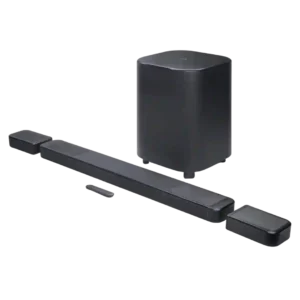
The pre-paired rear speakers integrate smoothly with the main bar, making changes between docked and surround layouts unusually painless.
Pros: Rear speaker versatility, Overall product quality
Cons: Size and TV fit, Gaming HDMI passthrough
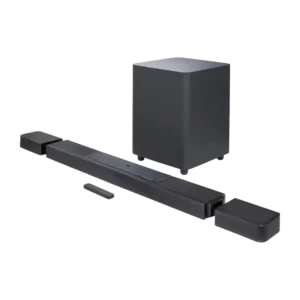
The strongest inter-speaker connectivity evidence was positive, with one reviewer saying the surrounds worked reliably even at distance.
Pros: Dialogue clarity (for TV/soundbar use), Subwoofer
Cons: EQ customization, Stereo imaging accuracy
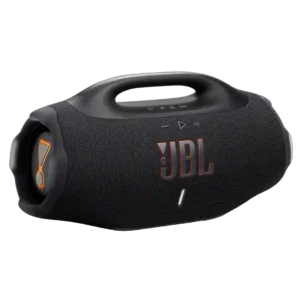
Auracast is a major upgrade for building larger JBL setups, supporting stereo pairs and broad multi-speaker synchronization. Reviewers like the ease and scale of current-generation pairing, though older PartyBoost models...
Pros: Overall satisfaction, Overall sound quality
Cons: Energy efficiency, Microphone

AirTouch is a standout feature, making two-speaker stereo pairing almost instant, while Auracast supports larger JBL groups. True stereo requires two Go 5 units, and older PartyBoost products are not...
Pros: Music performance, Battery life (if portable)
Cons: Lighting effects, Charging cable inclusion
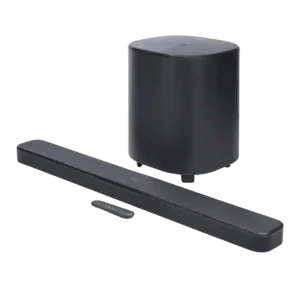
Inter-speaker connectivity was praised in one review for letting audio continue on another compatible speaker around the home.
Pros: Dialogue clarity (for TV/soundbar use), Surround sound simulation
Cons: App reliability, Audio format support

Inter-speaker connectivity is generally praised for instant or synchronized pairing, though broader compatibility is handled separately as a weakness.
Pros: Frequency response balance, Loudness / maximum volume
Cons: Weight convenience, Lighting effects

Inter-speaker connectivity is strong for newer Auracast-compatible speakers and stereo pairing, but the broader ecosystem is limited by backwards compatibility issues.
Pros: Frequency response balance, Price / value for money
Cons: Distortion at high volume, Backwards compatibility
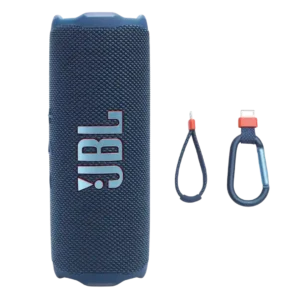
Inter-speaker connectivity is useful and often easy with Auracast, though reviewers note limited receive behavior, exact-model stereo requirements, or less mature operation than older PartyBoost.
Pros: Frequency response balance, Battery life (if portable)
Cons: Backwards compatibility, Stereo imaging accuracy
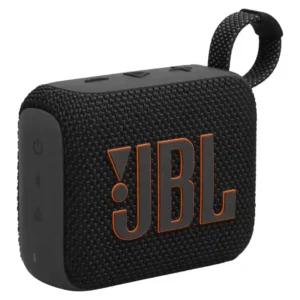
Auracast adds useful flexibility for linking compatible JBL speakers, and two Go 4 units can form a true stereo pair. Cross-model groups remain mono, and setup is usually easier through...
Pros: Overall satisfaction, Music performance
Cons: Bluetooth connection stability, Control button responsiveness

Inter-speaker connectivity is useful for growing a compatible JBL setup, though this evidence centers on newer Auracast speakers.
Pros: Frequency response balance, LED lighting effects
Cons: Float capability, Handle or strap quality

Inter-speaker connectivity ranged from seamless and stable to limited or clunky depending on whether reviewers used Auracast, PartyBoost, or app-based pairing.
Pros: Frequency response balance, Battery life (if portable)
Cons: Price / value for money, Value for money

Inter-speaker connectivity is useful through Auracast, but limitations include JBL-only support, mono behavior with some links, and identical-unit needs for stereo.
Pros: Handle or strap quality, EQ customization
Cons: Frequency response balance, Stereo imaging accuracy