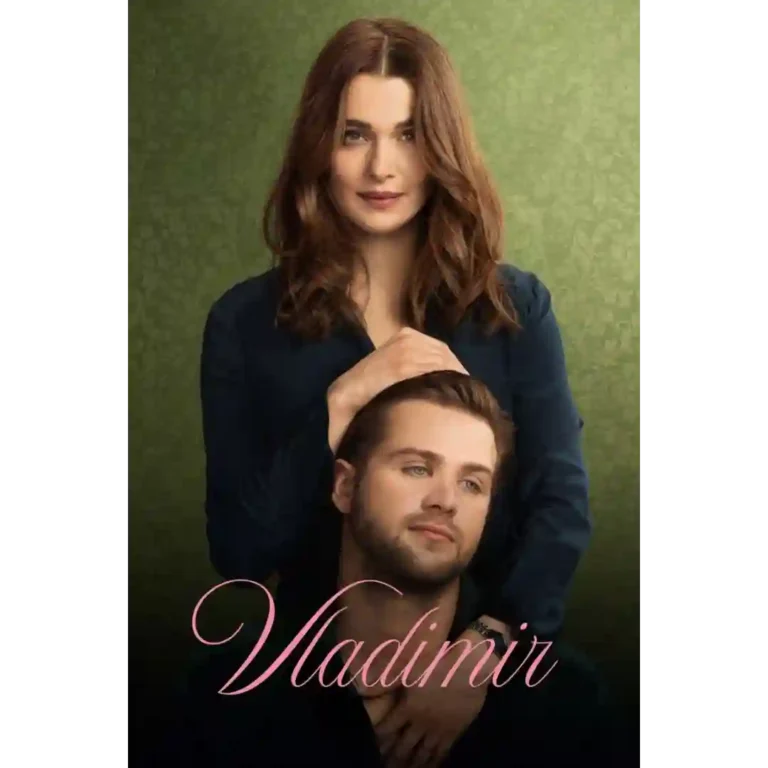
Vladimir, Season 1

Vladimir, Season 1 Review

Studio: Netflix
Released: March 5, 2026
Updated: 2 months ago
3.5
Overall review score
403
Review insights
56
Scored features
38
Expert reviews

Bottom Line

Choose Vladimir if you want a brisk adult campus dramedy powered by Rachel Weisz, moral ambiguity, and messy obsession. Skip it if repetitive fantasies, polarizing fourth-wall narration, unlikeable characters, or an ambiguous ending are likely to frustrate you.

Best for

Best for viewers who like morally messy antiheroines, dark academic satire, short bingeable episodes, and stories more interested in desire and ambiguity than clean answers.

Not for

Not for viewers who need sympathetic characters, consistent erotic payoff, restrained narration, or a conventionally resolved ending; several critics found the style grating, repetitive, or emotionally distancing.

Verdict

Vladimir is a deliberately prickly limited series whose clearest strength is Rachel Weisz, repeatedly praised for making its messy, self-deluding professor magnetic, funny, and watchable. The short episodes move quickly, and the best reviews admire the show’s willingness to sit with uncomfortable questions about desire, aging, power, accountability, and generational conflict. The tradeoff is execution: critics are sharply divided on the fourth-wall narration, the chemistry with Leo Woodall, and whether the erotic fantasies are provocative or surprisingly tame. Supporting characters can feel thin, and several reviewers think the political commentary or writing stays shallower than its ambitions. The finale is the biggest fault line, praised by some as cheeky and satisfying and condemned by others as rushed, unearned, or damaging to the season.

Feature Scorecards

Summary

56 reviewed features
  • Very positive 4.5-5.0
    16 (29%)
  • Positive 3.5-4.4
    13 (23%)
  • Neutral 2.5-3.4
    17 (30%)
  • Negative 1.5-2.4
    9 (16%)
  • Very negative below 1.5
    1 (2%)

Pros highlights

  • 4.7
    29 reviews moderate consensus
    main cast performance: 4.7, 29 reviews, moderate consensus
    The lead performance is the clearest consensus strength, with Rachel Weisz repeatedly described as magnetic, funny, fearless, and capable of carrying weaker material. Even harsh reviews usually found the acting more convincing than the writing.
  • 3.6
    25 reviews low consensus
    theme depth: 3.6, 25 reviews, low consensus
    At its best, the show digs into aging, desire, power, accountability, and generational ethics without easy answers. Other critics felt those same ideas stayed surface-level or were flattened by the adaptation.
  • 4.1
    18 reviews moderate consensus
    supporting cast performance: 4.1, 18 reviews, moderate consensus
    The supporting ensemble is generally well regarded, with Leo Woodall, John Slattery, Jessica Henwick, and others giving the messy campus world texture. A few reviews still felt thin characterization limited what the actors could do.
  • 4.0
    16 reviews low consensus
    entertainment value: 4.0, 16 reviews, low consensus
    Most critics found the chaos, discomfort, and obsession highly watchable, often calling it addictive or fun. A smaller group found the characters and premise too distancing to enjoy.
  • 3.7
    13 reviews low consensus
    modern political framing: 3.7, 13 reviews, low consensus
    The strongest notices praise the show for treating #MeToo, power, and generational conflict as morally complicated rather than binary. Others found the cancel-culture framing dated, shallow, or too eager to recycle familiar culture-war beats.
  • 3.6
    13 reviews low consensus
    cast chemistry: 3.6, 13 reviews, low consensus
    Chemistry between Rachel Weisz and Leo Woodall is intensely disputed: some call it electric or compellingly ambiguous, while others say it fizzles or never creates enough magic. That split directly shapes whether the central obsession works.

Cons highlights

  • 3.3
    32 reviews low consensus
    story quality: 3.3, 32 reviews, low consensus
    The season inspires sharply split reactions: admirers see a bold, slippery character study, while detractors see clichés, gimmicks, and an undercooked erotic plot. The divisive ending is a major reason overall story judgments vary so widely.
  • 3.1
    22 reviews low consensus
    character development: 3.1, 22 reviews, low consensus
    The protagonist is often praised as contradictory, messy, and psychologically rich, but several critics found Vladimir, Sid, and other supporting figures underdeveloped or flattened by her viewpoint.
  • 3.0
    20 reviews low consensus
    fourth-wall narration: 3.0, 20 reviews, low consensus
    Direct address is the show’s most polarizing formal choice: admirers say it puts viewers directly inside the protagonist’s mind, while detractors call it grating, repetitive, over-explanatory, or unconvincing.
  • 3.2
    15 reviews low consensus
    writing quality: 3.2, 15 reviews, low consensus
    The written adaptation is strongest when it leans into sharp dialogue, literary framing, and biting academic satire, which one review identifies as central to the show’s appeal.
  • 2.9
    13 reviews low consensus
    sexual content level: 2.9, 13 reviews, low consensus
    The erotic content is one of the biggest divides: some found the fantasies purposeful, sexy, and non-gratuitous, while many others thought the marketed steaminess stayed surprisingly tame or repetitive.
  • 3.3
    12 reviews moderate consensus
    audience appeal: 3.3, 12 reviews, moderate consensus
    This is a polarizing adult watch built around cringe, moral ambiguity, and abrasive characters. Viewers who enjoy messy antiheroes may be hooked, while those needing sympathetic characters or clean answers may struggle.

Cast & Creators

  • M
    4.5
    25 reviews low consensus
    Rachel Weisz: 4.5, 25 reviews, low consensus
    Weisz is the clearest performance standout, praised for magnetism, comedy, fearlessness, and her ability to make an abrasive antihero compelling. A few critics question the casting fit or direct-address technique, but the overall response to her acting is overwhelmingly strong.
  • Vladimir
    4.6
    13 reviews strong consensus
    Leo Woodall: 4.6, 13 reviews, strong consensus
    Woodall is usually praised for charm, ambiguity, and understated seductiveness, with several critics finding him a strong foil for Weisz. A few see a mismatch between his charisma and the intellectual depth the role is supposed to project.
  • John
    4.6
    7 reviews strong consensus
    John Slattery: 4.6, 7 reviews, strong consensus
    Slattery consistently earns praise for droll, understated comedy and for making John’s entitlement and charm coexist believably. Reviewers often credit him with keeping a potentially one-note husband lively.
  • David
    4.2
    3 reviews strong consensus
    Matt Walsh: 4.2, 3 reviews, strong consensus
    Walsh is an enjoyable supporting presence, with particular praise for his chemistry with Weisz and his value as a comic foil.
  • Cynthia
    4.3
    2 reviews limited evidence
    Jessica Henwick: 4.3, 2 reviews, limited evidence
    Henwick brings warmth and subtle strength to Cynthia and helps ground the story’s more surreal obsession. She is also singled out as a worthwhile foil in the ensemble.
  • Writer
    5.0
    1 review
    Jeanie Bergen: 5.0, 1 review
    Bergen’s adaptation work is praised for preserving the source’s adult complexity rather than sanding away its difficult ideas.

Compared With Category Average

Compared with other TV Shows, this product is above average in age appropriateness, episode length, editing quality, near average in supporting cast performance, main cast performance, below average in cliffhanger effectiveness, score quality, renewal interest.

Comparison summary

56 compared features
  • Above average 0.4+ pts higher
    14 (25%)
  • Same as average within 0.3 pts
    13 (23%)
  • Below average 0.4+ pts lower
    29 (52%)

Largest category differences

Attribute This product Category average Difference
cliffhanger effectiveness 1.0 4.0 -3.0
score quality 1.5 4.1 -2.6
age appropriateness 5.0 2.7 +2.3
renewal interest 2.0 4.3 -2.3
rewatch value 2.0 3.8 -1.8
episode length 4.8 3.3 +1.6
character consistency 1.5 3.1 -1.6
character likability 2.3 3.7 -1.4

Consider This Instead

If you want better cliffhanger effectiveness

Choose Young Sherlock, Season 1. It scores 5.0 vs 1.0 for cliffhanger effectiveness, with a 4.0 overall score.

Compare

If you want better score quality

Choose The Beast In Me. It scores 5.0 vs 1.5 for score quality, with a 3.8 overall score.

Compare

If you want better supporting cast performance

Choose Run Away, Season 1. It scores 5.0 vs 4.1 for supporting cast performance, with a 3.8 overall score.

Compare

Compared in Reviews

Products reviewers directly compared with this model, grouped into quick takeaways.

Fleabag

  • Similar: fourth-wall direct address The lead's direct-to-camera style is compared with Fleabag, while being more confessional.
  • Better: humanity and adaptation style The show is dismissed as a lesser Fleabag lacking its humanity.
  • Better: fourth-wall storytelling and nuance The adaptation evokes Fleabag but is judged a clumsier, less curious successor.

After the Hunt

  • Worse: satirical storytelling Its campus satire is judged to hold together better than After the Hunt.

Bridget Jones: Mad About The Boy

  • Similar: visual treatment of Leo Woodall The direction repeats a slow-motion pool image associated with Woodall's Bridget Jones role.

FAQ

Is Vladimir easy to binge?

Yes. The eight roughly half-hour episodes are one of the most consistently praised parts of the package, and multiple critics finished or recommended it as a one-sitting binge.

Is the series actually very steamy?

Opinions split. Some critics praise the fantasies as sexy and purposeful, while many say the show is much tamer and less erotic than its marketing suggests.

How is Rachel Weisz?

She is the strongest point of consensus, repeatedly called magnetic, brilliant, funny, and capable of carrying weaker material.

Does the fourth-wall narration work?

That is one of the biggest divides. Admirers say it puts you directly inside the protagonist’s unreliable mind; detractors find it repetitive, grating, or overly explanatory.

Is it faithful to Julia May Jonas’s novel?

Some critics call it extremely faithful to the book’s wit and complexity, while others think the adaptation strips away too much introspection and changes the ending in a less satisfying direction.

Is the ending satisfying?

There is no clear consensus. Some reviewers love its cheeky ambiguity and payoff, while others see it as rushed, unearned, or the season’s biggest mistake.

Sample Expert Reviews We Analyzed

These are a few of the reviews included in our analysis.

Video Reviews

Article Reviews

Top TV Shows to Consider

#1 Colin From Accounts, Season 3
4.8

Best for sharp adult humor, magnetic chemistry and a deeply satisfying farewell. Skip it if familiar will-they-won’t-they plotting or deliberately messy leads are dealbreakers.

Pros: humor, writing quality

#2 King of the Hill, Season 15
4.7

Choose Season 15 for warm, character-driven comedy, meaningful growth, and a finale that rewards longtime fans. Skip it if the short binge format, uneven replacement voices, or occasional clumsy commentary...

Pros: franchise connection, character development

#3 The Pitt, Season 2
4.7

Choose The Pitt Season 2 for a gripping, realistic medical drama with superb acting and emotional depth. Skip it if graphic procedures, unresolved arcs, or slower character-driven pacing bother you.

Pros: realism, emotional impact

#4 Furious, Season 1
4.6

Best for powerhouse performances, thorny character work, and a tense revenge mystery that grows richer as it goes. Skip it if abuse, trafficking, graphic violence, or deliberately messy moral questions...

Pros: main cast performance, character development

Cons: pilot episode quality