Bloody shootings, disintegrations, and serial-killer imagery involving removed eyes make this better suited to teens. Strong language, drinking, and distressing scenes involving grief and endangered young people add weight.
Official ratingTV-14
Bottom Line
Choose VisionQuest for Bettany and Spader’s sparring, thoughtful sci-fi, and an emotional family story. Skip it if you want an easy MCU entry point or a brisk adventure without extensive backstory.
Younger children, distracted background viewing, or newcomers seeking an effortless introduction to the MCU. A new streaming subscription solely for this series is also a conditional choice.
Verdict
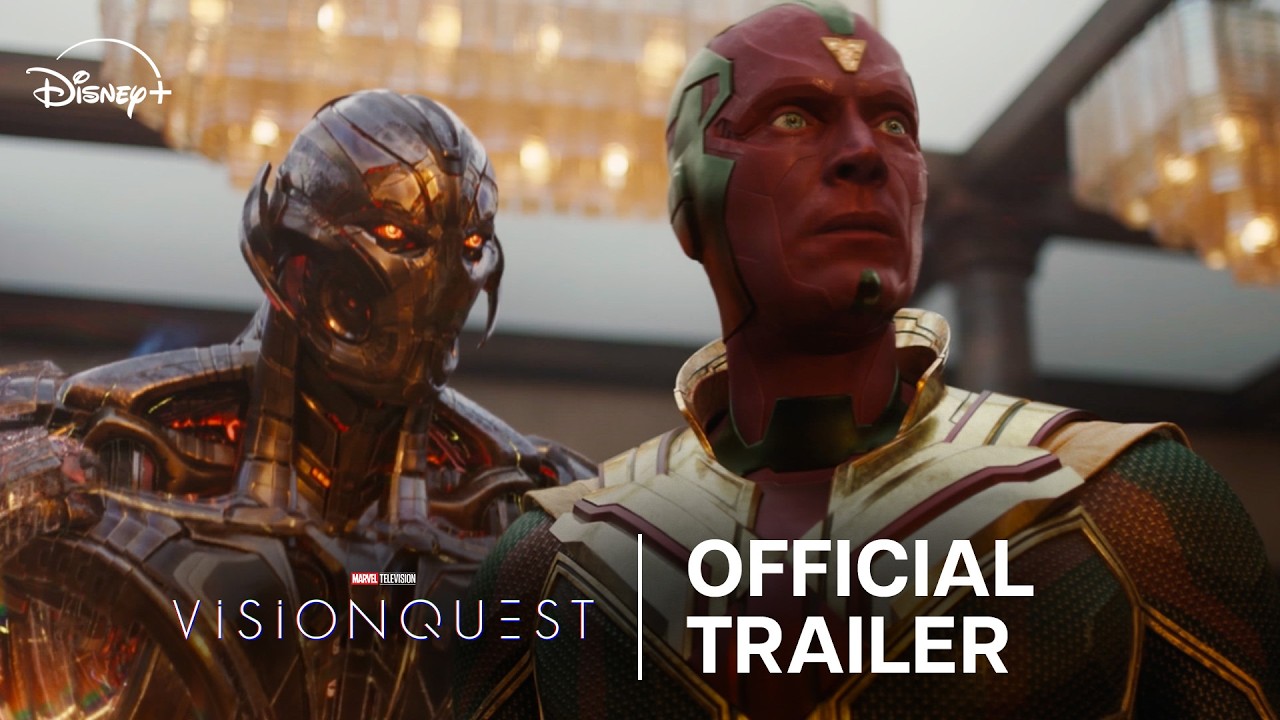
VisionQuest is strongest when its synthetic characters stop explaining the universe and start dealing with one another. Paul Bettany’s vulnerable, searching Vision and James Spader’s sardonic Ultron give its questions about identity, memory, and family a compelling center. The imaginative Mindspace design and bursts of forceful action add personality, while many full-season accounts praise the emotional payoff. The tradeoff is a crowded, lore-heavy journey: repeated exposition, a slower middle, and inconsistent use of Vision’s powers frustrate less enthusiastic viewers. Tommy and the supporting AIs also divide opinion. Returning WandaVision fans and patient sci-fi viewers are the clearest audience; newcomers may find the required context a significant obstacle.
Ultron’s sardonic remarks, computer-themed visual jokes, and the odd AI household provide much of the comedy. Reactions split over the broader supporting characters, whose antics can feel charming or forced.
Spader’s Ultron frequently steals the show, with several other AI and human characters drawing praise for personality and emotional range. Some broader performances or underused roles work less well for individual viewers.
Family relationships: 4.5, 26 reviews, moderate consensus
The intertwined bonds between Ultron, Vision, and Tommy give the identity questions a personal stake. Their awkward attempts to connect are often the heart of the show, even when other plotlines crowd them out.
character development: 4.0, 26 reviews, low consensus
Vision’s struggle to connect inherited memories with present feelings provides the strongest character material. Tommy, Ultron, and the supporting AIs inspire sharply different reactions to their depth and growth.
main cast performance: 4.6, 24 reviews, strong consensus
Bettany’s restrained confusion, flashes of humor, and eventual vulnerability earn strong praise. His intentionally colder version of Vision can also be harder to connect with initially.
The father-son relationships and late revelations can be deeply moving, with several accounts describing tears or gut punches. Others remain detached from the digital characters or find the emotions more stated than felt.
Personified AIs and a deliberately strange inner world give the show fresh possibilities. Critics disagree over whether those ideas overcome familiar superhero formulas and recycled existential questions.
Momentum varies sharply across the season: a strong setup and emotional finish can surround a slower middle. Some find the dense plotting absorbing throughout; others feel reveals are delayed or arrive without breathing room.
Repeated MCU reminders and lengthy origin explanations are among the most persistent complaints. Even viewers who enjoy the cast often wish the series would trust their memory and move forward.
The plot packs in reincarnations, layered identities, multiple villains, and shifting realities. Admirers find the threads well connected, while detractors struggle to follow the accumulating explanations.
character screen time: 2.0, 8 reviews, strong consensus
Some talented supporting characters receive less to do than viewers want, particularly the silent AIs and briefly used J.A.R.V.I.S. Late reveals and Paladin’s diminishing role also frustrate some viewers.
Some enjoy seeing Vision’s powers used inventively and facing a credible counter in adamantium. Others find him too easily disabled or question why he neglects abilities that could end the conflict.
Returning fan viewing: 4.3, 13 reviews, moderate consensus
Committed WandaVision and MCU followers have the clearest route into the callbacks, continuing family story, and returning characters. Familiarity helps, though franchise fatigue still limits enthusiasm for some.
Science-fiction fan viewing: 4.7, 3 reviews, strong consensus
The personhood questions and visualized computer mind offer substantial appeal for cerebral sci-fi viewers. The strongest endorsements focus on the story’s exploration of synthetic life rather than nonstop superhero action.
Watching several episodes together can sustain momentum through slower stretches, and some viewers happily finished in one sitting. Others prefer time between installments to digest the crowded story.
Not ideal for
Newcomer viewing
2.4
19 reviewslow consensus
Newcomer viewing: 2.4, 19 reviews, low consensus
Accessibility divides opinion: some find the recaps sufficient, while others consider WandaVision and wider MCU knowledge essential. The dense history can turn casual viewing into homework.
Background viewing
1.0
1 review
Background viewing: 1.0, 1 review
This is a poor match for distracted watching. Its dense identities, mythology, and interlocking clues ask for sustained attention.
Spader is the most consistent scene-stealer, blending sardonic humor, threat, and surprising warmth. His exchanges with Bettany often sustain the show when the plotting becomes cumbersome.
Bettany earns strong praise for making a restrained, emotionally disconnected Vision feel vulnerable and increasingly human. A few viewers find that deliberate stiffness harder to connect with at first.
Miller gives Jocasta a compelling mixture of force, vulnerability, and uncertain motives. Her emotionally complicated scenes, including those with Spader, are singled out as highlights.
Mollica’s vulnerable, charming Tommy is a major discovery for some viewers, especially in his scenes with Vision. Others find the distress overplayed or struggle to care about the character.
Matalas earns praise for threading MCU history into character-led sci-fi and reframing familiar philosophical ideas. Even favorable assessments sometimes find the series’ plotting less assured than its best individual scenes.
Stashwick brings swagger, menace, and comic oddness to Paladin. His performance generally fares better than criticisms of the character’s later role and the situations written around him.
Compared with other TV Shows, this product is above average in CGI quality, series finale quality, rewatch value, near average in cast chemistry, humor, below average in value for money, episode length, accent appeal.
Comparison summary
79 compared features
Above average0.4+ pts higher
30(38%)
Same as averagewithin 0.3 pts
32(41%)
Below average0.4+ pts lower
17(22%)
Largest category differences
Attribute
This product
Category average
Difference
CGI quality
5.0
3.0
+2.0
series finale quality
5.0
3.7
+1.3
value for money
2.0
3.3
-1.3
rewatch value
5.0
3.8
+1.2
episode length
2.0
3.3
-1.3
accent appeal
2.0
3.3
-1.3
faithfulness to source material
5.0
3.8
+1.2
setting shift execution
5.0
3.8
+1.2
Consider This Instead
If you want better character screen time
Choose Spider-Noir, Season 1. It scores 5.0 vs 2.0 for character screen time, with a 4.0 overall score.
Worse: superhero presentationIts use of Vision’s powers and costume is received as a refreshing follow-up to Lanterns.
WandaVision
Better: Mindscape scenesThe more artificial Mindscape sequences are seen as lesser versions of WandaVision.
Worse: science-fiction logicIts explanation-driven science fiction is said to make more sense than WandaVision.
Better: visual premise and originalityThe mansion construct is criticized as a weaker recreation of WandaVision’s ideas.
Agatha all along
Worse: overall executionThe series is judged to work better than Agatha all along.
Worse: narrative cohesionIts narrative goals are described as clearer and more cohesive than Agatha All Along’s.
FAQ
Do I need to watch WandaVision first?
It is the safest starting point. Some find the recaps sufficient, but many consider WandaVision essential and recommend familiarity with Age of Ultron and, to varying degrees, Agatha All Along.
What is the biggest strength?
Bettany and Spader’s performances and their exchanges are the most consistent highlights. The unusual house inside Vision’s mind also draws frequent praise.
Is it suitable for children?
It is better suited to teens than younger children, with bloody violence, strong language, drinking, and disturbing serial-killer imagery. Its official U.S. rating is TV-14.
Is it mostly action or philosophical drama?
The identity questions and family relationships take priority, with significant stretches of conversation. The action can be forceful and bloody when it arrives.
Does the season move quickly?
Opinions differ. Many enjoy the opening and emotional finish, while a slower middle, long explanations, and layered reveals are common complaints.
Is it worth subscribing just to watch?
Several opening-episode discussions recommend it for existing subscribers but stop short of recommending a new subscription solely for the show. The value is strongest if you already want to continue this MCU storyline.
Is the ending satisfying?
Many full-season assessments praise a heartfelt resolution to Vision’s journey. Others find the closure messy or less complete than the trilogy billing suggests.
Sample Expert Reviews We Analyzed
These are a few of the reviews included in our analysis.
Best for sharp adult humor, magnetic chemistry and a deeply satisfying farewell. Skip it if familiar will-they-won’t-they plotting or deliberately messy leads are dealbreakers.
Choose Widow’s Bay for its dark laughs, richly haunted island and memorable ensemble. Skip it if you need straightforward scares, rapid answers to every mystery or a completely resolved finale.
Choose Season 15 for warm, character-driven comedy, meaningful growth, and a finale that rewards longtime fans. Skip it if the short binge format, uneven replacement voices, or occasional clumsy commentary...
Best for sharply acted, compassionate, high-pressure hospital drama. Skip it if graphic procedures unsettle you or you need a neatly resolved season finale.