
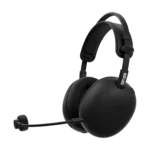
Sony INZONE H9 II Wireless Gaming Headset Feature Scores
Explore all 63 feature scores for Sony INZONE H9 II Wireless Gaming Headset, organized into pros and cons.
Scores by Feature
Summary
63 reviewed features-
Very positive 4.5-5.016 (25%)
-
Positive 3.5-4.429 (46%)
-
Neutral 2.5-3.48 (13%)
-
Negative 1.5-2.46 (10%)
-
Very negative below 1.54 (6%)
Pros
Sort
-
The roughly 260g weight is an overwhelming strength and a major reason the headset stays comfortable for hours. Reviewers repeatedly described it as featherlight, barely noticeable, and unusually light for a premium wireless model.
-
Footsteps and other competitive cues are a standout strength. Reviewers repeatedly heard enemy movement earlier and more distinctly, giving the headset a clear advantage for FPS play.
-
Long-session comfort is the H9 II’s most consistent strength. The low weight, breathable padding, and light pressure let many reviewers wear it for hours with little heat, soreness, or fatigue.
-
Simultaneous Bluetooth and 2.4GHz audio is consistently praised. It makes it easy to keep game sound active while adding phone music, calls, or Discord without constantly reconnecting devices.
-
For calls and voice chat, the mic is usually described as clear, natural, and substantially better than typical headset or earbud microphones. It is capable enough for meetings and casual communication even if it does not replace a dedicated broadcast mic.
-
Noise cancellation is one of the H9 II’s clearest strengths, repeatedly cutting fans, HVAC noise, keyboard chatter, and nearby voices down to a faint murmur or less. A few testers still found dedicated lifestyle ANC headphones stronger.
-
Microphone noise reduction works very well in many real-world tests, suppressing fans, breathing, construction noise, and other distractions while preserving speech. One noisy event exposed weaker filtering, so extreme environments can still break through.
-
The ear cushions are usually described as plush, breathable, and roomy enough for long play. A minority found them warm, thin, or uncomfortable, so the padding is excellent for most rather than universal.
-
The suspension headband is widely praised for spreading weight well and locking into place securely. Its push-button adjustment is clever and quick once learned, though fine changes while wearing it can be fiddly.
-
Positional audio is exceptionally strong, especially for competitive shooters. Reviewers repeatedly described precise left-right placement, depth, and footstep localization, though one test found vertical positioning less exact.
-
Bluetooth is broadly reliable and adds real versatility, especially alongside the 2.4GHz connection for phone audio or chat. Reviewers liked the fast pairing and dual-source use, with only scattered complaints about connection behavior.
-
Glasses and hats posed little comfort trouble in the tests that mentioned them, with reviewers reporting no pressure points or awkward fit.
-
The 2.4GHz connection consistently delivers responsive, lag-free gaming audio. No reviewer who directly judged latency found it problematic.
-
The redesign is widely liked for being understated, sleek, and less obviously 'gaming' styled than the original. Its minimalist look also makes it easier to wear away from a desk, though glossy surfaces and lightweight plastics divide opinion.
-
Sound quality is excellent for many gaming scenarios, with strong detail, clean separation, and immersive competitive cues. Music and non-FPS performance divide reviewers much more sharply, with several saying the default tuning needs EQ before it sounds right.
-
The detachable boom microphone is generally a strong performer, with many reviewers praising its clarity, positioning, and natural voice capture. Results are not flawless: noisy-event filtering, occasional muffling, and a few hardware failures produced a noticeable minority of complaints.
-
The headset generally fits securely and comfortably, with the adjustable suspension system accommodating many head shapes. Its very light clamp can reduce the seal or allow some movement for certain users.
-
Fast charging is a strong convenience, with several reviewers highlighting useful playback from only a few minutes on the cable. That makes short top-ups much easier when the battery is low.
-
Low clamping force helps the headset stay comfortable for long sessions and avoids pressure around the ears. On some heads, however, the relaxed clamp also lets the earcups shift more than ideal.
-
PC, PS5, Switch, and mobile use are all practical, making the H9 II a flexible multi-device headset. Xbox is the main exception because it lacks native wireless support.
-
Overall opinion leans positive because the headset combines exceptional comfort, strong ANC, a capable mic, and excellent competitive-game cues. Satisfaction drops sharply for buyers who focus on the high price, battery endurance, or the need to tune sound for non-FPS use.
-
A few reviewers singled out excellent separation between layers and sound sources, helping busy game scenes stay distinct rather than collapsing together.
-
The mix of 2.4GHz wireless, Bluetooth, and 3.5mm wired audio gives the headset broad connection flexibility. The experience can become less elegant when switching modes, and wired use disables some wireless functions.
-
Full earcup rotation is useful for laying the headset flat, wearing it around the neck, and finding a comfortable angle. One customer found the cups rotated too freely, but most comments were positive.
-
Bass is generally controlled and punchy enough for gunfire and explosions without burying positional cues, but the default low end is inconsistent. Some listeners wanted more impact, while others heard muddiness or excess boom in certain games and music.
-
The soundstage is generally wide and open enough to create a convincing sense of space in games. Most testers found good depth and immersion, although one customer described the spatial presentation as unusually enclosed.
-
Sony’s mobile app makes on-the-go EQ and ANC adjustments useful, but the software experience is not seamless. Reviewers called the tools basic and sometimes frustrating when PC and mobile settings overwrite or conflict with each other.
-
The included cables drew rare but clear praise for their useful length and practicality.
-
Replaceable earpads are a welcome longevity feature, and the removable design was easy to work with in the tests that tried it.
-
The custom EQ is powerful enough to fix much of the headset’s unusual default tuning and tailor it for other genres. The downside is that many reviewers felt EQ was necessary, and preset-saving behavior across apps can be cumbersome.
-
Basic setup is often fast and plug-and-play, but the software is less polished. INZONE Hub can feel bare-bones or confusing, and moving between desktop and mobile settings may require extra work.
-
Passive isolation is decent but not especially cocooning because the headset uses a light clamp and breathable design. Most of the real quiet comes once ANC is enabled.
-
The removable boom mic makes the H9 II easier to use as ordinary headphones and is simple to store or reattach. A few reviewers still preferred a stowable or flip-up design, and isolated customers reported connector problems.
-
The soft carrying pouch is useful and its accessory pocket is appreciated, but several reviewers wanted a protective hard case at this price. It is convenient for organization rather than serious impact protection.
-
Midrange reproduction is mostly clear, particularly for voices and game details, but the stock tuning can recess instruments and presence in music. EQ helps restore that missing body.
-
Spatial audio can add convincing immersion and strong 3D positioning, particularly on PlayStation. Sony’s personalized setup is more controversial because some reviewers found the ear-scanning process cumbersome or not worth the effort.
-
The large, well-spaced controls are often easy to locate by touch, especially the mute button, but usability is not uniformly polished. The volume wheel, mode chimes, and some platform-specific control behavior drew repeated criticism.
-
The lightweight construction is a tradeoff: several reviewers praised its flexibility and durability, while others thought the plastic or hollow feel was less premium than the price suggests. A small number of customers also reported physical defects.
-
The headset is generally stable in both fit and wireless operation, with secure headband locking and reliable connections. A few owners reported movement, audio breakups, or defective units, preventing a spotless record.
-
The earpads can be removed and snapped back into place easily, making replacement straightforward.
-
The hinge and adjustment structure handled aggressive stretching and movement without raising durability concerns in the test that evaluated it directly.
-
At high volume, one reviewer specifically found the sound remained enjoyable without harshness or fatigue.
-
The ANC sensor implementation was praised for blocking demanding background noise effectively, including office equipment and nearby voices.
-
The USB-C dongle provides dependable low-latency wireless and useful PC/console switching, but its physical implementation is not perfect. Some users disliked blocked adjacent ports, adapter needs, or the lack of extra insulation.
-
The accessory bundle is useful and reasonably complete, with the core cables, dongle, removable mic, and pouch covering the main ways owners will use the headset.
Cons
Sort
-
Console support has meaningful caveats despite working well on PS5 and Switch. Reviewers repeatedly criticized missing PS5 game/chat or UI integration, while Xbox lacks native wireless support.
-
The outer earcups pick up fingerprints and smudges very easily. Reviewers who mentioned the finish consistently found the marking annoying.
-
Volume output drew more criticism than praise, especially from users who wanted more headroom or smoother console control. A few testers found it sufficiently loud, but the overall sentiment is that output and adjustment could be stronger.
-
There is no useful built-in call microphone once the detachable boom is removed. That limits the otherwise appealing idea of using the headset like everyday wireless headphones.
-
Packaging feedback is mixed to negative: one presentation was praised, but some customers received units that appeared opened or arrived with condition problems.
-
Sidetone needs too much adjustment for a natural result: the default level can be hard to hear, while higher settings were described as robotic, shrill, or walkie-talkie-like.
-
Xbox support is limited rather than absent: native wireless operation is not available, but reviewers were able to use the headset through a 3.5mm wired connection. That compromise is acceptable for occasional use but not ideal for Xbox-first buyers.
-
The earcups can lie flat, but the headset does not fold into a compact shape. Reviewers also noted that the soft pouch offers less travel protection than the hard cases supplied with some premium headphones.
-
The default frequency balance is one of the most disputed areas. Several measurements and listening tests found recessed or uneven regions that make music less natural, even though the FPS-focused tuning can still work well for competitive play.
-
One reviewer specifically criticized the lack of easily changeable earcup covers, a customization feature expected from some other premium gaming headsets.
-
One premium-feature comparison counted the lack of RGB lighting among the extras the headset gives up at its high price.
-
Value is the headset’s biggest recurring concern. Many reviewers think $350 is difficult to justify when cheaper rivals offer longer battery life or similar features, although some buyers still consider the comfort, ANC, mic, and sound worth the premium.
-
Ambient mode does let outside sound through, but it falls short of a true conversational transparency mode. Reviewers often found it easier to remove the headset when talking to someone nearby.
-
Game/chat balance is convenient on PC, but its platform behavior is a major limitation. Multiple reviewers specifically disliked that the control does not provide the same useful integration on PS5.
-
The FPS presets can make footsteps and combat cues easier to hear, but the selection is overly concentrated on shooters. Some profiles sound muffled or unhelpful, leaving other game genres underserved.
-
USB-C is useful for charging and the wireless dongle works across many modern devices, but the physical setup has drawbacks. Several users wanted a USB-A adapter or more clearance so the dongle would not obstruct nearby ports.
-
Treble is usually clear enough for footsteps and gunfire without becoming fatiguing, but the stock tuning can also sound recessed, crunchy, or uneven. EQ is frequently needed to balance the highs for music and broader use.
-
Battery life is adequate for several sessions but rarely feels premium for the price. Around 30 hours is the common reference point, with ANC cutting endurance further, although some testing stretched much longer and quick charging softens the weakness.