
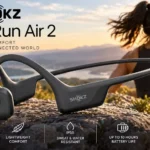
Shokz OpenRun Air 2 Feature Scores
Explore all 35 feature scores for Shokz OpenRun Air 2, organized into pros and cons.
Scores by Feature
Summary
35 reviewed features-
Very positive 4.5-5.016 (46%)
-
Positive 3.5-4.49 (26%)
-
Neutral 2.5-3.44 (11%)
-
Negative 1.5-2.45 (14%)
-
Very negative below 1.51 (3%)
Pros
Sort
-
Keeping the ear canals free makes cars, cyclists and other people easier to hear. This awareness is the defining benefit of the design, provided playback volume remains reasonable.
-
IP67 dust and water protection handles sweat, rain and rinsing after workouts. The rating is a strong sports advantage, though the headset is not intended for swimming and the port must be dry before charging.
-
Five minutes of charging can provide roughly two hours of playback, and a full recharge takes about an hour. Quick top-ups are a welcome safeguard before a workout.
-
Separated physical buttons make volume changes and track skipping easy even mid-run, with sweaty hands or gloves. Their reliable tactile feel is consistently preferred to finicky touch controls.
-
The connected neckband, revised hooks and redistributed balance resist bouncing or slipping during runs. Extended training sessions required little to no adjustment.
-
Long-run testing is a clear strength: three-hour sessions caused no soreness or ear-canal pressure. The low-profile hooks and ventilated open-ear fit make the headset easy to forget.
-
Standard USB-C replaces dependence on the older proprietary charging connector. This is a broadly praised convenience upgrade, although no charging cable is supplied.
-
Up to 10 hours is a useful step up for several runs or a long training session, and multi-hour workouts have been completed without alerts. Playback at higher volume drains the battery faster.
-
Two adjustable EQ slots and several listening profiles allow meaningful tuning, including pulling back bass that feels buzzy. These controls make the audio more adaptable to individual preferences.
-
The Shokz app adds accessible EQ tuning, configurable buttons, multipoint management and a headphone finder. It makes this basic running design easier to personalize.
-
A smaller, lower-profile shape and contoured hooks modernize the familiar wraparound design. The refinement is real, but the standard headset is not dramatically lighter than the previous OpenRun.
-
Revised hooks, Standard/Mini sizing and the stable neckband make a good fit stay put with minimal readjusting. Individual head shape still matters.
-
The Air 2 is regarded as a practical, comfortable refinement of the original OpenRun. Its improvements are worthwhile, although more premium Shokz models maintain an audio advantage.
-
Standard and Mini versions improve the odds of getting a secure fixed-neckband fit. Because the frame is not adjustable, the correct size has an outsized effect on comfort.
-
At about 26 grams, it feels very light during exercise and after hours of wear. The design appears slimmer rather than substantially lighter than the original OpenRun.
-
Vocal-focused settings make podcasts easier to enjoy, while Volume Boost helps outdoors. The louder preset cannot entirely overcome heavy traffic or other noisy settings.
-
The Air 2 offers a strong upgrade path from the original OpenRun at a similar price. Its value versus the OpenRun Pro 2 depends on discounts, since better sound can sometimes cost very little extra.
-
Pairing with both phone and laptop makes switching sources easier without constant reconnecting. The convenience expands its usefulness beyond exercise.
-
The neckband sits securely without creating distracting pressure around the head. That balance helps it remain comfortable through longer runs.
-
The companion app keeps essential tuning and control settings simple to locate. Customizing the sound does not require wrestling with complicated menus.
-
The microphones can reduce ordinary running background noise effectively, but stronger wind while cycling gets through. Launch claims of improved wind filtering exceed what has been independently demonstrated.
-
A covered, water-resistant USB-C socket addresses a recurring charging-area weakness reported with the older OpenRun. Drying and cleaning the socket after wet workouts remains important.
-
The transducers sit low enough to coexist comfortably with glasses, sunglasses, hats and visors. This helps for runs that involve extra headwear.
-
An audible headphone-finder function can help locate a misplaced neckband within hearing range. It is a handy addition for a headset frequently tossed into gym bags.
-
The connected neckband avoids having two separate buds or a charging case to manage during a run. It favors active convenience over pocketable true-wireless storage.
Cons
Sort
-
The open-ear design cannot provide the cancellation needed for a noisy train, airplane or loud gym. It is a poor choice when blocking surroundings is the priority.
-
Because the ear canals stay open, traffic and other environmental noise remain audible. That is intentional for awareness but a poor match for sound isolation.
-
A noticeable cheekbone tickle or buzzing can occur on bass-heavy music when volume is pushed up, although one runner scarcely noticed vibration during workouts. Lowering volume or bass can help.
-
The package is sparse and notably omits a USB-C charging cable. Buyers may need to use a cable they already own.
-
Bass has more warmth than on the original OpenRun, but remains relatively light beside the Pro 2. Louder bass-heavy tracks can also cause an unpleasant buzz against the skin.
-
The fixed neckband does not offer adjustable arms to compensate for an unsuitable fit. Choosing the right Standard or Mini size matters.
-
Nearby people may hear audio when volume is turned up. Quiet shared spaces call for more restrained listening levels.
-
Calls are usable while running, but the headset is less convincing for conversations in gusty cycling conditions. It works for occasional calls rather than consistently clear communication in all weather.
-
Volume Boost improves audibility in moderately noisy outdoor settings, but busy traffic and other loud environments can still drown out audio. Higher volumes also cost battery life.
-
PremiumPitch 3.0 adds warmth over the older OpenRun, and playlists and spoken audio remain enjoyable during runs. Overall sound can still feel slightly muffled and less detailed than the OpenRun Pro 2.
Use Cases
Best for
Sort
-
This is an excellent running companion: its hooks stay secure through speed work and long distances without painful ear pressure. Open ears also help runners hear approaching traffic and cyclists.
-
Rain protection, a low-bounce fit and clear environmental awareness all suit outdoor training. The open design trades isolation for these advantages.
-
The secure open-ear fit helps cyclists remain aware of road activity without sacrificing comfort. Calls can be harder to hear when riding into wind.
-
Speech stays understandable for casual listening, especially with the app’s Vocals preset. Spoken-word playback is a better match than bass-heavy critical music listening.
-
Open ears and a stable, connected band suit hikes where trail sounds and nearby people should stay audible.
-
Multipoint switching between a phone and computer adds a useful day-to-day role beyond running. The app also makes managing the paired sources straightforward.
-
For walks, the lightweight neckband stays unobtrusive while keeping surrounding sounds audible. It is a good choice for awareness-focused everyday movement.
-
Comfort, sweat resistance and stability make the headset workable for gym sessions, but very loud gyms can overwhelm the audio. It is more compelling for lighter-noise exercise.
Conditional or not ideal for
Sort
-
SwimmingDespite IP67 water resistance, the headset is not designed for swimming or underwater listening. It is meant for sweat, rain and rinsing after land-based exercise.
-
Noisy public transportThe open design lets train and other crowd noise through and offers no noise cancellation. Commuters needing privacy or isolation should choose sealed headphones.
-
Air travelThe lack of isolation makes the Air 2 a poor fit for listening over airplane cabin noise. Traditional noise-blocking earbuds are better suited to flights.
-
Phone calls while cyclingWind can interfere with both voice pickup and hearing the caller while riding. Cycling calls are much less reliable than calls taken on ordinary runs.