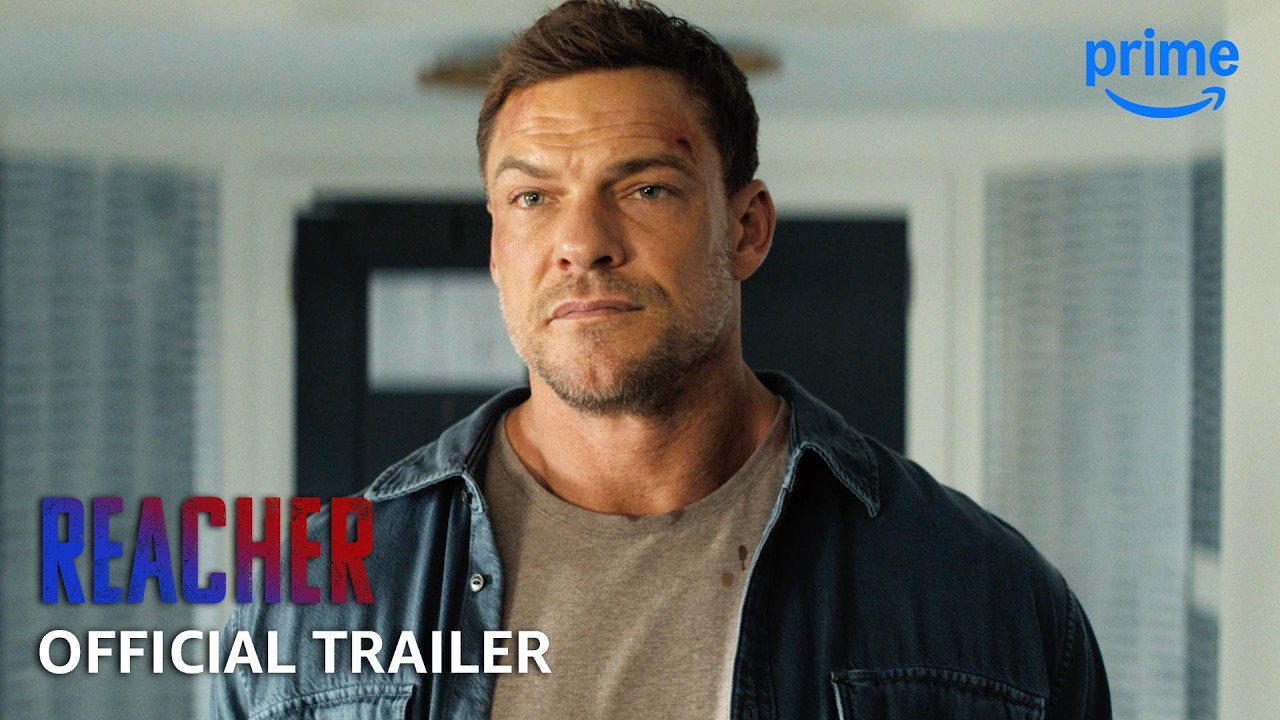
Choose it for bruising action, Ritchson’s presence, and a finale many found satisfying. Skip it if you want the cleaner mystery, tighter logic, and simpler small-town focus of the strongest earlier seasons.
Best for
Best for viewers who want relentless hand-to-hand action, high-stakes pulp, and a more emotionally vulnerable Reacher, especially if a bigger spy-thriller plot sounds appealing.
Not for
Less suited to viewers who prefer Reacher as a tight small-town mystery with cleaner logic, simpler villains, and most of the focus staying on Jack himself.
Verdict
Reacher Season 4 is a sharply divisive return built around one broadly shared strength: physical action. Many reviewers praise Alan Ritchson, the knife-heavy choreography, escalating set pieces, and an unusually emotional finale that gives Jacob, Tamara, Plum, and Reacher meaningful closure. The tradeoff is a much larger political conspiracy involving multiple agencies, shifting factions, and heavy exposition. Some critics enjoy that spy-thriller expansion and the added vulnerability it gives Reacher; others find the plot muddled, implausible, and less fun than the simpler formula of earlier seasons. The finale wins more agreement than the journey there, combining brutal combat with quieter moral and emotional payoffs.
Action is the clearest strength across the season, with frequent praise for brutal choreography, inventive environments, knife fights, and finale set pieces. A smaller group finds some shootouts implausible, crowded, or less impactful than earlier seasons.
The new ensemble is deeply divisive. Many reviewers praise Tamara, Jacob, Plum, and the broader cast as well-defined and emotionally useful, while others find the side characters weak, annoying, or less memorable than Season 1’s team.
The subway tragedy, Jacob’s grief, Sampson’s sacrifice, the memorial, and the quiet final train scene give the season more emotional weight than its bruising action might suggest. Most finale coverage finds those quieter beats effective.
main cast performance: 4.4, 10 reviews, low consensus
Alan Ritchson remains the season’s most consistent acting strength for most reviewers, with praise for his physicality, deadpan humor, and added vulnerability. A minority finds the newer, more solemn Reacher wooden or emotionally unconvincing.
Dry one-liners and Ritchson’s deadpan timing remain reliable strengths for many reviewers, though the harshest critics think the season has lost much of the playful spark of Season 1.
The best chases, toxin sequences, and finale fights generate strong tension, though some critics say implausible action and weaker characterization drain suspense elsewhere.
The season’s story produces the widest disagreement. Supporters call the mystery compelling and the season a return to form; detractors see an overcomplicated, illogical conspiracy that overwhelms the simple appeal of Reacher.
The conspiracy is the season’s most repeated weakness. Even positive reviewers admit the many agencies, mercenaries, shifting motives, and exposition can be difficult to track before the story finally clicks.
entertainment value: 3.0, 12 reviews, low consensus
Overall enjoyment is sharply divided. Positive reviewers call the season wildly entertaining or a return to form, while detractors describe it as dull, frustrating, or a major waste of the series’ earlier appeal.
The Hoths split reviewers sharply: some call them vicious, fresh, and genuinely dangerous, while others find them thin, clichéd, or physically unconvincing foils for Reacher.
Plausibility is a recurring complaint, from gunfights and police behavior to villain logic and Reacher surviving extreme injuries. Even enthusiastic reviews sometimes accept that the season is knowingly ridiculous.
character consistency: 1.3, 7 reviews, strong consensus
Reacher’s characterization is one of the biggest fault lines. Some critics accept the more vulnerable, guilt-driven version, while detractors say the humor, intelligence, and moral code that defined earlier seasons have been weakened or contradicted.
Alan Ritchson: 4.6, 21 reviews, moderate consensus
Alan Ritchson remains the dominant point of agreement: most reviewers see him as ideal casting, highly watchable, physically convincing, and increasingly capable of quieter emotion. A vocal minority thinks the post-Season 1 version has become too wooden and joyless.
Compared with other TV Shows, this product is above average in violence level, episode structure, pilot episode quality, near average in action sequence quality, suspense, below average in editing quality, cliffhanger effectiveness, production design.
Comparison summary
54 compared features
Above average0.4+ pts higher
14(26%)
Same as averagewithin 0.3 pts
12(22%)
Below average0.4+ pts lower
28(52%)
Largest category differences
Attribute
This product
Category average
Difference
editing quality
1.0
3.5
-2.5
cliffhanger effectiveness
1.5
4.0
-2.5
production design
2.0
4.2
-2.2
world-building
2.0
4.2
-2.2
writing quality
1.4
3.4
-2.0
realism
1.6
3.3
-1.7
directing quality
2.4
4.1
-1.8
character consistency
1.3
3.0
-1.7
Consider This Instead
If you want better character consistency
Choose The Night Manager, Season 2. It scores 5.0 vs 1.3 for character consistency, with a 3.9 overall score.
Products reviewers directly compared with this model, grouped into quick takeaways.
Mission: Impossible
Similar: action-thriller structure and fugitive-style escalationSeason 4 is compared favorably to Mission: Impossible for pushing Reacher into a faster, conspiracy-driven action mode.
FAQ
Is Reacher Season 4 good for action fans?
Yes, action is the most consistently praised element, especially the knife fights, improvised kills, chase sequences, and finale. A few critics find some scenes implausible or less impactful than earlier seasons.
Is the Season 4 story easy to follow?
Not always. Several reviewers say the government agencies, mercenaries, shifting motives, and exposition make the conspiracy muddled, while others find the mystery compelling and unpredictable.
How is Alan Ritchson in Season 4?
Most reviewers still see Ritchson as ideal casting and praise his physicality, deadpan humor, and added vulnerability. A minority thinks the newer Reacher has become too wooden or joyless.
Are the new supporting characters good?
Opinion is split. Some reviewers call the new group one of the show's strongest ensembles, while others find the side characters annoying, underdeveloped, or less memorable than Season 1's team.
Is the Season 4 finale satisfying?
The finale receives some of the season's strongest praise for its brutal action, emotional closure, and final train scene. A few reviewers think the official cleanup is too convenient or tidy.
How faithful is Season 4 to Gone Tomorrow?
It takes major liberties with Lee Child's novel, including villain backstory, setting, and the scale of the threat. Some reviewers like the modernization, while others think the changes weaken the Reacher formula.
Sample Expert Reviews We Analyzed
These are a few of the reviews included in our analysis.
Best for sharp adult humor, magnetic chemistry and a deeply satisfying farewell. Skip it if familiar will-they-won’t-they plotting or deliberately messy leads are dealbreakers.
Choose Widow’s Bay for its dark laughs, richly haunted island and memorable ensemble. Skip it if you need straightforward scares, rapid answers to every mystery or a completely resolved finale.
Choose Season 15 for warm, character-driven comedy, meaningful growth, and a finale that rewards longtime fans. Skip it if the short binge format, uneven replacement voices, or occasional clumsy commentary...
Best for sharply acted, compassionate, high-pressure hospital drama. Skip it if graphic procedures unsettle you or you need a neatly resolved season finale.