
If you want better season finale quality
Choose DTF St. Louis. It scores 5.0 vs 1.5 for season finale quality, with a 4.3 overall score.

Choose it for Rhea Seehorn, audacious sci-fi ideas, dark humor, and striking visual craft. Skip it if you need fast answers, constant momentum, or a season that resolves its central mystery cleanly.
Viewers who enjoy patient, idea-heavy science fiction, morally thorny character studies, dark comedy, and visual storytelling that rewards close attention.
Viewers who need fast plotting, frequent action, quick explanations, or a first season that fully resolves its central mystery may find the experience frustrating.
Pluribus earns broad praise for taking a familiar hive-mind premise somewhere stranger, more philosophical, and more character-driven. Rhea Seehorn is the clearest consensus strength, carrying long stretches of isolation with humor, grief, anger, and vulnerability, while the cinematography, production design, and supporting cast give the world unusual texture. The central questions about freedom, consent, happiness, individuality, and community give the season real staying power. The tradeoff is pace: several reviewers relish the patient, process-heavy storytelling, but others find the middle stretch repetitive, frustrating, or outright tedious. The season also withholds enough answers that its ending feels more like a launch point than closure. For viewers comfortable with ambiguity and slow-burn storytelling, its originality is the draw; for others, the same patience can become the main obstacle.
Compared with other TV Shows, this product is above average in dialogue quality, fourth-wall narration, originality, near average in season pacing, main cast performance, below average in season finale quality, ending satisfaction, media scrutiny portrayal.
| Attribute | This product | Category average | Difference |
|---|---|---|---|
| season finale quality | 1.5 | 3.8 | -2.3 |
| dialogue quality | 5.0 | 3.3 | +1.7 |
| ending satisfaction | 2.0 | 3.5 | -1.5 |
| media scrutiny portrayal | 2.5 | 4.0 | -1.5 |
| fourth-wall narration | 5.0 | 3.5 | +1.5 |
| originality | 4.2 | 3.3 | +0.9 |
| editing quality | 4.8 | 3.4 | +1.3 |
| writing quality | 4.3 | 3.4 | +0.8 |
Choose DTF St. Louis. It scores 5.0 vs 1.5 for season finale quality, with a 4.3 overall score.
Choose War. It scores 5.0 vs 4.3 for humor, with a 4.3 overall score.
Choose Sterling Point. It scores 5.0 vs 4.1 for visual style, with a 4.5 overall score.
Choose How to Get to Heaven from Belfast, Season 1. It scores 5.0 vs 4.1 for emotional impact, with a 4.4 overall score.
Products reviewers directly compared with this model, grouped into quick takeaways.
No. Its pacing is deliberately slow and process-focused; some reviewers find that hypnotic, while others call it repetitive or tedious.
Yes. Her performance is the strongest point of agreement, with repeated praise for carrying the show’s emotional weight and long stretches of isolation.
Not really. It contains mysteries and major reveals, but reviewers say it is more interested in character, atmosphere, and philosophical questions than rapid puzzle solving.
Both. Reviews repeatedly describe a mix of dark humor, unease, grief, satire, and philosophical drama.
Only partially. The show reveals important rules and information gradually, but several reviewers remain frustrated by how much is unresolved by the end.
It fits viewers who like slow-burn science fiction, difficult protagonists, thematic ambiguity, and strong visual craft more than constant plot acceleration.
These are a few of the reviews included in our analysis.





Vince Gilligan builds a slow and patient drama about a woman who refuses to surrender her inner life to a world that no longer values it.
‘Pluribus’ asks: Would we be willing to give up the struggles of the human condition for life in a friction-free bubble of contentment?
Pluribus is some of Vince Gilligan's best work, and it's because of how well he holds a mirror to his audience.
Pluribus, aka Plur1bus, is the new Vince Gilligan (Breaking Bad creator) show on Apple TV+. It has a few issues, but I loved it.
Here, finally is my Pluribus Season 1 review and though I thought the Season was very good, I have a big 'but' going forward I'll address.

Best for sharp adult humor, magnetic chemistry and a deeply satisfying farewell. Skip it if familiar will-they-won’t-they plotting or deliberately messy leads are dealbreakers.
Pros: humor, writing quality

Choose Widow’s Bay for its dark laughs, richly haunted island and memorable ensemble. Skip it if you need straightforward scares, rapid answers to every mystery or a completely resolved finale.
Pros: humor, genre satisfaction
Cons: ending satisfaction, season pacing
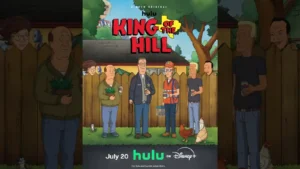
Choose Season 15 for warm, character-driven comedy, meaningful growth, and a finale that rewards longtime fans. Skip it if the short binge format, uneven replacement voices, or occasional clumsy commentary...
Pros: franchise connection, character development

Best for sharply acted, compassionate, high-pressure hospital drama. Skip it if graphic procedures unsettle you or you need a neatly resolved season finale.
Pros: character development, acting performance
Cons: character consistency, dialogue quality