
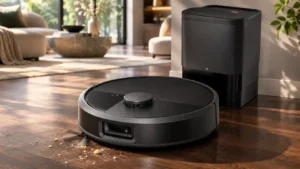
iRobot Roomba Max 705 Robot Vacuum Feature Scores
Overall Scorata score: 3.5/5
Based on 31 analyzed reviews · View source samples
Explore all 58 feature scores for iRobot Roomba Max 705 Robot Vacuum, organized into pros and cons.
Scores by Feature
Summary
58 reviewed features-
Very positive 4.5-5.016 (28%)
-
Positive 3.5-4.415 (26%)
-
Neutral 2.5-3.413 (22%)
-
Negative 1.5-2.410 (17%)
-
Very negative below 1.54 (7%)
Pros
Sort
-
Obstacle detection is a standout: cables, toys, and simulated pet messes are frequently avoided. Small or thin objects can still slip through.
-
LiDAR maps rooms quickly and produces orderly routes, even in dim lighting. Room editing and setup can be less polished than the navigation itself.
-
Automatic routines and bagged emptying make everyday floor maintenance noticeably easier, provided the station behaves.
-
Powerful suction earns praise for pulling crumbs, dust, and hair from floors and carpets, although one controlled test questions how much deep grit it actually extracts.
-
Carpet pickup is often strong for surface debris and hair, especially with extra passes. Deep dust extraction draws more mixed assessments.
-
Rubber rollers and strong suction are particularly good at lifting embedded hair and fibers; roller-end tangling remains the main caveat.
-
Hard-floor crumbs and hair are generally cleared well, although fine settled dust and grout-like debris proved difficult in one detailed test.
-
Sealed dust collection helps keep disposal tidy, but the dock does not always completely evacuate the robot’s small onboard bin.
-
Loose debris on low- and medium-pile carpets is usually picked up well, sometimes requiring a second pass.
-
Room scheduling, cleaning zones, and routines offer useful flexibility. Less intuitive map editing and occasional lag are common annoyances.
-
Smart dirt detection can revisit concentrated messes and increase suction, though a targeted test found that it triggered much less often than expected.
-
Laser navigation works in dim rooms and supports cleaning when overhead lights are off.
-
Several accounts describe enough battery for ordinary full-floor runs, though very large layouts may need a recharge break.
-
Pet hair and crumbs are often collected effectively from hard floors without multiple interventions.
-
Its powerful vacuuming and smarter navigation earn substantial praise, offset by a high price and uneven dock reliability.
-
The matte black robot and clean-looking dock are restrained and attractive without demanding visual attention.
-
Runtime is sufficient for many ordinary cleaning schedules, with multi-room coverage varying by suction mode and home size.
-
Solid casing, responsive bumpers, and protective details create a well-made impression, although long-term durability remains uncertain.
-
The enclosed disposal bag helps retain fine particles, but it should not be confused with verified HEPA filtration for the robot itself.
-
The auto-empty station saves routine dustbin trips, but emptying failures and awkward dock alignment repeatedly undermine that convenience.
-
It rarely gets stranded on ordinary objects in open layouts, but taller thresholds and tightly packed furniture are challenges.
-
Storage for a spare replacement dust bag inside the dock is a useful space-saving touch.
-
Extra filters and bags help owners get started, with replacement consumables available for routine maintenance.
-
Low- and medium-pile carpets generally respond well to the rubber rollers and suction, which can lift embedded debris.
-
Crumbs and coffee grounds are generally collected quickly on hard flooring, often within one or two passes.
-
Selectable suction is useful, but tests disagree on whether automatic Carpet Boost reliably reaches the desired higher power.
-
Accessible home and power buttons are convenient, though some app settings and menus are hard to locate.
-
The side brush helps with corners, though it sometimes scatters light crumbs or leaves edges imperfect.
-
Compatible aftermarket filters and bags can lower replacement costs, although owners should check exact part dimensions.
-
The dual rollers removed test fibers without the carpet-fiber tearing seen on some older vacuums.
-
Voice controls offer convenient room-specific commands where supported, although some promised smart-home connections were not available at launch.
Cons
Sort
-
A missing paper manual and ineffective QR instructions frustrate setup, with the more useful guide hidden inside the app.
-
Several tests found the robot backing up multiple times or sitting crooked on its dock, particularly when the dock is on carpet.
-
Forced firmware updates, stalled progress bars, and occasional resets make software maintenance a weak point.
-
Suction multipliers and the workings of smart sensing are poorly documented, making advertised performance difficult to compare with rivals.
-
The Max 705 Vac is strictly for vacuuming, so households that need wet cleaning must buy a different robot; the simpler maintenance is an upside for vacuum-focused users.
-
Dust transfer at the station makes a loud but brief burst, so the dock is more disruptive than the robot’s normal cleaning noise.
-
A carpeted charging base causes unreliable alignment in several tests; placing the station on hard flooring reduces this problem.
-
Long hair can accumulate at brush ends and the side brush, requiring occasional manual removal.
-
Buyers repeatedly object to flagship-level pricing for a vacuum-only machine when rivals add mopping. Discounts make it considerably more appealing.
-
The small onboard dustbin is adequate with regular auto-emptying, but fills quickly during heavier pet-hair and spot-cleaning sessions.
-
False full-bag messages can interrupt automation even when the dock’s collection bag still has room.
-
It can reach beneath taller furniture but misses dust below low couches and compact media stands.
-
Its raised sensor housing restricts access beneath low sofas and TV stands, despite decent clearance under taller furniture.
-
The separate charging station needs floor space and room for access, making self-contained designs more suitable for cramped rooms.
-
Sophisticated navigation and a dedicated station may be excessive for small apartments where simpler, less expensive robots could suffice.
-
The body feels solid but somewhat heavy when picked up, adding to its less-than-compact profile.
-
Consumable bags and replacement parts add to the cost of ownership, especially compared with cheaper competing vacuum-mop robots.
-
Ordinary doorway transitions are manageable, but taller steps can stop the robot from finishing its route.
-
High-pile results are conditional: the vacuum can lift embedded material, but tests note incomplete grit pickup and slower progress.
-
The perimeter can be missed on a second cleaning pass, leaving some material along room edges or baseboards.
-
Initial pairing can be manageable, but broken QR codes, mandatory updates, and unclear progress indicators make first setup needlessly frustrating.
-
Rubber rollers handle loose hair better than traditional bristles for some owners, but long strands can still wrap around the roller ends.
-
Normal cleaning is fairly quiet by robot-vacuum standards, but stronger suction increases the hum and the dock is distinctly louder.
-
Cleaning routines become straightforward once everything is mapped, but setup and editing rooms can require patience.
-
Against older Roombas, its mapping and obstacle detection stand out; controlled carpet testing and richer competing combo robots complicate the overall comparison.
-
Automatic suction increases on carpets can lag or fail to activate, particularly compared with models using dedicated carpet sensors.
-
The bagged dock reduces daily handling, but filters, sensors, and wrapped hair still need periodic attention.
Use Cases
Best for
Sort
-
Scheduled cleaning and automatic emptying reduce everyday workload, particularly for active households. Software interruptions and dock issues prevent a completely hands-off experience.
-
Pet hair pickup is a strength, but tangles and variable deep-carpet cleaning keep it from being entirely maintenance-free.
-
Excellent object avoidance makes loose cables and pet accidents less risky than on simpler robots, although very small objects can still be missed.
-
The brushes and navigation transition smoothly between carpeting and bare floors, but vacuum-only operation leaves wet messes untouched.
-
Vacuuming removes everyday dry messes from hard flooring; wet, sticky residue still requires a mop.
-
Cliff sensors protect stair landings, making upper-floor use possible when the robot is manually moved between floors.
-
Sealed dust disposal helps limit fine-particle exposure during cleanup; the robot is not established as having a HEPA-rated filter.
-
Automated vacuuming reduces the need to push or carry a cleaner, although occasional brush and dock maintenance remains necessary.
Conditional or not ideal for
-
Large homes and extended cleaning reachLonger battery life and mapped routes help cover sizable layouts, but some large homes require a recharge to finish.
-
Overnight cleaning suitabilityLaser mapping supports dark-room navigation, but the loud auto-empty burst can make sleeping-hour operation intrusive.