
Fractal Design Scape Headset Feature Scores
Explore all 70 feature scores for Fractal Design Scape Headset, organized into pros and cons.
Scores by Feature
Summary
70 reviewed features-
Very positive 4.5-5.034 (49%)
-
Positive 3.5-4.415 (21%)
-
Neutral 2.5-3.46 (9%)
-
Negative 1.5-2.414 (20%)
-
Very negative below 1.51 (1%)
Pros
Sort
-
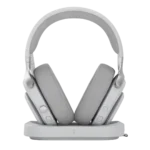
The magnetic wireless charging stand is the Scape’s most consistently praised convenience feature. It keeps the headset displayed, charged and the dongle organized with very little effort.
-
Design is a standout strength across the review set: understated, Scandinavian and premium rather than overtly gamer-styled. The subtle RGB, fabric and metal accents make it suitable for both desks and work calls.
-
Overall sentiment is strongly positive: the Scape is repeatedly recommended as a refined daily driver with excellent sound and charging convenience. One reviewer received a malfunctioning unit and was understandably very disappointed.
-
Positional accuracy is excellent for competitive play. Reviewers repeatedly reported easy footstep, gunshot and movement localization without needing exaggerated virtual-surround effects.
-
At around $200, value depends on what you prioritize. Many reviewers felt the refined build, sound and charging dock justify the price, while others called it pricey given the battery, ANC and feature omissions.
-
Charging is exceptionally convenient when the magnetic dock is used; placing the headset down can power it off and start charging automatically. Minor complaints include dock lift, status indication and host USB power behavior.
-
The parametric EQ is one of the most celebrated features. It provides unusually flexible tuning for a gaming headset, saves profiles onboard and makes it easy to correct bass or treble to taste.
-
Sound quality is one of the Scape’s strongest areas, with repeated praise for clean, detailed and balanced playback across games and music. Even reviewers with caveats generally rated the core audio highly.
-
Fractal’s browser-based Adjust software is widely praised for avoiding a heavy installed utility while still offering useful control. A few browser or reliability quirks keep it from being flawless.
-
Tri-mode connectivity is a real strength, giving users 2.4GHz wireless, Bluetooth and USB options for different setups. Reviewers frequently described the headset as versatile despite its Xbox limitation.
-
Midrange comes through clearly, with vocals, guitars and other mid-focused content staying well defined. Several reviewers singled out the mids as a strength of the otherwise slightly V-shaped tuning.
-
The closed-back Scape produces a notably roomy, wide presentation. Reviewers described the soundstage as above average to exceptional for gaming and movie use.
-
The stock tuning is generally judged well balanced and thoughtfully voiced, often leaning neutral-to-V-shaped. Reviewers also liked that the strong baseline makes EQ optional rather than mandatory.
-
RGB is unusually subtle and tasteful for a gaming headset, with good preset and custom options. The main tradeoff is battery life, which drops substantially when lighting stays on.
-
Build quality generally feels premium for the price, with sturdy plastics, metal details and deliberate controls. One reviewer still questioned long-term plastic-headband durability, and a defective unit shows quality control is not perfect.
-
The physical controls are a highlight, especially the damped crown/volume wheel. Reviewers repeatedly praised its tactility, easy reach and reliable media clicks, with only minor learning-curve complaints.
-
The memory-foam ear pads are plush, deep and often breathable, helping spread pressure well. A minority disliked the rougher fabric texture or found it scratchy.
-
Separation and detail are strong, with mids and lows staying distinct and subtle information easy to pick out. The analytical presentation suits both competitive play and detailed music listening.
-
Outside Xbox, compatibility is broad across PC, Mac, PlayStation, Switch and mobile devices. That makes the Scape easy to move among several common platforms.
-
Wireless range is a strength, staying connected several rooms away and reaching roughly 40 meters or around 55 feet in separate tests.
-
Bass is punchy and controlled rather than bloated, with enough impact for games and music. Some competitive players preferred trimming it with EQ so low-end effects would not mask cues.
-
Microphone impressions range from excellent to merely average. The detachable boom is generally clear enough for gaming and calls, but some reviewers heard compression or a tinny character compared with top headset mics.
-
The built-in mic is a handy backup for calls on the go, and several testers found it surprisingly usable. It is still clearly noisier and lower quality than the detachable boom mic.
-
Comfort is usually good over long sessions thanks to soft pads and manageable weight, but head shape matters. Several testers reported clamp or top-of-head pressure after a few hours.
-
Fit is secure and adaptable when the cups are positioned correctly, with generous ear clearance. Poor positioning or larger heads can expose more clamp pressure.
-
The boom mic is generally good enough for Discord, meetings and work calls, with some reviewers rating it very highly. Others found it merely serviceable, and the built-in mic is a step down.
-
The three onboard EQ slots are useful and easy to switch. Balance works well for many listeners, while competitive play may benefit from a leaner custom preset and some reviewers preferred the Depth-style tuning for music.
-
The Scape is much lighter than some premium rivals, which helps neck comfort over long sessions. A few reviewers still called the 330g-class chassis heavy compared with lighter gaming sets.
-
Packaging matches the minimalist design language and was praised for looking unusually polished and attractive rather than like typical gaming-headset packaging.
-
Passive isolation is mixed but often useful: some testers blocked traffic, workouts or room noise well enough without ANC, while others found the fabric pads let in more sound than competing closed-backs.
-
Microphone noise reduction can suppress keyboards and room noise effectively, but aggressive processing can thin or compress the voice. Several testers preferred leaving it off in quieter rooms.
-
Clamp force drew mixed reactions: some found the tension nearly perfect, while larger-head users and a few long-session testers wanted a looser fit.
-
Android use is straightforward over Bluetooth; one reviewer specifically described connecting to an Android phone as easy.
-
One tester praised the built-in DAC and amplifier for handling spatial cues well, helping the two-driver headset place movement convincingly.
-
The detachable boom mic is a practical win, letting the Scape look and behave more like ordinary lifestyle headphones when voice chat is not needed.
-
The earpads are easy to remove with little force, making pad swaps straightforward when replacement is needed.
-
Soft, compliant pads handled several glasses frames comfortably in one detailed test, despite the headset’s firmer clamp.
-
One detailed test found the highs remained controlled rather than turning shrill at maximum volume, suggesting the tuning keeps its composure when pushed.
-
The microphone connector uses a larger, more robust notch than some detachable-mic designs, giving the attachment a secure, premium feel.
-
The earpads are replaceable in practice and come off easily, though retail replacement availability was limited at the time of one review.
-
Setup is refreshingly simple: the headset is quickly detected, and most customization happens through a lightweight browser interface. Reviewers liked not having a large utility running in the background.
-
Spatial presentation is strong, with reviewers describing directional cues as precise and, in one case, calling the spatial audio top-notch for locating footsteps and gunshots.
-
The 2.4GHz connection is generally low-latency and stable, while Bluetooth can introduce more lag. For gaming, reviewers clearly preferred the dongle path.
-
The included USB cable feels robust and is long enough to charge or use the headset while connected, though the connector opening can limit bulkier aftermarket cables.
-
Metal hinge hardware contributes to the premium feel and gives the moving parts a sturdy impression.
-
The bundled dock materially improves the package, combining headset storage, charging and dongle management. That integration helped reviewers justify the overall price.
-
The fit is secure for normal gaming and work use without feeling loose enough to slip off. Violent head movement can still dislodge it, so it is not meant for workouts.
-
USB-C adds useful wired-audio and charging redundancy away from the dock. One reviewer wished the included connection setup were friendlier to USB-C-only computers.
-
Headband adjustment feels smooth, deliberate and resistant enough to hold its setting. The firmer mechanism takes a little effort but helps keep the fit from drifting.
Cons
Sort
-
Xbox is the clear compatibility gap. Multiple reviewers flagged that the Scape will not connect to Xbox consoles, making it unsuitable as a one-headset-for-every-system choice.
-
Multipoint is a clear omission: the Scape cannot stay connected to Bluetooth and its 2.4GHz link at the same time, so calls cannot simply mix in over a game.
-
There is no active noise cancellation, and that omission is one of the most repeated criticisms at this price. A few reviewers accepted the tradeoff because passive isolation was adequate for their use.
-
Sidetone is one of the weakest features in the launch-era reviews. Several testers found it extremely quiet, unclear or effectively broken and hoped firmware would improve it.
-
Maximum loudness is a recurring weakness. Several reviewers wanted more headroom, especially over Bluetooth, even though the headset is loud enough for ordinary listening.
-
There is no native game/chat balance control, a limitation called out by reviewers who rely on quick source mixing.
-
Console support is broad but not universal. The lack of Xbox compatibility is the major limitation, and the absence of a 3.5mm path narrows fallback options for some setups.
-
Portability is only average because the headset does not fold or lie fully flat, and neck wear can be awkward. The removable dongle and Bluetooth mode help when traveling.
-
Fabric earpads can briefly rustle when the headset is put on or shifted, enough for one reviewer to mistake the noise for electronic crackle.
-
Bluetooth is useful for phones and mobile listening, but it is not the Scape’s strongest connection mode. Reviewers noted no simultaneous mixing and, in some cases, lower volume, compression or lag.
-
The matte finish can show fingerprints readily, according to one hands-on reviewer.
-
One reviewer heard noticeable Bluetooth lag between on-screen action and sound effects, making that mode less suitable when sync matters.
-
Cup articulation is sufficient for most heads but limited for storage and neck wear. Multiple reviewers disliked that the earcups cannot rotate fully flat.
-
LDAC is absent, putting the Scape behind the Maxwell for high-quality Bluetooth codec support.
-
Transparency mode is absent, which disappointed a reviewer who relies on it to monitor their own voice and surroundings.
-
aptX Adaptive is not supported, and one reviewer specifically wished Fractal had included a more modern Bluetooth codec.
-
The removable 2.4GHz dongle integrates neatly into the charging dock and can be taken on the road. One reviewer had disconnects when it was plugged directly near other USB devices, which improved after repositioning and firmware.
-
Firmware support showed real benefit by reducing one reviewer’s disconnects, while other testers hoped updates would improve sidetone or noise suppression. One defective unit had no update available to solve its issue.
-
Treble is detailed and airy enough to expose small cues, but opinions split on the stock emphasis. A few testers heard extra harshness or occasional sibilance and preferred reducing it with EQ.
-
Codec support is a tradeoff. The 2.4GHz LC3+ implementation was praised for low latency and adequate bandwidth, while Bluetooth’s SBC/AAC-only support was criticized as dated.
-
Battery life is the most divisive practical issue: RGB-off runtime can approach 40–50 hours, but lighting cuts it sharply. Some reviewers called that weak for $200, while others barely noticed because the dock keeps it topped up.