If you want better protagonist appeal
Choose Trails in the Sky 1st Chapter. It scores 4.9 vs 3.4 for protagonist appeal, with a 4.4 overall score.

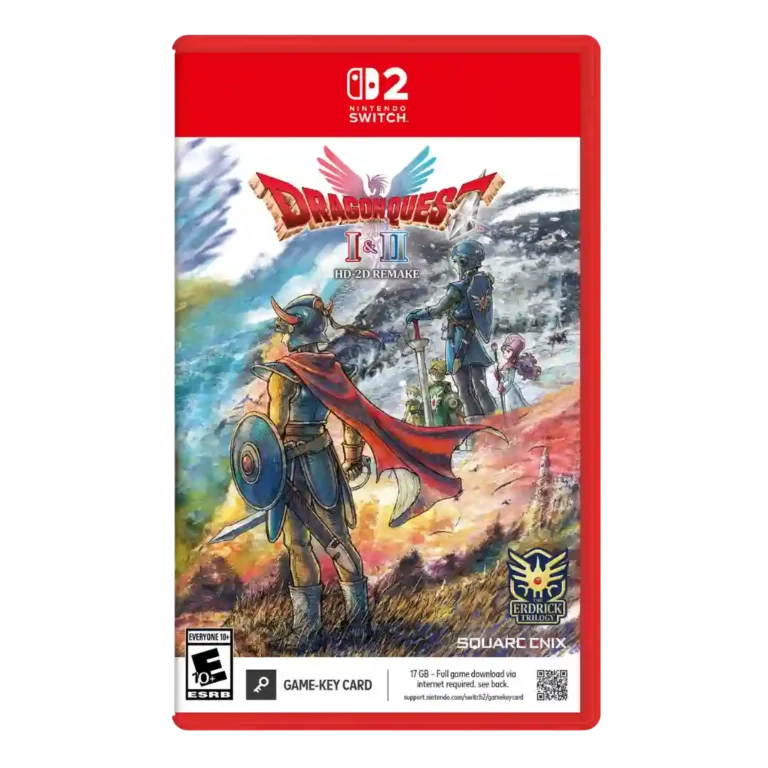
Choose it if you want classic turn-based Dragon Quest modernized with richer stories, gorgeous HD-2D visuals, and helpful quality-of-life options. Skip it if random encounters, grinding, or occasional difficulty spikes will sour the adventure.
Best for Dragon Quest fans, classic JRPG players, and newcomers who want the Erdrick Trilogy in a more approachable, visually rich form. It especially suits players who enjoy turn-based combat, treasure hunting, and story-driven remake expansions.
Not for players who dislike random encounters, grinding, silent protagonists, or difficulty spikes. Purists who want the shortest, simplest versions of Dragon Quest I and II may also prefer older releases.
Dragon Quest I & II HD-2D Remake lands as a thoughtful, ambitious modernization of two foundational JRPGs. Reviewers consistently praised the gorgeous HD-2D visuals, richer storytelling, orchestral music, and quality-of-life tools that make the pair more approachable without abandoning old-school turn-based structure. The biggest tradeoff is that modernization does not remove every inherited friction point: random encounters, grinding, RNG-heavy solo fights, and some padded or uneven stretches still show the games’ age. Dragon Quest II drew especially strong praise for its expanded party, character arcs, and scale, while Dragon Quest I was more divisive because its solo structure can feel tight and strategic or limiting and frustrating depending on the fight.
Compared with other Video Games, this product is above average in save system reliability, user interface design, frame rate stability, near average in combat system, value for money, below average in replay value, level design, fast travel convenience.
| Attribute | This product | Category average | Difference |
|---|---|---|---|
| save system reliability | 5.0 | 3.0 | +2.0 |
| replay value | 2.5 | 4.0 | -1.5 |
| user interface design | 4.7 | 3.3 | +1.4 |
| frame rate stability | 5.0 | 3.7 | +1.3 |
| level design | 2.5 | 3.8 | -1.3 |
| load times | 5.0 | 3.7 | +1.3 |
| character development | 4.8 | 3.6 | +1.1 |
| narrative quality | 4.6 | 3.6 | +1.0 |
Choose Trails in the Sky 1st Chapter. It scores 4.9 vs 3.4 for protagonist appeal, with a 4.4 overall score.
Choose The Alters. It scores 4.9 vs 4.2 for value for money, with a 4.2 overall score.
Choose Zero Parades: For Dead Spies. It scores 5.0 vs 2.5 for level design, with a 4.1 overall score.
Choose The Last of Us Part II Remastered. It scores 5.0 vs 2.8 for platform-specific feature support, with a 4.4 overall score.
Products reviewers directly compared with this model, grouped into quick takeaways.
Reviewers describe it as respectful but not strictly one-to-one. The core turn-based identity remains, but story, mechanics, characters, and quality-of-life features are heavily expanded.
Dragon Quest II received the stronger consensus because its expanded party, character writing, and larger adventure benefited more from the remake treatment. Dragon Quest I was still praised, but its solo structure divided reviewers.
Yes. Reviewers say it remains classic turn-based Dragon Quest, but Sigils, Scrolls, more abilities, and tougher encounters add strategy and more modern pacing.
Yes. Reviews mention difficulty modes, objective markers, speed-up options, autosave, map markers, treasure indicators, and other settings that make the games more approachable.
It can be. Reviewers liked the added challenge in many places, but several warned about RNG-heavy battles, random encounters, grinding, and difficulty spikes, especially in Dragon Quest I.
They are among the strongest points. Reviewers repeatedly praised the gorgeous HD-2D art, environmental detail, animation, orchestral soundtrack, and added voice acting.
Reviewers generally say yes, especially for players curious about classic JRPG history. The remake makes the first two Dragon Quest games far more approachable while preserving their old-school identity.
These are a few of the reviews included in our analysis.

Best for fluid traversal, rewarding exploration, striking art, and forgiving quality-of-life features. Skip it if you want deep combat, radical genre innovation, or consistently demanding bosses.
Pros: difficulty balance, boss design
Cons: innovation, sandbox freedom

Good if you want fast, tactical roguelite combat with huge progression depth, striking art, and standout music. Skip it if repetition, resource micromanagement, or a less emotionally satisfying sequel story...
Pros: combat system, progression system
Cons: originality

Good if you want a beautiful, demanding survival sandbox built around exploration, building, progression, and memorable co-op. Skip it if long resource runs, harsh death recovery, and deliberate pacing sound...
Pros: town-building system, exploration quality
Cons: grind level, fast travel convenience

Best for joyful destruction, dense exploration, and a charming DK-Pauline adventure. Skip it if camera quirks, frame-rate dips, easy bosses, or premium Switch 2 pricing are dealbreakers.
Pros: fun factor, world interactivity
Cons: frame rate stability, boss design