DANG! Review

Studio: Netflix
Released: September 8, 2026
Updated: 2 months ago
3.6
Overall review score
181
Review insights
42
Scored features
15
Expert reviews

Bottom Line

Choose DANG! for lively sibling chemistry, expressive animation, and messy adult-family comedy. Skip it if you want consistently sharp jokes, deep themes, or humor that is less topical and crude.

Best for

Best for viewers who enjoy adult animated family comedies, messy sibling dynamics, Gen Z and millennial humor, and short episodes with expressive visuals.

Not for

Less suited to viewers wanting child-friendly comedy, deep dramatic animation, broadly timeless jokes, or a season with consistently fresh plots and punchlines.

Verdict

DANG! works best when it stops chasing topical punchlines and lets its three dysfunctional siblings irritate, support, and slowly understand one another. Across the reviews, the voice performances, sibling chemistry, and colorful animation are the most dependable strengths, and the later family material gives the season welcome warmth and character growth. The tradeoff is consistency: internet-heavy references, repetitive mistakes, strained punchlines, and uneven crude humor keep several episodes from feeling as distinctive as the premise suggests. Its compact length and easy watchability help, but viewers looking for deeper adult animation or universally accessible comedy may find it slight. For viewers on its generational wavelength, though, the cast and family dynamic are strong enough to carry the mess.

Feature Scorecards

Summary

42 reviewed features
  • Very positive 4.5-5.0
    8 (19%)
  • Positive 3.5-4.4
    21 (50%)
  • Neutral 2.5-3.4
    10 (24%)
  • Negative 1.5-2.4
    1 (2%)
  • Very negative below 1.5
    2 (5%)

Pros highlights

  • 4.6
    10 reviews strong consensus
    cast chemistry: 4.6, 10 reviews, strong consensus
    The sibling ensemble is widely considered a major strength, with a lived-in, genuine dynamic that carries both the jokes and the warmer family moments.
  • 4.4
    10 reviews strong consensus
    animation quality: 4.4, 10 reviews, strong consensus
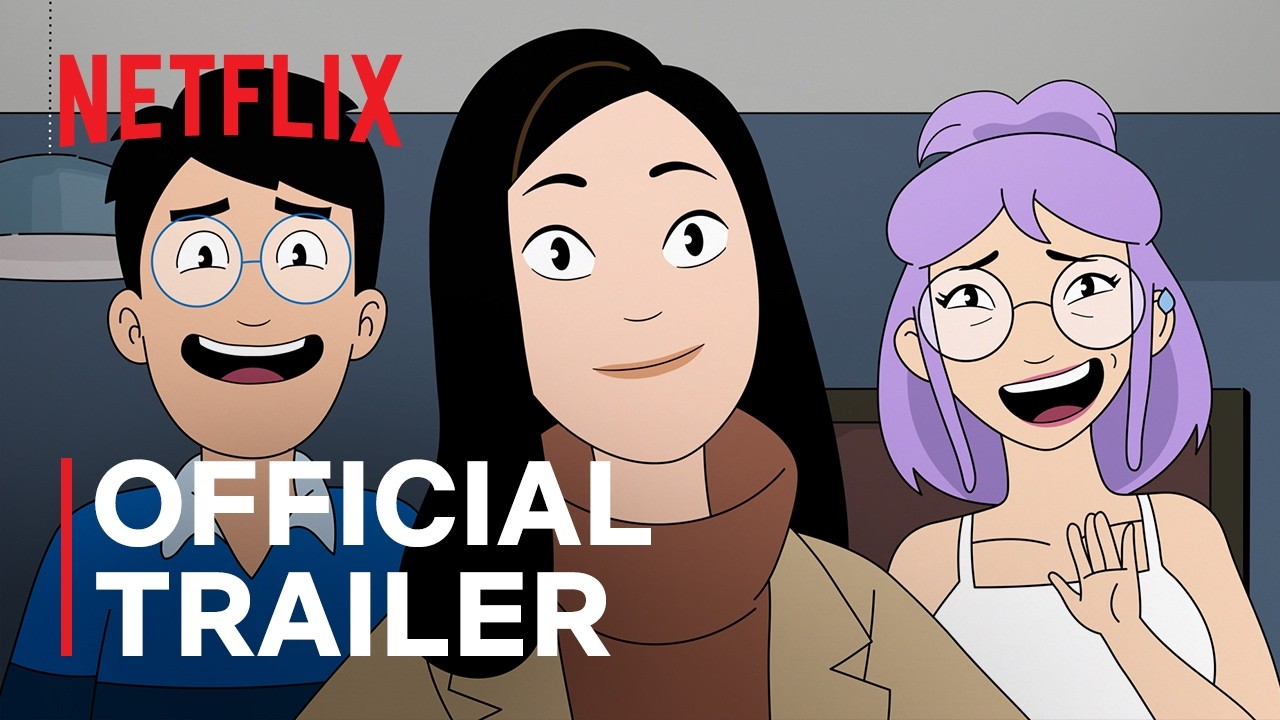
    The animation is one of the most consistently praised elements: clean, colorful, expressive, and well suited to physical comedy. Even reviewers who find the style simple generally think it fits the characters.
  • 4.3
    10 reviews strong consensus
    visual style: 4.3, 10 reviews, strong consensus
    Clean lines, bright colors, soft or deliberately awkward shapes, and expressive faces give the series a recognizable look. Some reviewers find it less visually distinctive than peers, but the overall presentation is widely praised.
  • 3.9
    10 reviews moderate consensus
    entertainment value: 3.9, 10 reviews, moderate consensus
    Overall enjoyment ranges from barely watchable to genuinely fun, but most reviewers find enough charm in the siblings, animation, and comedy to keep the season moving.
  • 3.9
    10 reviews strong consensus
    story quality: 3.9, 10 reviews, strong consensus
    The sibling relationship is the story’s strongest asset, and the later family material gives the season more purpose. Critics still note familiar setups, underdeveloped side ideas, and occasional overreliance on dysfunction.
  • 3.9
    8 reviews moderate consensus
    character development: 3.9, 8 reviews, moderate consensus
    Growth is present and becomes more meaningful later in the season, especially when the family returns to its roots. Some critics still find the leads one-note early on, but others see clear emotional progress by the end.

Cons highlights

  • 3.4
    13 reviews moderate consensus
    humor: 3.4, 13 reviews, moderate consensus
    Comedy is the biggest point of disagreement. Reviewers praise some character-driven, visual, and generational jokes, but repeatedly criticize strained punchlines, topical references, repetition, and crude bits that do not always land.
  • 2.8
    9 reviews moderate consensus
    originality: 2.8, 9 reviews, moderate consensus
    The central sibling angle has some distinctive personality, but many reviewers still see familiar adult-animation and slice-of-life territory. Repeated mistakes, topical jokes, and recognizable sitcom setups can make the season feel predictable.
  • 3.1
    8 reviews low consensus
    writing quality: 3.1, 8 reviews, low consensus
    Script quality is uneven across critics: topical references and less-distinctive writing draw criticism, while another reviewer praises the quick-witted lines and laugh-out-loud moments.
  • 3.2
    7 reviews moderate consensus
    theme depth: 3.2, 7 reviews, moderate consensus
    The show touches on adulthood, family expectations, identity, anxiety, dating, and social pressure with real insight at times. Several critics still think those ideas stop short of deeper exploration.
  • 3.1
    5 reviews moderate consensus
    audience appeal: 3.1, 5 reviews, moderate consensus
    Appeal looks highly demographic-dependent. Younger viewers and people who recognize the show’s online, generational references may connect strongly, while others may find the humor too niche or reference-heavy.
  • 2.3
    3 reviews low consensus
    sexual content level: 2.3, 3 reviews, low consensus
    Responses to the sexual and crude material vary sharply. One critic finds it excessively detailed or disgusting, while another appreciates that the sex-and-drug jokes are restrained enough to leave room for the family story.

Cast & Creators

  • Eunice
    4.5
    6 reviews strong consensus
    Poppy Liu: 4.5, 6 reviews, strong consensus
    Liu is praised for giving Eunice bite, laconic confidence, and a distinctive comic attitude. Her delivery helps the sibling dynamic feel lively without turning every selfish line into a shout.
  • Ruthie
    4.4
    6 reviews strong consensus
    Stephanie Hsu: 4.4, 6 reviews, strong consensus
    Hsu is frequently singled out for Ruthie’s sharp, judgmental energy, and one reviewer calls her the standout of the trio. Her delivery keeps Ruthie abrasive, funny, and still capable of drawing sympathy.
  • Andrew
    4.3
    6 reviews strong consensus
    Andrew Law: 4.3, 6 reviews, strong consensus
    Law’s performance and creative contribution receive strong notices when the show leans into Andrew’s awkward, anxious comic rhythm. Reviewers praise his timing and his ability to keep the character appealing despite the dysfunction.
  • Peter
    4.8
    2 reviews limited evidence
    SungWon Cho: 4.8, 2 reviews, limited evidence
    Cho makes a strong impression in limited time as Peter, with reviewers praising his serious delivery and calling the performance amusing, fantastic, and memorable.

Compared With Category Average

Compared with other TV Shows, this product is above average in season length, character consistency, realism, near average in visual style, animation quality, below average in age appropriateness, family friendliness, episode structure.

Comparison summary

42 compared features
  • Above average 0.4+ pts higher
    9 (21%)
  • Same as average within 0.3 pts
    19 (45%)
  • Below average 0.4+ pts lower
    14 (33%)

Largest category differences

Attribute This product Category average Difference
age appropriateness 1.0 2.7 -1.7
season length 4.5 2.9 +1.6
character consistency 4.5 2.9 +1.6
family friendliness 1.0 2.3 -1.3
realism 4.5 3.3 +1.2
episode structure 2.5 3.7 -1.2
episode length 4.5 3.3 +1.2
audience appeal 3.1 4.0 -0.9

Consider This Instead

If you want better episode structure

Choose Sterling Point. It scores 5.0 vs 2.5 for episode structure, with a 4.5 overall score.

Compare

If you want better age appropriateness

Choose Vladimir, Season 1. It scores 5.0 vs 1.0 for age appropriateness, with a 3.5 overall score.

Compare

Compared in Reviews

Products reviewers directly compared with this model, grouped into quick takeaways.

Long Story Short

  • Better: theme depth DANG! is judged much less thematically deep than Long Story Short.
  • Compared: tone Long Story Short is described as more grounded and melancholy in tone.
  • Better: visual distinctiveness DANG! is described as less visually idiosyncratic than Long Story Short.

BoJack Horseman

  • Compared: tone and thematic focus The reviewer contrasts DANG!'s family dysfunction with BoJack Horseman's existential focus.

Bojack Horsemen

  • Better: theme depth DANG! is judged much less thematically deep than Bojack Horsemen.

FAQ

Is DANG! consistently funny?

Not for every reviewer. Character-driven banter and visual gags land well for many, but topical references, repetition, and some crude jokes are frequent complaints.

What is the show’s biggest strength?

The sibling chemistry is the clearest strength, helped by strong voice performances and a family dynamic that becomes warmer as the season progresses.

How is the animation?

Mostly very well received. Reviewers praise the clean lines, bright colors, expressive faces, and visual comedy, even when they find the overall style simple.

Is it easy to binge?

Yes, the roughly 25–27 minute episodes and eight-episode season make it easy to get through, although repetition becomes more obvious when several episodes are watched together.

Is DANG! appropriate for children?

No. Reviews specifically cite sexual material, profanity, drug references, and crude adult humor, and multiple critics describe it as adults-only.

Does the season end well?

Generally yes. The Boston-set finale is described as one of the stronger episodes and a natural endpoint, though its emotional impact remains relatively light.

Sample Expert Reviews We Analyzed

These are a few of the reviews included in our analysis.
Video Reviews

Article Reviews

pluggedin.com

Dang!' is Netflix’s newest in a long line of raunchy comedies—a series that, once again, forgets the punchline as it's telling the joke.

Review score
1.0

Top TV Shows to Consider

#1 Colin From Accounts, Season 3
4.8

Best for sharp adult humor, magnetic chemistry and a deeply satisfying farewell. Skip it if familiar will-they-won’t-they plotting or deliberately messy leads are dealbreakers.

Pros: humor, writing quality

#2 Widow’s Bay
4.8

Choose Widow’s Bay for its dark laughs, richly haunted island and memorable ensemble. Skip it if you need straightforward scares, rapid answers to every mystery or a completely resolved finale.

Pros: humor, genre satisfaction

Cons: ending satisfaction, season pacing

#3 King of the Hill, Season 15
4.7

Choose Season 15 for warm, character-driven comedy, meaningful growth, and a finale that rewards longtime fans. Skip it if the short binge format, uneven replacement voices, or occasional clumsy commentary...

Pros: franchise connection, character development

#4 The Pitt, Season 2
4.7

Best for sharply acted, compassionate, high-pressure hospital drama. Skip it if graphic procedures unsettle you or you need a neatly resolved season finale.

Pros: character development, acting performance

Cons: character consistency, dialogue quality