
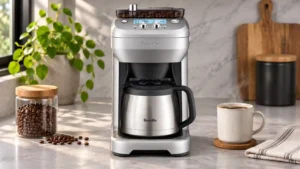
Breville The Grind Control BDC650BSS Coffee Maker Feature Scores
Overall Scorata score: 4.0/5
Based on 44 analyzed reviews · View source samples
Explore all 34 feature scores for Breville The Grind Control BDC650BSS Coffee Maker, organized into pros and cons.
Scores by Feature
Summary
34 reviewed features-
Very positive 4.5-5.014 (41%)
-
Positive 3.5-4.48 (24%)
-
Neutral 2.5-3.46 (18%)
-
Negative 1.5-2.46 (18%)
Pros
Sort
-
The illuminated LCD, large buttons, and clear brewing updates make normal operation approachable. Learning the strength and volume conventions may take a little practice.
-
Adjustable grind size, eight strength levels, and variable serving volumes let drinkers personalize their cup. The machine offers meaningful drip customization, though not the full control of separate brewing equipment.
-
Most cups taste rich, aromatic, and full-bodied thanks to fresh-ground beans. A minority of tests found weak, muddy, sour, or bitter results, especially before dialing in settings or when extraction ran poorly.
-
The combination of fresh grinding and automated brewing makes this machine highly satisfying for users who accept its routine. Higher complexity and durability concerns temper the otherwise positive experience.
-
Many users report smooth, flavorful drip coffee once the grind and dose are calibrated. Controlled testing also raises concerns about inconsistent dosing and suboptimal water temperature, so results are not universally repeatable.
-
The built-in burr grinder produces fresh, even grounds and offers useful grind and dosing adjustments. Sticky coffee residue, jammed chutes, and occasional bean-feed failures are its main weaknesses.
-
The front water-level display and full-tank indicator remove guesswork about how much water is available. Visible feedback is frequently appreciated during filling and brewing.
-
Brewing can be quick for an automated grind-and-brew system, with some batches ready in roughly four to six minutes. Full pots take longer, and the countdown display helps set expectations.
-
A front/top filling arrangement and clear water feedback usually make reservoir filling straightforward. Low cabinet clearance can make opening the water hatch less convenient.
-
The large carafe and water reservoir support multiple servings, while a half-pound hopper reduces constant refilling. Some find the hopper small relative to standalone grinders, and five-ounce cup markings can be confusing.
-
Several tests produced satisfyingly hot coffee right after brewing. Temperature can drop in the carafe or mug, particularly without preheating, while one rigorous test found brewing water below the ideal range.
-
The included reusable gold-tone basket is convenient and avoids paper waste, though its fuller-bodied output can be murky. Paper filters can produce a cleaner cup and simplify disposal.
-
The stainless steel housing and solid components feel premium, and some owners report years of reliable daily use. Others describe grinder, sensor, or leak problems, making long-term dependability a meaningful uncertainty.
-
Grind calibration, brewing timers, and water-fill feedback add genuinely useful automation. They are most valuable when settings are adjusted for different beans or batch sizes.
-
Pause-and-serve permits an early cup without waiting for the whole pot. The carafe needs to be returned promptly to avoid the filter basket overflowing.
-
The filter and maintenance brush cover the basics, and one test appreciated an included travel mug. These additions make the package more usable without extra purchases.
-
Getting the brewer out of its packaging and ready to use is straightforward. Deeper grinder calibration is a separate step if you want the best flavor.
-
The manual helps with calibration, cleaning, and daily operation, but at least one tester wanted clearer water-to-bean guidance. A first setup read is worthwhile.
-
The water heats quickly for at least some smaller servings, helping shorten the wait for a freshly brewed cup. This convenience does not resolve concerns about final extraction temperature.
-
The bean hopper closes securely enough to help keep stored beans fresh between uses. The sealing and easy filling were both appreciated.
-
Initial setup is manageable, with rinsing and priming taking only a short time. Achieving the best results calls for reading directions and performing grinder calibration.
-
Some users appreciate the improved thermal or brewing temperature behavior. One detailed temperature test found the brewer never reached the recommended extraction window, exposing a notable consistency concern.
Cons
Sort
-
The thermal carafe looks robust, but its narrow opening, recessed lip, and pour spout repeatedly cause awkward tilting, dribbles, and spills. A few users report clean pouring, so technique matters.
-
The limited warranty is regarded as short relative to the premium price, particularly given reports of grinder faults. Shoppers should check coverage for their exact region and retailer.
-
Basic grind and strength control is welcome, but experienced manual brewers may miss direct access to extraction variables. Separate grinders and pour-over equipment provide a higher degree of control.
-
Combining the brewer and grinder reduces separately replaceable or upgradeable equipment. Owners who want to improve individual brewing components over time may prefer two devices.
-
Daily rinsing, hand washing, and regular chute brushing are frequent chores, especially with oily beans; some testers also find the carafe difficult to clean. Others appreciate the removable parts and consider the routine manageable.
-
Scheduled brewing is useful, but the lack of remote operation disappointed a tester who wanted connected start controls. It is not a remotely managed smart coffee maker.
-
The brushed-metal finish shows fingerprints and smudges around frequently touched areas. A microfiber cloth removes them, but the finish is not effortless to keep pristine.
-
Experiences with warranty and repair support are uneven, including complaints about lengthy service turnaround. Coverage may ease repair costs but does not eliminate downtime.
-
Mineral descaling and grinder-chute upkeep remain important for taste and reliability. The machine offers maintenance prompts, but neglecting cleaning can harden residue and cause clogs.
-
Brushed stainless steel gives the brewer a polished, substantial look. Its tall, heavy body and required clearance can make it awkward on crowded counters or beneath low cupboards.
-
The grinder is quieter than some older machines in several tests, while other users call its short grinding phase loud enough to wake nearby sleepers. Noise sensitivity matters more than the relatively quiet brewing cycle.
-
Combining a real burr grinder, programmable brewing, and thermal carafe helps justify the premium for frequent coffee drinkers. Less expensive brewers or separate equipment can offer better value if you do not need the integrated workflow.
Use Cases
Best for
Sort
-
Fresh grinding and straightforward push-button brewing make this a satisfying daily drip machine for many households. Its ongoing cleaning needs and occasional inconsistency make it less effortless than a basic brewer.
-
Direct-to-mug brewing is a welcome alternative to making a whole pot, with room for many travel mugs and adjustable portions. Individual cup quality can vary, and one tester found the immersion brew muddy.
-
The insulated steel carafe avoids a scorching hot plate and often keeps coffee pleasantly warm for several hours. Heat retention varies with preheating, batch size, and time, so not every late cup stays piping hot.
-
Whole-bean brewing is the central attraction: beans are ground immediately before the brew for noticeably fresher flavor without a separate grinder. It is particularly appealing to anyone moving away from pre-ground coffee.
-
Programmable auto-start can grind and prepare coffee for a planned morning, rather than leaving grounds to stale overnight. The grinding phase can be noisy, and the carafe or cup must be in place.
-
A pre-ground bypass allows a decaf drink without emptying a hopper of regular beans. That extra flexibility is handy in mixed-caffeine households.
-
Up to a twelve-cup pot and a thermal carafe make it useful when several people want coffee. The adjustable strength and single-mug option also help when guest and household serving sizes vary.
-
For drinkers who want café-like flavor without purchasing a shop-made cup every morning, fresh-grind brewing is a compelling convenience. Its upfront cost only makes sense when the machine is used regularly.
-
Clear controls make the machine accessible after a short learning period, but getting the tastiest brew may require calibration and experiments with grind and strength. It is easier to operate than to perfect.
-
The reusable filter lets you make drip coffee without buying a paper filter for every batch. The tradeoff is a more hands-on cleanup and, for some palates, murkier coffee than with paper filters.
-
The small-portion and single-cup options are useful when a full carafe would be wasteful. Strength and steeping adjustments help adapt a smaller brew, although the cup result may differ from carafe mode.
-
Whole-bean single-cup coffee offers a fresher-tasting alternative to many pod machines, without the disposable plastic capsule. It is an appealing switch if cup quality matters more than pod convenience.
-
The grinder can be adjusted to suit light and medium roasts, which have been particularly successful in some testing. Dark, oily roasts are more likely to leave sticky residue.
-
One large batch can serve the household, while later drinkers can make a fresh mug instead of relying on leftover coffee. This flexibility helps staggered routines.
Conditional or not ideal for
Sort
-
Precision specialty coffee brewingGrind calibration and strength options are useful for exploring better drip coffee, but water-temperature, bloom, and extraction control are limited. Dedicated pour-over setups or precision brewers better serve those chasing maximum nuance.
-
Small kitchens and apartmentsThe substantial height and deep body make this a challenge for cramped countertops or low cabinets. Its all-in-one design does save the space that a separate grinder would occupy, so kitchen fit is situational.
-
Budget coffee buyersThe relatively high purchase price makes this a poor fit for tight budgets. More basic grind-and-brew machines are available for substantially less.
-
Quiet kitchensGrinder operation can be sharp enough to disturb people in nearby rooms, making timed early-morning brewing risky in noise-sensitive homes. Other users report that this model is reasonably subdued.
-
Home espresso and milk drinksThis is fundamentally a drip brewer rather than an espresso-and-milk system. Its built-in grinder is not intended to replace espresso-specific grinding or milk preparation equipment.
-
Cold coffee drinkersA dedicated cold-brew or over-ice program is not part of this model's appeal. Anyone chiefly preparing chilled drinks would be better served by a brewer with those modes.
-
Experimenting with coffee blendsChanging bean varieties is possible, but optimal dosing may require recalibration each time. It suits experimenters who do not mind a bit of extra adjustment.