
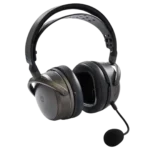
Audeze Maxwell 2 Feature Scores
Explore all 65 feature scores for Audeze Maxwell 2, organized into pros and cons.
Scores by Feature
Summary
65 reviewed features-
Very positive 4.5-5.025 (38%)
-
Positive 3.5-4.417 (26%)
-
Neutral 2.5-3.412 (18%)
-
Negative 1.5-2.410 (15%)
-
Very negative below 1.51 (2%)
Pros
Sort
-
Directional imaging is exceptional and one of the Maxwell 2’s defining strengths. Footsteps, reloads, vertical movement, and distant effects are easy to locate even in crowded competitive mixes.
-
Battery life is exceptional, commonly lasting around 80 hours or more and often stretching through a week or two of regular use. It is one of the headset’s strongest practical advantages.
-
The Maxwell 2’s planar drivers deliver exceptional clarity, detail, and resolution across games and music, making sound quality its most consistent strength. A few listeners prefer a more visceral or less analytical presentation, but fidelity is overwhelmingly praised.
-
Construction is consistently praised as sturdy, premium, and tank-like, with metal components and little creaking or flex. The substantial materials inspire confidence, even though they contribute to the headset’s heavy weight.
-
Separation is a standout strength: individual effects, voices, and musical layers remain distinct even when the mix gets chaotic. That clarity is especially useful for competitive shooters and dense music.
-
The closed-back design still produces an unusually spacious stereo field with convincing width and depth. Games and layered music benefit from the open-feeling presentation and easy placement of sounds.
-
Voices, dialogue, instruments, and game effects come through with excellent definition and natural body. The clear, articulate mids also help dense mixes stay intelligible during busy gameplay.
-
The 10-band EQ is flexible and the planar drivers respond very well to aggressive tuning without falling apart. Multiple custom profiles make it easy to add bass or tailor the sound, though some users want deeper parametric control.
-
The redesigned Audeze app is cleaner, faster, and easier to navigate than the old software, with straightforward access to EQ, sidetone, mic filtering, and updates. A few users still encounter connection or recognition quirks.
-
Magnetic earpads pop on and off with very little effort, making replacement and aftermarket swaps unusually convenient. This is widely treated as a meaningful quality-of-life improvement.
-
The Maxwell 2 covers USB-C dongle, Bluetooth, USB wired, and 3.5mm analog use across many device types. That flexibility is excellent, although the rules for combining sources are more restrictive than the connection list suggests.
-
The tuning is widely described as balanced, natural, and reference-like rather than heavily colored. That accuracy suits detail-focused listening, though bass- or excitement-seeking users may want EQ.
-
Native stereo imaging is already so precise that spatial processing can be impressive without being essential. Dolby Atmos or platform 3D modes can add immersion, though at least one listener preferred the natural stereo presentation.
-
Wireless response is consistently quick, with little or no noticeable delay over the 2.4GHz dongle and surprisingly good Bluetooth latency in some tests. It suits fast-paced games well.
-
The plush closed-back pads form a strong passive seal that blocks keyboards, chatter, and other everyday noise well. That isolation is useful at a desk, though people who prefer hearing their surroundings may find it too closed off.
-
Overall sentiment is positive because the sound, imaging, battery life, and build are genuinely high-end. Satisfaction falls for buyers who cannot tolerate the weight, need better dual-wireless behavior, encounter reliability problems, or already own the original Maxwell.
-
The roomy pads and moderate clamp work especially well with glasses, with multiple users reporting little extra pressure or sealing trouble. The fit is notably accommodating around eyewear.
-
Replaceable magnetic earpads make long-term maintenance and comfort customization simple. Being able to swap worn or alternative pads extends the headset’s practical life.
-
USB-C charging is simple, and fast charging adds many hours of playback from a short top-up. Combined with the large battery, charging rarely interrupts normal gaming routines.
-
PC, PlayStation, Switch, Mac, and mobile coverage is broad, with the correct console model extending support to Xbox or PlayStation. Moving between devices is generally easy once the connection method is configured.
-
FILTER noise reduction can suppress keyboards and loud background sounds effectively, especially on lower settings. Stronger processing can raise volume, clip, compress, or robotize the voice, so the best setting depends on the environment.
-
Firmware has already improved bass and microphone behavior, showing that Audeze can correct issues after launch. The update process and occasional regressions still create frustration for some owners.
-
Digital USB playback is a major strength, supporting clean 24-bit/96kHz audio through the headset’s internal processing. It helps the Maxwell 2 function as a serious music-listening headset as well as gaming gear.
-
Presentation feels appropriately premium, with the headset and accessories arriving in a polished, high-end package. The unboxing experience reinforces the solid build and premium positioning.
-
LDAC is a welcome option for higher-quality Bluetooth listening on compatible devices. It strengthens the Maxwell 2’s appeal as a music headset as well as a gaming headset.
-
The included presets offer useful starting points for immersive listening, bass boost, and competitive play. Their usefulness varies by game, and some users prefer custom EQ because certain presets do not change key cues enough.
-
The detachable boom mic ranges from very clear and near broadcast-like to compressed, distorted, or disappointing depending on software and firmware. In-game chat often fares better than Discord, making mic quality one of the more mixed areas.
-
The top end is detailed and airy for many listeners, adding definition without masking the mids. Others hear the stock tuning as sharp, sibilant, or metallic enough to become fatiguing over time.
-
The physical game/chat wheel is convenient on supported platforms and gives quick control without opening software. Its usefulness is reduced on PlayStation, where the mix may need to be handled through console settings.
-
Removable magnetic outer plates add easy cosmetic customization and can shave a little weight when left off. The feature is fun and practical, though the redesigned controls needed to accommodate it are not universally liked.
-
The large, plush earpads are generally soft, roomy, and supportive, with enough space for full over-ear fit. Heat buildup varies by user, but padding quality itself is usually praised.
-
Auracast is part of a strong modern Bluetooth feature set and adds to the headset’s wireless flexibility on compatible devices. It is praised alongside LDAC and LE Audio rather than treated as a headline reason to buy.
-
Bluetooth codec support is unusually broad and is praised for covering modern high-quality options such as LDAC, LE Audio, and Auracast. The main omission is aptX.
-
Bluetooth is convenient and broadly useful for phones and secondary devices, with generally good sound and easy pairing. Its automatic priority over the dongle can interrupt gaming audio, which makes source behavior frustrating for some setups.
-
The box provides the main cables, USB adapter, wireless dongle, and detachable boom mic needed for the supported connection modes. The bundle is practical and makes switching between devices easier.
-
The removable boom mic is handy for solo play, videos, travel, or public use because it reduces clutter when voice chat is unnecessary. It also makes the headset look less overtly gaming-focused.
-
Competitive cues such as footsteps remain clear even when explosions and other low-frequency effects pile up. That cue separation gives the headset a strong advantage in shooters.
-
USB-C is especially valuable for wired listening because it carries a clean digital signal into the headset and supports high-resolution playback. It is also the preferred wired option over the analog jack for maximum fidelity.
-
The planar drivers generally stay composed and detailed when pushed louder, with little muddiness or distortion. A few users still encounter harshness or source-dependent limitations at higher levels.
-
Clamp is usually described as moderate or light enough to avoid excessive ear pressure, and several glasses wearers appreciate the fit. A few users experience more squeeze or instability depending on head shape.
-
The recessed boom-mic socket guides the connector into a snug, secure fit with little ambiguity. It is a small but well-executed physical detail.
-
Call quality can be clear and easy to understand when the microphone behaves normally. It is suitable for everyday voice use, but the headset’s mic performance is more variable than its playback quality.
Cons
Sort
-
This is one of the clearest drawbacks: the Maxwell 2 cannot mix Bluetooth and 2.4GHz dongle audio at the same time. Bluetooth can coexist with wired USB or analog audio, but fully wireless two-source use remains awkward.
-
Reliability is the biggest customer-side concern, with reports of white noise, buzzing, disconnects, freezes, mic glitches, and firmware-related behavior. Some problems improve after updates or replacements, but the frequency of failure reports makes consistency a real caveat.
-
At roughly 560g, the Maxwell 2 is exceptionally heavy and the weight is its most repeated physical drawback. The wider suspension strap distributes the load better, but many users still notice neck, jaw, or head fatigue during long sessions.
-
The fixed-hole suspension strap holds its setting securely but is cumbersome to adjust and offers limited fine tuning. Users between sizes or sharing the headset may find the three-position approach especially frustrating.
-
Portability is poor for such a large, heavy headset. The cups do not fold or lie fully flat, so travel and compact storage are noticeably less convenient.
-
The standard launch model does not include ANC, and several buyers see that as a notable omission at this price. Some specifically suggest waiting for the announced ANC version if active isolation matters.
-
The reduced swivel is a step backward for storage and around-the-neck use. The cups no longer rotate fully flat, making the headset bulkier to pack than the original Maxwell.
-
Console support depends on buying the correct version, and some controls do not work identically everywhere. PlayStation game/chat mixing and cross-console wireless restrictions are the most notable limitations.
-
The USB-C dongle delivers responsive low-latency wireless audio, but source priority, mode switching, and occasional connection quirks can make it less seamless than expected. Some users also find its range only average.
-
Volume behavior is less consistent than the headset’s overall fidelity. Some users find mobile or wireless output quieter than expected, while others report enough level for normal listening.
-
The lack of aptX is a small codec gap rather than a deal-breaker. The rest of the wireless codec selection is strong enough that it matters mainly to buyers specifically invested in aptX.
-
Basic pairing and setup can be straightforward, but firmware, dongle modes, and app recognition introduce friction for some owners. The experience ranges from plug-and-play to surprisingly convoluted when troubleshooting is needed.
-
The recessed dials and physical controls are generally functional, but the tiny recessed mic-mute switch receives repeated criticism for being hard to find and operate quickly. Multi-function wheels also take some learning.
-
Android works across the headset’s supported wireless options, but dongle volume can be much lower than expected on phones and may need to be pushed to maximum. The platform is supported, though the experience is not flawless.
-
The wireless connection is usually stable at a desk, but physical stability is more mixed because the heavy cups can shift with movement. Some users report no dropouts while others encounter disconnects or sliding fit.
-
The built-in microphones are convenient when the boom is removed, but their sound quality is clearly weaker. They are adequate for casual calls or quick communication, while serious voice chat benefits from the boom mic.
-
The larger pads usually create a secure over-ear seal that supports bass and passive isolation, but the headset’s mass can make it shift or slide during head movement. Fit therefore depends heavily on head shape and strap position.
-
Sidetone is adjustable from the headset or app and can be useful for monitoring your voice, with improved behavior over the original in some tests. Opinions vary on its sound and usefulness, so many users leave it low or off.
-
The look is understated, mature, and more audiophile than typical RGB-heavy gaming gear. Some love the premium metal styling and removable plates, while others find the bulky shape plain or generic.
-
Range is adequate for normal desk and room use but inconsistent beyond that. Some units hold through nearby rooms, while others drop after roughly 10–12 feet or when moving between floors.
-
The premium price is easier to justify for buyers prioritizing top-tier sound, battery life, and build quality. Value drops sharply for original-Maxwell owners, since many reviews see the second generation as a modest sidegrade rather than a must-have upgrade.
-
Comfort is highly fit-dependent. The wider strap and plush pads let some people wear the headset for four to six hours comfortably, while others need breaks after one or two hours because of weight, warmth, or pressure.
-
Bass is clean, tight, and well controlled, yet opinions split on how much physical sub-bass slam it delivers. EQ and firmware updates can add weight without much distortion, but some listeners still find deep rumble too restrained.