
The Last First: Winter K2
Where It Has the Edge
- genre satisfaction is 5.0 vs 4.4. For mountaineering nonfiction fans, the film delivers gripping danger, striking scenery, and a more pointed social perspective than...

Scorata scores summarize analyzed review evidence on a 1–5 scale; they are not laboratory measurements or a simple average of customer star ratings. Feature scores summarize the reviews covering that feature. The overall score averages feature scores within each review, then combines review averages. When both expert and customer evidence are available, those two groups receive equal weight. Products can have different review coverage, so small score gaps do not establish a winner.
Recommendations prioritize important features for the category, with a score of at least 3.5, a gap of at least 0.25 points and at least two supporting reviews per product. Features with widely varying scores or broad connectivity contexts are excluded from recommendations. These safeguards do not establish statistical significance.
Quick verdict
The review evidence points to a tradeoff: genre satisfaction versus entertainment value and theme depth. Choose according to which strengths matter more to you; the overall score alone does not settle that choice.
Choose The Last First: Winter K2 for genre satisfaction.
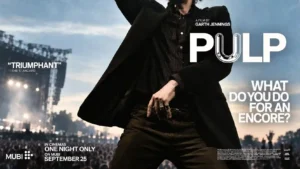
Choose Pulp: What Do You Do for an Encore? for entertainment value and theme depth.
Scores are out of 5. Missing scores mean missing review evidence, not a missing feature.
The closing ideas can feel more like an impasse than a fully resolved conclusion.
The finales land strongly, with “Common People” providing a rapturous payoff and “A Sunset” adding a sweeter, forward-looking coda.
The film adds valuable context around nationalism, colonial history, and indigenous mountaineering, but its treatment of the Nepali team's historic triumph can also feel patronizing and underdeveloped.
Pulp’s smart, funny, working-class British identity is treated as a defining strength rather than generic Britpop nostalgia.
The film often balances respect for the dead with clear-eyed analysis, but its true-crime withholding and beautiful imagery occasionally clash with the sober message.
Celebration, melancholy, reflection, and warmth coexist comfortably, with the film generally avoiding either empty triumphalism or overly heavy nostalgia.
K2 is consistently presented with breathtaking scale and beauty, from stark landscapes to terrifying on-mountain footage. The imagery is one of the film's most widely praised strengths.
The concert photography is the biggest visual divide: close-ups, silhouettes, and energetic shooting work well for some, while others find the O2 framing too distant and conventional.
The film generally shows restraint around tragedy and deliberately omits some deeply invasive material, but its use of visible frozen bodies can still feel somewhat exploitative.
Loss is handled with restraint, especially in the Steve Mackey memorial and the use of family footage involving Cocker’s late mother and grandmother.
Despite the many participants, the documentary often explains the chain of mistakes and systemic failures clearly and covers the expedition's major events in detail.
The loose chronology still makes the people and their tastes easy to grasp, helping newcomers follow the story before dates become important.
Rather than glorifying extreme climbing, the film uses the expedition as a social and moral critique. That anti-mountaineering-film angle is repeatedly presented as a distinctive strength.
Original flourishes, collage construction, and an art-house concert sensibility give the film personality, though not everyone finds the approach new; some later storytelling feels familiar or conventional.
The expedition is generally shaped into a compelling, thought-provoking story with vivid human stakes. The strongest criticism is that too many parallel strands can dilute focus.
The rise-from-obscurity story is usually intimate, warm, and absorbing, especially when memories feed directly into the concert. Its weaker stretches compress later history or revisit familiar beats without enough depth.
The critique of ambition, commercialization, social-media pressure, and shared risk is often thought-provoking and forceful. Beautiful mountain imagery and an occasionally diffuse structure can undercut that warning.
Self-belief, persistence, creative identity, and the need to keep making meaningful work give the film an accessible emotional message beneath the concert spectacle.
The assembly of firsthand footage, interviews, and social-media material is often praised as clear and seamless. The main counterpoint is that information withholding and too many story strands can make the structure feel manipulative or crowded.
The best editing fluidly cross-cuts old footage, memories, and current performances so each deepens the other. The archive-to-concert transitions are often singled out as smart and energetic.
For mountaineering nonfiction fans, the film delivers gripping danger, striking scenery, and a more pointed social perspective than a conventional summit chronicle.
As a concert-film/documentary hybrid, it is often praised as highly satisfying and even exemplary. A few reactions call it standard or slightly confused when the two halves compete for attention.
Bar-Lev is widely praised for balancing compassion, accountability, and competing motives without reducing the story to simple heroes and villains. A few structural choices draw criticism, but the overall approach is thoughtful and controlled.
Garth Jennings is widely praised for connecting archive and performance, preserving spontaneity, and handling personal material sensitively. The main split is the arena filming, which a few critiques find too basic or distant.
Interviews are woven into the on-mountain material effectively, helping the documentary turn a large collection of firsthand sources into a coherent narrative.
Cocker’s candid, cheeky narration and the archival interview material make the history feel personal rather than like a formal talking-head documentary.
The large number of climbers, factions, and side stories can clog the film's pace and make the middle feel over-busy.
The concert-history alternation can be lively, but it sometimes feels cluttered, rushed, or prone to cutting away just as a recollection becomes interesting.
This is much more than a survival chronicle, digging into ambition, class, nationalism, colonial history, social media, commercialization, and responsibility. Even a more skeptical critic still calls it thought-provoking.
Themes of outsider identity, persistence, ageing, and holding onto youthful ambition give the concert material more meaning than a simple greatest-hits celebration.
The deaths, grieving families, and climbers' personal stakes make the film harrowing and often deeply affecting, though its crowded structure can sometimes blunt that emotional connection.
The film moves easily between joy, nostalgia, and loss, with the Steve Mackey tribute and the band’s return carrying particular weight. Several reactions describe leaving energized, smiling, or newly invested in Pulp.
The documentary makes strong use of footage captured during the expedition, turning material recorded by climbers and other filmmakers into an immediate account of events.
The archive is one of the film’s clearest strengths: rare footage, home movies, photographs, documents, and television clips give the history texture and intimacy. Its personal material is also handled with notable sensitivity.
The filmmaking process is described as unusually collaborative, with the director crediting a strong team for shaping the final documentary.
The film benefits from treating concert staging and documentary storytelling as one connected project, with the creative partnership around the Pulp show described as unusually meaningful.
The winter setting is distinctive, but the underlying K2 story of hubris and preventable danger can feel familiar from earlier mountain-disaster documentaries.
The later narrative is criticized for repeating a story many fans already know rather than finding fresh ground.
The film strips away the romantic image of high-altitude climbing by emphasizing brutal cold, exhaustion, poor planning, and the mountain's indifference to human ambition.
The documentary’s time-capsule feel and candid first-person storytelling come across as unusually honest and unvarnished.
The film contrasts majestic, almost romantic mountain beauty with claustrophobic and brutal conditions, creating a striking visual tension between allure and danger.
Collage, scrapbook textures, lighting effects, and bold concert visuals give the film a strong Pulp-specific identity. A few reactions still find parts of the arena coverage too conventional or non-intimate.
The film has clear appeal for documentary and mountaineering fans, and its social themes broaden the hook beyond climbing. Its less exhilarating, more analytical approach may limit mainstream thrill-seeker appeal.
The film works for devoted fans while also serving as an inviting Pulp introduction for newcomers. Seasoned followers may know much of the history already, but the archive and performances still add fresh value.
The documentary is tense, interesting, and often thrilling, but it is more sobering than exhilarating. Viewers seeking a pure climbing rush may find the experience deliberately less escapist.
Most reactions find the film engaging, joyful, warm, and fun, with the concert material creating strong momentum. The notable exception is the view that some O2 energy never fully reaches the screen.
The chronology and causes of the disaster are presented with a strong sense of documentation and clarity, leaving little doubt about many of the key events.
The band’s history benefits from being told by people who lived it, giving the retrospective a sense of first-hand credibility.
The climbing footage is dramatic but does not deliver the immersive, vertigo-heavy rush associated with the most kinetic mountaineering films.
The animated timeline and pencil-style illustrations add playful visual invention. The graphics flirt with twee territory, but their sparing use keeps them effective.
The Jarvis-centered focus is a clear tradeoff. Some coverage gives the whole band welcome space, but several critiques wish Candida Doyle, Mark Webber, Nick Banks, and the broader group history had more room.
The climbers can feel vivid and human when the film focuses on their personalities and motivations, but the crowded structure sometimes weakens investment in individual journeys, especially the Nepali team.
The band’s chemistry reads naturally on screen, from spontaneous stage interplay to small, playful moments such as Candida Doyle laughing with Cocker.
The documentary captures the expedition's dark human drama effectively, even when it stops short of the exhilarating heights of the best climbing thrillers.
A father-and-son strand is described as tender, adding a personal family dimension to the larger competition and tragedy.
The Steve Mackey tribute turns a familiar love song into a moving reflection on a dear friend and creative partner.
Cocker’s dry, self-deprecating wit gives the documentary much of its personality, while family and band anecdotes keep the history light on its feet.
Withholding some identities risks feeling manipulative, but controlled foreshadowing and tone help the concealment work.
The romantic subplot can feel shoehorned into an already crowded narrative.
The running time leaves two kinds of viewers wanting more: one response misses the full concert, while another feels 98 minutes cannot do the band’s history justice.
First-person climbing footage can be genuinely terrifying, using sheer drops and precarious conditions to create fear without conventional horror devices.
The film repeatedly generates strong tension from dangerous climbs, known fatalities, and carefully delayed revelations. Its true-crime-like suspense works for many, though some dislike the withholding.
The film is described as receiving broad acclaim, including an enthusiastic response from Joyzine.
Jarvis Cocker remains a magnetic, witty showman whose movement and emotional delivery carry the arena material. A little late-career creakiness and conspicuous autotune draw mild caveats.
The music is a major strength, with classics and newer songs repeatedly described as joyful, barnstorming, triumphant, and enduring. “Common People” is an especially consistent high point.
The rest of Pulp is repeatedly praised as energized, committed, and fully engaged, with the ensemble sounding and playing like a cohesive live unit.
The show mixes large-scale spectacle—neon, galactic backdrops, screens, strings, and a grand curtain—with stripped-back moments that often prove even more effective.

Best for pristine archival footage, immersive sound, and a surprisingly tense look at Disneyland’s construction. Skip it if you want a comprehensive, deeply critical history; several reviewers found the 78–79-minute...
Pros: plot clarity, realism
Cons: plot originality, runtime

Best for an intimate, inventive archival portrait with strong emotional and cultural impact. Skip it if substantial nudity or an occasionally wandering biographical structure will frustrate you.
Pros: chemistry between characters, emotional impact
Cons: runtime, plot clarity

Best for an audacious, text-driven conspiracy thriller with gorgeous 16mm atmosphere and mounting dread. Skip it if long stretches of reading, deliberate repetition, and an intentionally austere narrative sound more...
Pros: story quality, plot clarity
Cons: chemistry between characters, sound design

Best for slow-burn suspense, iconic synth music, and shadow-soaked filmmaking that still feels influential. Skip it if you need fast pacing, polished sound, consistently natural dialogue, or modern gore-heavy kills.
Pros: chemistry between characters, directing quality
Cons: sound design, dialogue quality