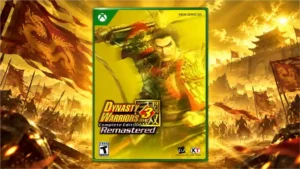
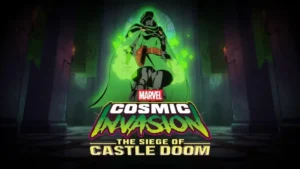
Dynasty Warriors 3 Complete Edition Remastered
Where It Has the Edge
- movement feel is 5.0 vs 3.3. Dodging and faster horse travel make characters feel substantially more mobile without erasing the heavier classic combat rhythm.

Scorata scores summarize analyzed review evidence on a 1–5 scale; they are not laboratory measurements or a simple average of customer star ratings. Feature scores summarize the reviews covering that feature. The overall score averages feature scores within each review, then combines review averages. When both expert and customer evidence are available, those two groups receive equal weight. Products can have different review coverage, so small score gaps do not establish a winner.
Recommendations prioritize important features for the category, with a score of at least 3.5, a gap of at least 0.25 points and at least two supporting reviews per product. Features with widely varying scores or broad connectivity contexts are excluded from recommendations. These safeguards do not establish statistical significance.
Quick verdict
The available evidence supports the recommendation below, but does not establish an overall winner. Check the remaining features against your priorities.
Choose Dynasty Warriors 3 Complete Edition Remastered for movement feel.
There is not enough comparable review evidence to recommend Marvel Cosmic Invasion: The Siege of Castle Doom over the other product.
No clear scored advantage over the other product.
Scores are out of 5. Missing scores mean missing review evidence, not a missing feature.
Modern teaching tools integrate smoothly into the push-and-pull of battle, making new defensive mechanics easy to absorb.
Castle Doom's tutorials and door explanations leave several players figuring out key mechanics for themselves, although a basic how-to guide is available.
Combining the base game, Xtreme Legends material, and added scenarios makes this feel like an unusually complete revival.
The expansion adds a full mode but lacks some endgame ambitions and rewards that might have made it feel more substantial.
Weapon fusion and focused rewards reduce the need to slog through layers of currencies, making long-term upgrading feel purposeful.
Repeated runs and rising unlock costs can feel grindy when the rewards are mainly minor modifiers rather than transformative upgrades.
The underlying combo structure can still feel hyper-repetitive by modern standards despite the remaster's added defensive tools.
The original's juggling, switching, and special moves remain a major strength, with Sue's barriers adding clever combo opportunities.
Control and style toggles earn praise, but the dedicated accessibility suite is inconsistent and one critic flags missing color-blind and audio-direction options.
Controller remapping and effect toggles are available, but missing colorblind and text-scaling options limit accessibility.
The remaster is not viewed as groundbreaking; its goal is refinement and preservation rather than reinventing the Musou formula.
Combining arcade brawling with a countdown and branching roguelike structure feels fresh to some players, though others see little new beyond the familiar formula.
Some reviewers see this as a strong entry point with helpful modern tools, while others think its old rules and combat make newer entries easier for newcomers.
Newcomers can struggle with unclear door rewards, poorly explained modifiers, and a steep early difficulty curve.
Character movement is more fluid and modern, but stiff legacy animation, uneven NPC motion, and a few presentation quirks keep it from feeling uniformly current.
Animation quality is an appealing part of the expansion, especially for players who enjoy the arcade-action foundation.
Minor oddities such as NPCs snagging on scenery appear, but they are described as uncommon rather than pervasive.
Some runs reportedly froze, stalled progress, or lost access to enemies, although another playthrough found no major bugs.
Dodging and faster horse travel make characters feel substantially more mobile without erasing the heavier classic combat rhythm.
Sue's mobility and air tricks are useful, while Doom's deliberately heavy movement suits his power but can make platform gaps awkward.
Musou, Free, Challenge, Versus, and other modes give the package considerable breadth beyond repeated story runs.
Random doors, hazards, and events change the encounters, but many rooms recycle enemies and castle scenery. Extra possibilities do not always translate into meaningfully different runs.
The Three Kingdoms setup has plenty of charm and can be compelling, but several critics find the actual storytelling sparse, fragmented, or repetitive.
Narrative quality is a recurring weakness that makes continued runs less enjoyable.
Weapon Fusion is one of the best new systems, letting players carry preferred bonuses forward and giving drops lasting value, though one critic finds it basic.
Offense, defense, and tactical perks help tailor a run, with occasional useful equipment. Many upgrades are plain stat increases, and several players say they barely affect the action.
Performance depends heavily on platform: high-end PC, PS5-class hardware, and tuned Steam Deck runs draw praise, while Switch 2 suffers drops and instability.
Heavy combat can cause noticeable slowdown on Xbox Series X, despite generally stable play elsewhere.
Portable quality is highly platform-dependent: Steam Deck can be a good tuned experience, while Switch 2 handheld draws strong criticism.
On ROG Xbox Ally X, the hectic fights were reported to run relatively steadily, with slightly less slowdown than on Xbox Series X.
The tactical map pressure and old-school combat ask newcomers to learn quickly, but the challenge can be rewarding once it clicks.
Initial runs can be hard to understand, particularly the door icons and the reasons the Siege Gauge becomes overwhelming.
Weather, water, lighting, snow, foliage, and varied terrain give the remade battlefields far more visual presence.
Spiked balls, electrified switches, and other castle traps make rooms interactive, even if the architectural scenery rarely changes.
The package generally feels polished, but texture streaming, FMV quality gaps, platform hitching, and other small technical quirks remain.
Several technical and progression oversights hold back an otherwise enjoyable addition.
The cast offers satisfying historical variety, though one critic finds too many fighters cosmetically distinct but mechanically similar.
Doom's heavy attacks and Sue's technical, airborne control offer distinct approaches, even when certain area attacks feel recycled.
Dozens of officer campaigns and long-form completion goals can stretch playtime into tens or even hundreds of hours.
Unlocking everything can require significant playtime, adding substance for players who enjoy the repeated challenges.
Revisiting the same conflicts from different officers can be appealing contextually, but repetition is still one of the most consistent complaints.
Special events, boss echoes, and randomized enemy combinations offer changing challenges, though the same rooms and enemies can become overly familiar.
The Unreal Engine 5 rebuild is broadly praised for characters, lighting, and battlefields, but Switch 2 cutbacks and some legacy-looking assets create a clear platform gap.
Expressive pixel art and recognizable Marvel sprites remain standout visual strengths, even if the environments repeat.
Co-op is a standout: dividing battlefield duties with another player makes campaigns more manageable and much more entertaining.
Co-op can turn character synergies and route selection into entertaining teamwork. The escalating gauge, crowded screen, and occasional disconnections can make group attempts difficult.
Cleaving through crowds while managing battlefield pressure remains deeply satisfying for fans, though repetition and simple combos can wear down newcomers.
The tag-team, combo-heavy brawling remains enjoyable and responsive in Castle Doom. The dispute is whether repeated rooms introduce enough new decisions to sustain that strong foundation.
The thin cutscenes often fail to give officers much motivation or background, limiting character depth.
Character levels and passive abilities are restricted in Castle Doom, reducing the sense of ongoing hero progression.
Weapon and stat growth can be rewarding, but the old Merit and stat-pickup structure feels antiquated to critics who expect direct leveling.
Reed's Lab adds unlockable gear, events, and modifiers between runs. Some appreciate the ongoing rewards, while others find permanent growth too slight or the unlocks too focused on making runs harder.
The bow is substantially more useful than in the original, turning a formerly weak tool into a practical option on higher difficulties.
Weapons and character specials vary in usefulness: a strong life-steal item stands out, while some new supers feel derivative.
The remaster keeps the demanding old-school pressure, with dangerous archers and aggressive officers; some find that refreshing, others unfair or exhausting.
The game tests dodging, team swapping, and route planning more than the base campaign. Some call the challenge fair and satisfying; others find early attempts excessively punishing.
The remaster is widely praised for preserving the original maps, combat rhythm, audio, modes, and quirks while adding optional modernization.
Faithfulness to franchise is an appealing part of the expansion, especially for players who enjoy the arcade-action foundation.
One co-op session produced a fatal error, but it did not recur during that reviewer's playtime.
Experiences are inconsistent: one playthrough ran without issue, but others suffered freezes, menu exits, and repeated disconnections.
Most critics still find the game highly entertaining and addictive, especially longtime fans, although a few newcomers find the loop dull or dated.
Big attacks, superhero combos, and a frantic gauntlet make the expansion lively for many players. Others have fun with the fighters but tire of the mode's repetitive structure or harsh failures.
More than 40 officers provide a broad selection of weapons and campaigns; the roster is repeatedly treated as a major strength.
Doctor Doom and Invisible Woman are the expansion's clearest crowd-pleasers. Their contrasting heavy-hitter and technical-control styles make familiar stages worth revisiting.
The achievement list is described as mostly uninspired, with several tasks demanding substantial time and effort.
The lack of additional achievements and endgame milestones can leave completion-focused players without much to pursue.
Updated outfits, menus, and environments preserve the PS2 identity while giving the game a polished modern visual style.
Comic-book character sprites and retro arcade aesthetics capture the Marvel brawler style, with new attacks giving Doom and Sue recognizable personality.
Local couch co-op is consistently one of the game's strongest features, adding coordination and comedy to the campaign.
On one screen, added enemies, shared route decisions, and varied heroes make the gauntlet particularly lively with friends.
Busy battlefield events can be hard to parse, with one critic saying the action lacks enough readability to make important events feel meaningful.
Door symbols and equipment descriptions can require trial and error, making early choices less informed than they should be.
The core formula is deliberately familiar rather than new, which suits nostalgic fans but limits its sense of freshness.
The mode borrows standard roguelike choices but does not fully deliver on its distinctive premise for every player.
The clean, simple classic menus are praised, but a few settings are buried outside battle preparation.
Using some progression screens requires awkward menu navigation, and descriptions of unlocked modifiers are not always helpful.
The English dub is intentionally preserved and sharply divisive: technically rough and often mocked, but also loved for its camp and nostalgia; alternate languages help.
Doom's confident taunts and the familiar battle lines add personality and arcade enthusiasm, especially during crowded encounters.
Optimization is strong on PC and PS5-class hardware and workable on Steam Deck, but Switch 2 is a major outlier with aggressive visual cuts and unstable performance.
One PC playthrough reported a smooth, trouble-free run through the new mode.
The returning heavy-metal score is close to universally loved, with several critics calling it a defining strength.
Energetic new music and the retro-inspired score help keep the action lively and fit the game's comic-book atmosphere.
Forty-plus officers, unlock requirements, Free Mode, rare items, difficulty tiers, and co-op give completion-minded players enormous replay potential.
Branching doors, randomized encounters, and modifiers give players reasons to return. Opinions split sharply on whether modest unlocks and repetitive backdrops sustain that interest past the first clear.
Most reviewers see generous value in the huge package and modest price, but the Switch 2 version draws a strong value warning because of its technical compromises.
The inexpensive expansion is viewed as worthwhile when its extra fighters and repeatable mode click, but less attractive when the limited variety becomes obvious.
Late-fight boss healing is viewed as an extra point of friction rather than a satisfying escalation.
The Doom showdown divides opinion: some enjoy a demanding, fair finale, while others find it anticlimactic or wish the expansion offered more new bosses.
Several critics find the older stages flat, sparse, or barren compared with modern Musou design.
Castle corridors, snowy battlements, and elevator sections contain interactive hazards, but their visuals and layouts can become samey over repeated runs.
Enemy behavior is one of the most divisive holdovers: soldiers can be aggressive and battlefield-aware, but ranged AI, pathing, and occasional passivity or dogpiling expose the game's age.
Third-person bow aiming is easier to place accurately than before, including shots around barricades.
The campy, unserious old-school Musou vibe is a major part of the appeal for players who miss that era.
Challenge and Versus modes can be excellent diversions, especially with another player, but not every challenge has lasting appeal.
Right-stick control and officer targeting make the camera far easier to manage than the original, although some manual work remains.
The new gauntlet adds branching routes, repeat attempts, and a rising threat meter to the beat-'em-up combat. Its fresh structure wins fans, but several find the actual runs shallow or repetitive.
Doom's magical traps and powerful strikes feel imposing, while Sue's bubbles, shields, and invisible-platform movement create satisfying new combos. A few supers are criticized for feeling too similar to existing attacks.
Character switching is an appealing part of the expansion, especially for players who enjoy the arcade-action foundation.
Modern checkpoints and rewind-style retries are praised for preventing long battles from becoming punishing full restarts.
Co-op communication is an appealing part of the expansion, especially for players who enjoy the arcade-action foundation.
Sue's force fields can hold enemies for teammates while heavier fighters bring damage, making coordinated pairs rewarding.
Weapon collecting gains purpose from fusion, making new drops feel useful rather than disposable.
Some attacks and depth positioning are hard to judge, although new enemy markers help players track flying threats.
Battlefield callouts from allies help players track multiple objectives without constantly staring at the map.
Bodyguards are criticized for contributing less than other battlefield NPCs.
Officer cutscenes can be disabled, though finding the relevant setting is described as more cumbersome than it should be.
The famously cheesy dialogue is frequently enjoyed as comedy, turning dated writing into part of the game's personality.
Healing, battery, event, and equipment doors offer meaningful tradeoffs when planning a route. Their icons can be confusing at first, and a few players find the best choice too obvious.
Seeing classic outfits and battlefields rebuilt with modern visuals can hit returning fans with a strong nostalgic emotional punch.
Castle Doom gives the campaign a new post-game challenge, but players disagree about whether it has enough meaningful unlocks to remain compelling.
New Doombots appear alongside enemies from the campaign, yet repeated or reskinned foes are a frequent disappointment. The same enemy combinations become familiar over multiple attempts.
The upgraded scenery makes simply riding around and taking in the maps enjoyable enough to become a break from combat.
Reworked cutscenes and proper lip-syncing are a noticeable presentation upgrade.
Dodging, perfect guards, counters, weapon fusion, and other quality-of-life additions make the old framework much easier to enjoy today, even if it remains simple.
Health recovery is restricted enough to make co-op and longer runs stressful, and scarce pickups magnify mistakes.
Brawler-plane alignment can make some enemy hits look undeserved or difficult to anticipate.
Active soldiers, battlefield duels, and audio cues can sell the sense of war, though some campy performance choices may pull other players out.
Loading is a recurring complaint, especially on Switch 2, where waits are notably longer than on other platforms.
Weapon drops stay relevant because useful bonuses can be transferred forward through fusion.
Story context is comparatively sparse and often pushed into pre-battle text, so players who want deeper lore need to do extra reading.
One Xbox playthrough reported frequent disconnects that could erase lengthy runs, a serious problem for online sessions.
Dodge and block additions improve battle pacing by helping players stay engaged instead of frequently disengaging from threats.
Being able to pause a scenario, leave, and resume later is a welcome convenience for long battles.
The consensus is strongly positive: this is a careful, substantial revival that modernizes visuals and mechanics without sanding away Dynasty Warriors 3's identity.
The gauge raises the stakes by strengthening enemies as time passes or damage mounts. It is exciting for skilled players but can snowball into harsh, opaque losses for others.
Split-screen play turns the battlefield into a lively shared experience and is repeatedly treated as part of the game's personality.
Solo attempts expose the unforgiving Siege Gauge and limited safety net. Playing without teammates can feel especially demanding.
Split-screen remains a fan-favorite feature and is praised for making both co-op and Versus play more fun.
Choosing doors, managing health, and pairing heroes adds thought to the arcade fighting. Not everyone finds these decisions meaningful once an efficient battery-focused route becomes obvious.
At least one critic specifically enjoys the exaggerated crowd-clearing violence, treating the scale of the melee as part of the game's satisfaction.
Weather, lighting, fire, water, and large-scale spectacle are major beneficiaries of the rebuild.
Readability can suffer when players, enemies, and effects crowd the screen. Helpful enemy markers and sharp pixel sprites partly offset that problem.
Static, indestructible obstacles stand out against the otherwise lively battlefields and can feel dated.
Story writing is mixed: one critic finds the cutscenes thin and incoherent, while another praises the way the game captures its historical culture and lore.
Tailoring perks to a hero pair gives cooperative tactics some extra depth, especially with Sue's support abilities. Critics say the small pool of statistical upgrades rarely produces truly different builds.
The left-stick horse summon can be triggered accidentally, creating an awkward control quirk.
Horse summons, faster dashes, clearer camera control, and freer routes make large battlefields easier to cross, though some maps remain sprawling chores.
Older mission structure shows its age with straightforward objectives, less dynamic setups, and scenarios that can be bypassed too directly.
Local multiplayer is welcome, but missing online co-op at launch and limited launch options leave the multiplayer feature set incomplete.
The returning button-mashing weapon clashes were singled out as an unwelcome old mechanic.
Random encounter design is a recurring weakness that makes continued runs less enjoyable.
Metallic weapon impacts, battlefield noise, and refreshed audio give battles strong energy and reinforce the series' old-school identity.
The classic menu layout is easy, clean, and straightforward despite the age of its overall structure.
Historical maps, factions, landmarks, and contextual detail give players a surprisingly rich sense of the Three Kingdoms setting.
Modern controls usually feel smoother and more responsive, but parries can be finicky and several longtime players prefer the classic layout.
Toggling events, equipment, and modifiers lets players tune the rules and risk for the next attempt.
The two fighters often justify the add-on, and the Castle Doom mode can offer a sizeable return for returning fans. Value is less convincing if repetitive rooms and weak progression discourage further attempts.
Multiple English, Japanese, and Chinese voice options are appreciated, though one critic notes a few naming inconsistencies.
On PC, controller glyph handling can be inconsistent; one reviewer reports a PS4 pad displaying Xbox button prompts.
Mid-stage recording and exact resume points make lengthy battles much easier to fit around real-world interruptions.
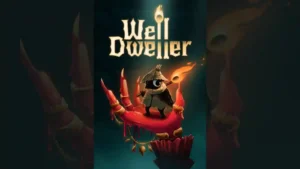
Best for fluid traversal, rewarding exploration, striking art, and forgiving quality-of-life features. Skip it if you want deep combat, radical genre innovation, or consistently demanding bosses.
Pros: difficulty balance, boss design
Cons: innovation, sandbox freedom

Best for superb combat, inventive builds, and richly voiced characters. Skip it if repeated runs, resource gathering, or visually busy battles outweigh the appeal of steady progress.
Pros: overall quality, combat system
Cons: pacing, grind level
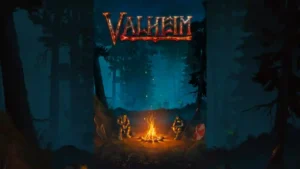
Good if you want a beautiful, demanding survival sandbox built around exploration, building, progression, and memorable co-op. Skip it if long resource runs, harsh death recovery, and deliberate pacing sound...
Pros: town-building system, exploration quality
Cons: grind level, fast travel convenience

Leonida is a breathtakingly alive crime sandbox with memorable protagonists, spectacular heists, and extraordinary detail. The tradeoff is a 30 fps ceiling, occasional control awkwardness, and some progression friction.
Pros: immersion, graphics quality
Cons: grind level, controls responsiveness