Compare Sony Bravia 8 II vs Hisense CanvasTV 2026

Sony Bravia 8 II

Sony Bravia 8 II

Overall score 3.9 / 5

Based on 42 scored reviews

vs
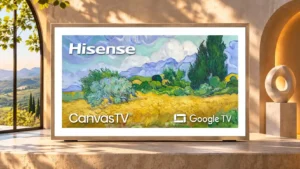
Hisense CanvasTV 2026

Hisense CanvasTV 2026

Overall score 3.8 / 5

Based on 12 scored reviews

How we score

Scorata scores summarize analyzed review evidence on a 1–5 scale; they are not laboratory measurements or a simple average of customer star ratings. Feature scores summarize the reviews covering that feature. The overall score averages feature scores within each review, then combines review averages. When both expert and customer evidence are available, those two groups receive equal weight. Products can have different review coverage, so small score gaps do not establish a winner.

Recommendations prioritize important features for the category, with a score of at least 3.5, a gap of at least 0.25 points and at least two supporting reviews per product. Features with widely varying scores or broad connectivity contexts are excluded from recommendations. These safeguards do not establish statistical significance.

Quick verdict

What each product is best for

The review evidence points to a tradeoff: overall satisfaction and screen uniformity versus input lag and judder handling. Choose according to which strengths matter more to you; the overall score alone does not settle that choice.

Choose Sony Bravia 8 II for overall satisfaction and screen uniformity.

Choose Hisense CanvasTV 2026 for input lag and judder handling.

Why these recommendations?

Sony Bravia 8 II

Where It Has the Edge

  • overall satisfaction is 4.7 vs 1.8. Overall reactions are highly positive, with the TV repeatedly described as excellent or close to the best, even...
  • screen uniformity is 4.2 vs 2.3. Panel uniformity is consistently strong, with clean grayscale performance and little visible variation across the screen.
  • black levels is 4.0 vs 2.5. OLED blacks are usually deep and convincing, especially in controlled light, but ambient light can lift them toward...

Hisense CanvasTV 2026

Where It Has the Edge

  • input lag is 4.5 vs 3.7. Low latency makes the TV responsive to game controls, even though image motion itself may blur.
  • judder handling is 4.8 vs 2.8. Film judder is removed from most inputs, with a minor exception for 25p material carried in 60p signals.
  • remote control quality is 4.5 vs 2.6. A tidy, backlit remote with easy controls is a useful part of the package.
Sony Bravia 8 II 3.9 overall score
Hisense CanvasTV 2026 3.8 overall score

Compare features

Scores are out of 5. Missing scores mean missing review evidence, not a missing feature.

Scored on both products

Performance

Picture quality
Sony Bravia 8 II
4.4

Picture quality is the defining strength: sharp, dimensional, colorful and cinematic across strong sources, with only bright-room and rival-brightness caveats.

Hisense CanvasTV 2026
3.9

Picture quality ranges from very good for everyday bright content to basic under critical tests, particularly when deep blacks and fast motion matter.

Overall image accuracy
Sony Bravia 8 II
4.7

The picture is strongly oriented toward natural, reference-style reproduction, with especially accurate HDR and calibrated modes despite some criticism of Sony’s calibration targets.

Hisense CanvasTV 2026
2.0

Uncalibrated settings can have a strong blue cast, although an extensive calibration improves color fidelity dramatically.

White balance accuracy
Sony Bravia 8 II
4.0

White balance is a mixed area: some out-of-box settings run too cool or blue, but calibration can bring results very close to reference.

Hisense CanvasTV 2026
1.5

Default white balance is overly blue and cool, although significant calibration can bring it close to ideal.

Dark-room performance
Sony Bravia 8 II
3.9

The Bravia 8 II is at its best with the lights down, where its precision, blacks, HDR punch and cinematic balance become especially convincing.

Hisense CanvasTV 2026
1.5

Dark viewing is the biggest image compromise: black skies become navy and patchy, and demanding films lose cinematic depth.

Contrast ratio
Sony Bravia 8 II
4.1

Contrast is excellent in favorable lighting, combining deep blacks with bright highlights, though the screen coating can reduce perceived contrast in bright rooms.

Hisense CanvasTV 2026
2.6

The edge-lit panel has relatively weak native contrast, making black levels elevated and dim scenes look flatter than on local-dimming or OLED TVs.

Sound quality
Sony Bravia 8 II
4.4

Built-in sound is unusually strong for a thin TV—direct, detailed and spacious enough that a soundbar feels optional rather than mandatory for everyday viewing.

Hisense CanvasTV 2026
3.2

Sound quality is divisive: some find dialogue and everyday programs sufficient, while others hear very tinny speakers with too little bass.

HDR performance
Sony Bravia 8 II
3.9

HDR is one of the TV’s strengths, with punchy highlights, deep blacks and excellent Dolby Vision rendering, although some presets and bright-room conditions reduce impact.

Hisense CanvasTV 2026
2.9

The set delivers watchable HDR with respectable midtone detail, but weak blacks and local dimming limitations reduce the overall HDR effect.

Bass performance
Sony Bravia 8 II
3.6

Bass is punchier and more controlled than on many thin TVs, but deep low-end weight remains limited enough that movie fans may still want a subwoofer or sound system.

Hisense CanvasTV 2026
2.7

Bass is light and sometimes nearly absent, leaving more demanding soundtracks without much low-end heft.

Noise reduction
Sony Bravia 8 II
3.8

Processing does a strong job cleaning compression noise and lower-quality sources without making the image look harsh or overly processed.

Hisense CanvasTV 2026
4.5

Blocky streaming compression is cleaned up effectively, at the cost of losing a little fine texture.

Peak brightness
Sony Bravia 8 II
4.0

Peak brightness is a substantial step up over earlier Sony OLEDs and plenty strong in practice, but LG and Samsung flagships can still reach higher peaks.

Hisense CanvasTV 2026
3.3

SDR brightness is good and most everyday scenes have enough light output, but the TV lacks premium HDR sparkle and trails some competing gallery models.

Audio passthrough
Sony Bravia 8 II
4.0

DTS playback and passthrough are useful for legacy disc collections and make it easier to hand audio off to an external system.

Hisense CanvasTV 2026
4.5

eARC passes high-quality audio to compatible external equipment and supports the major formats needed for home theater setups.

HDR brightness
Sony Bravia 8 II
4.5

HDR highlights are vivid, controlled and often spectacular, but the Sony is not the brightest flagship and some modes can push highlights away from reference.

Hisense CanvasTV 2026
4.1

Average HDR scenes have enough brightness to look respectable, but small highlights lack punch and do not stand out like they do on higher-end TVs.

Color accuracy
Sony Bravia 8 II
4.4

Natural skin tones, nuanced hues and very accurate calibrated results are major strengths; a few measurements find minor white or light-color errors.

Hisense CanvasTV 2026
4.1

The color story varies: some find vibrant, natural skin tones, while more exacting tests flag a cool blue tint and inaccurate default white balance.

Daytime viewing performance
Sony Bravia 8 II
3.9

Bright-room performance is serviceable and the anti-reflective treatment helps, but strong ambient light can flatten blacks and make brighter rivals more suitable.

Hisense CanvasTV 2026
4.3

Good SDR brightness and a strong anti-reflective surface make ordinary daytime programs comfortably watchable.

Gaming performance
Sony Bravia 8 II
3.5

Console gaming is good overall, especially on PS5, but only two HDMI 2.1 inputs, a 120Hz ceiling and weaker PC-oriented features keep it behind the best gaming TVs.

Hisense CanvasTV 2026
3.3

Game controls feel responsive and casual play can be satisfying, yet severe motion smearing is a major disadvantage in fast games.

Other features

Motion handling
Sony Bravia 8 II
3.6

Motion is natural and cinematic out of the box, with only slight judder or blur that can usually be reduced without obvious soap-opera artifacts.

Hisense CanvasTV 2026
3.9

Moving images can look smooth during everyday viewing, but long pixel transitions cause conspicuous blur with demanding fast content.

Input lag
Sony Bravia 8 II
3.7

Input lag is good enough for most console players, with sub-frame results at 60Hz and 120Hz, though some comparisons find Sony slower than rivals.

Hisense CanvasTV 2026
4.5

Low latency makes the TV responsive to game controls, even though image motion itself may blur.

Response time
Sony Bravia 8 II
4.0

OLED pixel response is effectively instantaneous, keeping motion clean and ghosting minimal for games and video.

Hisense CanvasTV 2026
1.0

Pixel transitions are unusually slow in demanding tests, producing blur and soft edges, despite much better impressions from some casual viewing.

Overall satisfaction
Sony Bravia 8 II
4.7

Overall reactions are highly positive, with the TV repeatedly described as excellent or close to the best, even when price and feature omissions temper enthusiasm.

Hisense CanvasTV 2026
1.8

The gallery-style result earns enthusiasm for its aesthetics and value, but image-performance concerns and one frustrating mounting experience keep reactions mixed.

Dirty screen effect
Sony Bravia 8 II
4.0

Screen cleanliness is strong, with one direct test praising Sony’s handling of dirty-screen effect.

Hisense CanvasTV 2026
1.5

The middle of the screen can show obvious dirty-screen patches, which may be noticeable during uniform backgrounds or panning shots.

Cable management
Sony Bravia 8 II
2.5

Cable routing is not ideal because the power lead sits away from the other connections, making a clean installation less convenient.

Hisense CanvasTV 2026
4.8

Rear routing channels and clips help hide HDMI and power cables for a cleaner wall-mounted presentation.

Wall-mount compatibility
Sony Bravia 8 II
2.5

Wall mounting works, but the low screw placement can leave the TV sitting higher than expected on an existing mount.

Hisense CanvasTV 2026
4.8

The included flush-mount option is attractive and typically simple to install, with standard mount support mentioned as an alternative.

Judder handling
Sony Bravia 8 II
2.8

Motionflow handles judder naturally with only mild artifacts, and small adjustments can smooth difficult pans without making movies look artificial.

Hisense CanvasTV 2026
4.8

Film judder is removed from most inputs, with a minor exception for 25p material carried in 60p signals.

Screen uniformity
Sony Bravia 8 II
4.2

Panel uniformity is consistently strong, with clean grayscale performance and little visible variation across the screen.

Hisense CanvasTV 2026
2.3

The panel shows visible blotching and center-screen patchiness, even though narrow vertical banding is fairly subtle.

Remote control quality
Sony Bravia 8 II
2.6

The remote is usable and intuitive, but losing backlighting and rechargeable power feels like a downgrade on a premium TV.

Hisense CanvasTV 2026
4.5

A tidy, backlit remote with easy controls is a useful part of the package.

Stutter handling
Sony Bravia 8 II
2.8

24fps stutter is present but well managed, and modest smoothing can reduce it without adding a heavy soap-opera effect.

Hisense CanvasTV 2026
4.5

Low-level interpolation noticeably reduces frame-hold stutter without strongly changing the cinematic look.

Black levels
Sony Bravia 8 II
4.0

OLED blacks are usually deep and convincing, especially in controlled light, but ambient light can lift them toward grey on the QD-OLED surface.

Hisense CanvasTV 2026
2.5

Blacks often appear gray or navy instead of deep black, especially in a dark room. That weakness is less distracting in everyday lighting.

Remote layout
Sony Bravia 8 II
3.0

The remote is comfortable enough, yet the abundance of fixed app buttons makes the layout feel more cluttered than necessary.

Hisense CanvasTV 2026
4.5

The small, simplified button arrangement is easier to understand and use in dim light.

VRR range
Sony Bravia 8 II
1.5

VRR does not extend below 60Hz, narrowing its usefulness when frame rates fall beneath that threshold.

Hisense CanvasTV 2026
3.0

VRR helps at common frame rates and supports low-frame-rate compensation, but it does not function above 144Hz.

Viewing angles
Sony Bravia 8 II
4.2

Off-axis image quality is excellent, with strong color and luminance retention across wide seating positions, though one source found the glossy screen less forgiving.

Hisense CanvasTV 2026
2.8

The picture looks best straight on and loses noticeable color and quality as viewers move to the sides.

Account requirements
Sony Bravia 8 II
3.3

Google sign-in can make app credentials easier to manage, but tying the TV to a Google account can be undesirable for people who want less ecosystem integration.

Hisense CanvasTV 2026
4.5

Google account setup is straightforward and helps bring personal photos into the TV experience.

HDMI 2.1 port count
Sony Bravia 8 II
1.9

Only two HDMI 2.1 inputs are provided, and one doubles as eARC, making multi-console plus soundbar setups unnecessarily restrictive.

Hisense CanvasTV 2026
3.0

Only two of four HDMI inputs handle high-bandwidth HDMI 2.1; the other two top out at 4K 60Hz.

Glare resistance
Sony Bravia 8 II
3.7

The anti-reflective treatment cuts glare effectively, but direct lamps can still mirror and the coating can contribute to lifted blacks in bright rooms.

Hisense CanvasTV 2026
4.8

The matte anti-glare coating does an excellent job dispersing window and lamp reflections, making bright-room use one of its strongest areas.

Gaming mode quality
Sony Bravia 8 II
3.6

Game mode can be very effective for PS5 use, but Dolby Vision gaming can run too bright and some gaming presets sacrifice natural tone for performance.

Hisense CanvasTV 2026
2.5

Low input lag and useful console features help Game Mode, but flat HDR and slow transitions hold back overall gaming quality.

Reflection handling
Sony Bravia 8 II
4.0

Reflections are handled well overall and rarely distract, though direct lights remain visible and the coating’s effect on blacks is a tradeoff.

Hisense CanvasTV 2026
5.0

The matte layer strongly suppresses both direct reflections and ambient glare, reinforcing the framed-art illusion.

Motion clarity
Sony Bravia 8 II
4.6

Fast sports and movement stay crisp with little blur, reinforcing Sony’s long-standing strength in motion resolution.

Hisense CanvasTV 2026
3.9

Motion assessments conflict: some find minimal blur in their tests and casual play, while more demanding pixel-transition measurements reveal severe smearing.

Color volume
Sony Bravia 8 II
4.6

Bright saturated colors are a standout, giving HDR highlights and bold hues unusual intensity while retaining Sony’s restrained tuning.

Hisense CanvasTV 2026
4.0

Strong reds and blues make images engaging, but very bright and dark colors are limited by modest contrast and brightness.

Motion interpolation
Sony Bravia 8 II
3.9

Sony’s interpolation is unusually subtle, smoothing pans while preserving a cinematic look better than many aggressive motion systems.

Hisense CanvasTV 2026
4.5

Motion smoothing does a good job reducing stutter without much soap-opera effect, and a separate low-latency option works in games.

Banding control
Sony Bravia 8 II
4.1

Banding is generally very well controlled, with several tests finding none at all, although faint banding can still appear in very dark tones.

Hisense CanvasTV 2026
3.5

Vertical bands are subtle, and most color gradients are smooth; some banding remains in bright green shades.

Variable refresh rate
Sony Bravia 8 II
3.7

VRR can deliver very smooth console gameplay, but the 120Hz cap and lack of low-frame-rate VRR below 60Hz limit flexibility for PC use.

Hisense CanvasTV 2026
4.3

VRR keeps supported console and PC games relatively tear-free over a broad range, though it stops working above 144Hz.

PC text clarity
Sony Bravia 8 II
2.0

Fine white text can reveal QD-OLED color fringing, making the panel less suitable as a close-range desktop monitor.

Hisense CanvasTV 2026
2.5

BGR subpixels can make desktop text less clean than on typical RGB displays, though the issue may be subtle for some users.

Upscaling quality
Sony Bravia 8 II
4.4

Upscaling is among the TV’s strongest processing talents, making SD and HD material look cleaner, sharper and more detailed without excessive artifacts.

Hisense CanvasTV 2026
4.9

HD and lower-resolution material is enlarged cleanly, preserving outlines and fine details without obvious jaggies.

Calibration options
Sony Bravia 8 II
4.5

Sony’s presets are unusually accurate and easy to use, while deeper picture controls still leave room for enthusiasts to fine-tune the image.

Hisense CanvasTV 2026
5.0

Significant calibration can correct the cool color temperature and deliver excellent accuracy, but the default picture requires meaningful work.

Dialogue clarity
Sony Bravia 8 II
4.3

Voices are clear, full and closely anchored to the on-screen action, with Voice Zoom adding extra intelligibility when backgrounds get busy.

Hisense CanvasTV 2026
4.8

Spoken dialogue is consistently easy to follow even when the speakers lack low-end weight.

High-refresh-rate gaming
Sony Bravia 8 II
3.3

120Hz gaming can feel smooth and responsive, but the lack of 144Hz or 165Hz support leaves serious PC players better served elsewhere.

Hisense CanvasTV 2026
3.7

Fast signal acceptance up to 4K 144Hz and 1080p 288Hz is impressive, but blurry pixel transitions and size-specific limits temper gaming suitability.

Low-resolution content handling
Sony Bravia 8 II
4.2

DVD, 720p and 1080p material is usually cleaned up impressively, though the TV cannot completely hide weak-source artifacts and some rivals extract a little more detail.

Hisense CanvasTV 2026
4.5

Compressed streams and lower-resolution sources clean up nicely, but aggressive smoothing can erase small details.

Stand width
Sony Bravia 8 II
2.2

The feet sit at the outer edges, forcing owners to use furniture nearly as wide as the TV and making narrow cabinets a poor fit.

Hisense CanvasTV 2026
2.5

The fixed-position feet demand a fairly wide cabinet if wall mounting is not possible.

Image processing
Sony Bravia 8 II
4.2

Sony’s XR processing is repeatedly singled out as class-leading, producing clean, natural, dimensional images and especially strong low-quality-source cleanup.

Hisense CanvasTV 2026
4.5

Processing handles low-quality streams and ordinary HDR midtones well, although smoothing can remove some fine texture.

Advertising intrusiveness
Sony Bravia 8 II
2.0

Google TV runs smoothly, but its overly zealous advertising is a recurring annoyance in an otherwise polished smart-TV experience.

Hisense CanvasTV 2026
2.3

Google TV includes advertising that cannot be completely disabled without giving up most smart functions; even a generally positive software experience has this annoyance.

Color gamut
Sony Bravia 8 II
4.0

The QD-OLED panel delivers exceptionally wide color coverage, with strong BT.2020 performance and vivid colors that stay controlled rather than cartoonish.

Hisense CanvasTV 2026
3.8

DCI-P3 coverage is good and everyday HDR colors are colorful, though this is not a reference-grade wide-color display.

Gradient handling
Sony Bravia 8 II
4.2

Gradients and dark shading are usually excellent, with smooth tonal transitions and strong near-black detail; the gradation control itself does not always make a large difference.

Hisense CanvasTV 2026
4.4

Color gradients are mostly smooth with limited banding, aside from some bright green shades.

Shadow detail
Sony Bravia 8 II
4.3

Near-black and shadow detail are exceptional, preserving texture and subtle information that many OLEDs crush or wash out.

Hisense CanvasTV 2026
4.1

Dark-scene nuances remain surprisingly visible in many HDR scenes, although lifted blacks keep those shadows from looking truly deep.

Maximum volume
Sony Bravia 8 II
4.0

Built-in audio can reach room-filling levels and sounds more dynamic than most thin TVs, making it viable without a soundbar in many rooms.

Hisense CanvasTV 2026
3.9

The speakers can play fairly loudly, although compression grows noticeable near maximum output.

Refresh rate
Sony Bravia 8 II
3.8

The 120Hz refresh rate is perfectly workable for consoles but looks conservative beside premium TVs offering 144Hz or 165Hz.

Hisense CanvasTV 2026
3.8

The larger sizes offer high-refresh inputs and responsive casual gameplay, but one 50-inch test reported a 60Hz limit and demanding motion remains blurry.

Auto low-latency mode
Sony Bravia 8 II
4.5

Automatic low-latency behavior contributes to responsive, smooth gameplay without requiring manual mode switching.

Hisense CanvasTV 2026
4.5

Modern consoles automatically enter the low-latency gaming mode, avoiding manual input changes.

Distortion control
Sony Bravia 8 II
2.5

Low frequencies are generally controlled, but high volume can introduce treble hardness, fuzz, buzzing or outright distortion.

Hisense CanvasTV 2026
2.5

Maximum-volume output suffers audible compression, limiting clarity at the upper end.

Ownership and support

Reliability
Sony Bravia 8 II
2.5

A frustrating HDMI/HDR hardware hiccup required a power cycle, introducing a small but real reliability concern despite otherwise normal operation.

Hisense CanvasTV 2026
2.0

The edge-lit backlight architecture raises concern about failure and unevenness over time, though burn-in risk is low.

HDR10+ support
Sony Bravia 8 II
1.7

HDR10+ is not supported, a genuine format omission for services or sources that rely on it.

Hisense CanvasTV 2026
4.5

HDR10+ Adaptive is credited with bringing out image details and more expressive highlights.

HDR format support
Sony Bravia 8 II
2.0

Core HDR formats are well covered, but the absence of HDR10+ means those sources fall back to static HDR10 metadata.

Hisense CanvasTV 2026
4.5

Useful HDR formats including Dolby Vision IQ and HDR10+ Adaptive contribute positively to supported content.

FreeSync support
Sony Bravia 8 II
2.3

There is no formal AMD FreeSync certification, reducing the TV’s appeal for PC gamers even though standard HDMI VRR works.

Hisense CanvasTV 2026
4.5

AMD variable refresh works well across a useful range and helps prevent tearing in compatible games.

4K at 144 Hz support
Sony Bravia 8 II
1.8

There is no 144Hz or 165Hz mode, a clear limitation for PC players comparing the Sony with faster premium rivals.

Hisense CanvasTV 2026
3.5

4K 144Hz input is available on two HDMI connections, but very slow pixel response prevents fully crisp high-speed motion.

4K at 120 Hz support
Sony Bravia 8 II
3.5

4K/120Hz works well for console play and can look excellent, but 120Hz is also the ceiling rather than a cutting-edge refresh target.

Hisense CanvasTV 2026
5.0

4K 120Hz input works with supported modern consoles, making the screen versatile on paper despite its blurry pixel response.

Value for money
Sony Bravia 8 II
3.6

The premium price is difficult to ignore, but strong picture, sound and processing make the cost easier to justify for cinema-focused buyers, especially after discounts.

Hisense CanvasTV 2026
5.0

A stylish framed TV with a bundled bezel, mounting hardware and free art makes a convincing value proposition, particularly at discounted prices.

HDMI 2.1 support
Sony Bravia 8 II
2.0

The available HDMI 2.1 ports provide the expected high-bandwidth gaming features, but limiting full bandwidth to two inputs is a persistent flagship-level complaint.

Hisense CanvasTV 2026
3.0

The higher-bandwidth inputs support modern gaming features, but anyone connecting several advanced devices must choose ports carefully.

Setup ease
Sony Bravia 8 II
4.5

Initial setup is generally quick and straightforward, from physical installation to Google TV configuration, though some steps still require switching between interfaces.

Hisense CanvasTV 2026
3.7

Most installations are described as straightforward, aided by an included mount and magnetic frame. One DIY mounting attempt ended badly and required reconsidering the hardware.

AirPlay support
Sony Bravia 8 II
4.5

AirPlay is a useful part of the TV’s broad wireless streaming toolkit and gives Apple-device owners an easy local playback option.

Hisense CanvasTV 2026
4.0

Apple AirPlay adds welcome device flexibility alongside Google Cast.

Casting support
Sony Bravia 8 II
4.5

Casting is a useful strength thanks to Chromecast and AirPlay, covering both Android/Google and Apple households.

Hisense CanvasTV 2026
4.0

Google Cast is a welcome addition to the broad streaming and sharing feature set.

Dolby Vision support
Sony Bravia 8 II
4.3

Dolby Vision content looks especially accurate, detailed and vibrant, making the format one of the TV’s strongest viewing modes.

Hisense CanvasTV 2026
4.5

Dolby Vision IQ and gaming modes can make supported content more enjoyable and easier to watch.

Comfort and build

Size options
Sony Bravia 8 II
2.3

The 55- and 65-inch-only range is one of the TV’s clearest limitations, especially for buyers wanting a 77-inch or larger flagship OLED.

Hisense CanvasTV 2026
4.5

A broad 50-to-85-inch range gives flexibility for different rooms, but performance features may vary with size.

Build quality
Sony Bravia 8 II
4.2

The chassis, metal frame and finish feel appropriately premium, with solid construction matching the TV’s flagship positioning.

Hisense CanvasTV 2026
4.8

The television feels well assembled, and the included decorative frame makes a more premium impression than the largely plastic body suggests.

Design and appearance
Sony Bravia 8 II
4.2

The slim-bezel, minimalist One Slate design looks refined and premium without being flashy, with a finish that suits wall mounting or a modern room.

Hisense CanvasTV 2026
4.7

Slim wall mounting, a magnetic teak-look frame and a low-glare surface help the TV look more like framed artwork than a conventional black rectangle.

Controls and connectivity

App performance
Sony Bravia 8 II
3.8

The Bravia Connect app can make adjustments easy, but connection failures and occasional SDR playback from built-in streaming apps undermine consistency.

Hisense CanvasTV 2026
5.0

Streaming apps launch quickly and switching between services is responsive rather than cumbersome.

Tone mapping
Sony Bravia 8 II
4.2

Sony’s tone mapping is generally excellent and natural, preserving highlight detail and PS5 compatibility, though a few sources note mapping errors or less impactful choices.

Hisense CanvasTV 2026
3.5

HDR brightness tracks midtones accurately but clips or rolls off at the brighter end of the available range.

Operating system speed
Sony Bravia 8 II
4.3

Google TV is usually smooth, responsive and fluid, though one assessment still found it reliable rather than genuinely fast.

Hisense CanvasTV 2026
5.0

Google TV loads apps promptly and moves between services without much friction.

Smart TV platform
Sony Bravia 8 II
4.3

Google TV is broadly liked for its app depth and familiar layout, though it can be buggy, ad-heavy and less polished than the slickest alternatives.

Hisense CanvasTV 2026
3.7

Google TV brings familiar navigation, easy apps and streaming, though an older software version and persistent advertising are drawbacks.

Menu responsiveness
Sony Bravia 8 II
4.5

Menus are generally easy to navigate, but some deeper settings can feel slower and less responsive than the best rival interfaces.

Hisense CanvasTV 2026
5.0

Apps and menus respond promptly, keeping routine navigation smooth.

Voice assistant support
Sony Bravia 8 II
4.0

Hands-free Google Assistant is a useful platform advantage and broadens control beyond the remote.

Hisense CanvasTV 2026
4.0

Hands-free voice control works as an appreciated part of the Google TV ecosystem.

Evidence available for one product

Other features

Ease of use
Sony Bravia 8 IINo score yet
Hisense CanvasTV 2026
4.8

Google TV is approachable, picture presets are convenient, and the physical remote is simple to operate.

1440p input compatibility
Sony Bravia 8 IINo score yet
Hisense CanvasTV 2026
5.0

The TV accepts 1440p at 120Hz from current consoles without trouble.

Accessibility features
Sony Bravia 8 II
4.5

Voice Zoom can lift dialogue out of busy mixes, and simultaneous Bluetooth headphone plus speaker output is especially useful when viewers need different listening levels.

Hisense CanvasTV 2026No score yet
Ambient Experience
Sony Bravia 8 II
4.5

Google Photos screen savers are a genuinely liked ambient feature, turning idle-screen time into a more personal display experience.

Hisense CanvasTV 2026No score yet
Art catalog browsing
Sony Bravia 8 IINo score yet
Hisense CanvasTV 2026
5.0

Browsing the artwork collection feels straightforward, with suitable paintings and pictures easy to find for different moods.

Art mode personalization
Sony Bravia 8 IINo score yet
Hisense CanvasTV 2026
4.8

Personal photos and rotating displays are easy to configure, but advanced art scheduling and curated playlists would be welcome.

Artwork library selection
Sony Bravia 8 IINo score yet
Hisense CanvasTV 2026
4.3

There is an appealing collection of free artwork without a required subscription. The breadth divides opinion, ranging from plentiful everyday choices to a comparatively limited catalog.

Black uniformity
Sony Bravia 8 IINo score yet
Hisense CanvasTV 2026
3.5

Dark backgrounds can show brighter spots and milky patches, although there is little obvious edge flashlighting.

Blooming control
Sony Bravia 8 II
4.3

Per-pixel OLED lighting keeps blooming and haloing essentially absent, preserving clean separation around bright objects on dark backgrounds.

Hisense CanvasTV 2026No score yet
Burn-in resistance
Sony Bravia 8 IINo score yet
Hisense CanvasTV 2026
5.0

Permanent burn-in is considered very unlikely, which is reassuring for extended art displays and static on-screen elements.

Color crosstalk
Sony Bravia 8 II
2.0

The QD-OLED subpixel layout can create a red or colored fringe on sharp high-contrast edges, especially visible around fine text and small bright details.

Hisense CanvasTV 2026No score yet
Content recommendations
Sony Bravia 8 II
4.2

Google TV recommendations are usable but not especially personal; suggestions can lean generic or surface services the viewer does not use.

Hisense CanvasTV 2026No score yet
Documentation quality
Sony Bravia 8 IINo score yet
Hisense CanvasTV 2026
5.0

Clear setup instructions help make assembly and installation straightforward.

Energy efficiency
Sony Bravia 8 II
2.0

Power consumption is a weak point, with the Bravia 8 II drawing significantly more energy than the LG G5 in both SDR and HDR testing.

Hisense CanvasTV 2026No score yet
Ethernet connectivity
Sony Bravia 8 II
1.5

The wired Ethernet connection is limited by a 100Mbps-class port, which can actually be slower than the TV’s Wi-Fi for very high-bitrate streaming.

Hisense CanvasTV 2026No score yet
Flicker control
Sony Bravia 8 IINo score yet
Hisense CanvasTV 2026
1.5

At most backlight settings the low-frequency PWM flicker can create duplicated images or eye discomfort; maximum brightness is much less affected.

Free streaming channels
Sony Bravia 8 IINo score yet
Hisense CanvasTV 2026
4.5

Google TV Freeplay offers an easy way to watch live channels without hunting for something specific.

G-SYNC compatibility
Sony Bravia 8 II
2.3

Formal Nvidia G-SYNC support is inconsistent across descriptions and lacks the clear certification PC gamers may expect, despite usable HDMI VRR.

Hisense CanvasTV 2026No score yet
Game Mode interpolation
Sony Bravia 8 IINo score yet
Hisense CanvasTV 2026
4.5

Optional low-latency interpolation can make slower-frame-rate games look smoother, even from older consoles.

Gaming dashboard
Sony Bravia 8 II
4.0

The gaming menu is handy and convenient, putting picture adjustments and assist features within easy reach during play.

Hisense CanvasTV 2026No score yet
HDMI port accessibility
Sony Bravia 8 IINo score yet
Hisense CanvasTV 2026
5.0

Most connections face sideways near the edge, so cables remain accessible even with the screen mounted close to the wall.

HDR highlight detail
Sony Bravia 8 IINo score yet
Hisense CanvasTV 2026
2.3

Tiny highlights often lack intensity, and very bright regions can lose some detail.

Image realism and naturalness
Sony Bravia 8 IINo score yet
Hisense CanvasTV 2026
4.6

The matte surface can convincingly mimic painted canvas, while everyday video often shows natural-looking skin tones. Out-of-box color accuracy is less consistent.

Included accessories
Sony Bravia 8 IINo score yet
Hisense CanvasTV 2026
4.8

A decorative frame and wall mounting hardware add real value, reducing the need for separate purchases to achieve the gallery look.

Motion artifacts
Sony Bravia 8 IINo score yet
Hisense CanvasTV 2026
2.0

Uneven pixel transitions can cause intermediate-color trails and soft moving edges.

Off-axis color shift
Sony Bravia 8 IINo score yet
Hisense CanvasTV 2026
2.4

Colors and overall image quality degrade appreciably from side seats, so center seating is preferable.

Packaging quality and presentation
Sony Bravia 8 IINo score yet
Hisense CanvasTV 2026
5.0

Components arrive neatly organized, making the first unboxing and setup experience pleasant.

Panel type
Sony Bravia 8 II
4.0

The glossy QD-OLED panel is widely viewed as a high-end choice, delivering excellent picture quality with only a few characteristic subpixel and ambient-light tradeoffs.

Hisense CanvasTV 2026No score yet
Remote control usability
Sony Bravia 8 IINo score yet
Hisense CanvasTV 2026
4.5

Simple controls, backlit buttons and wireless operation without exact pointing make the remote easy to live with.

Remote responsiveness
Sony Bravia 8 II
4.5

Button tactility is good and navigation works well, even if the infrared receiver can be a little sensitive.

Hisense CanvasTV 2026No score yet
Room presence automation
Sony Bravia 8 IINo score yet
Hisense CanvasTV 2026
4.3

The motion sensor can turn artwork off when a room is vacant and restore it when someone returns, avoiding needless display time.

Search quality
Sony Bravia 8 II
2.5

Google TV search is useful but hampered by limited filters and web-style dead ends that make results less focused than they should be.

Hisense CanvasTV 2026No score yet
Speaker quality
Sony Bravia 8 IINo score yet
Hisense CanvasTV 2026
1.5

The integrated speakers can sound especially thin, making a soundbar advisable for fuller music and film sound.

Stand quality
Sony Bravia 8 II
4.3

The two-height feet are a simple, useful solution for fitting a soundbar, even if the overall stand design has placement limitations.

Hisense CanvasTV 2026No score yet
Stand stability
Sony Bravia 8 II
5.0

The metal feet hold the panel securely and can raise it cleanly for a soundbar.

Hisense CanvasTV 2026No score yet
Treble clarity
Sony Bravia 8 IINo score yet
Hisense CanvasTV 2026
4.0

Treble is clear and generally well controlled, although it can sound a little bright or thin.

Wall flushness
Sony Bravia 8 IINo score yet
Hisense CanvasTV 2026
4.8

The included low-profile mounting arrangement lets the screen sit against the wall convincingly like a framed print.

Ownership and support

4K gaming support
Sony Bravia 8 II
3.7

4K gaming is enjoyable at 120Hz and benefits from Sony’s console-focused features, though Dolby Vision gaming and the refresh ceiling bring some tradeoffs.

Hisense CanvasTV 2026No score yet
1080p at 240 Hz gaming support
Sony Bravia 8 IINo score yet
Hisense CanvasTV 2026
2.5

1080p signals can run as high as 288Hz, although VRR stops working above 144Hz and pixel transitions still cause blur.

Chromecast support
Sony Bravia 8 II
4.5

Built-in Chromecast adds convenient local streaming and complements the TV’s strong Google TV integration.

Hisense CanvasTV 2026No score yet
Dolby Atmos support
Sony Bravia 8 II
4.3

Dolby Atmos is a welcome part of the audio package and pairs well with the TV’s screen-based sound presentation.

Hisense CanvasTV 2026No score yet
DTS support
Sony Bravia 8 II
4.5

DTS support is a useful differentiator for disc libraries and is welcomed alongside Dolby Atmos compatibility.

Hisense CanvasTV 2026No score yet
EARC support
Sony Bravia 8 IINo score yet
Hisense CanvasTV 2026
5.0

eARC lets a soundbar or receiver receive high-quality uncompressed sound over HDMI, with broad format compatibility.

Headphone support
Sony Bravia 8 II
4.5

Simultaneous Bluetooth headphones and TV or external speakers are unusually practical, especially when two viewers need different volume levels.

Hisense CanvasTV 2026No score yet
Tuner support
Sony Bravia 8 II
4.5

ATSC 3.0 support is a useful broadcast advantage, especially because some competing premium TVs omit next-generation over-the-air tuning.

Hisense CanvasTV 2026No score yet
Wall-mount installation reliability
Sony Bravia 8 IINo score yet
Hisense CanvasTV 2026
1.0

One DIY installation suffered an apparent wall-anchor or bracket failure and nearly led to a refund, so extra care with mounting hardware and wall conditions is warranted.

Warranty
Sony Bravia 8 II
2.0

The warranty is described as somewhat anemic for a premium television.

Hisense CanvasTV 2026No score yet

Controls and connectivity

App selection
Sony Bravia 8 II
4.4

The Google TV app catalog is a major strength, with no significant omissions and strong support for major services and UK catch-up apps.

Hisense CanvasTV 2026No score yet
Bluetooth audio support
Sony Bravia 8 II
4.5

Bluetooth audio is unusually flexible, including virtually lag-free accessory use and simultaneous headphone plus speaker playback.

Hisense CanvasTV 2026No score yet
Bluetooth connectivity
Sony Bravia 8 II
4.5

Bluetooth 5.3 is described as fast enough for virtually lag-free headphones and gaming accessories.

Hisense CanvasTV 2026No score yet

Review contexts may differ, so use caution when interpreting the score gap.

Frame customization
Sony Bravia 8 IINo score yet
Hisense CanvasTV 2026
4.9

The included magnetic teak frame snaps on easily, with additional finishes offering ways to adapt the look to the room.

HDR tone mapping accuracy
Sony Bravia 8 IINo score yet
Hisense CanvasTV 2026
4.0

HDR midtone brightness tracks the intended level closely, while the brightest material rolls off more sharply.

Privacy controls
Sony Bravia 8 II
4.5

A physical microphone control and the option to use voice commands only from the remote provide a welcome way to limit always-listening behavior.

Hisense CanvasTV 2026No score yet
Smart home integration
Sony Bravia 8 II
4.0

Google Home integration extends the TV beyond streaming, giving it useful smart-home control from the same interface.

Hisense CanvasTV 2026No score yet
Software updates
Sony Bravia 8 II
4.0

Long-term Google platform updates add value, even if the interface itself could use more intelligence today.

Hisense CanvasTV 2026No score yet
Streaming app support
Sony Bravia 8 II
4.3

Major streaming and catch-up services are well supported, with the Google TV catalog leaving few meaningful gaps.

Hisense CanvasTV 2026No score yet
Wi-Fi performance
Sony Bravia 8 II
4.0

Wireless connectivity is presented as part of an otherwise strong connection suite and is capable enough for typical streaming use.

Hisense CanvasTV 2026No score yet

Performance

Art display mode
Sony Bravia 8 IINo score yet
Hisense CanvasTV 2026
4.4

Art Mode gives the screen a convincing second life as wall decor, though the integrated gallery tools are relatively basic.

Audio/video sync
Sony Bravia 8 II
3.3

Screen-based audio can track the picture extremely closely, though one source encountered a noticeable YouTube audio-sync problem.

Hisense CanvasTV 2026No score yet
Audio settings
Sony Bravia 8 IINo score yet
Hisense CanvasTV 2026
4.5

The sound presets produce noticeable changes between casual TV and action movies, giving the limited speakers some useful flexibility.

Automatic brightness adjustment
Sony Bravia 8 IINo score yet
Hisense CanvasTV 2026
5.0

The ambient light sensor helps maintain a comfortable image as room lighting changes, reducing the need for manual adjustments.

Display technology
Sony Bravia 8 II
4.0

QD-OLED is a major part of the appeal, combining OLED black control with unusually strong color and brightness performance.

Hisense CanvasTV 2026No score yet
Local dimming performance
Sony Bravia 8 IINo score yet
Hisense CanvasTV 2026
1.3

There is no local dimming to brighten highlights independently or keep black areas dark, reducing dark-scene and HDR impact.

Picture detail
Sony Bravia 8 IINo score yet
Hisense CanvasTV 2026
4.9

Fine details remain sharp and clear in well-mastered content, with particularly strong upscaling of HD images.

Picture mode tuning
Sony Bravia 8 IINo score yet
Hisense CanvasTV 2026
5.0

Thoughtful Filmmaker, Day and Night presets make it easy to match viewing conditions without constantly opening picture menus.

SDR picture performance
Sony Bravia 8 IINo score yet
Hisense CanvasTV 2026
4.0

Good SDR brightness makes ordinary shows and broadcast content enjoyable, especially with ambient light in the room.

Soundstage
Sony Bravia 8 II
4.4

Acoustic Surface Audio creates a wide, well-localized presentation that extends beyond the screen, though a full surround system still adds more immersion.

Hisense CanvasTV 2026No score yet
Sustained brightness
Sony Bravia 8 II
3.7

Full-screen brightness remains a relative OLED weakness, especially beside the brightest rivals, although SDR full-field performance is less limiting than on older OLEDs.

Hisense CanvasTV 2026No score yet

Comfort and build

Bezel size
Sony Bravia 8 II
4.5

The ultra-thin bezel helps the screen look chic and minimal without drawing attention away from the image.

Hisense CanvasTV 2026No score yet
Power cord design
Sony Bravia 8 II
3.3

The partially detachable power cable is useful, but the plug arrangement is less wall-mount-friendly than it could be.

Hisense CanvasTV 2026No score yet
Size-specific gaming refresh limits
Sony Bravia 8 IINo score yet
Hisense CanvasTV 2026
2.0

The 50-inch model was reported at 60Hz by one hands-on tester, while the larger models support high refresh. Buyers should confirm refresh-rate specifications for the exact size.

Other Top TVs to Consider

#1 Samsung S90H
4.5

Choose the S90H for bright-room OLED viewing, deep blacks and top-tier gaming without flagship pricing. Skip it if you want Dolby Vision, a glossy screen or the simplest smart-TV software.

Pros: glare resistance, black levels

Cons: Dolby Vision support, color gamut

#2 Roku Pro Series (2025)
4.4

Best for bright Mini-LED picture, excellent built-in audio, easy Roku navigation, and responsive 4K/120 gaming. Skip it if you want ad-free menus, premium motion consistency, or stronger confidence in long-term...

Pros: overall satisfaction, picture quality

Cons: reliability, portability and versatility

#3 TCL QM8L
4.4

Choose the QM8L for a big, brilliantly bright TV with vivid HDR, deep mini-LED blacks, low input lag, and four HDMI 2.1 ports. Skip it if you need OLED-clean motion,...

Pros: picture quality, value for money

Cons: stand quality, judder handling

#4 LG G6
4.4

Choose the G6 for class-leading bright-room OLED picture, rich color, deep blacks and elite gaming. Skip it if you want strong built-in audio, polished launch firmware, no account sign-in, or...

Pros: picture quality, peak brightness

Cons: value for money, sound quality