
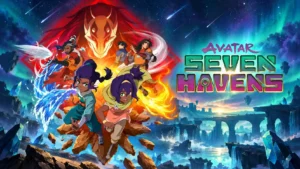
S.W.A.T. Exiles
Where It Has the Edge
No clear scored advantage over the other product.

Scorata scores summarize analyzed review evidence on a 1–5 scale; they are not laboratory measurements or a simple average of customer star ratings. Feature scores summarize the reviews covering that feature. The overall score averages feature scores within each review, then combines review averages. When both expert and customer evidence are available, those two groups receive equal weight. Products can have different review coverage, so small score gaps do not establish a winner.
Recommendations prioritize important features for the category, with a score of at least 3.5, a gap of at least 0.25 points and at least two supporting reviews per product. Features with widely varying scores or broad connectivity contexts are excluded from recommendations. These safeguards do not establish statistical significance.
Quick verdict
The available evidence supports the recommendation below, but does not establish an overall winner. Check the remaining features against your priorities.
There is not enough comparable review evidence to recommend S.W.A.T. Exiles over the other product.
Choose Avatar: Seven Havens for originality and spin-off quality.
No clear scored advantage over the other product.
Scores are out of 5. Missing scores mean missing review evidence, not a missing feature.
Some supporting figures are intentionally abrasive, with Hondo’s billionaire clients described as especially insufferable rather than appealing company.
Pavi’s compassion, odd habits, and resilience make her an immediate favorite for many viewers. The twins and allies are broadly appealing, though occasional whining and tantrums can irritate.
Longtime S.W.A.T. viewers have an obvious entry point through Hondo, while the setup is accessible enough for procedural fans who did not follow all eight seasons of the original.
Young leads and playful antics welcome another generation of viewers, with adults often enjoying the atmosphere and social themes too. Some longtime fans find the opening less mature than Korra.
The new team has not yet built the history needed for a strong emotional payoff, and the premiere’s central death lands especially weakly because the victim has little audience attachment.
Pavi’s loneliness, small acts of kindness, and reunion with her sister repeatedly move viewers. Music and shared memories make the family story especially affecting.
Originality is the clearest weakness. The new squad and mentor dynamic add some freshness, but the underlying procedural formula often feels heavily inherited from the previous series.
The feared Avatar, broken world, and paired protagonists are widely welcomed as bold departures. A few viewers see familiar post-apocalyptic tropes or an underused twin concept rather than a fully fresh story.
The scripting is uneven: some material is praised as intriguing and propulsive, while forced Gen Z dialogue, flimsy social-media themes and a blunt grief device draw criticism.
The script is praised for efficient setup, purposeful progression, and engaging character work. Blunt exposition and uneven early development keep some assessments qualified.
The premiere establishes the new status quo and has hooks, but reactions are split. Some see an intriguing start, while others feel it resembles a network episode transplanted to Starz or avoids the bolder story it teased.
The premiere wins over many cautious viewers through atmosphere, kindness, and a strong final reveal. More critical responses find its early pacing and visual execution rough before the series improves.
The opening episodes occasionally make the chain of events difficult to follow, especially around Hondo’s return and the mechanics of the first case.
Several viewers find the basic situation accessible even with multiple mysteries in play. Others cannot yet see a clear main quest, antagonist, or overall direction.
The season conspiracy earns interest for being less straightforward than expected, but the premiere’s heavily teased tragic turn is criticized for taking a safer, less affecting route.
The twin-Avatar reveal is often praised as exciting, earned, and an effective expansion of the premise. Some critics find early clues obvious or remain unconvinced until the mystery receives an explanation.
The show generally moves briskly, with slick pacing and little sense of dead air in the more enthusiastic reactions.
Some viewers appreciate an atmospheric opening with time for character connection. Others feel the plot advances too slowly, holds back answers, or rushes brief conflicts and reconciliations.
The new group has potential, but chemistry is the most repeated ensemble concern. Their differences are clear; the easy rapport and emotional shorthand of the old squad have not formed yet.
Pavi and Nisha’s contrasting personalities give the series a warm emotional center. A few critics find their early separations and reconciliations rushed or insufficiently earned, and the wider team is still coming together.
The added in-house conflict and relationships give the new squad a stronger dramatic engine than a purely episodic case structure would provide.
Jae’s conflict between inherited beliefs and protecting the twins provides compelling drama. The sisters’ earliest disagreements are less convincing to one viewer because their emotional bond is still developing.
Hondo provides a strong bridge to the original series, and familiar DNA helps the transition. At the same time, several reactions say the spinoff leans too hard on the old formula or makes the missing original ensemble more noticeable.
Many see a welcome return of Avatar’s humor, heart, and mythology without excessive nostalgia. Others feel the reset puts too much distance between the new story and the world they loved.
The weakest dialogue is the material written to sound young and online; some Gen Z phrasing is described as forced and grating.
The clearest complaints target blunt exposition, clunky slogans, and awkward trailer banter. A more forgiving response finds the silliness appropriate for young characters.
The sequel lands as a workable but uneven extension of the franchise. Its best notices praise a promising new direction, while harsher takes say it feels unnecessary, too familiar, or not yet fully settled.
The new installment is welcomed as a worthy expansion and a needed revival for the franchise. Its fresh premise restores interest without simply replaying earlier adventures.
The generational divide and topical police-world themes can give the show timely friction, but the social-media and influencer material sometimes comes off as thin or clichéd.
Climate danger, isolationism, and public paranoia make the new setting feel timely. These parallels are valued for adding relevance to an entertaining fantasy adventure.
The recruits generally feel distinct in personality and motivation, though their individuality is currently stronger than their sense of unity as a team.
The twins and a handful of central allies make the strongest impression. The large supporting roster can blur together, and some viewers want the animal companions to have more presence.
Hondo still feels recognizably like the established character even as the spinoff puts him in a darker, more uncertain phase of his life.
Supporters find Pavi’s strange habits and the twins’ childish disagreements believable for their circumstances. Critics question Jae’s rapid change of beliefs and moments when the children sound too mature.
The new cast shows enough personality and presence to suggest it can eventually make the spinoff its own.
The culturally representative ensemble is welcomed as a meaningful improvement. Praise also goes to voices that convey the characters’ distinct personalities and emotional lives.
The roughly hour-long installments are described as moving quickly enough that the runtime does not feel heavy.
The roughly twenty-minute format delivers character moments and substantial action efficiently. Compact episodes are praised for fitting in spectacle without overwhelming the story.
The mentor role gives Hondo new material, while the young squad is deliberately positioned to grow over time. Not every character feels fully developed yet, and the premiere’s grief arc is less effective for some.
Pavi’s courage, Jae’s conflicting loyalties, and the twins’ different ambitions provide promising arcs. Not everyone finds the supporting characters fully developed, especially the mentor and White Lotus members.
The generational clash produces some amusing moments, though the comedy is more of a supporting flavor than a consistent strength.
Small asides, Pavi’s odd habits, and playful pairings preserve much of the franchise’s comic charm. Some jokes miss, and a few critics find quips undermine the danger or lack the original’s warmth.
The show is at its strongest when it varies the usual mission template, including a standout review-board episode and early installments that introduce backstories without dumping everything at once.
Distinct episodes build a serialized mystery while retaining their own shape. Nisha’s perspective on the premiere is especially praised as an efficient introduction rather than a repetitive recap.
Interest in continuing is healthy among the more positive reactions, with the evolving team dynamic repeatedly cited as a reason to keep watching.
The new characters and unanswered mysteries leave many viewers eager for more. Several explicitly hope the series has enough time to develop its larger world and deliver satisfying answers.
The strongest thematic material comes from generational conflict, mentorship, consequences and Hondo’s attempt to rebuild purpose. These ideas give the spinoff more depth than a simple case-of-the-week reset.
Fear, belonging, survival, and moral ambiguity give the adventure substantial thematic promise. Some critics still miss the predecessors’ political complexity and deeper moral exploration.
Cassidy’s prosthetic leg is treated as part of a capable, determined character rather than as a limit, and that handling is framed positively.
Pavi’s prosthetic leg affects her movement, confidence, and daily routine without making her inherently lesser. The strongest praise goes to a nuanced portrayal that acknowledges challenges while preserving capability and independence.
The tactical set pieces remain one of the safest strengths. The action is repeatedly described as slick, dependable and energetic enough to satisfy viewers who come for the S.W.A.T. formula.
Inventive bending, cooperative rescues, and some fluid fights earn enthusiastic praise. Other viewers find the movement stiff, the camera too static, or the choreography difficult to follow.
The rebuilding-a-team premise and season-long threads give the series real momentum for some viewers. The main dissent is that its biggest tragic setup does not carry the emotional or dramatic weight it promises.
The family mystery and changed role of the Avatar usually provide a compelling foundation. Reservations center on an underdeveloped main direction, slow answers, and smaller plots that distract from the strongest questions.
For viewers who like tactical procedurals, the series largely delivers the expected mix of cases, team banter, action and ongoing drama. It is conventional, but often effective within that lane.
The mystery of a destroyed world appeals to a viewer who explicitly enjoys post-apocalyptic fantasy. Familiar genre ingredients remain satisfying when paired with likable characters.
The internal betrayal and mole storyline give the season a useful source of tension, with the conspiracy gaining momentum once the threat from within becomes clear.
Questions about the twins, their parents, Korra, and the spirit anomaly keep many viewers theorizing and returning. Others feel the stakes remain too soft or the premiere lacks a decisive escalation.
The serialized hooks, quick pace and ongoing team mystery make the show easy to keep watching once it gets moving.
The serial mysteries and premiere cliffhanger make another episode tempting. Several viewers wanted to continue immediately after their available episodes ended.
The new headquarters is noticeably stripped down, with a smaller, bare-bones setup that reinforces the rougher underdog tone but lacks the old show’s polished infrastructure.
Ellora’s architecture, detailed interiors, and colorful environments often invite viewers to pause and look closely. The stripped-down elemental symbols draw a sharp dissenting complaint.
The biggest mismatch concerns the heavily promoted heartbreak around Hondo; one reaction argues the premiere delivers a much less consequential version of that promise.
Several viewers say the trailers chose weaker animation shots and undersold a much more appealing series. A dissenting response feels the episodes themselves fail to deliver the hostility promised by the premise.
The younger ensemble brings useful energy, with Lucy Barrett and Ronen Rubinstein singled out for especially interesting supporting turns. The group still has work to do before it feels as indispensable as the old team.
Supporting voices earn praise for gravitas, comic energy, and distinct personality. The ensemble’s expressive performances strengthen the younger leads and the world around them.
Shemar Moore is consistently treated as the production’s anchor, with his command of Hondo and physical presence carrying much of the show. Even cooler reactions to the spinoff tend to remain positive about the lead performance.
The principal voices make the twins and Jae engaging through vulnerability, confidence, and playfulness. Pavi’s heartfelt delivery is a particular strength.
Performance quality is one of the stronger areas, with the ensemble praised as energetic and the central acting work singled out as a highlight.
The voice cast often supplies the warmth, humor, and emotional weight that make the new ensemble engaging. Even a critic of the animation praises the performances for conveying more emotion than the drawings.
The returning S.W.A.T. theme is warmly received and immediately restores a familiar franchise identity.
Listeners praise the balance between fresh electronic textures and restrained musical callbacks. Some consider the soundtrack among the franchise’s best and recommend hearing it on its own.
The familiar procedural rhythm remains easy to watch, especially when Moore is driving the action. Several takes describe it as engaging comfort viewing with enough energy to keep the episodes moving.
Most viewers find the opening engrossing and enjoyable, often beyond their expectations. Even a more reserved response finds the series entertaining while waiting for its setup to develop.
One of the clearest reservations is whether this continuation has fully earned the need for another iteration of S.W.A.T.; the early episodes show potential without completely answering that question.
Opinions range from dazzling and smooth to choppy and under-detailed. The strongest objections concern inconsistent movement and weaker bending shots, while supporters find the finished episodes far better than the trailers suggest.
Static angles and repeated pans or zooms draw criticism for limiting the bending’s impact. The framing can make action feel less dynamic than the choreography deserves.
The premiere’s twin-Avatar reveal repeatedly leaves viewers eager for the next episode. Even those who anticipated the twist praise the way the ending delivers it.
One critic finds the replacement of language, architecture, and cultural habits difficult to reconcile with the White Lotus retaining historical knowledge. The reset’s internal logic remains a concern.
Many welcome the South Asian influences and more representative creative and voice teams. A dissenting view finds the earlier shows’ Asian and Indigenous distinctions too muted in the new world.
The hopeful characters and accessible storytelling are repeatedly enjoyed across generations. This appeal coexists with dark fantasy threats that may unsettle younger children.
The sudden internal monologue feels out of place to one viewer, particularly when Pavi could have spoken to her companion. It makes a character decision too explicit.
Kindness between Pavi and Jae makes their first connection especially moving. The wider group’s uneven bonds are also appreciated for feeling personal rather than simply repeating the original team.
Jae and Datu’s visible relationship is widely welcomed as a natural expansion of the world’s representation. One critic still finds the pace of explicit visibility frustratingly slow.
New spiritual questions and changes to the Avatar cycle spark strong interest. Viewers who enjoy unusual mythology find plenty to consider beyond the familiar bending rules.
The changed symbols and design language are accepted as a purposeful reflection of how cultures evolve. The updated art direction retains appeal despite its more minimal presentation.
One critic finds Pavi’s reluctance and passivity weaken larger situations. Nisha’s willingness to act helps compensate, but cuteness alone does not resolve the concern.
Pavi’s imperfect bending form adds welcome physical credibility for one viewer. Another finds the twins’ behavior too mature and their difficult upbringing insufficiently reflected in their reactions.
Weekly episode batches are praised for offering satisfying chunks while leaving time for conversation and reflection. The three-episode premiere also lets the initial setup reach a more rewarding stopping point.
Brief romantic scenes and emerging adult pairings are generally charming. Jae and Datu’s relationship is especially praised for its simple warmth despite limited screen time.
The synth-heavy score is one of the most consistently celebrated strengths, combining otherworldly atmosphere with moving familiar motifs. One critic finds parts too reminiscent of Stranger Things.
Judgments of the opening stretch vary between purposeful setup and overly slow progress. A few viewers find the season’s mysteries engaging enough to offset delayed answers, while others want it to cover more ground.
The elemental opening is welcomed when it arrives, with the twins’ synchronized bending providing a distinctive flourish. Its map and details also reward close attention.
Many feel the series balances playfulness, emotion, and danger well. Others find the youthful comedy clashes with a bleak world or makes the opening less mature than expected.
The mysterious energy creature fascinates one viewer, while others miss a clearly defined, complex antagonist. Early environmental threats do not always carry the same dramatic weight as past villains.
One assessment finds the young protagonists and cutesy humor especially well suited to younger viewers. That judgment concerns the presentation rather than a complete content-safety assessment.
Early critical reception is characterized as broadly positive, even though individual write-ups still raise recurring concerns about originality and chemistry.
Returning faces can restore familiar rhythms and provide welcome franchise links, although they sometimes make the absence of the former core ensemble more obvious.
Uniforms and accessories appeal when they communicate the benders’ abilities and new social roles. Another critic finds most clothing unremarkable beside the chancellor’s design.
One reaction praises the immersive opening audio, while another wants stronger impact from the tornado and bending sounds. The effects do not earn the same consistent enthusiasm as the music.
Pastel landscapes, aurora skies, and a distinct science-fiction influence are frequent highlights. Detractors find the characters flat or the look less culturally specific than earlier Avatar series.
Ellora often feels alive through its markets, architecture, collective bending, and uneasy institutions. Critics question the loss of older cultural distinctions and want the reset’s logic and other havens developed further.
Shared viewing is valued for offering meaningful lessons to children. Pavi’s joy and compassion create opportunities to discuss how to act in a frightening world.

Best for sharp adult humor, magnetic chemistry and a deeply satisfying farewell. Skip it if familiar will-they-won’t-they plotting or deliberately messy leads are dealbreakers.
Pros: humor, writing quality

Choose Widow’s Bay for its dark laughs, richly haunted island and memorable ensemble. Skip it if you need straightforward scares, rapid answers to every mystery or a completely resolved finale.
Pros: humor, genre satisfaction
Cons: ending satisfaction, season pacing
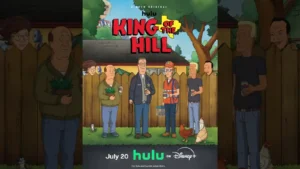
Choose Season 15 for warm, character-driven comedy, meaningful growth, and a finale that rewards longtime fans. Skip it if the short binge format, uneven replacement voices, or occasional clumsy commentary...
Pros: franchise connection, character development
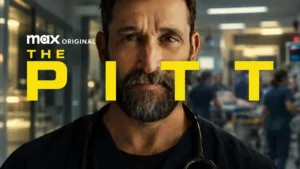
Best for sharply acted, compassionate, high-pressure hospital drama. Skip it if graphic procedures unsettle you or you need a neatly resolved season finale.
Pros: character development, acting performance
Cons: character consistency, dialogue quality