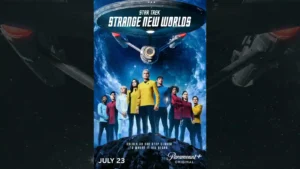
Star Trek: Strange New Worlds, Season 4
Where It Has the Edge
No clear scored advantage over the other product.

Scorata scores summarize analyzed review evidence on a 1–5 scale; they are not laboratory measurements or a simple average of customer star ratings. Feature scores summarize the reviews covering that feature. The overall score averages feature scores within each review, then combines review averages. When both expert and customer evidence are available, those two groups receive equal weight. Products can have different review coverage, so small score gaps do not establish a winner.
Recommendations prioritize important features for the category, with a score of at least 3.5, a gap of at least 0.25 points and at least two supporting reviews per product. Features with widely varying scores or broad connectivity contexts are excluded from recommendations. These safeguards do not establish statistical significance.
Quick verdict
The available evidence supports the recommendation below, but does not establish an overall winner. Check the remaining features against your priorities.
There is not enough comparable review evidence to recommend Star Trek: Strange New Worlds, Season 4 over the other product.
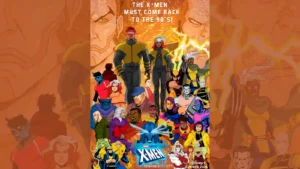
Choose X-Men ’97 Season 2 for lore depth and violence level.
No clear scored advantage over the other product.
Scores are out of 5. Missing scores mean missing review evidence, not a missing feature.
One commenter strongly criticizes Pelia’s casting, calling the character and casting choice a poor fit.
The newer cast additions are welcomed enthusiastically, with Polaris in particular described as feeling immediately at home in the series.
One critic sees the return to The Elysian Kingdom as an unnecessary sequel and questions why that story needed revisiting.
Reviewers largely see the revival as justified rather than empty nostalgia, praising how it updates the classic series while still feeling purposeful on its own.
One critic is disappointed that LGBT representation has receded since the first season, especially while heterosexual relationships remain prominent.
One reviewer specifically applauds the use of BCE as a more inclusive historical label, reacting positively to that small representational choice.
One reviewer finds it odd that fantasy magic can function aboard the Enterprise, weakening the internal power rules.
One reviewer especially praises the creative, larger-scale use of mutant powers and how the season lets abilities feel more spectacular.
Lore use is contentious: callbacks can enrich the Trek setting, but some reviewers feel canon and legacy references are mishandled or used without enough purpose.
The season leans deeply into Apocalypse, X-Force, X-Factor, time travel, and wider mutant mythology, a major draw for reviewers who enjoy dense comic lore.
Dialogue draws some of the harshest criticism in weaker episodes, where it is called shallow, forced, ridiculous, or overly melodramatic.
Dialogue is usually praised for its comic-book conviction, punchy exchanges, and emotional lines, though some repetition and corniness are noted.
Drama is inconsistent: performers can sell emotional material, but soap-opera framing and weak character drama sometimes undercut otherwise serious ideas.
The season’s melodrama is treated as a feature, with reviewers praising its heightened family conflict, emotion, and classic X-Men soap-opera energy.
Runtime works when an episode has enough story to fill the hour, but thinner comedy installments are criticized for stretching limited plots.
One reviewer felt the sub-30-minute episodes use their limited runtime efficiently and still cover enough story.
Clarity is a recurring weakness in the more fantastical episodes, where reviewers question unexplained rules, hand-waved setups, and shaky internal logic.
The multi-timeline setup is often praised as surprisingly readable, but critical reviews flag confusing time-travel logic and plotting that becomes harder to follow later.
Some episodes ask for a heavy suspension of disbelief, and reviewers are less satisfied when emotional stories lack a grounded framework.
One review praises the show’s gritty emotional realism, especially the way flawed heroes make choices driven by survival and love.
Stories are the main fault line: strong standalone adventures can be compelling, but several gimmick-heavy episodes are criticized as thin, pointless, or weakly resolved.
Most reviewers find the season compelling and ambitious, especially its opening arcs, while a smaller but forceful group sees the overall story as messy or badly organized.
The darker episodes use violence and body horror effectively for some reviewers, while others feel gore becomes spectacle without enough story support.
The darker violence is generally seen as effective, with reviewers noting brutal or graphic imagery that heightens danger without treating it as empty shock.
Romance is divisive: some pairings have chemistry, but other reviewers dislike the Kirk/La’An direction or feel existing romantic arcs have run their course.
Romantic material gets both warmth and frustration: Rogue and Gambit are often praised, while Morph’s unreturned feelings and some relationship choices divide opinion.
The season earns credit for inventive time-bending and genre concepts, though some later riffs are described as derivative or insufficiently fresh.
Reviewers who discuss originality praise the season for feeling fresh rather than merely replaying old successes, even while drawing heavily from classic stories.
Emotional impact peaks when grief, identity, or loss receives room to breathe, though several reviewers say those moments are weakened by surrounding gimmicks.
Emotional beats are a major strength, with grief, family, sacrifice, and loss repeatedly described as heartbreaking, moving, or devastating.
Genre-hopping is the season’s biggest divide: some reviewers love the fearless variety, while others find the fantasy, puppet, soap, and parody swings exhausting or un-Trek-like.
Reviewers enjoy how the season moves between superhero drama, sci-fi, fantasy, horror, and soap opera while still feeling recognizably X-Men.
Twists receive mixed reactions, from a clever dinosaur-time-travel turn to character resolutions that some viewers found telegraphed.
Unexpected story turns and reversals are generally welcomed, with reviewers enjoying that the season can still surprise knowledgeable fans.
Action ranges from tense, effective disaster storytelling to sequences some reviewers see as empty spectacle.
Action is consistently praised as inventive, fluid, colorful, and exciting, with multiple fights singled out as season highlights even by more critical reviewers.
The season can reach meaningful themes about identity, grief, ethics, and self-acceptance, but several reviewers think its genre conceits sometimes leave those ideas underexplored.
Family, destiny, prejudice, power, survival, redemption, and love give the season unusual thematic weight for superhero animation.
One reviewer says the season leaves viewers hungry for more even after a binge.
Several reviewers say episodes fly by or leave them wanting the next installment immediately, giving the season strong watch-more momentum.
One positive assessment says the episodic format still preserves consistent character arcs across episodes.
Wolverine’s episode was praised for reframing his self-image without changing the core of who the character is.
Camera work and cinematography are consistently among the better-regarded craft elements, especially when episodes adopt distinct visual identities.
Visual framing earns praise for comic-book composition and memorable shots, including creative camera work that makes individual frames feel deliberately staged.
Franchise connections are split between praise for the Original Series feel and concern that existing canon is beginning to dominate the show.
The season’s links to the wider animated Marvel world and returning X-Men continuity are treated as rewarding rather than distracting in the reviews that discuss them.
One reviewer welcomes the reduced emphasis on characters being sexually or romantically fixated on Spock.
One reviewer explicitly approves of the absence of forced innuendo, preferring the more restrained approach to sexualized humor.
Character development is uneven: some arcs and spotlight episodes land well, while other reviewers find major threads underdeveloped or insufficiently lasting.
Character work is widely praised, especially for Jubilee, Cyclops, Rogue, Polaris, and Apocalypse, though rushed transitions leave some arcs underexplored.
Screenplay reactions are mixed, with some scripts faulted at the concept level while stronger episodes benefit from clearer structure and sharper character turns.
Writing receives polarized reactions: many praise the early arcs and emotional construction, while the harshest full-season reviews criticize weak plotting and rushed execution.
Episode pacing varies widely: the real-time disaster story uses relentless momentum effectively, while weaker episodes are said to sag or rush their final acts.
Early episodes are often praised for focused momentum, but several reviews call individual chapters rushed or too compressed when major developments pile up quickly.
Comedy is often a highlight, from Spock and Pike’s fantasy doubles to the stoner-style episode, but some parody-heavy installments are described as painfully unfunny.
The season’s comedy is generally appreciated as light relief, especially Morph’s quips and Jubilee’s snark, without undercutting the larger stakes.
The score is a strong craft element, including praise for Nami Melumad’s symphonic work, even if not every episode’s musical support lands equally well.
The orchestral score receives strong praise for deepening the drama and evolving familiar themes without losing their identity.
One reviewer finds worthwhile political themes in the season’s more overtly political material and sees room for deeper interpretation.
Social commentary on prejudice, oppression, radicalization, and coexistence remains meaningful to several reviewers, though one finale review feels the season drifts away from that relevance.
The crew’s chemistry is a major asset, especially when new pairings and alternate-character dynamics let familiar cast members play off each other differently.
One review especially praises the chemistry around Xavier and Magneto, calling the interplay between their performers a continuing highlight.
Character balance improves when neglected pairings receive attention, but some reviewers still think legacy characters can pull focus away from Pike’s crew.
The season often uses its split timelines to give overlooked characters more room, but later reviews repeatedly argue that the huge roster sidelines some core X-Men.
Several reviewers feel the season recaptures classic or traditional Star Trek structure and spirit, while one fantasy episode is criticized as barely feeling like Trek.
Comic fans frequently praise the season for honoring classic stories, continuity, and visual ideas while remixing them rather than copying them scene for scene.
Ethical themes can feel authentically Trek-like, but reviewers also criticize how some mental-health and relationship material is handled.
One reviewer criticizes the handling of Psylocke’s identity history, calling the retained presentation uncomfortable in light of the comics’ later reckoning with it.
Tone is a major weakness for detractors, especially when serious grief or character work is paired with broad parody or comedy.
Several full-season reviews describe a noticeable shift after the strong opening, with later episodes feeling uneven or like a different show.
Continuity is a recurring concern, particularly when genre episodes appear to ignore earlier rules or when legacy connections feel forced.
Continuity is a recurring weak spot in the more critical coverage, especially around time-travel logic, past relationships, and convenient character decisions.
The 10-episode season is widely seen as too short for this many tones, characters, and ideas, leaving several reviewers wanting a longer traditional TV run.
A repeated complaint is that nine episodes are not enough for the number of teams, arcs, and emotional beats the season tries to cover.
The episodic, mission-of-the-week structure is frequently praised, although some reviewers think the short streaming format gives the standalone approach too little room.
Separating timelines into focused episodes is frequently praised for clarity and depth, although some later standalone or filler-like chapters are seen as poorly placed.
The season’s rhythm feels compressed and uneven to several reviewers, with back-to-back gimmick episodes creating fatigue and serialized arcs feeling disrupted.
This is the clearest recurring weakness: many full-season reviews say the back half moves too quickly, skips needed character fallout, or feels overstuffed.
Interest in continuing is strong in the positive season reviews, with critics expressing excitement for what comes next and sadness that so few episodes remain.
Despite criticisms, reviewers repeatedly express strong interest in Season 3 and want to see where the story goes next.
The season’s suspense works best in its disaster and horror modes, where reviewers praise real tension, unease, and edge-of-your-seat momentum.
Tension is a strong point in the best episodes, with danger, uncertainty, and Apocalypse’s threat keeping viewers on edge.
Trelane and other antagonistic figures are generally enjoyed, with praise for personality and the way they support the episode’s conflict.
Apocalypse is widely praised as complex, threatening, and unusually humanized, but several finale-focused reviews think his payoff weakens that buildup.
A strongly negative commenter says the season lacks enough substance to inspire a rewatch.
One reviewer says a favorite emotional scene was compelling enough to rewatch whenever it appeared in their social feeds.
Despite major disagreements about individual episodes, reviewers frequently describe Season 4 as fun, entertaining, or enjoyable when its experiments click.
Even reviewers with structural complaints still describe the season as fun, exciting, or enjoyable, with action and character moments keeping it engaging.
Sound work is mixed: atmospheric design receives praise, while one fantasy episode is criticized for conspicuous ADR.
One finale review praises the eerie removal of sound during Rogue’s Celestial encounter, using near-silence to make the sequence more unsettling.
One reviewer highlights a small world-building detail as a fun addition to the setting.
One review likes how the season expands the mutant world through new teams and settings, while still wanting broader connections beyond the X-Men corner.
Production design earns strong praise for giving wildly different episodes their own identity while keeping the Enterprise polished and recognizable.
Distinct locations and richly designed backgrounds help the past, present, and future timelines feel visually separate and give the season its own identity.
The season is visually ambitious and often striking, though isolated effects shots and some heavily stylized episodes draw criticism.
The season’s colors, retro-modern art direction, distinctive locations, and comic-panel energy draw heavy praise, despite a few complaints about isolated designs.
Costumes are repeatedly singled out as a strength, especially the elaborate fantasy looks and the show’s playful genre-specific wardrobe.
The season’s new costumes are enthusiastically received, with one reviewer especially enjoying how the refreshed looks make characters feel older and cooler.
Audience appeal looks polarized: some see broad, accessible fun and familiar TOS flavor, while others think the gimmick-heavy direction alienates viewers.
Fans of the first season and longtime X-Men viewers are expected to respond especially well, while one review cautions that the season is not the easiest entry point for newcomers.
Una is described as solid, charismatic, and capable of making difficult situations feel manageable.
Reviewers respond strongly to characters such as Morph, Lorna, and the X-Men as a flawed but relatable ensemble rather than idealized heroes.
Acting is broadly praised even when the surrounding episode is disliked, though a few reviewers object to deliberately hammy or exaggerated performances.
Voice work is one of the clearest strengths, with repeated praise for the ensemble’s emotional weight and several standout performances.
Music is usually regarded positively, with praise for the season’s genre-shifting sound, though one critic feels a droning score sometimes carries weak material.
Music is repeatedly praised, from needle drops to the returning theme and score, with reviewers saying it strengthens the period feel and action.
The main ensemble is one of the season’s clearest strengths, with repeated praise for the cast’s range across comedy, drama, horror, and adventure.
The returning voice ensemble is repeatedly praised as confident, emotionally committed, and completely at home in the roles.
A supporting performance receives standout praise, especially Joe Morton’s guest turn.
Guest and newly added performers receive strong praise, with reviewers describing them as an important part of the season’s expanded ensemble.
One commenter strongly dislikes Pelia’s stylized accent and considers it unnecessary to the character.
One critique says past experiences do not meaningfully change current behavior, weakening the sense that characters face lasting consequences.
Animation earns near-universal praise for its fluid action, vibrant presentation, and stronger modern execution, though a few reviewers note inconsistent or weaker dialogue shots.
One commenter describes the approaching end as bittersweet, simultaneously sad to lose more Trek and ready for this series to conclude.
CGI is generally praised as polished and ambitious, with occasional shots criticized for looking unconvincing.
Major episode endings are effective hooks, leaving reviewers eager for the next chapter even when the cliffhangers carry mixed emotions.
Direction ranges from nimble comic staging to choices some reviewers call uninspired, making the execution as variable as the season’s concepts.
One review criticizes an important emotional scene for being cut too short.
Finale reactions are sharply split: some find the ending emotional and moving, while others say the resolution is rushed, underbuilt, or too easy.
The show’s darker material can push against its kid-friendly roots, but reviewers who address suitability still find it workable for a broad audience and say younger viewers are not shut out.
One commenter feels the Princess Bride-style fourth-wall reference makes the fantasy episode less immersive.
The retro presentation, 1990s tone, music cues, and comic-book styling are repeatedly praised for evoking the era without feeling like a hollow imitation.
The season premiere is generally viewed as a strong return to classic Trek-style adventure, with a few dissenting reactions to its execution.
Practical work is well received, including creatures and the puppet execution, which several reviewers say looks excellent.
One reviewer dislikes the three-episode premiere, feeling it made the season seem to pass too quickly for an already established show.
The finale is one of the most criticized parts of the season, with multiple reviewers calling it messy, rushed, or unable to match the buildup despite strong action and emotion.
Effects are usually impressive, from dragons and creatures to large-scale space imagery, though a few reviewers call out weaker CGI moments.
One critic thinks the prequel function is becoming too eager to position the series for a hypothetical Kirk-era continuation.
The mature edge generally lands well: reviewers note that darker imagery can get gnarly, but the show still remains accessible to younger viewers without talking down to its older audience.
One commenter misses Star Trek’s older reputation for inspiring scientific and professional curiosity and feels this season offers less of that quality.
One reviewer appreciates that trailers concentrated on the opening episodes, preserving later-season material rather than giving too much away.

Best for sharp adult humor, magnetic chemistry and a deeply satisfying farewell. Skip it if familiar will-they-won’t-they plotting or deliberately messy leads are dealbreakers.
Pros: humor, writing quality

Choose Widow’s Bay for its dark laughs, richly haunted island and memorable ensemble. Skip it if you need straightforward scares, rapid answers to every mystery or a completely resolved finale.
Pros: humor, genre satisfaction
Cons: ending satisfaction, season pacing

Choose Season 15 for warm, character-driven comedy, meaningful growth, and a finale that rewards longtime fans. Skip it if the short binge format, uneven replacement voices, or occasional clumsy commentary...
Pros: franchise connection, character development

Best for sharply acted, compassionate, high-pressure hospital drama. Skip it if graphic procedures unsettle you or you need a neatly resolved season finale.
Pros: character development, acting performance
Cons: character consistency, dialogue quality