Scorata scores summarize analyzed review evidence on a 1–5 scale; they are not laboratory measurements or a simple average of customer star ratings. Feature scores summarize the reviews covering that feature. The overall score averages feature scores within each review, then combines review averages. When both expert and customer evidence are available, those two groups receive equal weight. Products can have different review coverage, so small score gaps do not establish a winner.
Recommendations prioritize important features for the category, with a score of at least 3.5, a gap of at least 0.25 points and at least two supporting reviews per product. Features with widely varying scores or broad connectivity contexts are excluded from recommendations. These safeguards do not establish statistical significance.
Quick verdict
What each product is best for
The available evidence supports the recommendation below, but does not establish an overall winner. Check the remaining features against your priorities.
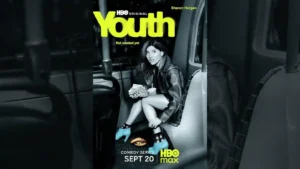
Choose Youth (2026) for character balance and writing quality.
There is not enough comparable review evidence to recommend Tip Toe over the other product.
Why these recommendations?
Youth (2026)
Where It Has the Edge
character balance is 4.5 vs 3.0. The Alex-Ruari pairing is generally well balanced, with their parallel crises reinforcing each other, though some surrounding relationships...
writing quality is 4.6 vs 4.1. Horgan’s scripts are repeatedly praised for sharp observation, comic precision, and honesty, even as a minority view finds...
humor is 4.7 vs 4.2. Comedy is the broadest point of agreement: reviewers repeatedly call the show very funny, mordant, biting, and laugh-out-loud...
Tip Toe
Where It Has the Edge
No clear scored advantage over the other product.
Youth (2026)4.6 overall score
Tip Toe4.5 overall score
Compare features
Scores are out of 5. Missing scores mean missing review evidence, not a missing feature.
Scored on both products
Other features
Accountability handling
Youth (2026)
2.0
The show’s handling of Ruari’s wrongdoing draws criticism for making his rehabilitation too easy, softening a harder accountability arc.
Tip Toe
4.6
Clive’s habit of blaming everyone but himself is treated as a key part of his radicalization. The story makes his refusal to self-examine feel dangerous rather than excusable.
Modern political framing
Youth (2026)
2.5
The masculinity storyline is one of the shakier elements; its attempt to engage contemporary anxieties around young men is seen as less fully resolved than the midlife material.
Tip Toe
4.9
The series is unapologetically about the present moment, tying radicalization, anti-LGBTQ rhetoric, misinformation, and social polarization to intimate neighbor conflict. Most find that urgency powerful even when the messaging is blunt.
Drama quality
Youth (2026)
2.5
The dramatic side is less consistent than the comedy, with one critic arguing that the many complications can crowd out the emotional core.
Tip Toe
4.8
As drama, the series lands hard: tense, emotionally forceful, and frequently described as essential or top-tier. Its bluntness rarely erases the impact of the performances and central conflict.
Character balance
Youth (2026)
4.5
The Alex-Ruari pairing is generally well balanced, with their parallel crises reinforcing each other, though some surrounding relationships feel less organically integrated.
Tip Toe
3.0
The two leads receive deep, nuanced treatment, while some supporting characters—especially Zee—are left thinner or more functional than the central pair.
Dialogue quality
Youth (2026)
5.0
Sharp lines, witty banter, and precise comic phrasing are repeatedly singled out as part of the show’s appeal.
Tip Toe
3.5
The dialogue is one of the clearest tradeoffs: it can be urgent, thoughtful, and nuanced, but several assessments find the speeches blunt, preachy, or too eager to spell out the message.
Screenplay quality
Youth (2026)
5.0
The scripts are praised for tight episodic construction, sharp comic beats, and a strong sense of narrative flow.
Tip Toe
3.6
The scripts have urgency and purpose, but conspicuous speechifying and overlong monologues sometimes make the writing feel more instructional than dramatic.
Character development
Youth (2026)
3.7
The mother-son relationship grows in satisfying ways, but Ruari’s personal arc is also criticized as rushed and at times too simply resolved.
Tip Toe
4.8
Leo and Clive emerge as flawed, layered people rather than simple symbols. Clive’s flashes of vulnerability and Leo’s warmth, carelessness, anger, and fear make the tragedy more persuasive.
Directing quality
Youth (2026)
4.0
The direction supports the show’s brisk half-hour rhythm and helps its observational comedy land consistently.
Tip Toe
5.0
Peter Hoar’s direction earns particular praise for a bravura premiere montage and a haunting, tightly controlled sense of dread.
Genre satisfaction
Youth (2026)
4.0
As a midlife comedy-drama it lands very well, though at least one reviewer places it just below Horgan’s best earlier work.
Tip Toe
5.0
The psychological-thriller approach is highly effective, generating horror-level fear without functioning as a conventional horror series.
Episode structure
Youth (2026)
4.0
The two-episode opening gives the overlapping family, work, and dating pressures enough room to establish themselves before the weekly rollout.
Tip Toe
4.7
Repeated flashes of Leo’s fate turn each episode into a countdown, creating a fatalistic structure that keeps the focus on how the tragedy develops rather than what happens.
Story quality
Youth (2026)
4.2
The central midlife and mother-son stories are compelling and self-aware, though some side plots feel superfluous and the overall emotional core can occasionally get crowded.
Tip Toe
4.8
The neighbor feud is widely praised as a gripping vehicle for fear, resentment, prejudice, and radicalization. The story remains compelling even when its mechanics become deterministic or overtly symbolic.
Writing quality
Youth (2026)
4.6
Horgan’s scripts are repeatedly praised for sharp observation, comic precision, and honesty, even as a minority view finds the writing slightly softened and less biting than her best work.
Tip Toe
4.1
Davies’ writing is strongest when character, conflict, and politics reinforce one another. The recurring drawback is over-explanation, with blunt speeches sometimes doing work the central relationship already accomplishes.
Humor
Youth (2026)
4.7
Comedy is the broadest point of agreement: reviewers repeatedly call the show very funny, mordant, biting, and laugh-out-loud effective, especially in its publishing satire and awkward social situations.
Tip Toe
4.2
Dark and playful humor gives the story some breathing room, especially around Leo and the bar community. Still, one assessment finds the show too serious and occasionally strident rather than genuinely funny.
Editing quality
Youth (2026)
4.5
Onscreen phone displays and rapid digital interruptions effectively communicate how Alex’s obligations pile up and collide.
Tip Toe
5.0
The premiere’s cross-cut montage is a standout construction, combining sexuality, loneliness, and radicalized media consumption into one bravura sequence.
Character likability
Youth (2026)
4.5
Patrick’s appeal is carefully calibrated: he remains flawed, but reviewers find him likable and charming enough to make Alex’s attraction believable.
Tip Toe
4.9
Leo’s charm, generosity, humor, and instinct to help vulnerable people make him easy to care about even when he misjudges situations or pushes too far.
Realism
Youth (2026)
4.6
Reviewers repeatedly praise the specificity of everyday behavior, family friction, awkward sex, and midlife insecurity, although one excerpt finds the overall presentation slightly too glamorous.
Tip Toe
4.3
Realism is mixed at the plot level: the social-media radicalization and cultural climate feel frighteningly believable, but some character decisions and the final escalation strain credibility.
Episode pacing
Youth (2026)
4.3
The pacing is loose and light rather than urgent, with several reviewers finding the breezy movement a good fit for the material.
Tip Toe
4.0
The short run mostly keeps tension taut, though speech-heavy stretches can interrupt the momentum when the drama pauses to underline its politics.
Cast chemistry
Youth (2026)
4.8
Chemistry is one of the clearest strengths, especially in Alex’s romantic scenes with Patrick and the shifting warmth and strain of her friendship with Sam.
Tip Toe
5.0
Cumming and Morrissey’s chemistry gives the central feud exceptional heat, shifting convincingly between hostility, uneasy connection, and outright menace.
Cultural representation
Youth (2026)
5.0
The show’s London social world feels naturally diverse, and its focus on complex women over 50 is welcomed as a broader, less stereotyped form of representation.
Tip Toe
4.8
Queer and trans life is portrayed as a lived community rather than a backdrop, with the bar, found-family bonds, and generational fears giving the story breadth beyond the central feud.
Theme depth
Youth (2026)
4.8
The show’s strongest thematic idea is that growth does not end with youth: aging, desire, parenting, work, and self-definition are treated as ongoing and often contradictory.
Tip Toe
4.9
The series digs into masculinity, queer visibility, prejudice, online radicalization, found family, resentment, and personal responsibility. Its strongest moments let those ideas emerge through character rather than speeches.
Emotional impact
Youth (2026)
4.8
Cringe, tenderness, and midlife anxiety frequently sit beside the jokes, producing moments reviewers found wrenching, vulnerable, and emotionally recognizable.
Tip Toe
4.9
The show is consistently described as harrowing, heartbreaking, disturbing, and deeply affecting. Its anger and dread leave a strong impression even on viewers who resist its lack of subtlety.
Tone consistency
Youth (2026)
4.9
The series largely sustains a tricky blend of raunch, melancholy, cringe, and tenderness without losing its identity as a comedy.
Tip Toe
5.0
The series holds onto its anxious, threatening atmosphere with unusual discipline, rarely allowing the tension to fully break even during lighter or more intimate scenes.
Acting quality
Youth (2026)
5.0
Performances are a major strength, with the ensemble making relationships feel lived-in and Aran Murphy’s work bringing tenderness to Ruari.
Tip Toe
5.0
The performances are the clearest strength, with Alan Cumming and David Morrissey repeatedly singled out for rich, frighteningly human work. Even the supporting ensemble receives strong praise.
Casting quality
Youth (2026)
5.0
The ensemble is viewed as a clear strength, with the cast itself described as great and the guest lineup adding extra texture.
Tip Toe
5.0
Cumming describes Leo as an unusually fitting role for his age, background, and dramatic strengths, reinforcing the sense that the lead casting is especially well matched.
Plot originality
Youth (2026)
5.0
The show’s fresh angle comes less from its basic dating premise than from how it reframes the empty nest and reinvention through a 50-year-old woman’s perspective.
Tip Toe
5.0
Revealing the central death up front is treated as a bold structural choice, and the broader storytelling is praised as daring and distinctive rather than routine.
Season length
Youth (2026)
5.0
Eight half-hour episodes make for a compact season that several reviewers describe as unusually easy to binge.
Tip Toe
5.0
Five episodes is judged an ideal length, keeping the story concentrated before its dread has time to become exhausting or repetitive.
Season pacing
Youth (2026)
5.0
The season’s flow is addictive enough that one reviewer found it easy to move from episode to episode almost without noticing.
Tip Toe
5.0
The compact season maintains expertly built tension and avoids the slackness that a longer run might have introduced.
Comfort and build
World-building
Youth (2026)
4.0
Guest characters and the publishing-world ensemble add depth and color to the show’s wider social universe.
Tip Toe
4.5
The grounded world-building is strongest around Spit & Polish, where ordinary work, gossip, friendship, and safety make the queer community feel lived-in rather than merely symbolic.
Performance
Supporting cast performance
Youth (2026)
4.7
The supporting players are widely seen as a strength, bringing comic energy and added texture even when a few side characters verge on caricature.
Tip Toe
4.5
The supporting ensemble is a genuine strength, with several younger performers singled out and the queer and trans cast given room to make strong impressions.
Main cast performance
Youth (2026)
5.0
The lead ensemble is consistently praised, with Horgan’s comic presence and Aran Murphy’s naturalistic work giving the show much of its emotional credibility.
Tip Toe
5.0
Cumming and Morrissey dominate the series, with their performances described as phenomenal, revelatory, riveting, and at times career-best work.
Ownership and support
Entertainment value
Youth (2026)
5.0
The series is described as a highly enjoyable, superlative comedy with strong momentum and plenty of comic payoff.
Tip Toe
4.8
Despite the punishing subject matter, the strongest recommendations call it must-watch television and argue that its tension and performances make the experience compelling.
Controls and connectivity
Audience appeal
Youth (2026)
4.8
The comedy is especially relatable for viewers navigating midlife, but its clear character work and humor are also described as accessible beyond that core audience.
Tip Toe
4.7
The series is repeatedly positioned as urgent, essential, and worth seeking out, especially for viewers drawn to intense social drama. Its confrontational style may narrow the audience, but enthusiasm is still high.
Critic appeal
Youth (2026)
5.0
Critical reception is strongly positive, with the series characterized as another major success for Horgan.
Tip Toe
5.0
The show arrives with exceptionally strong critical momentum, with existing U.K. coverage framed as suggesting it could rank among Davies’ best work.
Evidence available for one product
Other features
Bingeability
Youth (2026)
5.0
Short episodes, breezy momentum, and an addictive flow make the season unusually easy to consume in long stretches.
Tip ToeNo score yet
Character consistency
Youth (2026)
3.2
Alex is praised as carefully balanced, but Sam and especially Ruari draw some criticism for inconsistent characterization or behavior that serves the plot.
Tip ToeNo score yet
Episode length
Youth (2026)
4.8
The roughly 30-minute episodes are praised as snappy and particularly well suited to easy viewing.
Tip ToeNo score yet
Ethical sensitivity
Youth (2026)No score yet
Tip Toe
4.1
The series often handles prejudice with unusual care, refusing to require Leo to be flawless before deserving safety. One weakness is Stephanie’s bigotry being left insufficiently addressed, and a viewer also found some sensitive material gratuitous.
Finale satisfaction
Youth (2026)No score yet
Tip Toe
2.8
The climax can deliver a stomach-churning payoff, but the ending is still a notable split point: some find the final escalation hard to believe and the postscript titles clumsy.
Language level
Youth (2026)
4.5
The foulmouthed dialogue fits the show’s candid comic voice and is treated as part of the fun rather than a drawback.
Tip ToeNo score yet
Menopause portrayal
Youth (2026)
5.0
The menopause material is unusually frank and specific, treating physical changes, sexuality, and self-image as both funny and meaningful rather than background detail.
Tip ToeNo score yet
Pilot episode quality
Youth (2026)No score yet
Tip Toe
5.0
The premiere makes a strong first impression by revealing the tragedy immediately and closing with a bravura montage; the unconventional opening is specifically praised as improving the show.
Release schedule
Youth (2026)
4.5
The two-episode premiere is viewed as a smart launch choice because it establishes the show’s competing pressures before shifting to weekly episodes.
Tip ToeNo score yet
Romance quality
Youth (2026)
4.8
Alex and Patrick’s relationship is a major draw, powered by warmth, bad timing, and strong chemistry that makes both characters’ hesitation understandable.
Tip ToeNo score yet
Score quality
Youth (2026)No score yet
Tip Toe
5.0
Sam Watts’ scoring is singled out alongside the direction as haunting and note-perfect, strengthening the sustained atmosphere of dread.
Season finale quality
Youth (2026)No score yet
Tip Toe
2.8
The climax has real stomach-churning impact, yet the final escalation and postscript execution leave some viewers unconvinced or dissatisfied.
Series finale quality
Youth (2026)No score yet
Tip Toe
2.8
As the limited-series ending, the climax is powerfully disturbing for some but unconvincing for others, especially in its final escalation and postscript wrap-up.
Sexual content level
Youth (2026)
4.7
The show is sexually frank and raunchy, but reviewers generally approve of how the sex scenes stay awkward, funny, and grounded rather than glossy.
Tip ToeNo score yet
Suspense
Youth (2026)No score yet
Tip Toe
4.8
Knowing Leo’s fate does not reduce the tension; it intensifies it. Ordinary encounters become threatening, and the series sustains a slow-motion-train-wreck sense of dread.
Trauma portrayal
Youth (2026)No score yet
Tip Toe
3.6
The bleak material is often praised for confronting violence without simply wallowing in it, but at least one viewer felt the trauma became excessive and existed for its own sake.
Villain quality
Youth (2026)No score yet
Tip Toe
4.8
Clive works because he is not reduced to a cartoon monster: flashes of vulnerability, ordinariness, and possible decency make his slide into hatred more frightening.
Comfort and build
Production design
Youth (2026)
4.0
Real London locations and polished interiors are used in ways that fit Alex’s publishing-world ambitions and professional setting.
Tip ToeNo score yet
Visual style
Youth (2026)
4.3
Phone screens and busy visual details reinforce Alex’s overloaded life, though one review finds the show’s polished glamour a little at odds with its claim to everyday realism.
Best for sharp adult humor, magnetic chemistry and a deeply satisfying farewell. Skip it if familiar will-they-won’t-they plotting or deliberately messy leads are dealbreakers.
Choose Season 15 for warm, character-driven comedy, meaningful growth, and a finale that rewards longtime fans. Skip it if the short binge format, uneven replacement voices, or occasional clumsy commentary...
Choose The Pitt Season 2 for a gripping, realistic medical drama with superb acting and emotional depth. Skip it if graphic procedures, unresolved arcs, or slower character-driven pacing bother you.
Best for powerhouse performances, thorny character work, and a tense revenge mystery that grows richer as it goes. Skip it if abuse, trafficking, graphic violence, or deliberately messy moral questions...