
Monster: The Lizzie Borden Story
Where It Has the Edge
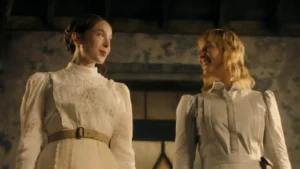
- casting quality is 4.8 vs 4.4. Casting drew strong praise, from Beatty's immediate fit for Lizzie to broader comments about an impressive ensemble.

Scorata scores summarize analyzed review evidence on a 1–5 scale; they are not laboratory measurements or a simple average of customer star ratings. Feature scores summarize the reviews covering that feature. The overall score averages feature scores within each review, then combines review averages. When both expert and customer evidence are available, those two groups receive equal weight. Products can have different review coverage, so small score gaps do not establish a winner.
Recommendations prioritize important features for the category, with a score of at least 3.5, a gap of at least 0.25 points and at least two supporting reviews per product. Features with widely varying scores or broad connectivity contexts are excluded from recommendations. These safeguards do not establish statistical significance.
Quick verdict
The review evidence points to a tradeoff: casting quality versus writing quality and genre satisfaction. Choose according to which strengths matter more to you; the overall score alone does not settle that choice.
Choose Monster: The Lizzie Borden Story for casting quality.
Choose War for writing quality and genre satisfaction.
Scores are out of 5. Missing scores mean missing review evidence, not a missing feature.
One early-viewing reaction found the first episodes slow enough to prompt yawning, scrolling, and an early exit.
Individual episodes are generally brisk and tightly constructed, with legal reversals and revelations arriving quickly. This strong scene-to-scene momentum contrasts with some criticism of the season’s larger arc.
Multiple reviewers felt eight episodes was too much for the material, citing padding, side quests, and a format that feels longer than necessary.
Eight episodes are judged to be exactly right for the first case, long enough to develop the legal battle without creating major leftover questions.
Writing drew heavy criticism for character choices and invented material that some reviewers felt disrespected the historical story.
The scripts can be sharp and character-aware, especially when exposing vulnerability, but one critic finds some flourishes glib. The writing is strongest when it lets legal strategy reveal personality.
One review felt the season leans too hard on sensationalist media frenzy instead of the underlying truth of the case.
The relentless tabloid attention around the celebrity divorce is praised as especially true to life, adding pressure beyond the legal case itself.
The premiere's dialogue was criticized as over-the-top, fitting the season's deliberately heightened but divisive style.
Fast, sharp, witty dialogue is one of the most consistent strengths. The legal exchanges, insults, and class satire give the series much of its energy even when other elements divide opinion.
Realism is a major weakness, with several reviews describing the series as salacious, implausible, or far removed from known history.
Realism is sharply contested. Some praise the legal detail and grounding in recognizable divorce practices, while others find parts of the plotting or world-building highly implausible.
The dark comedy lands for some viewers and completely misses for others, ranging from 'frequently hilarious' reactions to one reviewer who did not laugh at all.
Dark comedy, biting class satire, insults, and verbal sparring keep the divorce warfare from becoming relentlessly grim. The humor works best when it sharpens the characters’ cruelty.
At its best the show works as a bitter domestic nightmare, but another reviewer found the opening insufficiently dramatic or cinematic.
The legal and marital conflict is usually described as juicy, tense, and highly entertaining. Even a harsh critic concedes that the characters’ nastiness can generate effective cutthroat conflict.
Tone is one of the show's biggest fault lines: some praise the fun, weird blend, while others find the camp, sensationalism, and detours disjointed.
The series largely succeeds at keeping morally ugly people entertaining without asking viewers to love them, balancing cynicism, soapiness, and dark humor with impressive control.
The premiere divided reviewers: one enjoyed its restraint, while others thought the opening was sordid or flat rather than compelling.
The premiere starts shaggy and unfocused, then grows into a more cerebral and compelling legal thriller by the end. Its finish is stronger than its opening stretch.
Story reactions split sharply: some found the retelling interesting and absorbing, while others called it directionless, over-invented, or a disservice to the real case.
The central divorce war can be engrossing, clever, and addictive, yet not everyone buys its depth or focus. Stronger reactions celebrate the legal chess match; weaker ones see a shallow or predictable story.
The Aileen Wuornos material and other side stories are repeatedly said to pull focus from the more compelling Borden household conflict.
The large ensemble is both a strength and a weakness. Some praise how the focus spreads across lawyers and clients, while others feel the show waits too long to foreground its best characters or lacks a clear center.
Lizzie and Bridget's relationship was called the strongest part of the series by one reviewer, who valued how it grows from companionship into something more dangerous.
The central marriage divides opinion: one critic cannot believe Morgan and Carla were ever in love, while another finds the lead chemistry effective at showing the thin line between love and hate.
The ending's suffrage celebration was criticized for muddled irony, with its intended point getting lost in a scene played too sincerely.
The ending is the biggest point of disagreement. Some find it a satisfying landing with few loose ends, while others see a sentimental, underpowered, or outright disappointing resolution.
The feminist framing splits reviewers: some see relevant exploration of gender and female rage, while others find it reductive or adolescent in execution.
The season raises timely subjects such as extreme wealth, gender roles, and social-media power, but one critic argues it introduces those issues without developing much insight.
Reviewers receptive to gothic camp enjoyed the first episode's restraint, playful tone, and reduced reliance on the franchise's usual gimmickry.
As an adult legal drama, the series is very well received. Its mix of prestige polish, soapiness, workplace rivalry, and dirty legal tactics feels fresh enough to stand out within the genre.
The cross-era, female-killer framing struck several reviewers as fresh and unusual, with one calling the project unique on television.
The family-law angle and refreshed use of familiar tropes earn strong praise, but one critic finds the overall tale painfully predictable. Originality therefore depends heavily on whether the legal maneuvering feels fresh or familiar.
Character work is uneven. Some reviews praised the human stakes and Bridget's complexity, while others felt major figures were thin or unrealistically written.
Characterization draws sharply divided reactions: several critics find the ensemble complex, grounded, and well shaded, while others call the leads thin or underdeveloped. The lawyers tend to receive stronger marks than the divorcing couple.
One review praised the unresolved mystery for staying sharp, memorable, and difficult to shake.
Betrayals, strategic reversals, and shifting allegiances give the legal battle genuine thriller momentum. The show repeatedly creates tension without relying on physical danger.
Casting drew strong praise, from Beatty's immediate fit for Lizzie to broader comments about an impressive ensemble.
The cast is widely viewed as deep and well chosen, with the leads and legal ensemble fitting their roles strongly. A minority concern is that a few recognizable actors are underused or not ideal fits.
Max Winkler's command of the show's unusual dramatic-comic tone was specifically praised as clear from the outset.
Direction is praised for keeping the legal maneuvering clear, stylish, and energetic, while giving the contrasting offices and ensemble enough visual personality.
The themes are highly divisive. Some reviewers saw a distinctive exploration of repression and female rage; others called the treatment superficial or unsatisfying.
The series clearly has ideas about money, marriage, class, entitlement, and public image, but critics split on how deeply it explores them. Some find meaningful insight; others see slick surfaces and underdeveloped themes.
The midseason shift to Aileen Wuornos was praised by the creator as a structural move that broadens and deepens the story.
The eight installments are mostly praised for elegant construction and strong forward hooks. One critic sees seven impressive episodes before a weaker finale, while another strongly approves of the anthology approach.
Beatty and Vicky Krieps were specifically praised for chemistry that helps ground the first episode's otherwise lurid setup.
Most pairings click, especially the married lawyers and several adversarial combinations, though one critic found the central divorcing couple emotionally unconvincing. Overall, the ensemble’s rhythm is a major asset.
Audience reactions reported in one article included viewers finishing all eight episodes in a single sitting.
Episode endings, escalating secrets, and propulsive legal maneuvering make the season especially easy to keep watching. Several reactions describe it as addictive or difficult to turn off.
The romanticized imagery around Lizzie and Bridget drew favorable comparisons to lush, rapturous period filmmaking.
The visual capture gives the contrasting offices and polished London spaces enough style to stay engaging without becoming overly showy.
Emotional impact varies with tolerance for the spectacle: one review found the story haunting, while another said provocation diluted the feelings underneath.
The season has flashes of real poignancy and can become absorbing, but its emotional reach is less consistent than its thriller mechanics. Some critics wanted deeper feeling from the central marriage.
Two reviewers found the narrative scattered and forced, especially when side stories pulled attention away from the Borden case.
The crowded cast and lack of a clearly identified protagonist can make the story difficult to orient around, especially as more lawyers and subplots enter the picture.
The eight-episode run was repeatedly criticized for padding, tonal impatience, and detours that slow the central story.
The season-level arc is a recurring weakness for several critics, who find it slow to get moving or insufficiently escalatory even when individual episodes feel propulsive.
The show is a poor choice as a history lesson; its heavy dramatization makes it entertainment rather than a reliable account.
Beyond the soapier elements, the series gives viewers an accessible look at British solicitors, barristers, high-end divorce strategy, and the machinery surrounding major cases.
Entertainment value is polarized: some found it energetic, highly watchable, and blood-splattered fun, while one reviewer quit after two episodes.
Entertainment is the broadest point of agreement: even with concerns about depth or pacing, the show is frequently described as fun, addictive, sophisticated, and easy to get swept up in.
The soundtrack is adventurous and often effective, though reviewers noted both inspired needle drops and choices that felt painfully obvious.
The broader music receives praise elsewhere through the score, but one critic singles out the theme song as notably underwhelming.
One reviewer objected to the title itself, arguing that the extensive fictionalization makes it misleading as 'The Lizzie Borden Story.'
The promotion emphasizes Morgan and Carla’s divorce battle, while the series itself increasingly centers the rival law firms. That shift works dramatically, but the marketing only partially reflects the show’s true focus.
Acting is the clearest consensus strength. Multiple reviews praised the cast as excellent or able to sell the heightened material, though a few felt the writing limited what performers could do.
The ensemble is one of the show’s clearest strengths, with repeated praise for confident, vivid performances across the firms and divorcing couple. Even more critical takes generally still regard the acting as polished.
Ella Beatty's lead work drew solid-to-strong notices, with reviewers praising her restraint and emotional shifts even when one found her merely good.
Most reactions praise the leads strongly, but one critic finds scenes between Morgan and Carla flat and energy-draining. That dissent makes the lead pairing more divisive than the supporting ensemble.
Sarah Paulson's supporting work was singled out as so compelling that even a creator joked she could elevate a phone-book reading.
The supporting lawyers are a major strength and, for some critics, more compelling than the top-billed couple. The depth of the ensemble keeps the workplace side lively even when the central marriage falters.
Critical reception was described as mixed rather than clearly positive or negative.
Early aggregate critical reception was strongly positive, with a high average rating and a clear majority of favorable notices at the time cited.
One reviewer failed to connect with the characters strongly enough to continue past the second episode.
One strongly negative take finds the central cast noxious and driven by selfish motives. The show often aims for watchable rather than lovable characters, which will not work for everyone.
Early audience reactions cited by one article suggested strong immediate engagement, with viewers described as hooked.
The show is framed as unusually satisfying adult entertainment, built around sharp dialogue, wealth, legal gamesmanship, and messy relationships rather than broad family appeal.
The series' look is a consistent positive, described as stylish, handsome, strange, and visually compelling.
Glossy offices, expensive clothes, polished London locations, and a sleek HBO finish give the series a luxurious look. Even mixed reviews tend to admire the presentation.
Formal clothing contributes to the claustrophobic period world, reinforcing the pressure of rigid social expectations.
Wardrobe is a standout part of the luxury aesthetic, from sharp professional looks to memorable courtroom fashion. Multiple critics single out the costuming as unusually stylish.
Ornate interiors, haunted textures, and convincing period presentation earned strong praise across several reviews.
The contrasting law-firm spaces, polished London settings, and high-budget interiors create a rich visual identity. The production design repeatedly reinforces old-money versus modern-upstart tensions.
The opening axe-murder sequence's foley work was called a masterpiece, making sound one of the premiere's standout technical elements.
Crisp, pristine sound helps the rapid dialogue and verbal sparring land cleanly, supporting the show’s workplace-thriller intensity.
Cramped rooms, formal clothes, and rigid social codes create a convincing pressure-cooker world shaped by judgment and confinement.
The first episode gradually opens beyond the celebrity couple into a broader ecosystem of rival firms, workplace loyalties, and legal hierarchies, making the professional world increasingly engaging.
One fact-checking review mocked Andrew Borden's accent-stutter combination as implausible, making vocal authenticity a clear complaint.
The anthology structure is viewed as an excellent fit: season one can resolve its divorce case cleanly while the rival-law-firm framework moves on to a fresh legal battle.
The episode endings are particularly strong at creating immediate forward pull, often making the next installment feel hard to resist.
Some late-arriving personal subplots feel abrupt, with important developments appearing without enough setup and briefly disrupting the show’s otherwise structured legal focus.
The specifically British legal setting, class dynamics, celebrity culture, and social codes are treated as central to the show’s appeal rather than interchangeable background.
One scene involving a character’s speech impediment is intentionally uncomfortable. The handling is mixed in effect, though the performance makes clear that the cruelty is not being endorsed.
Kinetic editing helps sharpen betrayals and legal reversals, adding momentum to scenes that might otherwise play as talk-heavy procedural material.
The show ventures into deliberately cruel behavior, including a speech-impediment attack and using a child as leverage, but the performances make the moral ugliness clear rather than celebratory.
Historical faithfulness is the most consistent weakness. Reviews repeatedly faulted fabricated relationships, altered events, and major liberties with an unresolved case.
As a Monster installment, the season is divisive: some found it fresh or enjoyed the Aileen expansion, while others called those links heavy-handed or the franchise's weakest use of them.
Sarah Paulson's Aileen Wuornos transformation was praised for hair and makeup work that convincingly nails the look.
Period presentation is mixed: some reviewers found the details and production unusually authentic, while another felt the Massachusetts setting barely registered.
Secrets, reversals, betrayals, and shifting leverage are among the show’s most reliable pleasures. The twists generally feel like engines for the legal chess match rather than random shock value.
The first season leaves at least one critic feeling that the early renewal makes complete sense, with the rival-firm format offering clear room for another case.
The instrumental score is a consistent craft highlight, using plucky strings and sharp keys to inject stress, pace, and energy into otherwise dialogue-heavy scenes.
The finale is highly polarizing, ranging from a satisfying conclusion to a major stumble that undercuts earlier strengths. Expectations for the ending will strongly shape the overall impression.
Sexual content drew some of the strongest disagreement: critics often saw fetishistic or misplaced sexualization, while one reviewer enjoyed its bold directness.
The bloody effects were specifically praised as impressively executed even by a reviewer who disliked much of the season.
Rebecca Hall's Abby was praised as a phenomenal, highly entertaining villain.
The gore is similarly divisive. Several critics found it lurid, fetishistic, or unnecessary, while another embraced the blood-soaked excess as part of the fun.
A late guest appearance by Archie Panjabi is treated as an exciting surprise and adds to the season’s sense of a deep bench of recognizable performers.

Best for sharp adult humor, magnetic chemistry and a deeply satisfying farewell. Skip it if familiar will-they-won’t-they plotting or deliberately messy leads are dealbreakers.
Pros: humor, writing quality

Choose Widow’s Bay for its dark laughs, richly haunted island and memorable ensemble. Skip it if you need straightforward scares, rapid answers to every mystery or a completely resolved finale.
Pros: humor, genre satisfaction
Cons: ending satisfaction, season pacing

Choose Season 15 for warm, character-driven comedy, meaningful growth, and a finale that rewards longtime fans. Skip it if the short binge format, uneven replacement voices, or occasional clumsy commentary...
Pros: franchise connection, character development

Best for sharply acted, compassionate, high-pressure hospital drama. Skip it if graphic procedures unsettle you or you need a neatly resolved season finale.
Pros: character development, acting performance
Cons: character consistency, dialogue quality