Scorata scores summarize analyzed review evidence on a 1–5 scale; they are not laboratory measurements or a simple average of customer star ratings. Feature scores summarize the reviews covering that feature. The overall score averages feature scores within each review, then combines review averages. When both expert and customer evidence are available, those two groups receive equal weight. Products can have different review coverage, so small score gaps do not establish a winner.
Recommendations prioritize important features for the category, with a score of at least 3.5, a gap of at least 0.25 points and at least two supporting reviews per product. Features with widely varying scores or broad connectivity contexts are excluded from recommendations. These safeguards do not establish statistical significance.
Quick verdict
What each product is best for
The review evidence points to a tradeoff: Sound quality and Soundstage depth versus Portability/foldability and Audio-video sync accuracy. Choose according to which strengths matter more to you; the overall score alone does not settle that choice.
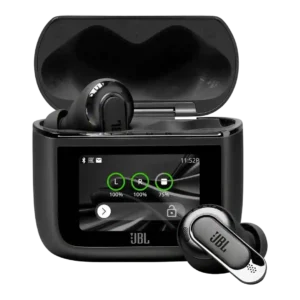
Choose JBL Tour Pro 3 Earbuds for Sound quality and Soundstage depth.
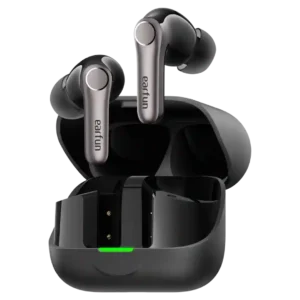
Choose EarFun Air Pro 4 Plus for Portability/foldability and Audio-video sync accuracy.
Why these recommendations?
JBL Tour Pro 3 Earbuds
Where It Has the Edge
Sound quality is 4.6 vs 4.3. Reviewers widely praised the overall sound as clear, exciting, and flagship-level, with only a few caveats about tuning...
Soundstage depth is 4.4 vs 2.8. Soundstage depth evidence was positive but limited, with comments about full engagement and an immersive concert-like effect.
Multi-platform compatibility is 4.9 vs 3.6. Multi-platform compatibility was praised because the transmitter case and feature blend expand use beyond standard phone pairing.
EarFun Air Pro 4 Plus
Where It Has the Edge
Portability/foldability is 3.9 vs 3.1. Portability is good thanks to the light earbuds and generally compact case. A few reviewers thought the case...
Audio-video sync accuracy is 4.1 vs 3.4. Low-latency and gaming performance is generally strong. Game Mode often brought audio close to the action, although Bluetooth...
Value for money is 4.5 vs 4.1. Value for money is the strongest point of agreement. Reviewers repeatedly say the combination of sound, battery life,...
JBL Tour Pro 3 Earbuds4.4 overall score
EarFun Air Pro 4 Plus3.9 overall score
Compare features
Scores are out of 5. Missing scores mean missing review evidence, not a missing feature.
Scored on both products
Performance
Sound quality
JBL Tour Pro 3 Earbuds
4.6
EarFun Air Pro 4 Plus
4.3
Details and evidence for Sound quality
JBL Tour Pro 3 Earbuds
Reviewers widely praised the overall sound as clear, exciting, and flagship-level, with only a few caveats about tuning preferences.
Sound quality is the product's strongest consensus win, with rich, detailed and unusually mature performance for the price. A few reviewers wanted more refinement, but many thought it competed surprisingly close to much more expensive earbuds.
Soundstage depth is weaker than width. Reviewers described the presentation as relatively flat or merely adequate in front-to-back depth even when the overall stage remained spacious.
Details and evidence for Microphone noise reduction
JBL Tour Pro 3 Earbuds
Microphone noise reduction was usually praised for suppressing train, traffic, wind, and office noise, though one reviewer found wind-city performance weaker.
Microphone noise reduction works well in ordinary indoor or moderately noisy settings, but heavy wind and busy streets expose its limits. Background suppression can also make the user's voice quieter or less stable.
Passive isolation is a useful foundation for ANC. Reviewers who discussed the seal found it capable of blocking a fair amount of outside sound even before electronic cancellation is applied.
Noise cancellation is the main point of disagreement. Some reviewers found it impressively effective on steady low-frequency noise, while several others called it average, confusing to configure, or clearly behind the strongest rivals.
Low-latency and gaming performance is generally strong. Game Mode often brought audio close to the action, although Bluetooth still leaves enough delay or directional imprecision to limit competitive use.
There is no dedicated spatial-audio processing, but reactions to that omission are mostly mild. Some reviewers missed the feature, while others felt the natural width and depth made artificial spatial modes unnecessary.
Bass is one of the sound profile's strengths: deep, punchy and generally well controlled without swamping the mids. A minority found the default low end a little thick or less forceful than expected.
The stage is generally wide and spacious for budget earbuds, helping music feel open and immersive. A few reviewers still found it narrower than premium alternatives or wider than it is deep.
The default tuning is usually described as balanced, warm and natural rather than aggressively V-shaped. A few reviewers heard too much brightness or bass, but the overall frequency balance earned positive marks.
There is no low-latency wireless dongle, which limits suitability for serious competitive gaming. Game Mode helps substantially, but Bluetooth remains the underlying connection.
Wear detection is inconsistent across reviewers. Some found it responsive and improved, while others experienced false pauses or fit-related detection problems.
The earbuds work across a broad mix of phones, computers and portable gaming devices, and reviewers generally had few compatibility problems. Android gets the richest codec options, but basic use remains strong across platforms.
LDAC is valued for giving Android users another high-bitrate option and sometimes a little more body or detail. Its drawback is higher battery use and, in some setups, more connection instability or reduced multipoint flexibility.
The smart charging case was the standout feature across reviews, praised for touchscreen controls, transmitter utility, and overall usefulness despite size complaints.
The charging case is usually considered compact, practical and pocketable, but opinions on its feel are mixed. Some praised its sturdy design, while others found it slippery, awkward to open, or less premium than the earbuds' performance suggests.
The Find Headphones function is a useful practical extra for locating a misplaced bud. Reviewers who mentioned it treated the audible locator as a welcome feature in an already deep app.
Clarity at extreme volume is only middling. Reviewers noted that treble can become hot or more aggressive near the top of the volume range even though normal listening stays controlled.
The large preset library gives plenty of quick tuning options, but quality and usability are mixed. Some reviewers liked the choice while others found the presets excessive, poorly organized, or less useful than the manual EQ.
Portability is good thanks to the light earbuds and generally compact case. A few reviewers thought the case could be slimmer, but it remains easy to carry in most pockets or bags.
Android use is a good fit, especially for access to Fast Pair and higher-resolution codec options. Reviewers who tested Android generally found pairing and app support straightforward.
High-resolution wireless playback is a notable value advantage, with reviewers appreciating access to advanced codecs at a low price. The improvement over standard AAC can be subtle, but compatible sources can extract extra detail.
Treble is usually clean, detailed and better resolved than on earlier EarFun models, helped by the balanced-armature driver. Depending on listener and volume, it can also sound too bright, too safe or slightly hot.
The IP55 protection is widely viewed as sufficient for workouts, sweat, rain and everyday outdoor use. Reviewers treat it as a useful durability upgrade, while noting that the earbuds are not meant for submersion.
Midrange performance is generally clear, full and natural, with vocals and instruments staying distinct from the bass. A few reviewers found the mids recessed, thin or less energetic, making this less unanimous than the bass praise.
The accessory package is simple but useful, especially the unusually broad selection of ear-tip sizes. Reviewers liked having enough fit options without unnecessary extras.
Physical stability is good for walking, running and workouts when the correct tips are used. Reviewers generally found the buds secure enough to stay in place through movement.
Transparency mode is useful for conversations and basic awareness, but it is rarely described as class-leading. Reviewers commonly called it decent or good enough, with less natural amplification than premium rivals.
Instrument separation is a major sound-quality strength for the price. Reviewers repeatedly heard distinct instruments and vocals with good left-right organization even in busier mixes.
Volume output is strong enough for demanding listening. The reviewer who assessed it directly found useful loudness around mid settings and plenty of headroom above that.
Touch controls are customizable and usually responsive, but they are not universally loved. Some reviewers found them sensitive, fiddly or less satisfying than pressure-based controls.
The matte finish can resist fingerprints well, but the case is not equally resistant to cosmetic wear. One reviewer specifically found it easy to scratch.
Case-hinge confidence is a minor durability concern. Reviewers noted a less-secure lid and wished for a sturdier metal hinge, even though neither described an outright breakage.
Build quality is solid for the price but visibly budget-oriented. Reviewers generally trust the earbuds' durability while noting plasticky materials and a few case or hinge details that feel less premium.
The broad ear-tip selection helps accommodate different ear sizes and was repeatedly useful for achieving a secure seal. Reviewers with small ears in particular benefited from the extra sizing choices.
The familiar stem design is functional and often described as attractive or understated, but it does not hide the budget materials. Several reviewers liked the clean look while others called it plasticky or generic.
Fit is generally secure and comfortable, with the revised oval tips helping many reviewers get a good seal. Individual ear shape still matters, and a few testers needed to experiment with sizes or experienced fit-related sensor quirks.
Long-wear comfort is consistently strong. The light earbuds sit comfortably for multi-hour listening, commuting, workouts and gaming without the pressure or fatigue some reviewers experience with other ANC buds.
Initial pairing and everyday setup are generally easy, particularly with Fast Pair. The main usability complaint is the large number of ANC and tuning options, which can make the software feel more complicated than necessary.
Bluetooth performance is usually quick and dependable, with easy pairing and few dropouts in normal use. The main caveat is that demanding combinations such as LDAC plus multipoint can introduce instability.
Call quality is good for everyday use, with clear speech in quiet and moderate noise. It is not consistently flagship-level, and several reviewers reported weaker intelligibility or voice stability in wind and very loud surroundings.
Sound customization is a standout feature. The 10-band EQ and personal profiles can meaningfully reshape bass, mids and treble, and several reviewers used them to correct aspects of the stock tuning they disliked.
The EarFun Audio app is widely praised for its depth, useful layout, and extensive controls. A few reviewers found parts of it unstable or overly busy, but customization is a consistent strength.
Auracast is mostly viewed as a welcome future-facing extra rather than an everyday necessity. Reviewers like seeing it at this price even though several had little opportunity to use it.
Codec breadth is exceptional for the price, with reviewers repeatedly praising the unusually complete set of modern wireless audio options. That flexibility is especially valuable for Android users and audio tinkerers.
Value was highly context-dependent: many reviewers liked the feature set or sale pricing, while others criticized the premium price and cheaper JBL alternatives.
Value for money is the strongest point of agreement. Reviewers repeatedly say the combination of sound, battery life, codecs and customization delivers far more than the sub-$100 price suggests.
Multipoint is usually convenient and reliable, with some reviewers calling switching seamless or flawless. A smaller group encountered stutters or instability, particularly when combining two-device use with LDAC.
Charging is a strong convenience feature thanks to wireless charging and useful quick-charge performance. Reviewers repeatedly liked getting these extras in a budget-priced set.
Battery life is one of the clearest strengths, with reviewers repeatedly praising long single-charge endurance and generous case reserves. Higher-bitrate codecs and ANC reduce runtime, but the overall result remains excellent for the class.
AI translation drew mixed reactions. It can handle basic exchanges reasonably well, but reviewers also found the workflow slow or awkward and questioned how accurately the feature is marketed.
aptX support is repeatedly treated as unusually generous at this price. Reviewers value having it alongside other high-resolution options, though the audible advantage depends on the source device and settings.
Headwear compatibility has a specific caveat: one reviewer found that wearing a beanie could accidentally trigger the touch controls and pause playback.
Overall satisfaction is very high: most reviewers consider these among the strongest sub-$100 earbuds and several gave unusually enthusiastic recommendations. The few reservations center on ANC, calls and budget-feeling materials rather than the core listening experience.
Firmware support earned positive comments when updates arrived during testing and fixed real issues. Reviewers saw the active update cadence as a reassuring sign that EarFun is still refining the product.
Lossless-oriented codec support is impressive for a budget model, but reviewers were careful about its limits. It can improve the available wireless quality with compatible devices without turning Bluetooth into truly wired lossless playback.
Imaging is good for music, with convincing left-right placement and useful spatial cues. For competitive gaming, however, at least one reviewer found direction and distance too imprecise for pinpoint positioning.