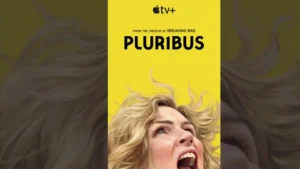

Pluribus, Season 1
Where It Has the Edge
No clear scored advantage over the other product.

Scorata scores summarize analyzed review evidence on a 1–5 scale; they are not laboratory measurements or a simple average of customer star ratings. Feature scores summarize the reviews covering that feature. The overall score averages feature scores within each review, then combines review averages. When both expert and customer evidence are available, those two groups receive equal weight. Products can have different review coverage, so small score gaps do not establish a winner.
Recommendations prioritize important features for the category, with a score of at least 3.5, a gap of at least 0.25 points and at least two supporting reviews per product. Features with widely varying scores or broad connectivity contexts are excluded from recommendations. These safeguards do not establish statistical significance.
Quick verdict
The available evidence supports the recommendation below, but does not establish an overall winner. Check the remaining features against your priorities.
There is not enough comparable review evidence to recommend Pluribus, Season 1 over the other product.
Choose The Grand Tour for cinematography.
No clear scored advantage over the other product.
Scores are out of 5. Missing scores mean missing review evidence, not a missing feature.
Unease is sustained through eerie politeness, uncertainty, and sudden danger rather than constant action. Many reviews call the result creepy, tense, or thrilling.
Predictability undercuts suspense for the harshest critics, who say they can anticipate each beat before it happens.
Dialogue is generally valued for trusting viewers and letting tense or funny exchanges carry ideas without excessive exposition.
The banter ranges from credible and mate-like to timid, scripted, and stiff. Reviewers who dislike the reboot often point directly to unnatural delivery as a problem.
The premiere is frequently highlighted as spectacular, dramatic, and unusually confident. A smaller number of reviewers object to specific early choices or feel the opening promises a faster show than the season becomes.
The opener draws mixed reactions, from a smart if slightly clunky springboard to a flat, overly safe, or outright bad first impression.
Originality is one of the strongest points of agreement. Even skeptical reviewers describe the central concept and its execution as unusual, inventive, or unlike most current television.
Originality is a recurring weakness: many reviewers call the reboot safe, derivative, predictable, or too close to old Top Gear and Grand Tour formulas. A few accept the familiar structure because the new personalities provide some freshness.
As science fiction, the show is praised for mixing body-snatcher unease, satire, dark comedy, noir touches, and character drama without feeling like a routine genre exercise.
The familiar motoring-adventure formula still works strongly for some enthusiasts, but other reviewers question whether the genre template has been exhausted.
The series repeatedly blends dread, comedy, heartbreak, and philosophical drama. Most reviewers admire that tonal elasticity, though the same strangeness can make the experience feel uneven to some.
Some reviewers think the reboot balances continuity and change well, but others say it lacks a clear identity and still needs to decide what kind of show it wants to be.
Familiarity with Gilligan’s earlier work raises expectations, but reviewers generally value Pluribus for moving into a distinct kind of science fiction rather than simply repeating Breaking Bad.
Some reviewers see a successful relay that preserves the old show's spirit, spectacle, and legacy; others think the cameos and familiar structure only underline how different the new version feels from the original.
The episodic construction is widely admired, especially the cold opens and chapters that tell a complete mini-arc while still advancing the larger season.
The six films are praised in one review for feeling distinct from one another rather than repeating the same vehicle problem or setup.
When its strange premise clicks, the season can be intensely absorbing and hard to stop thinking about. That pull is less reliable for viewers who find the slow build tedious.
One reviewer watched all six episodes in a single binge, suggesting the season can be very easy to keep watching when the new format clicks.
Carol’s strongest screen partnerships add warmth and tension to an intentionally lonely story, especially her evolving connection with Zosia.
Chemistry is the biggest point of disagreement. Several reviewers praise immediate rapport and an easy team dynamic, while others hear forced banter and say the trio has not yet found a natural rhythm.
The central story earns substantial praise for its bold premise and character-centered approach, though critics split over whether the slow narrative engine provides enough payoff within one season.
The strongest full-season review praises the episodes as distinct, memorable, increasingly exciting, and supported by outstanding storytelling.
The series grounds its extreme premise in recognizable grief, loneliness, and human behavior, though a few reviewers struggle with the plausibility of particular character choices.
The show's staged nature lands differently across reviews. Some find the banter and updated format more believable than before, while others can plainly feel the scripting and planning behind the stunts.
Season pacing receives mixed reactions, with clear strengths offset by meaningful criticism.
The season appears to improve as it goes for multiple reviewers, with later episodes described as stronger or more exciting than the opening stretch.
Writing is widely praised for trusting the audience, subverting familiar science-fiction tropes, and building character and ideas patiently, even when the pacing becomes divisive.
One strongly positive review praises the season's storytelling as outstanding, supporting the show's scripted and narrative construction.
Carol is intentionally difficult: cynical, angry, stubborn, and sometimes self-destructive. Some find that complexity fascinating or relatable, while others say her incuriosity and abrasiveness make the season harder to invest in.
Even skeptical reviewers tend to find the new hosts personally pleasant and likable, with one calling all three seriously lovely people.
Dark, absurd humor is a major part of the appeal, repeatedly breaking the tension without undercutting the unsettling premise.
Comedy is divisive: Bourgeois and the new team's lighter style feel fresh and playful to some reviewers, while others find the reboot noticeably less funny than the original.
Individual episodes often favor process and atmosphere over speed. Some reviewers enjoy that patience, while others feel certain chapters sacrifice too much forward motion.
One review approves the deliberately low-stakes start, arguing that letting the show develop at its own pace may be the right way to build the new team.
The cinematography is consistently singled out for unconventional framing, long takes, wide compositions, and carefully controlled visual storytelling.
Cinematography is one of the clearest strengths across the coverage, with even negative reviews praising the glossy car imagery, landscapes, and cinematic polish.
The season deliberately concentrates attention on Carol, often functioning like a one-woman show. Some reviewers admire the focus, while others miss a fuller ensemble and more character interaction.
Bourgeois often becomes the trio's dominant comic personality. Some reviewers like how Holland and Engelsman set him up, while others feel too much charisma is concentrated in one presenter.
The season’s queer relationship is central rather than incidental, but one reviewer criticizes an early death as an overly familiar queer-character trope. International characters also draw some criticism for limited agency.
One review explicitly notes that the core presenting setup remains three white men, framing the reboot as conservative in its representation despite changes in personality.
The writing earns praise for avoiding easy self-narration even when characters spend long stretches alone, trusting performance and visual storytelling instead.
James Engelsman is singled out as the strongest narrator of the new trio, giving the explanatory sections a polished voice.
Critical reception is portrayed as exceptionally strong in the supplied coverage, with the show repeatedly described as a major or even masterpiece-level arrival.
The BBC's roundup characterizes the early critical response as mixed, with notable disagreement over presenter chemistry and whether the reboot feels too safe.
The show has strong appeal for viewers who enjoy patient, idea-heavy science fiction, but several critics warn that its deliberate pace and prickly lead will push some people away.
Several reviewers think the reboot can reach beyond hardcore car fans, including viewers who do not care much about driving, while still retaining the basic appeal of the franchise.
Music is generally treated as atmospheric and purposeful, although not every reviewer finds it especially memorable.
One reviewer singles out a needle drop as one of the strongest music choices in the show's history.
Supporting performers are well regarded, especially Karolina Wydra, Samba Schutte, Carlos Manuel Vesga, and Miriam Shor, who give Carol’s isolated story needed contrast and texture.
The original trio's cameos divide reviewers. One sees Clarkson, May, and Hammond as disengaged, while another says their brief appearances immediately remind viewers why they were so effective.
Rhea Seehorn is the consensus standout, with reviews repeatedly calling her performance masterful, magnetic, funny, vulnerable, and capable of carrying long stretches alone.
Opinions on the new trio are sharply split: some reviewers find them polished, promising, and highly watchable, while others describe them as stilted, anonymous, or out of their depth.
Visual style is a major strength, from desert wides and surreal emptiness to carefully framed interiors and more globally scaled locations.
The reboot retains the franchise's polished, high-budget visual identity, with lavish vehicle photography and strong lighting repeatedly praised.
Silence is used deliberately as part of the show’s soundscape, reinforcing isolation and letting quiet moments carry unusual weight.
The production's sound is specifically praised alongside its cinematography and lighting as outstanding.
Most critics find the season compelling, funny, strange, and absorbing, but a meaningful minority describe stretches as tedious, listless, or boring.
Overall enjoyment ranges from enthusiastic praise to outright rejection. The spectacle works for many viewers, but critics of the reboot say repetition and weak chemistry make the show feel unnecessary or dull.
Acting is one of the season’s clearest strengths. The cast is repeatedly praised for selling an unusual premise without losing the human emotion underneath it.
The expensive challenges, races, and stunts are consistently among the reboot's strongest elements, described as fun, thrilling, slick, and impressively executed.
The unconventional handover to Holland, Engelsman, and Bourgeois is widely seen as a smart casting move, with Bourgeois repeatedly singled out as an especially strong fit.
Thomas Holland is praised for feeling like the same presenter he was before television, retaining the personality and delivery style the reviewer already valued.
Carol is treated as a genuine character study rather than a simple mystery-box hero. Reviewers like how new layers emerge through isolation, grief, anger, and changing relationships.
The show frequently ends chapters with new possibilities rather than tidy answers. That unpredictability builds anticipation, though the season finale’s cliffhanger frustrates some viewers.
Direction receives strong praise for precise blocking, staging, visual patience, and the confidence to let quiet scenes play out at length.
Editing is praised for giving the series a distinctive rhythm, with carefully shaped montages and unconventional transitions reinforcing its fresh narrative voice.
Grief, isolation, vulnerability, and sudden loss give the high-concept story a strong emotional undercurrent. Several reviews describe individual episodes or performances as heartbreaking.
Reactions to the ending are mixed. Some appreciate the open-ended setup, while harsher reviews argue the season stops where the main story should finally be accelerating.
The depiction of Carol’s relationship with her readers is one of the more contested early choices, with criticism that it reduces fans to an oversimplified mass.
The most negative thematic criticism targets the show's anti-EV or pro-hydrocarbon framing, which several reviewers describe as dated or objectionable.
Mystery and withheld information are a deliberate part of the experience. Some reviewers enjoy the ambiguity, while others find the lack of answers frustrating or confusing.
The season’s revelations and tonal shifts keep many reviewers unsure where the story will go next. That unpredictability is usually praised rather than treated as random.
The Diddly Squat Farm handoff is criticized in one review as conspicuous cross-promotion rather than an organic opening beat.
The long gap anticipated between seasons is a concern for reviewers who already feel the first season withholds too much progress.
Interest in another season is polarized: some reviewers strongly want the new trio to continue, while others doubt the chemistry or concept can develop enough to justify more episodes.
Carol and Zosia’s relationship develops from wary dependence into something more emotionally charged. Reviewers who discuss it find the chemistry compelling and central to the season’s vulnerability.
The choral-leaning score and use of silence fit the collective premise well. One dissenting review finds the music less captivating than a major sci-fi comparison point.
The season-ending turn is one of the sharper points of disagreement: some see an exciting launchpad for season two, while others find it weak or badly delayed payoff.
At least one full-season review argues that nine episodes are more than the story needs, suggesting the season could have delivered the same arc more efficiently.
The season is especially strong as a vehicle for questions about freedom, consent, happiness, grief, conformity, individuality, and community. Reviewers often value the questions more than definitive answers.
The show's car knowledge can be a real strength: reviewers praise both the technical insight and the presenters' ability to make specialist information interesting.
Rewatch value is a consistent strength, earning emphatic praise across the reviews that discuss it.
Production design and scale help the premise feel global while retaining a distinct Albuquerque identity, with locations, built environments, and physical staging drawing repeated praise.
The hive-mind premise is developed through rules, social consequences, and lived details rather than dense exposition. Reviewers generally find the resulting world unusually rich and thought-provoking.
Choose The Pitt Season 2 for a gripping, realistic medical drama with superb acting and emotional depth. Skip it if graphic procedures, unresolved arcs, or slower character-driven pacing bother you.
Pros: episode structure, main cast performance
Cons: age appropriateness, plot clarity

Best for powerhouse performances, thorny character work, and a tense revenge mystery that grows richer as it goes. Skip it if abuse, trafficking, graphic violence, or deliberately messy moral questions...
Pros: episode structure, supporting cast performance
Cons: cinematography, sexual content level

Best for sharp jokes, standout performances, and a warm, emotionally satisfying goodbye. Skip it if you most valued the pricklier Deborah-Ava conflict and biting Hollywood satire; the final season is...
Pros: plot originality, episode structure
Cons: season length, realism
Best for fast, darkly funny spy thrills, standout performances, and a tightly wound six-episode run. Skip it if the familiar formula, dense callbacks, or a major cliffhanger ending are likely...
Pros: season finale quality, character development
Cons: accent authenticity, product placement