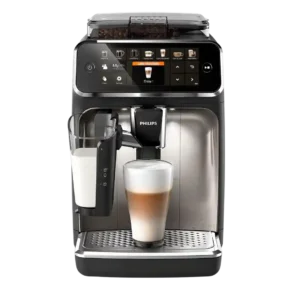
Philips LatteGo 5400 Espresso Machine
Where It Has the Edge
- Accessories is 4.1 vs 2.5. Accessory evidence is favorable but limited, centered on a useful measuring scoop and the ability to buy replacement...

Scorata scores summarize analyzed review evidence on a 1–5 scale; they are not laboratory measurements or a simple average of customer star ratings. Feature scores summarize the reviews covering that feature. The overall score averages feature scores within each review, then combines review averages. When both expert and customer evidence are available, those two groups receive equal weight. Products can have different review coverage, so small score gaps do not establish a winner.
Recommendations prioritize important features for the category, with a score of at least 3.5, a gap of at least 0.25 points and at least two supporting reviews per product. Features with widely varying scores or broad connectivity contexts are excluded from recommendations. These safeguards do not establish statistical significance.
Quick verdict
The review evidence points to a tradeoff: Accessories versus Milk, steam and frothing and Speed and time-to-cup. Choose according to which strengths matter more to you; the overall score alone does not settle that choice.
Choose Philips LatteGo 5400 Espresso Machine for Accessories.
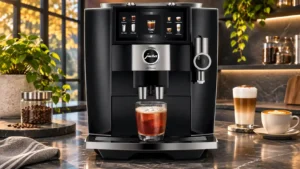
Choose Jura J10 twin Diamond for Milk, steam and frothing and Speed and time-to-cup.
Scores are out of 5. Missing scores mean missing review evidence, not a missing feature.
Smart connectivity scores poorly because the clearest evidence says shoppers wanting app telemetry should look elsewhere.
Wi-Fi and the J.O.E. app support custom recipes and brewing timers, making a cup ready ahead of a routine. Scheduled brewing still needs a correctly positioned cup.
The only opinionated iced-drink evidence says the 5400 is not made for iced drinks, making it weaker for summer iced-coffee use.
On-demand cold extraction is a standout attraction that delivers smooth chilled-style coffee without an overnight steep. It still needs ice for a properly cold drink and does not replicate every characteristic of immersion brewing.
The pod/consumables evidence favors switching to beans, with one reviewer calculating major savings versus pods and less environmental waste.
The Sweet Foam capsule adds a preparation and cleanup step, but can be removed and rinsed without much effort.
Accessory evidence is favorable but limited, centered on a useful measuring scoop and the ability to buy replacement parts/accessories.
Milk accessories require attention before purchase, and an external milk vessel may cost extra. Buyers should verify what comes in the particular package rather than assume the full milk setup is included.
Maintenance is a clear strength, especially automatic rinses, front water access, brew-group cleaning and LatteGo cleanup, with minor caveats around manual carafe rinsing and prompts.
The closed-loop milk cleaning accessory is praised for convenience, yet regular rinses, filters and cleaning products remain necessary. The non-removable brew unit also frustrates owners who prefer self-service maintenance.
Drink quality is the main split: reviewers praise fantastic daily drinks, americanos and milk beverages, while espresso-focused reviewers repeatedly call the straight espresso mild, weak or lacking body.
Espresso and milk drinks are generally described as rich, good-tasting and well prepared. An owner who switched to a less expensive competitor did not find enough flavor advantage to justify the cost.
Milk handling is easy and often satisfying, especially for cappuccinos and family use, but foam texture is divisive: some call it velvety or compact, others airy, watery or quick to collapse.
The milk system can produce airy foam and heated milk for rich cappuccinos, flat whites and specialty drinks. Some texture changes still require a manual dial adjustment.
Most reviewers find one-touch drinks quick enough for daily use, with praise for speedy cappuccinos and instant workflow, though one review found a latte took three minutes.
One-touch preparation, separate bean supplies and a timer make drinks convenient to prepare. Frequent bean switching no longer involves emptying and purging a single grinder.
The grinder and hopper earn praise for ceramic burrs, sealed freshness and good pucks, but several espresso-focused reviewers say the grind range is too coarse or macro-stepped.
Two independent grinders are the main attraction, letting different beans stay ready and enabling regular, decaf or half-caf drinks without swapping. Hands-on grind adjustment is less complete than a manual setup.
The overall experience is the strongest consensus point: reviewers repeatedly call it intuitive, easy, family-friendly and low-hassle.
The machine offers a highly versatile, mostly hands-off coffee routine with many ways to personalize drinks. Price, the interface and maintenance demands can undermine that convenience for some owners.
Used-puck disposal is generally low-mess, with reviewers noting hard pucks and a tidy grounds tray/container workflow.
Internal puck ejection reduces manual handling after each drink. Waste still needs to be emptied periodically as part of standard upkeep.
Capacity is good for households and family mornings, with large tank/hopper praise, but it is not suited to making rounds of coffee for groups.
Dual bean hoppers and a sizable water reservoir support varied daily drinks. Because bean storage is split between hoppers, a household using only one supply may refill it more often.
Automation and sensor feedback is helpful for refills and bean detection, though the drip-tray sensor gap appears as a separate design flaw.
Coffee Eye cup detection helps stop wrong-spout dispensing, while automated prompts simplify daily use. Those safeguards are particularly helpful in a busy shared kitchen.
AquaClean is generally praised for extending descaling intervals and being straightforward, though reviewers note replacement cost and skepticism about long claims.
Water filtration helps organize the machine’s care routine, but replacement cartridges add ongoing expense. Filtration does not eliminate other cleaning tasks.
Marketing accuracy is mixed: the quieter frothing claim is largely supported, but the foam-quality improvement claim is criticized.
The 46-drink claim includes variants of fewer underlying recipes, so the headline count can overstate the number of genuinely different drinks.
Brewing consistency is context-dependent: volumes and americanos can be accurate and balanced, but several reviewers found café crema or espresso extraction thin unless settings are adjusted.
Automatic brewing favors predictable strength and extraction without manual dosing. Some enthusiasts miss the ability to control every extraction variable directly.
Build quality is mixed: some reviewers find durable plastic and solid design, while others complain about cheap-feeling plastic, micro-cracking, flimsy pieces or a loose cord.
Plastic construction divides opinion: some appreciate the practical finish, while one owner found the materials unacceptable for a high-end appliance. Attractive looks do not guarantee a premium feel.
Design flaws recur around fixed milk spouts, unclear markings, noisy operation, cheap-feeling pieces, milk residue, leaks, and missing drip-tray sensing.
The divided screen frustrates at least one owner, who thinks it undermines the machine’s appearance and usability.
Design and ergonomics are broadly praised for a sleek look, compact footprint, lighting, and clear controls, despite some cheap-feeling plastic in other attributes.
The surprisingly compact dual-grinder layout and glossy finish earn praise, but it remains a substantial countertop appliance. Some owners dislike the plastic body and three-panel screen.
Value is mostly positive: reviewers call it a fantastic buy or worthwhile family investment, but one questions the premium over simpler Philips models.
Some see excellent value in the dual-grinder capability relative to premium rivals, while others find the high price difficult to justify. It makes the most financial sense when both grinders and advanced recipes see frequent use.
Setup is usually guided and easy once underway, but reviewers reported missing instructions, cleanup after the first rinse, and filter/O-ring friction.
Support evidence is limited but mixed: one reviewer praises Philips customer service, while another flags warranty risk from non-Philips descaler.
The single-boiler design is treated as an acceptable tradeoff because the reviewer notes little waiting time between steaming and brewing.
The clearly labeled milk dial is easy to adjust, but the divided touchscreen can be confusing at first. Some users adapt after practice, while others dislike the layout.
Cup, tray and carafe handling is mixed: some parts attach easily and tall cups fit, but cup alignment, leakage, travel mug fit and unreadable markings create friction.
The machine is presented as compatible with an ordinary US outlet, without special plumbing. Its power draw still warrants care when other high-wattage appliances share the circuit.
Packaging sustainability is positive where mentioned, with reviewers appreciating recyclable packaging.
Hot water is useful for tea, oatmeal and green tea, though one reviewer warns it can be slightly milky if the milk carafe is not rinsed.
Light extraction gives a gentler, lower-temperature cup that is ready to drink sooner. Its appeal is strongest for people wanting a milder coffee option.
Popularity evidence is limited to one review citing strong owner reception and many Google reviews.
This is a sizable machine designed to stay on the counter, rather than one that tucks away easily between uses.
Sweet Foam blends syrup into milk evenly, creating stable, flavorful foam. Its small attachment needs rinsing and refilling, and some owners would rather add syrup themselves.
The broad hot, cold, light and sweetened drink menu is a major strength, especially with programmable preferences. Some of its advertised choices are variations of base drinks, and fine extraction control is limited.
Closed-loop milk cleaning is a standout convenience for some testers, but a dissatisfied owner finds another machine easier to maintain.
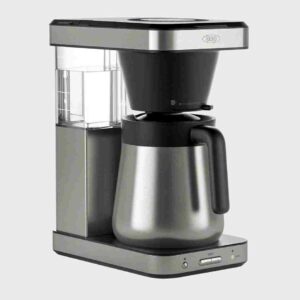
Choose the OXO Brew 8-Cup if you want fast, consistent drip coffee in small or full batches. Skip it if you need programming, app controls, a larger pot, or the...
Pros: Brewing performance and consistency, Overall user experience
Cons: Design flaws
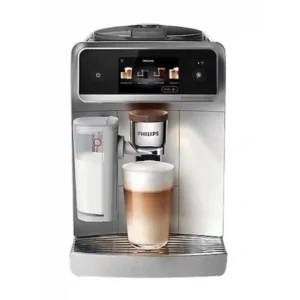
Best for effortless, highly personalized hot and cold coffee in a busy multi-drinker home. Skip it if counter space is tight, you demand silky adjustable microfoam, or the premium price...
Pros: Automation and sensors, Overall user experience
Cons: Design flaws, Mess-free used-puck disposal
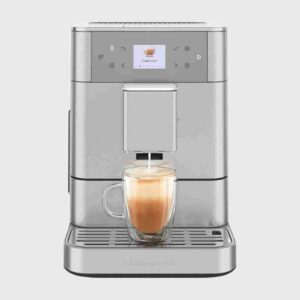
Choose the KitchenAid KF6 for rich espresso, quiet operation, easy cleaning, and strong value in a super-automatic. Skip it if dense cappuccino foam, plant-milk presets, touchscreen controls, or an included...
Pros: Water system, maintenance and descaling, Overall user experience
Cons: Accessories, Design flaws
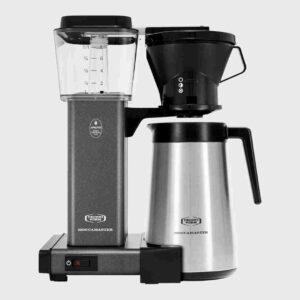
Choose the Moccamaster KBT for fast, excellent drip coffee, durable build, and a thermal carafe that keeps coffee hot. Skip it if you need programmability, a compact footprint, or a...
Pros: Brewing performance and consistency, Espresso and beverage quality
Cons: Automation and sensors, Design flaws