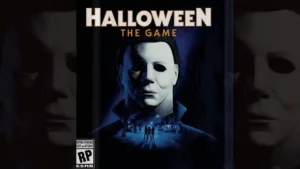
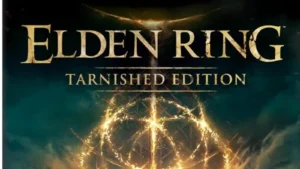
Halloween: The Game
Where It Has the Edge
- graphics quality is 4.1 vs 3.9. Haddonfield often looks excellent, especially in lighting and environmental scenes, although performance modes and some effects can reduce...

Scorata scores summarize analyzed review evidence on a 1–5 scale; they are not laboratory measurements or a simple average of customer star ratings. Feature scores summarize the reviews covering that feature. The overall score averages feature scores within each review, then combines review averages. When both expert and customer evidence are available, those two groups receive equal weight. Products can have different review coverage, so small score gaps do not establish a winner.
Recommendations prioritize important features for the category, with a score of at least 3.5, a gap of at least 0.25 points and at least two supporting reviews per product. Features with widely varying scores or broad connectivity contexts are excluded from recommendations. These safeguards do not establish statistical significance.
Quick verdict
The review evidence points to a tradeoff: graphics quality versus polish and game length. Choose according to which strengths matter more to you; the overall score alone does not settle that choice.
Choose Halloween: The Game for graphics quality.
Choose Elden Ring: Tarnished Edition for polish and game length.
Scores are out of 5. Missing scores mean missing review evidence, not a missing feature.
Cross-play is a welcome inclusion that helps PC and console players share the same multiplayer pool.
Switch 2’s lack of cross-platform multiplayer is a clear limitation, keeping co-op and invasions separated from the larger PlayStation, Xbox, and PC populations.
One launch account reports servers holding up well enough for players to get into matches without major trouble.
Online maintenance can force the game offline and prevent planned multiplayer sessions, making availability a practical inconvenience when it occurs.
Value is divisive: hardcore Halloween and multiplayer fans can justify the price, while solo-focused or polish-sensitive players are repeatedly advised to wait for fixes or a sale.
For newcomers, the base game plus Shadow of the Erdtree is repeatedly called a huge amount of high-quality content for the price. Existing owners have a weaker case to rebuy because the Tarnished-specific extras are comparatively small.
Replayability is mixed: multiplayer unpredictability and campaign challenges add reasons to return, but repeated objectives and limited launch content raise longevity concerns.
Replay value is exceptional: alternate builds, missed quests, hidden areas, New Game Plus, and the new starting gear give veterans repeated reasons to return.
PS5 Pro performance can be strong, but the lack of native PS5 Pro feature support is still a disappointment.
The Switch 2 version benefits from portability and some hardware support, but reviewers miss options such as a performance mode, stronger HDR behavior, and broader online compatibility.
Launch matchmaking is uneven, with reports of stalled lobbies, long killer queues, and difficulty filling sessions.
Matchmaking is remembered as easy and fluid during periods of high player activity, helping the online experience feel effortless.
Crashes remain a serious launch concern in several accounts, including hard crashes and sessions ending abruptly.
Crash stability is excellent in the reviews that address it directly, with multiple long sessions reporting no crashes or major failures.
The NPC-rescue premise is distinctive, but its door-to-door repetition divides opinion and can become boring for players who want more direct PvP pressure.
The cycle of exploring, fighting, discovering gear, experimenting with builds, and returning stronger is repeatedly praised as absorbing and difficult to put down.
Solo checkpointing can be unforgiving and awkward, making campaign setbacks more annoying than they need to be.
Sites of Grace are generally placed close enough to major fights that failed attempts do not require long runbacks, keeping repeated boss attempts focused on the fight itself.
Progression can become a slog when basic cosmetics or abilities sit behind long, sequential unlock paths.
One returning reviewer specifically praises how easy it is to dive back in without facing a long, sluggish grind, while exploration and flexible leveling let players strengthen naturally.
Across otherwise enthusiastic and critical takes alike, the game is repeatedly described as needing more polish, especially in interactions, animations, AI, and stability.
Reviewers overwhelmingly see the shipped edition as polished and dramatically improved over early demos, with remaining rough edges rarely overwhelming the core experience.
The solo campaign is brief and widely treated as supplemental content rather than a full-length reason to buy the game by itself.
The base game and Shadow of the Erdtree together offer an enormous amount of playtime, commonly described as well over 100 hours and potentially hundreds for thorough explorers or repeat runs.
Civilian onboarding is a major weakness: Michael gets a campaign tutorial, while survivors are often left to discover objectives, perks, and systems through trial and error.
The opening is more approachable than earlier Souls games thanks to an optional tutorial, flexible starting classes, and many routes to power. Some reviewers still want clearer explanations of classes and core systems.
Weapons can make coordinated civilians extremely difficult for Michael to handle, especially when several armed players stack together.
The game offers an enormous range of viable weapons and builds, and several new Tarnished weapons are enthusiastically praised. Some new options are clearly outclassed by later DLC gear, while a few may be unusually strong early on.
Matches can start tense and exciting but lose momentum once human players escape or die and everyone waits for the last NPCs to be found.
Returning to the Lands Between still feels easy to settle into without a long grind or sluggish open-world pacing getting in the way.
Michael’s campaign usually works well as a hands-on tutorial, but its tutorial-like structure is also why solo players often find it insubstantial.
The tutorial draws sharp criticism from one reviewer, who finds it poor despite the ability to revisit help information later.
The launch package can feel thin over time, with repeated objectives, a limited map pool, and only Michael as the killer making long sessions feel familiar.
The complete package is enormous, with weapons, armor, spells, builds, regions, bosses, dungeons, and the full expansion offering exceptional breadth. The edition-specific extras are much smaller, so returning owners may find the genuinely new material modest.
The game has fresh ideas around NPC rescue and stalking, but comparisons to IllFonic’s earlier asymmetrical titles leave some players feeling the broader structure is familiar.
Even when its fantasy influences are recognizable, reviewers praise the game for transforming them into a distinctive dark-fantasy identity of its own.
The close, constrained camera during interactions can leave players exposed, a choice that effectively raises tension when Michael may be nearby.
The camera remains a recurring weakness, especially in tight spaces or during hectic encounters. Several reviewers describe it as awkward enough to be noticeable even when the rest of combat works well.
Frame-rate drops, stutter, and slowdown are common launch complaints, though a few setups perform much better than others.
Frame-rate impressions are genuinely mixed. Many reviewers report a mostly stable 30fps experience with only occasional dips, while others encounter choppiness or severe drops in busy open areas and certain boss fights.
Michael’s abilities and the rescue systems can create clever horror scenarios, but mechanical roughness keeps the package from feeling consistently refined.
The overall gameplay design is described as deeply satisfying, with exploration, combat, build experimentation, and progression reinforcing one another.
Michael’s environmental executions are a highlight, but basic melee, grabs, hit registration, and civilian counterattacks can feel clumsy or inconsistent.
Combat remains one of the package’s biggest strengths, combining precise timing with shields, dodges, magic, summons, weapon skills, mounted fighting, and an enormous range of builds. Reviewers repeatedly describe victories as demanding but deeply satisfying.
Bugs are the most repeated complaint, ranging from funny visual jank to broken interactions, progression issues, invisible characters, and match-disrupting glitches.
The shipped port is far cleaner than its rough preview build, with many reviewers seeing few serious issues. Pop-in, lighting glitches, resume quirks, and occasional odd bugs still appear in some playthroughs.
Balance is highly context-dependent: some groups find both sides viable, while others see coordinated civilians bullying Michael or Michael feeling oppressive against less organized teams.
One reviewer sees the starting-class stat spreads as useful for min-maxing, while also flagging the possibility that certain new gear could be unusually strong in PvP.
Fun depends heavily on tolerance for jank and on who you play with; many find it hilarious and addictive, while others find the same systems repetitive or frustrating.
Despite the punishment, reviewers repeatedly describe the game as exhilarating, addictive, and hard to put down, with combat victories and exploration delivering sustained enjoyment.
Gun aiming can glitch instead of tracking smoothly, making ranged actions feel less dependable than they should.
Enemy lock-on can feel less reliable on Switch 2 than on other versions, making target tracking less precise in some encounters.
Execution animations can look brutal and impressive, but ordinary movement, grabs, clipping, and broken states make animation quality inconsistent.
Animation holds up most of the time, but large groups can cause distant enemies to animate in a noticeably choppy, stop-motion-like way.
The campaign is a faithful Michael-focused retelling with some enjoyable added moments, yet many see it primarily as an extended tutorial rather than a substantial story.
Story reactions are mixed: lore-focused reviewers admire its depth and environmental storytelling, while others find the central narrative too sparse or easy to lose track of during free exploration.
Accessibility is limited by missing options such as adjustable field of view, a particular concern for motion-sensitive players.
The game is more flexible than earlier FromSoftware titles, but dedicated accessibility accommodations remain limited for players who need broader options.
Making civilians responsible for rescuing Haddonfield residents instead of simply escaping gives the asymmetrical formula a recognizable identity of its own.
The open-world reinvention is still described as revolutionary years later, especially in how it turns traditional Souls difficulty into freedom to explore elsewhere and return stronger.
Searching drawers and buildings for specific escape items can become tedious, especially when required pieces are hard to locate across large maps.
Shadow of the Erdtree’s older exploration rewards are criticized as underwhelming, with later updates improving what players receive for some discoveries.
Connection loss, latency, and other network problems can interrupt matches and add to the launch-period roughness.
One reviewer reports an annoying suspend-and-resume reconnection loop that repeatedly returns the player to menus before restoring the session.
The game is at its best with friends: coordination, proximity chat, rescues, and improvised chaos create many of its most memorable moments.
The one reviewer who directly tested co-op reported smooth back-and-forth summoning and found fighting bosses with a friend highly enjoyable.
Haddonfield often looks excellent, especially in lighting and environmental scenes, although performance modes and some effects can reduce clarity or visual consistency.
Switch 2 preserves the game’s visual identity surprisingly well, especially in handheld mode, but resolution softness, reduced draw distance, pop-in, simpler textures, and a clear gap versus PS5/PC are recurring caveats.
Perks, prestige, cosmetics, weapons, and challenges provide a substantial progression chase, though randomness and grind can add friction.
Runes, flexible stat allocation, upgrades, respec options, and the expansion’s separate progression create strong build freedom. Some DLC-specific progression mechanics remain divisive.
When the systems behave, the game convincingly puts players inside a playable Halloween movie, especially through Michael’s first-person stalking perspective.
The combination of sparse interface, atmospheric art, sound, scale, and discovery makes the world exceptionally immersive even after hundreds of hours.
The strongest consensus is its devotion to Halloween: locations, music, visual details, Michael’s behavior, and familiar story beats closely evoke the 1978 film.
The experience remains firmly true to its Souls-like roots, preserving the demanding combat and learning-through-failure identity longtime players expect.
Rainy streets, glowing interiors, and careful lighting give Haddonfield a striking, film-like visual identity.
The art direction remains one of the game’s clearest strengths: dramatic vistas, strange creatures, monumental architecture, and a distinctive dark-fantasy style survive the Switch 2 downgrade exceptionally well.
Stalking, darkness, power cuts, and surprise repositioning make Michael feel appropriately predatory and are among the strongest franchise-specific mechanics.
Stealth is not the main focus, but sneaking through dangerous areas is described as a fun and useful alternative to direct combat.
Haddonfield’s darkness, period details, music, and stalking imagery consistently recreate the oppressive mood of the 1978 film.
Reviewers consistently praise the mournful, oppressive, mysterious atmosphere. Even technical compromises rarely diminish the strong sense of place across the Lands Between and Realm of Shadow.
Homes, streets, cars, décor, and other period touches make Haddonfield feel unusually specific and lived-in rather than like generic multiplayer arenas.
Distinct biomes, intricate armor, architecture, foliage, underground areas, and dense scenery make the world feel richly authored. Even with Switch 2 reductions, reviewers still find the environmental detail striking.
Proximity chat is a standout social feature, turning scares, role-playing, and accidental comedy into a major part of the multiplayer appeal.
Asynchronous messages and easy matchmaking helped make the original shared-world experience feel unusually lively and communal.
Lighting, reflections, fog, and shadow work create strong nighttime imagery, though a few graphical effects and edges draw criticism.
Large-scale lighting, spells, particles, and environmental effects remain impressive on Switch 2, though the busiest scenes can coincide with performance drops.
Environmental kill spots turn ordinary household objects into playful, gruesome opportunities and reward experimentation.
The world is packed with encounters, treasure, NPCs, and unexpected threats, giving exploration a strong sense that something is always happening nearby.
Unlock and challenge screens can be confusing, adding friction to an already grind-heavy progression system.
The interface is intentionally restrained and mostly effective, while additions such as a recent-items view make it easier to track newly collected lore and gear.
The resident-rescue scoring system and two-sided objectives make multiplayer feel different from many rivals, but AI, pacing, and PvE emphasis determine whether that difference feels fresh or frustrating.
The online systems remain useful, but Switch 2’s isolated matchmaking pool is viewed as a meaningful loss for a game built around summons, invasions, and asynchronous interaction.
Mission navigation can be too vague in solo play, with a stronger waypoint system likely to reduce time spent simply hunting for targets.
The expanding map supports discovery well, but its limited guidance can be both freeing and daunting depending on how much direction a player wants.
Most maps are dense, moody, and well sized for chases and rescues, though some players worry their suburban similarity will become stale.
Legacy Dungeons, layered open spaces, underground regions, and the expansion’s vertical layouts are consistently praised as intricate, surprising, and among FromSoftware’s best work.
Sound is generally a strength, using cues and effects to intensify danger, although isolated spatial-audio bugs can be especially disruptive in a stealth game.
The soundscape is praised for reinforcing loneliness, menace, and the weight of combat. Handheld speakers can sound thinner, but the underlying audio design remains strong.
Haddonfield feels inhabited rather than empty, with detailed homes and residents giving the town a convincing everyday life for Michael to disrupt.
The Lands Between remains one of the game’s signature achievements, combining environmental storytelling, mythology, strange characters, and memorable regions into a world reviewers describe as unusually rich and coherent.
Optimization is inconsistent across hardware, with reports ranging from smooth PS5 Pro play to severe stutter, low frame rates, and heavy PC performance demands.
The final port is dramatically improved from the disastrous 2025 demo and many reviewers call it an impressive technical achievement. Experiences still range from near-faultless to noticeably rough in demanding areas, so optimization is strong but not uniformly flawless.
John Carpenter’s familiar themes and the game’s period-styled music are repeatedly praised for completing the Halloween atmosphere.
Music is strongly praised for elevating major encounters and strengthening the world’s dramatic, haunting identity.
Grabs, item interactions, and movement inputs can fail or feel sluggish, which is especially frustrating during chases and executions.
Most reviewers find combat inputs responsive enough that mistakes still feel like the player’s own, which is crucial for Elden Ring’s timing-heavy fights. A few note lower-frame-rate feel or stick dead zones as minor compromises.
Voice work ranges from performances praised as close to the film to harsher complaints about campy or off-sounding delivery.
Voice performances are strongly praised and fit the broader enthusiasm for the game’s heavy, atmospheric audio presentation.
Cosmetics, loadouts, weapons, and unlockable looks give regular players plenty to chase, even if some individual rewards feel minor.
Build freedom is exceptional: players can reshape stats, weapons, spells, armor, and playstyle with very little long-term commitment to the starting class. The new classes add more useful starting points rather than locking players into fixed roles.
Battery results vary by test, but most reports land around a couple of hours to roughly two and a half hours. Some reviewers found that acceptable for a game this demanding, while others considered the drain a notable portable drawback.
Resident AI is one of the clearest weaknesses: NPCs can ignore danger, obstruct players, lock doors at bad times, or otherwise undermine the rescue-focused objective.
Civilian traits provide some differentiation, but several players feel the roster plays too similarly for those stat differences to matter much.
The campaign is highly linear; changing tactics or kills rarely changes the larger outcome of Michael’s story.
The new Idus and Heavy Knight starts are generally viewed as strong, useful options for newcomers and repeat runs. A few reviewers think their early equipment can be powerful enough to soften the opening challenge.
Online activity, messages, summons, and the broader player community can make the world feel more alive, but platform separation and DLC compatibility concerns reduce that benefit for some players.
Spirit Ashes are repeatedly praised as capable helpers that make difficult fights more approachable without removing the satisfaction of winning.
Crafting earns strong praise and is useful enough that the reviewer who focuses on it wants FromSoftware to expand the system in future games.
Dialogue is a weak point in the harshest assessments, where campy delivery and awkward lines make the campaign feel sillier than intended.
The game is brutally demanding, but the open world, summons, build changes, leveling, and alternate routes give players many ways to respond to a wall. Some late-game and DLC encounters still draw criticism for spikes or mechanics that feel overly punishing.
Limited build resources can discourage experimentation, with one missed opportunity being a safe training space before committing materials to a setup.
Finally overcoming a boss after repeated failures is singled out as one of the game’s most powerful rewards, creating a strong sense of relief and accomplishment.
Shadow of the Erdtree is praised as exceptional endgame content, adding a full new map, demanding fights, and fresh progression for high-level characters.
The breadth of creatures is praised as staggering, helping exploration stay surprising across a very large world.
Exploration is the most consistently celebrated part of the experience: distant landmarks invite detours, hidden areas reward curiosity, and repeated playthroughs still reveal places, quests, and encounters reviewers missed before.
Fast travel is treated as a major quality-of-life strength, letting players escape areas they are not ready for and quickly return after upgrading or changing strategy.
Portability is the edition’s defining advantage. Most reviewers enjoy exploring, grinding, or tackling shorter objectives in handheld mode, though battery drain, small text, darker scenes, and Joy-Con comfort can limit very long sessions.
One reviewer specifically praises the tactile feedback, finding the controller response effective enough to strengthen the feel of combat.
Shape Jump, stalking, restricted awareness, and Michael’s sudden appearances generate genuine jump scares and sustained moments of dread.
The sparse HUD is often praised for keeping the screen readable and letting the world dominate the presentation, though small handheld text can make some information harder to read.
The game remains demanding to learn, and some systems are communicated too subtly for newcomers. Its open-world structure and plentiful guides make that curve easier to manage than in earlier Souls games.
Loading is generally acceptable to very fast on Switch 2, especially around fast travel and death, though a few reviewers notice longer waits than on more powerful hardware.
The lore is repeatedly described as dense, strange, and rewarding for players willing to read item descriptions and connect environmental clues, even when the main story remains deliberately opaque.
The Tarnished Pack’s paid cosmetic-and-starting-gear approach worries some reviewers because it departs from FromSoftware’s usual pattern of more substantial paid expansions or free minor updates.
One reviewer finds the Switch 2 controls responsive enough that traversal and combat movement still feel dependable during demanding play.
The Game-Key Card approach disappoints reviewers who want the complete game stored on the physical card, since a substantial download is still required.
Missed jump inputs on Joy-Cons can make precision platforming frustrating, especially in a game where a failed input may mean falling to your death.
Players are free to change builds, choose routes, delay bosses, use summons, or approach encounters in very different ways, making the game unusually accommodating of personal playstyle.
Recurring side characters give the smaller questlines much of their charm, helping the world feel personal despite its enormous scale.
The expansion’s additional upgrade paths are viewed positively, adding fresh ways to strengthen characters and experiment with builds.
Environmental storytelling is strongly praised, with the world’s finer details doing much of the narrative work without relying on conventional exposition.
Boss fights are widely admired for spectacle, challenge, and payoff, though some reviewers criticize late-game difficulty spikes, repeated encounters, or weaker bosses in specific regions.
Controller impressions depend heavily on setup: the Pro Controller earns praise, while stock Joy-Cons can feel cramped or tiring during long, demanding fights.
The open world is almost universally praised for freedom, density, verticality, and the way it turns difficulty into a choice to explore elsewhere. Reviewers repeatedly describe it as a benchmark for open-world action RPG design.
Post-death and interaction minigames wear out their welcome quickly for several players, turning downtime into repetitive button work rather than meaningful participation.
Optional questlines and their recurring characters are praised as a major source of charm, rewarding players who wander beyond the critical path.
Shadow of the Erdtree is repeatedly treated as a huge, high-quality inclusion that makes the package feel exceptionally complete. The smaller Tarnished Pack extras draw more mixed reactions, especially when judged as paid content on other platforms.
Early patches are encouraging, but long-term confidence depends on steady fixes and enough new maps, characters, and objectives to keep the community active.
The small paid DLC is criticized for potentially breaking existing mods and forcing modders to support split configurations.
Sleep-mode behavior can force online players back to the title screen and create an unpleasant risk of losing recent progress when stepping away.
One analysis highlights a mismatch between circulated 60fps claims and the shipped 30fps-class performance, making pre-release performance messaging a notable point of skepticism.
The recent-items tab is a meaningful quality-of-life improvement, making newly collected lore and gear much easier to track.

Best for fluid traversal, rewarding exploration, striking art, and forgiving quality-of-life features. Skip it if you want deep combat, radical genre innovation, or consistently demanding bosses.
Pros: difficulty balance, boss design
Cons: innovation, sandbox freedom

Best for superb combat, inventive builds, and richly voiced characters. Skip it if repeated runs, resource gathering, or visually busy battles outweigh the appeal of steady progress.
Pros: overall quality, combat system
Cons: pacing, grind level

Good if you want a beautiful, demanding survival sandbox built around exploration, building, progression, and memorable co-op. Skip it if long resource runs, harsh death recovery, and deliberate pacing sound...
Pros: town-building system, exploration quality
Cons: grind level, fast travel convenience

Leonida is a breathtakingly alive crime sandbox with memorable protagonists, spectacular heists, and extraordinary detail. The tradeoff is a 30 fps ceiling, occasional control awkwardness, and some progression friction.
Pros: immersion, graphics quality
Cons: grind level, controls responsiveness