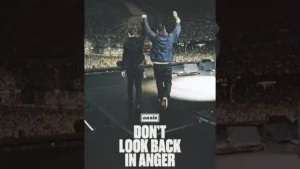
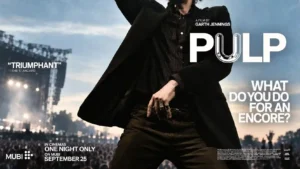
Oasis: Don’t Look Back in Anger
Where It Has the Edge
- chemistry between characters is 5.0 vs 4.5. Liam and Noel’s revived chemistry is a major pleasure: reviewers highlight their comic timing, mutual respect, and the...

Scorata scores summarize analyzed review evidence on a 1–5 scale; they are not laboratory measurements or a simple average of customer star ratings. Feature scores summarize the reviews covering that feature. The overall score averages feature scores within each review, then combines review averages. When both expert and customer evidence are available, those two groups receive equal weight. Products can have different review coverage, so small score gaps do not establish a winner.
Recommendations prioritize important features for the category, with a score of at least 3.5, a gap of at least 0.25 points and at least two supporting reviews per product. Features with widely varying scores or broad connectivity contexts are excluded from recommendations. These safeguards do not establish statistical significance.
Quick verdict
The review evidence points to a tradeoff: chemistry between characters versus theme depth and archival footage quality. Choose according to which strengths matter more to you; the overall score alone does not settle that choice.
Choose Oasis: Don’t Look Back in Anger for chemistry between characters.
Choose Pulp: What Do You Do for an Encore? for theme depth and archival footage quality.
Scores are out of 5. Missing scores mean missing review evidence, not a missing feature.
The structure is praised for misdirecting expectations away from a conventional backstage exposé and toward a broader story about fandom, healing, and what the music means to people.
The later narrative is criticized for repeating a story many fans already know rather than finding fresh ground.
One recurring weakness is explanatory clarity: the film communicates the emotional result of the reunion far better than the practical reasons the brothers reconciled or the details of what changed.
The loose chronology still makes the people and their tastes easy to grasp, helping newcomers follow the story before dates become important.
The film’s unusually soft, peace-and-love tone is a deliberate break from Oasis’s combative image. One critic finds that coziness a little strange, even while acknowledging the brothers’ familiar wit.
Celebration, melancholy, reflection, and warmth coexist comfortably, with the film generally avoiding either empty triumphalism or overly heavy nostalgia.
The central reunion and fan story is often praised as moving, redemptive, and well constructed, but this is also the film’s biggest recurring weakness: many reviewers wanted far more about the 2009 split, the years apart, and the mechanics of reconciliation.
The rise-from-obscurity story is usually intimate, warm, and absorbing, especially when memories feed directly into the concert. Its weaker stretches compress later history or revisit familiar beats without enough depth.
Reviewers repeatedly praise the concert photography for balancing stadium scale with intimate faces, using close-ups and huge crowd shots to make the reunion feel both massive and personal.
The concert photography is the biggest visual divide: close-ups, silhouettes, and energetic shooting work well for some, while others find the O2 framing too distant and conventional.
Editing is often praised as subtle, snappy, and effective at moving between eras, cities, performers, and fans. Some reviewers push back when the cut leans too heavily on crying crowds or makes later concerts feel repetitive.
The best editing fluidly cross-cuts old footage, memories, and current performances so each deepens the other. The archive-to-concert transitions are often singled out as smart and energetic.
Will Lovelace and Dylan Southern are widely praised for translating the reunion tour into an immersive cinema experience while keeping the brothers’ reconciliation and fan stories emotionally legible.
Garth Jennings is widely praised for connecting archive and performance, preserving spontaneity, and handling personal material sensitively. The main split is the arena filming, which a few critiques find too basic or distant.
The film finds depth in music as community, escape, memory, healing, and intergenerational connection. Several reviewers see those ideas as more important than the mechanics of the Gallagher feud itself.
Themes of outsider identity, persistence, ageing, and holding onto youthful ambition give the concert material more meaning than a simple greatest-hits celebration.
The first joint Liam-Noel interview in decades is frequently praised as funny, warm, candid, or moving. The recurring complaint is that the film does not push the brothers hard enough on how the feud ended or why the reunion happened.
Cocker’s candid, cheeky narration and the archival interview material make the history feel personal rather than like a formal talking-head documentary.
Archival material is used to bridge the 2009 breakup and the 2025 reunion, with reviewers praising the way old and new footage is blended into the film’s larger emotional timeline.
The archive is one of the film’s clearest strengths: rare footage, home movies, photographs, documents, and television clips give the history texture and intimacy. Its personal material is also handled with notable sensitivity.
Liam and Noel’s revived chemistry is a major pleasure: reviewers highlight their comic timing, mutual respect, and the sense that their old sibling rapport has returned in a gentler form.
The band’s chemistry reads naturally on screen, from spontaneous stage interplay to small, playful moments such as Candida Doyle laughing with Cocker.
The closing stretch is generally satisfying because it leaves the brothers visibly closer and the audience on a high, although one reviewer would have preferred the title song as the final musical statement.
The finales land strongly, with “Common People” providing a rapturous payoff and “A Sunset” adding a sweeter, forward-looking coda.
The two-hour length works for committed fans but draws criticism from casual viewers, especially when fan interviews repeat similar emotional beats. One reviewer felt the film could have been closer to 90 minutes.
The running time leaves two kinds of viewers wanting more: one response misses the full concert, while another feels 98 minutes cannot do the band’s history justice.
The documentary does not reinvent the concert-film form for everyone, but several reviewers praise its fan-centered focus, blend of backstage intimacy and spectacle, and refusal to follow a standard rock-doc formula.
Original flourishes, collage construction, and an art-house concert sensibility give the film personality, though not everyone finds the approach new; some later storytelling feels familiar or conventional.
The film’s message of forgiveness, reconciliation, collective joy, and music as a unifying force resonates strongly with most reviewers. A few find the religious framing and brotherly-love emphasis overly sentimental or too neatly packaged.
Self-belief, persistence, creative identity, and the need to keep making meaningful work give the film an accessible emotional message beneath the concert spectacle.
Pacing is one of the more divided areas. Some find the film light, propulsive, and never boring, while others say repeated fan stories and post-Cardiff concert patterns make the middle and later sections drag.
The concert-history alternation can be lively, but it sometimes feels cluttered, rushed, or prone to cutting away just as a recollection becomes interesting.
Liam and Noel’s humor is a consistent strength, from caustic one-liners to Mick Jagger jokes and relaxed sibling banter that repeatedly breaks through the sentiment.
Cocker’s dry, self-deprecating wit gives the documentary much of its personality, while family and band anecdotes keep the history light on its feet.
Emotional response is the clearest consensus strength: critics describe tears, goosebumps, catharsis, euphoria, and a powerful sense of communal release throughout the film.
The film moves easily between joy, nostalgia, and loss, with the Steve Mackey tribute and the band’s return carrying particular weight. Several reactions describe leaving energized, smiling, or newly invested in Pulp.
As a concert film and rock documentary, the film earns very strong marks for spectacle, music, and feeling. The main genre-level criticism is that it sometimes behaves more like a celebratory tour film than a probing documentary.
As a concert-film/documentary hybrid, it is often praised as highly satisfying and even exemplary. A few reactions call it standard or slightly confused when the two halves compete for attention.
The documentary is praised for showing Oasis as a working-class Manchester phenomenon that now reaches across ages, nationalities, and generations, while also touching on the band’s Irish roots.
Pulp’s smart, funny, working-class British identity is treated as a defining strength rather than generic Britpop nostalgia.
Hidden cameras, unobtrusive rehearsal coverage, and genuine sibling interactions give the film a strong sense of authenticity. Reviewers often respond to moments that feel unguarded rather than staged.
The documentary’s time-capsule feel and candid first-person storytelling come across as unusually honest and unvarnished.
The visual approach favors large-format spectacle, expressive crowd imagery, and polished concert photography. Most reviewers love the scale, though one critic thinks the slickness sometimes tips into corporate polish.
Collage, scrapbook textures, lighting effects, and bold concert visuals give the film a strong Pulp-specific identity. A few reactions still find parts of the arena coverage too conventional or non-intimate.
The film lands most strongly with Oasis devotees and reunion-tour attendees, but several critics say its crowd energy can also win over agnostics. A minority warn that non-fans and casual listeners may tire of the sentiment, repetition, or long setlist.
The film works for devoted fans while also serving as an inviting Pulp introduction for newcomers. Seasoned followers may know much of the history already, but the archive and performances still add fresh value.
Critical reception is presented as overwhelmingly positive, with the film repeatedly described as moving, nostalgic, and technically accomplished even when critics want more depth.
The film is described as receiving broad acclaim, including an enthusiastic response from Joyzine.
The central onstage performances are praised as masterful, with the reunion shows retaining the authority, confidence, and scale fans hoped for.
Jarvis Cocker remains a magnetic, witty showman whose movement and emotional delivery carry the arena material. A little late-career creakiness and conspicuous autotune draw mild caveats.
The Oasis songs remain the film’s engine, repeatedly described as thrilling, thunderous, timeless, and powerful live. The only notable complaint is that one reviewer wanted more complete performances instead of abbreviated songs.
The music is a major strength, with classics and newer songs repeatedly described as joyful, barnstorming, triumphant, and enduring. “Common People” is an especially consistent high point.
The wider band is praised as being in excellent form, helping the reunion sound polished and forceful rather than like a nostalgia exercise.
The rest of Pulp is repeatedly praised as energized, committed, and fully engaged, with the ensemble sounding and playing like a cohesive live unit.
Most reviewers find the film highly entertaining, especially in a theater, thanks to the music, humor, scale, and crowd energy. Even several mixed reviews still describe it as exciting or enjoyable.
Most reactions find the film engaging, joyful, warm, and fun, with the concert material creating strong momentum. The notable exception is the view that some O2 energy never fully reaches the screen.
The animated timeline and pencil-style illustrations add playful visual invention. The graphics flirt with twee territory, but their sparing use keeps them effective.
The Jarvis-centered focus is a clear tradeoff. Some coverage gives the whole band welcome space, but several critiques wish Candida Doyle, Mark Webber, Nick Banks, and the broader group history had more room.
The brothers’ gradual softening toward each other is one of the film’s most affecting arcs, moving from awkward rehearsals to visible affection and a joint interview.
The film benefits from treating concert staging and documentary storytelling as one connected project, with the creative partnership around the Pulp show described as unusually meaningful.
The brothers’ revived banter is a highlight, with quick jokes and affectionate sparring giving the film much of its comic personality.
The strongest dramatic material comes from the uncertainty around the brothers’ first rehearsals and opening show, where even a known outcome still feels tense and high-stakes.
Loss is handled with restraint, especially in the Steve Mackey memorial and the use of family footage involving Cocker’s late mother and grandmother.
The Steve Mackey tribute turns a familiar love song into a moving reflection on a dear friend and creative partner.
One review explicitly treats the brothers’ heavy profanity as part of the fun, finding their foul-mouthed irreverence hilariously entertaining rather than distracting.
The written structure supports a clear forgiveness-and-reconciliation theme, but at least one critic finds the sermon material too scripted and heavy-handed.
The rehearsal-room uncertainty and first Cardiff show retain real tension even though viewers know the tour succeeded, giving the early film an unusually strong sense of jeopardy for a concert documentary.
The band’s history benefits from being told by people who lived it, giving the retrospective a sense of first-hand credibility.
The show mixes large-scale spectacle—neon, galactic backdrops, screens, strings, and a grand curtain—with stripped-back moments that often prove even more effective.
The sound is one of the film’s biggest technical strengths: reviewers praise the live mix, roaring guitars, stadium-scale impact, and IMAX/Dolby immersion. Even mixed reviews agree that a loud theater suits it.
Fans are repeatedly told they will want to relive the reunion, and some expect superfans to return multiple times to catch details or re-experience the concert euphoria.
One reviewer goes as far as saying Liam’s comic Mick Jagger riff is worth the price of admission by itself.

Best for pristine archival footage, immersive sound, and a surprisingly tense look at Disneyland’s construction. Skip it if you want a comprehensive, deeply critical history; several reviewers found the 78–79-minute...
Pros: plot clarity, realism
Cons: plot originality, runtime

Best for an intimate, inventive archival portrait with strong emotional and cultural impact. Skip it if substantial nudity or an occasionally wandering biographical structure will frustrate you.
Pros: chemistry between characters, emotional impact
Cons: runtime, plot clarity

Best for an audacious, text-driven conspiracy thriller with gorgeous 16mm atmosphere and mounting dread. Skip it if long stretches of reading, deliberate repetition, and an intentionally austere narrative sound more...
Pros: story quality, plot clarity
Cons: chemistry between characters, sound design

Best for slow-burn suspense, iconic synth music, and shadow-soaked filmmaking that still feels influential. Skip it if you need fast pacing, polished sound, consistently natural dialogue, or modern gore-heavy kills.
Pros: chemistry between characters, directing quality
Cons: sound design, dialogue quality