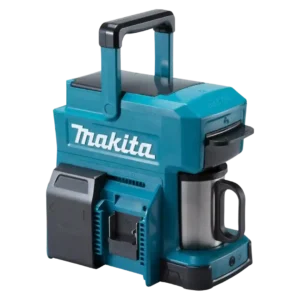
Makita Cordless Coffee Maker (18 V)
Where It Has the Edge
- Speed and time-to-cup is 4.2 vs 3.1. Speed is mostly viewed positively for a cordless brewer, with several reviewers calling the brew time quick or...

Scorata scores summarize analyzed review evidence on a 1–5 scale; they are not laboratory measurements or a simple average of customer star ratings. Feature scores summarize the reviews covering that feature. The overall score averages feature scores within each review, then combines review averages. When both expert and customer evidence are available, those two groups receive equal weight. Products can have different review coverage, so small score gaps do not establish a winner.
Recommendations prioritize important features for the category, with a score of at least 3.5, a gap of at least 0.25 points and at least two supporting reviews per product. Features with widely varying scores or broad connectivity contexts are excluded from recommendations. These safeguards do not establish statistical significance.
Quick verdict
The review evidence points to a tradeoff: Speed and time-to-cup versus Capacity and Espresso and beverage quality. Choose according to which strengths matter more to you; the overall score alone does not settle that choice.
Choose Makita Cordless Coffee Maker (18 V) for Speed and time-to-cup.
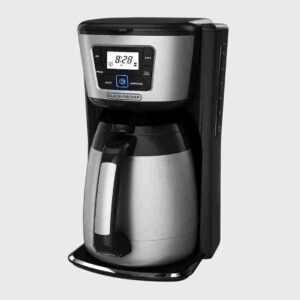
Choose Black+Decker Thermal Coffeemaker, 12-Cup CM2035B for Capacity and Espresso and beverage quality.
Scores are out of 5. Missing scores mean missing review evidence, not a missing feature.
Capacity is a repeated limitation because servings are small and battery charge limits how many cups can be made.
Capacity was a clear strength, with reviewers noting the full 12-cup output works well for larger households, offices, or frequent entertaining.
Speed is mostly viewed positively for a cordless brewer, with several reviewers calling the brew time quick or acceptable.
Speed was acceptable but not a standout: one review called it standard, while others found it not the quickest or relatively long.
Cup and handling feedback is mixed, from praise for splash protection to complaints about low clearance, a weak lid, and occasional mess.
Carafe handling was mixed: most reviewers liked the pour quality and wide-mouth cleaning, but one found the press-to-pour lever hard for smaller hands.
Beverage quality divides reviewers: some found clean or pleasant coffee, while coffee-focused reviewers called it weak, bland, or just fine.
Beverage quality was generally pleasant but not elite, ranging from smooth and drinkable in lab testing to very good in a user review.
Cleaning and maintenance are mostly easy, though clogging and retained moisture mean the machine still needs basic care.
Maintenance was mixed: cleanup and dishwasher-safe parts were praised, but regular carafe cleaning, descaling time, and a fixed reservoir created hassles.
Heating performance is acceptable but not universally strong; 18V improves results, while some reviewers found warm-up or efficiency lacking.
Heating performance was inconsistent: some users measured or tasted very hot coffee, while the lab review found the water heated slowly and below ideal.
Overall experience depends heavily on use case, ranging from delight for Makita users to confusion about the product’s narrow niche.
The overall experience was positive for everyday use, with intuitive controls and simple operation offset by a short learning curve in one lab review.
The automatic shutoff/protection behavior was praised for reducing hassle during work breaks.
Automation features were useful rather than flashy: reviewers valued the freshness timer, auto-brew programming, and safety-minded auto shutoff.
The reusable filter is generally seen as convenient, though reviewers note grind choice matters and clogging can happen.
The lack of a permanent filter was a drawback because it adds ongoing paper-filter costs and unnecessary waste.
Brewing performance is mixed: some reviewers got hot, quick, clean coffee, while others found the brew weak or merely adequate.
Brew performance was mixed-positive: several reviewers liked the balanced extraction and flavor, while one lab review criticized below-ideal brew temperatures.
One performance claim was tested favorably, with the brewer exceeding the advertised cup output in that review.
Home testing supported the core thermal-carafe claim, with the reviewer reporting coffee stayed warm for hours and remained enjoyable without reheating.
Value depends on already owning Makita batteries; reviewers are less positive when batteries, charger, or alternatives are factored in.
Value was a major strength, with multiple reviewers framing it as a budget-friendly brewer that outperforms its low price.
Setup is consistently described as simple, with reviewers finding the single-serve workflow straightforward.
Setup was described as quick and straightforward, with the home reviewer saying initial setup took only a few minutes.
Build quality is one of the stronger points, with several reviewers describing the machine as durable, solid, and tool-like.
Build quality drew split reactions: reviewers liked the stainless or insulated carafe, but one home test found the plastic body flimsy and not built to last.
Design flaws cluster around battery drain, missing storage or AC flexibility, loose accessories, condensation, and drips.
Design flaws centered on the press-to-pour carafe and a break-prone lid-lever warning, making the carafe less carefree than the rest of the machine.
The physical design is usually praised for being compact, easy to handle, and visually cohesive with Makita tools.
Reviewers generally liked the compact footprint, readable controls, appearance, and counter-friendly design, though ergonomics were not uniformly perfect.
Accessories are useful but uneven: the included cup and lid earned praise in some reviews, while another reviewer found the small cup limiting.
Pod support is useful but specialized, with limited pod selection offset by cheap and accessible Senseo-style options in one review.
Hot-water-style use is a secondary strength, with reviewers saying it works decently for tea or hot drinks.
Portability is the core appeal, especially for jobsites, camping, trucks, or off-grid use, but battery weight tempers that benefit.
The thermal pot function was the strongest point, with every relevant review saying the carafe kept coffee warm for hours or consistently hot.
Scoop storage is praised as thoughtful and convenient, reducing the chance of losing a small accessory.
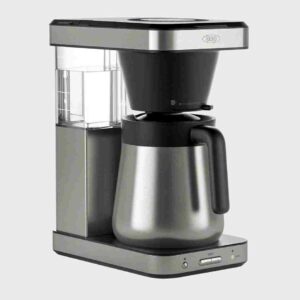
Choose the OXO Brew 8-Cup if you want fast, consistent drip coffee in small or full batches. Skip it if you need programming, app controls, a larger pot, or the...
Pros: Brewing performance and consistency, Overall user experience
Cons: Design flaws
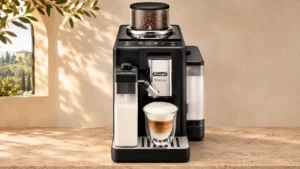
Swappable bean hoppers, intuitive controls and silky automatic milk foam make the Rivelia unusually convenient for varied coffee routines. The premium price, grinder-clearing step and optional cold-foam upgrade are worth...
Pros: Grinder, hopper and dosing system, Espresso and beverage quality
Cons: Iced / cold-brew function quality, Capacity
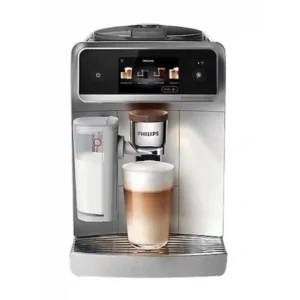
Best for effortless, highly personalized hot and cold coffee in a busy multi-drinker home. Skip it if counter space is tight, you demand silky adjustable microfoam, or the premium price...
Pros: Automation and sensors, Overall user experience
Cons: Design flaws, Mess-free used-puck disposal
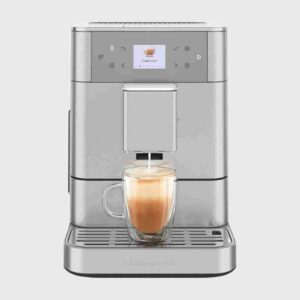
Choose the KitchenAid KF6 for rich espresso, quiet operation, easy cleaning, and strong value in a super-automatic. Skip it if dense cappuccino foam, plant-milk presets, touchscreen controls, or an included...
Pros: Water system, maintenance and descaling, Overall user experience
Cons: Accessories, Design flaws